Peach-Faced Lovebird Care Guide: Everything to Know
If you’ve spent any time reading about the peach faced lovebird, you already know these small parrots pack a surprising amount of personality into a five-inch frame. They’re curious, chatty, and famous for the way bonded pairs sit pressed together for hours. Watch closely and you’ll notice something else: lovebirds are chewers, explorers, and escape artists all at once, which is exactly why so many first-time owners underestimate what they need.
This guide goes deeper than a typical care sheet. It covers the species and color varieties you’ll actually encounter, the enclosure and diet details that keep lovebirds healthy for a full decade or more, and the health issues worth watching for, so you can give your lovebird a genuinely good life.
Quick Facts: Peach-Faced Lovebird
- Lifespan: 10–15 years, with some individuals living past 20 with excellent care
- Adult size: 5–7 inches (13–17 cm), roughly 43–63 grams
- Care level: Intermediate
- Diet: Quality pelleted small-parrot food, a seed mix, and daily fresh produce
- Minimum cage size (pair): Around 24″ L x 18″ W x 24″ H, larger is always better
- Temperament: Energetic, affectionate, and occasionally nippy or territorial
Lovebird Species and Color Varieties
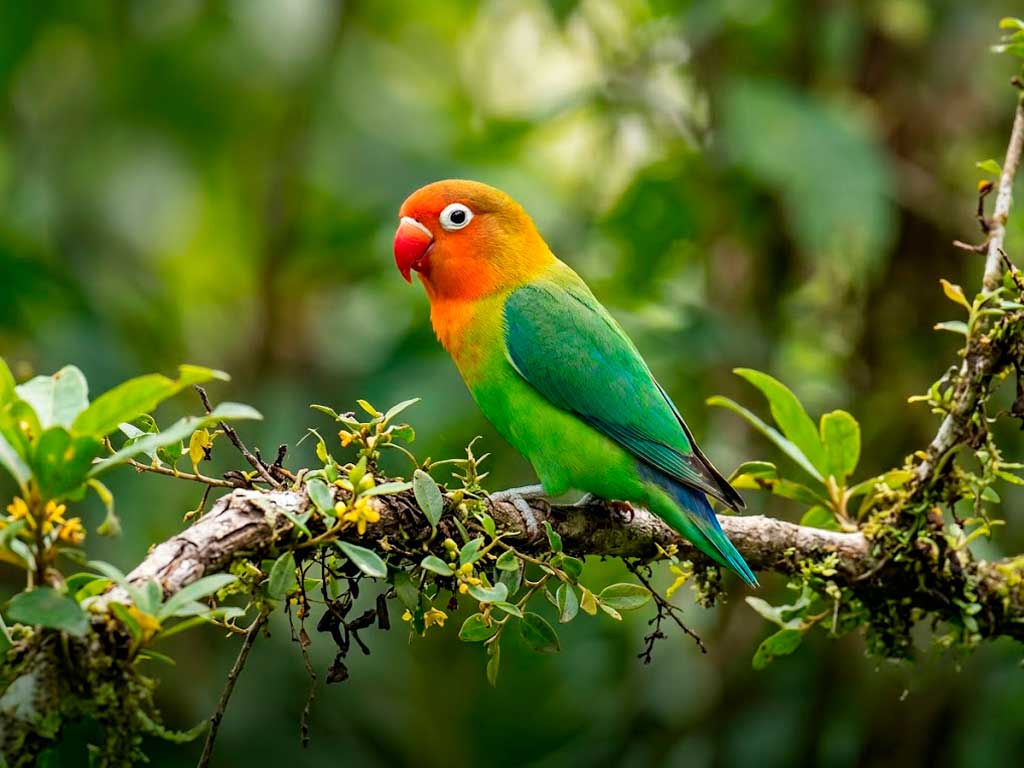
The peach faced lovebird (Agapornis roseicollis) is the species most people picture when they think “lovebird,” and it’s the most common one kept as a pet. It’s bright green with a rosy-pink face and a blue rump that flashes in flight. Did you know peach-faced lovebirds are one of the most extensively color-mutated parrot species in aviculture? Breeders have developed dozens of variations, including the popular Dutch blue, lutino (yellow with red eyes), cinnamon, and pied forms.
Beyond the peach-faced lovebird, a few other species show up in the pet trade regularly. Fischer’s lovebirds and masked lovebirds both have a distinctive white eye ring that peach-faced birds lack, along with a slightly different color palette. Black-cheeked lovebirds are less common but occasionally available through specialist breeders. All of these species share similar care needs, so most of this guide applies across the board.
Setting Up the Right Enclosure
Lovebirds are acrobatic and surprisingly active for their size, so cage space matters more than most new owners expect. A single lovebird needs a cage no smaller than 18″ L x 18″ W x 24″ H, while a pair does best with at least 24″ L x 18″ W x 24″ H, and larger is always an improvement. Bar spacing should sit around 1/2 to 5/8 inch to keep your bird from squeezing through or getting a wing stuck.
A sturdy flight-style cage like the Prevue Pet Products Steel Bird Flight Cage gives a pair genuine room to climb and stretch their wings, and it’s built specifically with lovebirds and similarly sized parrots in mind. If space or budget is tighter, the ZENY 53-Inch Parakeet Bird Cage is a solid rolling-stand alternative that still leaves room to grow.
Skip wood or galvanized wire enclosures, since lovebirds chew constantly and can ingest toxic material from both. Place the cage in a draft-free, well-lit spot away from the kitchen, since cooking fumes are dangerous for birds, and keep it off the floor and out of direct sunlight.
Lovebird Diet and Nutrition
A well-fed lovebird eats more than just seed. The foundation of a healthy diet is a quality pelleted food formulated for small parrots, making up roughly 60 to 70 percent of what your bird eats day to day. Higgins Vita Seed Conure and Lovebird Food works well as a fortified seed component alongside that pelleted base.
Round out the diet with fresh produce daily: apple with the seeds removed, berries, broccoli, carrot, bell pepper, and leafy greens all work well. Discard uneaten fresh food after a few hours, since it spoils quickly and can make your bird sick. Never offer avocado, chocolate, caffeine, onion, or garlic, all of which are toxic to birds. A cuttlebone should be available at all times for calcium, and separate food and water dishes matter more than they sound, since lovebirds will happily contaminate a shared bowl. Stainless steel feeding cups with a clamp holder are easy to clean and hard for a determined chewer to damage.
Daily Care and Enrichment
Lovebirds are highly intelligent and get bored quickly without enough to do. It’s a small thing, but it matters: a bored lovebird doesn’t just act out, it can develop genuinely harmful habits like feather plucking. Rotate at least five or six toys regularly, mixing foraging toys, chew toys, and swings so nothing goes stale.
A shallow bathing dish or a gentle misting a few times a week keeps feathers in good condition, since most lovebirds bathe enthusiastically once they get the hang of it. Give your bird supervised time outside the cage daily on a play gym, and lovebird-proof the room first, since these birds investigate everything within reach.
Handling and Socialization
Here’s the honest tradeoff: a single, hand-raised lovebird can bond closely with you and thrive on daily interaction, while a bonded pair will bond more to each other than to you. Neither choice is wrong, it just changes what kind of relationship you’re signing up for.
Young, hand-raised birds tame fastest. Start with slow movements and a calm voice, then work up to offering a treat from a dowel or your finger. Lovebirds can be nippy, especially during hormonal periods, so patience matters more than speed here. If you already keep a cockatiel, you’ll notice lovebirds are a touch more assertive and territorial by comparison.
Grooming Basics
Most lovebirds keep their own nails and beak in reasonable shape through normal climbing and chewing, though nails may still need an occasional trim. Leave nail and wing trimming to an avian-experienced vet or a trained groomer, since improper technique can cause real injury or bleeding.
Bathing, as covered above, is largely self-directed if you offer the opportunity regularly. Watch for a healthy sheen and smooth feather texture as your baseline for what normal looks like.
Cleaning and Maintenance
Spot-clean the cage daily, removing droppings and old food before it builds up. Wash food and water dishes every day, and swap out cage liner at least once a week, more often for a pair. Nature’s Miracle Small Animal Cage & Surface Cleaner handles the bio-enzymatic side of things well, breaking down stains and odor without harsh chemicals that could bother your bird’s sensitive respiratory system. Give perches and toys a full wash whenever they look soiled, and let everything dry completely before it goes back in the cage.
Lovebird Health and Common Problems
This section is general guidance rather than veterinary advice, so any of the signs below are a reason to call an avian-experienced vet rather than wait and see. A healthy lovebird should have bright, clear eyes, smooth feathers, consistent droppings, and a steady appetite.
A few conditions show up often enough to know in advance. Feather plucking is usually tied to boredom or insufficient enrichment, particularly in single birds without enough interaction. Psittacine beak and feather disease, or PBFD, is one reason sourcing from a reputable breeder matters. Goitre from iodine deficiency is easy to prevent with a mineral block or iodine supplement. Egg binding is a real risk in breeding females and needs prompt veterinary attention. Annual wellness visits catch most of these issues early, well before they become visible at home.
Frequently Asked Questions
Can I keep just one lovebird, or does it need a companion?
A single, hand-raised lovebird that gets daily interaction from you can live a genuinely happy life. Pairs bond more strongly with each other than with people, so the right choice depends on whether you want an interactive pet or a more hands-off, observational relationship.
How long do peach-faced lovebirds live?
Most peach-faced lovebirds live 10 to 15 years with good care, and some individuals live past 20. Diet, enrichment, and regular vet visits all play a role in how long your bird lives.
Are lovebirds good pets for beginners?
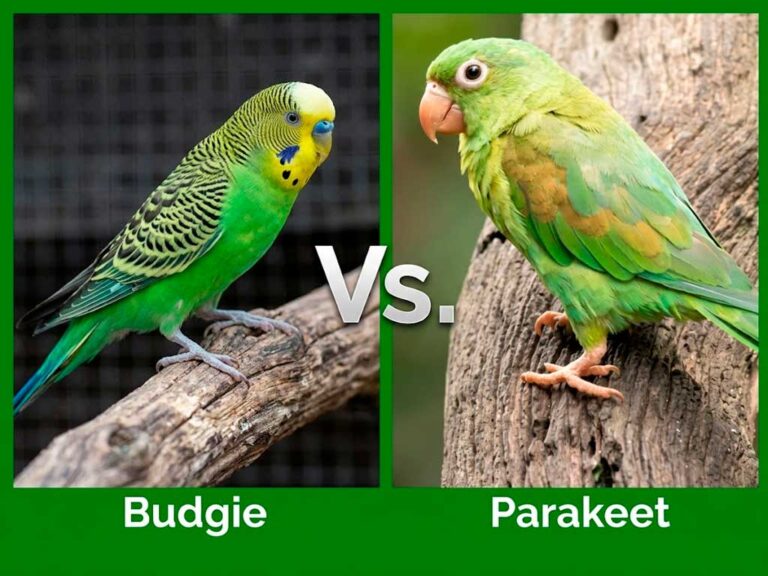
Lovebirds fall somewhere in the middle: they’re more demanding than a budgie but more manageable than a large parrot. First-time bird owners can absolutely succeed with a lovebird as long as they’re ready for daily interaction and a decade-plus commitment.
What’s the difference between a peach-faced and a Fischer’s lovebird?
The clearest visual difference is the eye ring. Fischer’s lovebirds have a distinct white ring around each eye, while peach-faced lovebirds do not. Their care needs are otherwise very similar.
Do lovebirds bite?
Lovebirds can nip, especially during hormonal periods or when startled. Consistent, gentle handling from a young age goes a long way toward reducing this, though even well-socialized lovebirds may nip occasionally.
How big of a cage does a lovebird need?
A single lovebird needs a minimum of 18″ L x 18″ W x 24″ H, while a pair should have at least 24″ L x 18″ W x 24″ H. More space is always better, especially for a pair that will spend most of its life in that enclosure.
What do lovebirds eat besides seed?
A balanced diet centers on a quality small-parrot pellet, supplemented with fresh fruits and vegetables daily and a limited amount of fortified seed as a treat. Seed alone leaves most lovebirds nutritionally short.
Why does my lovebird tuck paper into its feathers?
This is completely normal nesting behavior unique to lovebirds. They tuck strips of paper, palm frond, or soft bark into their rump feathers to carry nesting material, unlike any other parrot species.
Are lovebirds noisy?
Lovebirds are vocal, with sharp, persistent calls, though they’re generally quieter than larger parrots like macaws or cockatoos. Expect regular chatter rather than constant screaming.
Do lovebirds need a vet?
Yes. An annual wellness visit with an avian-experienced vet catches most health issues early, and any of the warning signs covered above warrant a sooner appointment.
A peach faced lovebird asks for more than a budgie but rewards that extra effort with real personality and a genuinely long-term companionship. Get the cage size, diet, and daily interaction right from the start, and you’re set up for a decade or more with one of the most characterful small parrots you can keep.
For a broader look at beginner-friendly species and how lovebirds compare, our best pet birds for beginners guide is a good next stop, and our complete guide to bird feeding covers nutrition basics across species in more depth.
Happy Pet Zone may earn a commission from qualifying purchases made through the Amazon links in this article, at no extra cost to you.