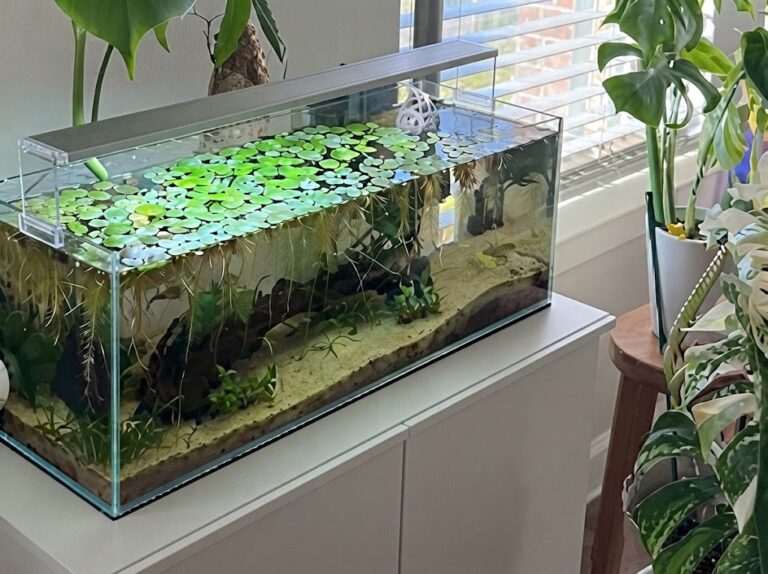
Asian Biotope Aquarium: How to Build a Southeast Asian Tank That Works
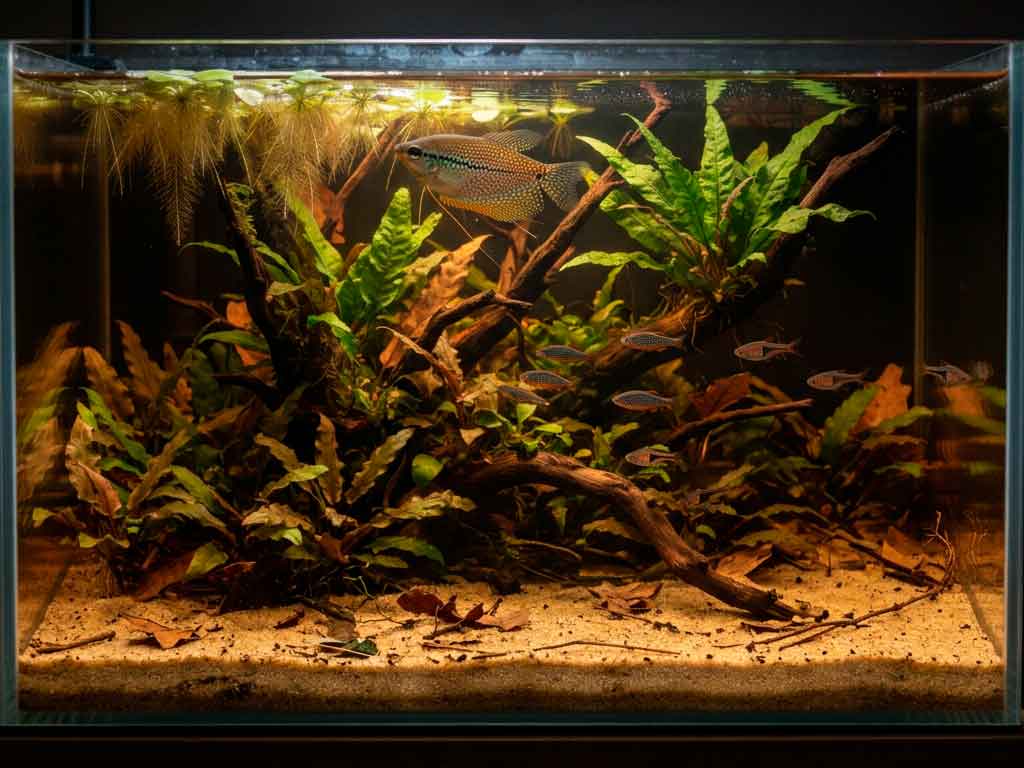
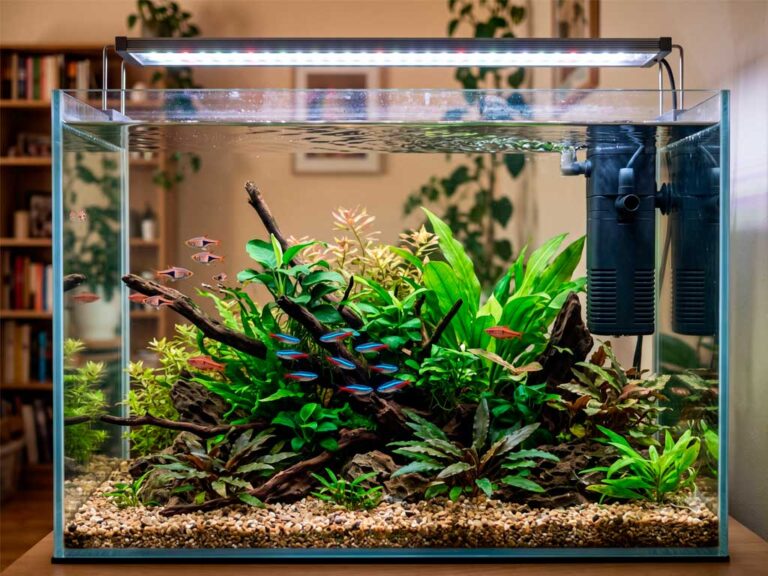
An Asian biotope aquarium recreates a Southeast Asian stream: soft, acidic, leaf-stained water. Those conditions decide the substrate, the plants, the flow and most of the fish list.
Aim for pH 6.0 to 7.0, GH 3 to 9, KH 2 to 4 and 25 to 28 °C (77 to 82 °F). Get that stable first, and the aquascape becomes a matter of taste rather than guesswork.
What is an Asian biotope aquarium?
A biotope tank copies one habitat, not a continent. Every plant, fish and piece of wood should come from the same region and the same water.
For Southeast Asia that means Malaysia, Indonesia, Thailand, Vietnam, Cambodia, Laos, Myanmar and the Philippines. The region holds peat swamps, forest streams and slow lowland rivers, and each one produces a different tank.
| Rule | What it means in practice |
|---|---|
| Same region | Fish, plants and wood from one habitat, not one continent |
| Same water | pH, GH and KH inside the range the species meet in the wild |
| Same flow | Gentle current, not a river tank |
| Same look | Leaf litter, wood, dim light, muted colors |
A biotope is not a theme. A painted background does not make a tank Asian if the fish come from three continents.
Why it works as a first biotope:
- The fish are widely available and mostly hardy.
- The plants tolerate low light.
- Soft water is easy to make from a mix of tap and RO water.
- The look comes from wood and leaves, not expensive equipment.
One warning about the word “Asian”. A cherry barb comes from Sri Lanka and a zebra danio from India and Bangladesh. Both are Asian, and neither belongs in a Southeast Asian biotope. Decide the region before you buy.
Which Southeast Asian habitat are you copying?
Three habitats cover most builds, and the choice sets the flow, the substrate and the plants.
| Habitat | What it looks like in a tank |
|---|---|
| Peat swamp forest | Still, tea-colored water, deep leaf litter, wood tangles, dim light |
| Forest stream | Clearer water, gentle current, rounded rocks, stem plants |
| Lowland river and flooded forest | More open swimming space, big wood, Vallisneria, floating plants |
Peat swamp forest
The most distinctive of the three, and the hardest to keep stable. Water sits still, leaves pile up, and tannins stain the tank a deep amber. Cryptocoryne and Java fern do most of the planting.
Forest stream
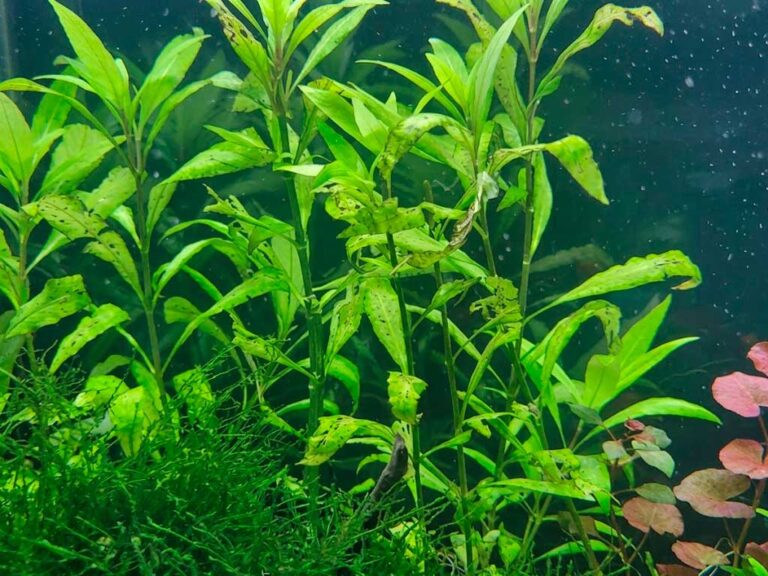
The easiest first build. A gentle current runs through wood and rounded stone, light reaches the plants, and Aponogeton and Hygrophila grow without CO2.
Lowland river and flooded forest
A larger, more open tank with big pieces of wood and a clear swimming lane. Floating plants shade the edges, and the fish use the whole water column.
The North Selangor Peat Swamp Forest in Malaysia holds about 48 fish species, 8 of them described in the last two decades and 6 found nowhere else (Tannin Aquatics, 2018). That is why the habitat matters: a biotope tank can hold species that rarely appear in a general community.
What water parameters does an Asian biotope need?
The table is the short version, and the notes under it cover the one number that causes most crashes.
| Parameter | Target |
|---|---|
| pH | 6.0 to 7.0 |
| GH (general hardness) | 3 to 9 °dGH |
| KH (carbonate hardness) | 2 to 4 °dKH |
| Temperature | 25 to 28 °C (77 to 82 °F) |
| Flow | Gentle surface movement, no strong jet |
| Light | Low to moderate |
A veterinary guide from Francodex puts the community range at pH 6.5, hardness 5 to 9 and 23 to 28 °C (73 to 82 °F), which sits inside the table above (Francodex, 2019).
Wild peat swamp water can sit near pH 5 with almost no KH. That water is real, and it is also unstable in a closed tank: with no carbonate buffer, a small amount of acid drops the pH fast.
TFH Magazine suggests keeping KH at least 4 to prevent pH swings (TFH Magazine, 2021). That buffer pulls pH toward neutral, so a tank at KH 2 to 4 settles near 6.5 rather than 5.5. For a community tank the trade is worth it: a stable pH 6.0 to 7.0 beats a perfect number that moves. Leave pH 5 for specialists such as licorice gouramis, and only with a controller and a test routine.
How to get there without chemicals:
- Test your tap water for pH, GH and KH before buying anything.
- If GH is above 10, mix tap with RO or rainwater.
- Add catappa or oak leaves and driftwood for tannins, not to chase a pH number.
- Re-test KH weekly for the first month; it falls as acids accumulate.
- Change 20% to 30% of the water weekly at tank temperature.
Never use pH-down products to hit a number. They move pH for a day and leave the tank less stable than before.
If your tap water is hard, the tank still runs, but the fish list narrows. Harlequin rasboras and kuhli loaches cope with moderate hardness, while wild bettas and licorice gouramis do not. Mixing RO water costs less than replacing the fish later.
How do you build the substrate and hardscape?
Build in layers, and let wood and leaves do most of the visual work.
- Add a 5 to 6 cm (2 to 2.4 in) layer of sand or fine gravel, with a little clay mixed into the base.
- Lay driftwood or mangrove root across the tank, with a few branches reaching toward the surface.
- Group rounded rocks around the wood base, away from the spots where loaches dig.
- Scatter a thin layer of dried leaves over the substrate.
- Keep the front third open for swimming and feeding.
- Plant the back and sides; that is where fish find cover.
| Material | Why it belongs |
|---|---|
| Sand or fine gravel | Soft substrate for kuhli and dwarf chain loaches |
| Driftwood and roots | The structure of a flooded forest |
| Rounded stones | Typical of forest streams and safe for bottom fish |
| Catappa or oak leaves | Tannins, cover and food for microfauna |
| Bamboo stems or branches | Vertical lines that break up the layout |
Contrast matters more than quantity. Dark wood against light sand, green plants against brown leaves. A tank with five materials in five colors looks like a shop display.
Which plants belong in an Asian biotope?
Choose two to four species and plant them in groups. That is the advice TFH gives for a natural look, and it also makes the tank easier to keep.
| Plant | Where it goes |
|---|---|
| Cryptocoryne wendtii | Midground, tolerates low light |
| Cryptocoryne crispatula | Background, narrow leaves in gentle flow |
| Bucephalandra | On wood and rock, slow grower |
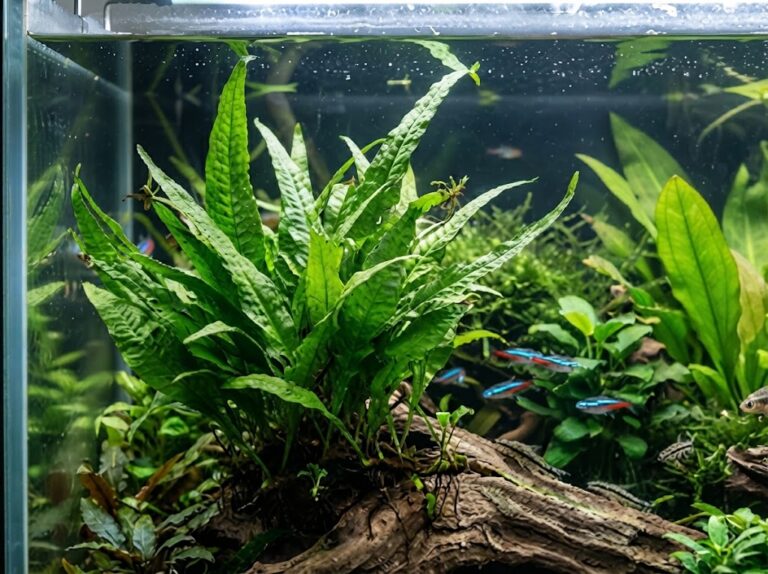
| Java fern (Microsorum pteropus) | Tied to wood, low light |
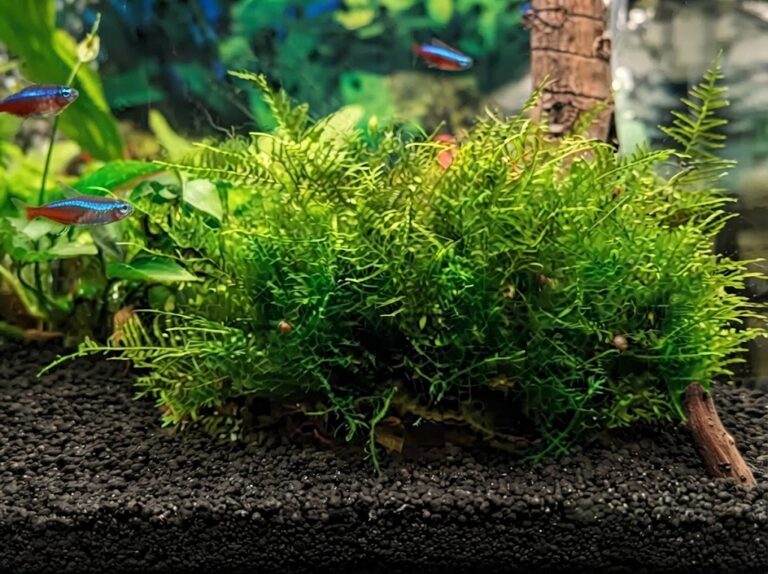
| Java moss (Taxiphyllum barbieri) | Covers wood and hides fry |
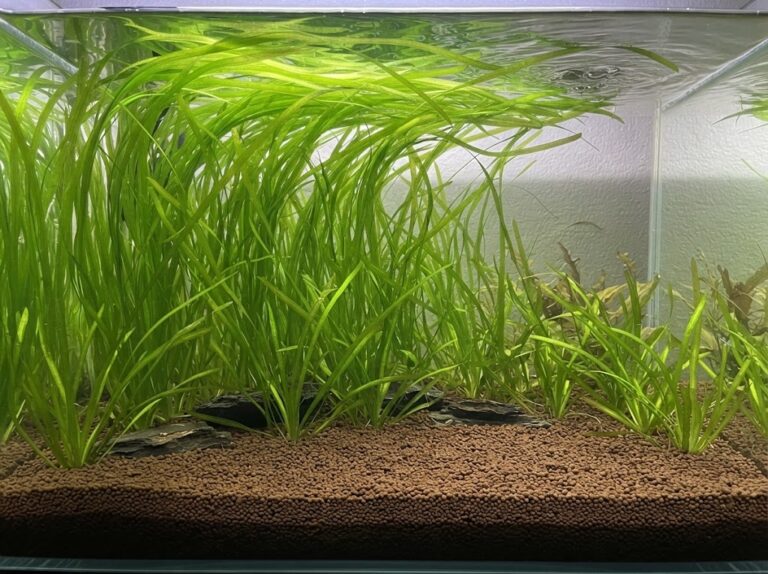
| Vallisneria | Background, sends runners |
| Hygrophila difformis | Background, fast grower |
| Red tiger lotus (Nymphaea) | Feature plant in a larger tank |
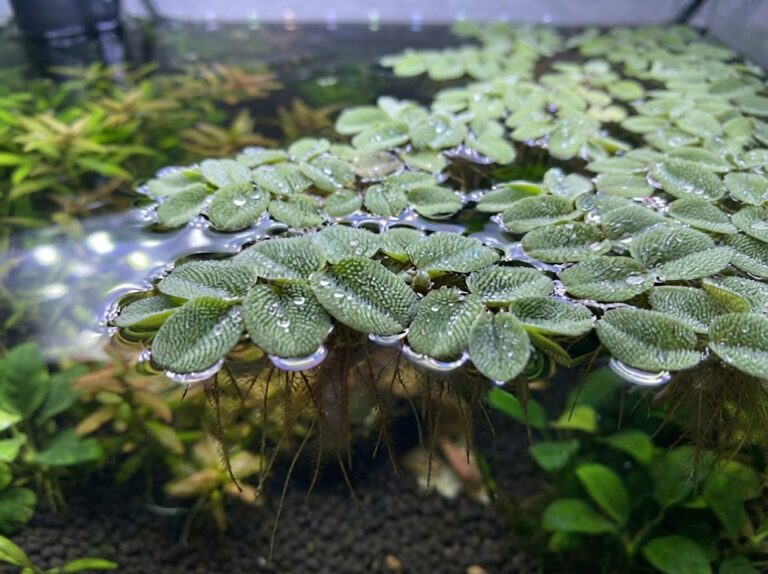
| Salvinia or frogbit | Floating cover that dims the light below |
Three notes save plants and money. Cryptocoryne often melts after a move and grows back from the root, so do not pull it out in the first month. Buy plants grown submerged where possible, because emersed-grown Cryptocoryne drops its leaves in the first weeks and then recovers, which looks like failure and is not.
Floating plants cut light and take nutrients from the water column, which suits a dim biotope. The aquarium lighting guide explains how much light the slower species actually need.
Which fish go in each zone?
Stock by layer. Start with the community aquarium fish by zone guide for the principle; this is the Southeast Asian version of it.
| Zone | Southeast Asian species |
|---|---|
| Surface | Honey gourami, sparkling gourami, betta (one male), licorice gourami (advanced) |
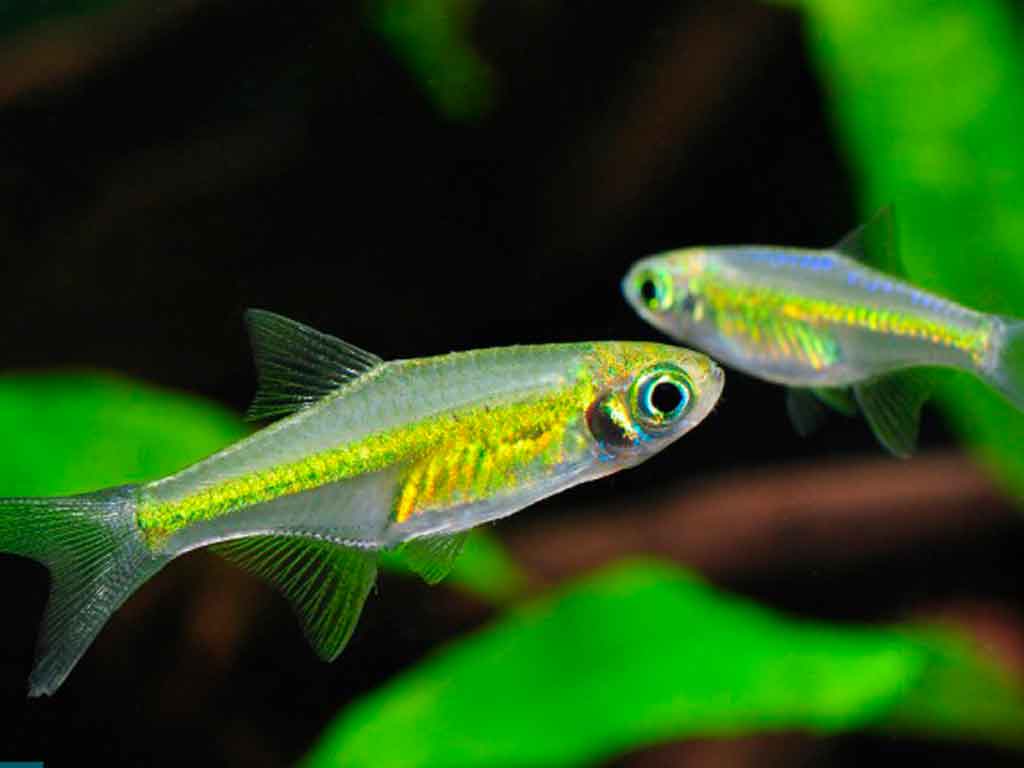
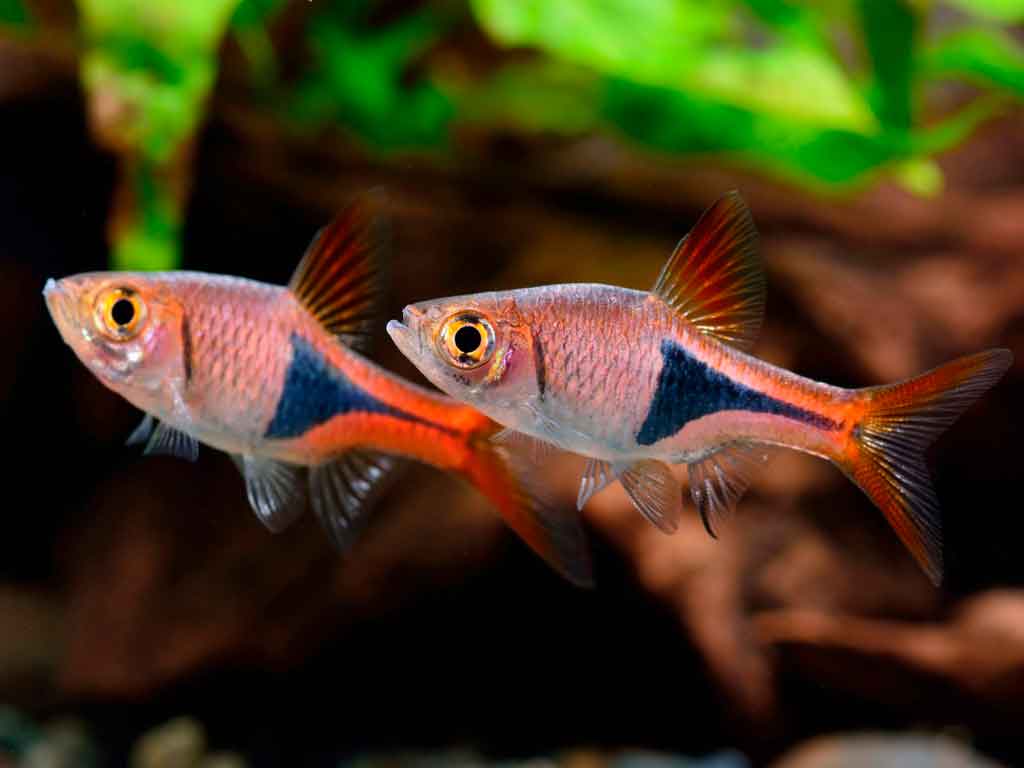
| Midwater school | Harlequin rasbora, lambchop rasbora, chili rasbora, Kubotai rasbora, scissortail rasbora |
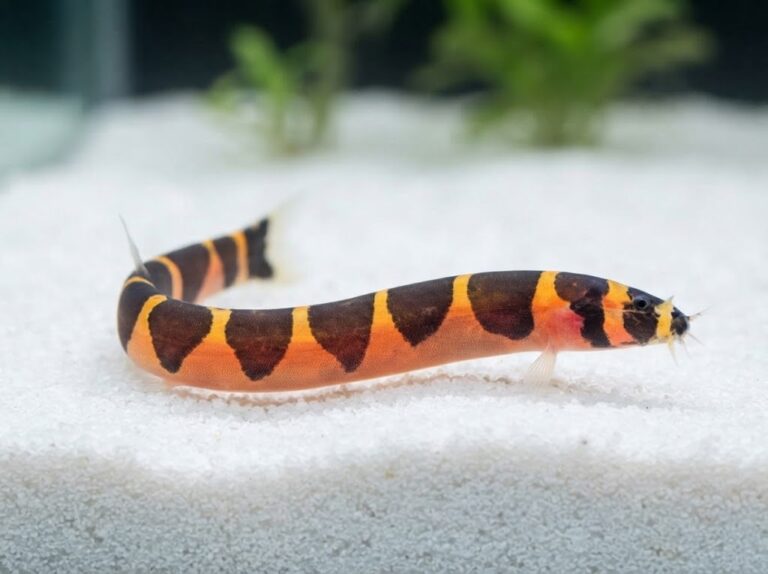
| Bottom | Kuhli loach, dwarf chain loach |
| Algae crew | Siamese algae eater |
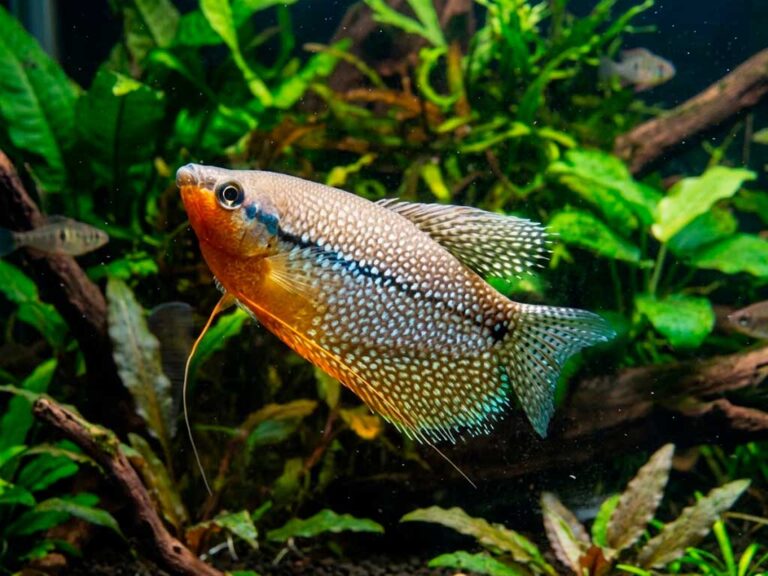
| Centerpiece | Pearl gourami, paradise fish |
Rules that prevent most problems:
- One school per zone. Three midwater schools compete for the same space.
- Buy rasboras in groups of 8 or more; 6 is the floor, not the target.
- Keep the largest gourami for last, once the school is feeding well.
- Keep tiger barbs out of a calm biotope; they nip fins.
- Treat a betta as a single centerpiece. One male per tank, never two.
- Give glass catfish a group of six and a calm tank, or they hide all day.
The harlequin rasbora care guide covers the species most builds start with, including the water it prefers.
Which Asian fish should you avoid?
Several fish from the region are sold as community fish and do not belong in a calm biotope.
| Fish | Why it does not fit |
|---|---|
| Clown loach | Reaches 30 cm (12 in) and needs a 180 cm (71 in) tank |
| Tiger barb | Nips fins in a calm community |
| Kissing gourami | Grows to 30 cm (12 in) and grazes on soft plants |
| Pangasius shark | Outgrows home tanks, reaching 1 m (39 in) or more |
| Red-tailed black shark | Territorial with similar-shaped fish |
| Three-spot gourami | Hardy, but aggressive when it breeds |
The pattern is size and temperament. A fish that looks right in the shop can be three times longer in two years, and a fish that is peaceful alone can turn territorial once it pairs up.
How many fish fit your tank?
These are outlines, not rules. Filtration, water changes and adult size decide the real number.
| Tank | Stocking outline |
|---|---|
| 60 cm (24 in), 60 L (16 US gal) | 8 chili rasboras, 1 honey gourami, 6 dwarf chain loaches |
| 80 cm (31 in), 100 L (26 US gal) | 12 harlequin rasboras, 1 honey gourami, 8 kuhli loaches |
| 100 cm (39 in), 180 L (48 US gal) | 15 harlequin rasboras, 10 Kubotai rasboras, 3 pearl gouramis, 8 dwarf chain loaches |
| 120 cm (47 in), 240 L (63 US gal) | 20 harlequin rasboras, 12 scissortail rasboras, 3 pearl gouramis, 10 kuhli loaches, 3 Siamese algae eaters |
The 60 L row is tight for kuhli loaches, which do better from 76 cm (30 in) upward. In a smaller tank, keep the chili rasboras with shrimp instead.
Two stocking notes that matter more than the numbers:
- Pearl gouramis do best as one male with two females, not as a group of males.
- Siamese algae eaters reach 15 cm (6 in) and need a long tank with algae to graze.
What equipment does an Asian biotope need?
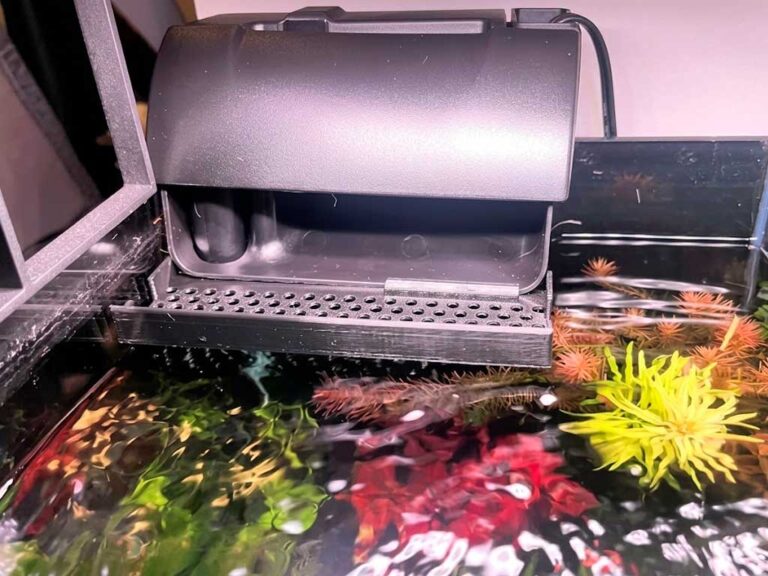
- A canister or sponge filter rated for the volume, with a gentle outlet. The aquarium filtration guide explains the flow side.
- A heater sized for the room, because the tank runs at 25 to 28 °C (77 to 82 °F). The aquarium heater guide covers wattage.
- A tight lid. Gouramis and bettas breathe at the surface and need humid air; a dry room harms the labyrinth organ.
- A low to moderate LED on a timer, 6 to 8 hours a day.
- A thermometer you can read without squinting.
- No chiller, no UV and no CO2 for a first build.
What does a 100 L (26 US gal) build look like?
A complete parts list removes most of the guesswork. This is a forest stream build for an 80 cm (31 in) tank.
| Part | Choice |
|---|---|
| Tank | 80 cm (31 in), 100 L (26 US gal) |
| Filter | Canister rated at 600 L/h, outlet near the surface |
| Heater | 100 W, set to 26 °C (79 °F) |
| Light | 30 W LED, 7 hours a day |
| Substrate | 5 cm (2 in) of sand with a clay layer underneath |
| Wood | Two pieces of driftwood, one reaching the surface |
| Plants | Cryptocoryne wendtii, Java fern, Vallisneria |
| Fish | 12 harlequin rasboras, 1 honey gourami, 8 kuhli loaches |
Three choices do the work. The canister provides gentle flow without a jet, the wood gives the midwater school a line to swim along, and the plants stay in three species so the tank reads as one place rather than a collection.
How long does the build take?
Six weeks is a realistic pace for a first Asian biotope.
| Week | What happens |
|---|---|
| 1 | Set up the tank, substrate, wood and filter, and start the cycle |
| 2 | Test ammonia and nitrite daily until both read zero |
| 3 | Add plants, leaves and the light timer |
| 4 | Add the bottom group after quarantine |
| 5 | Add the midwater school |
| 6 | Add the centerpiece fish last, then watch for two weeks |
Adding fish slowly gives the filter time to catch up with each group and keeps the water stable while the plants establish.
How do you keep it stable?
Stability beats a perfect number, and the routine is short.
- Change 20% to 30% of the water weekly, at tank temperature.
- Top up evaporation with RO or distilled water, because minerals stay behind.
- Replace half the leaf litter every 4 to 6 weeks as it breaks down.
- Test KH and pH weekly for two months, then monthly.
- Rinse filter media in removed tank water, never under the tap.
- Quarantine new fish for two to four weeks.
- Keep the lid on and the room free of drafts.
What mistakes ruin an Asian biotope?
| Mistake | Fix |
|---|---|
| Mixing South American fish and plants | Choose an Asian equivalent for every zone |
| Chasing pH 5 with chemicals | Hold KH 2 to 4 and let botanicals tint the water |
| Adding a clown loach to a small tank | Use kuhli or dwarf chain loaches |
| Using a strong filter jet | Aim the outlet at the surface or fit a spray bar |
| Bright light over slow plants | Dim the light and add floating plants |
| Leaving the tank open | Fit a lid for anabantoids and jumpers |
Frequently Asked Questions
Pick one habitat, then build to its numbers
Start with the habitat, not the fish list. A peat swamp needs still water and leaves; a forest stream needs gentle flow and rounded stone. Choose one, set pH 6.0 to 7.0 with KH 2 to 4, and plant two to four species in groups.
Then stock one school per zone, quarantine every group, and leave two quiet weeks after the last fish before you call it finished. The zone guide covers the layering rules, and the Aquariums section holds the rest of the builds.