Tibetan Spaniel Dog Breed: The Little Lion That Guarded Monasteries
Could a small dog with a soft, almost lion-like coat also be an alert watchdog with a mind of its own? The Tibetan Spaniel dog has been doing exactly that for centuries.
Originally valued around Tibetan monasteries, this little companion is known for watching its surroundings closely, forming strong bonds with family, and deciding for itself when something deserves attention.
Tibetan Spaniels are affectionate and adaptable, but they are not always eager to follow instructions just to please someone. They need daily activity, regular coat care, and patient training that respects their independent nature.
If you are considering one, this guide covers what life with a Tibetan Spaniel is really like, from its history and personality to grooming, nutrition, common health concerns, and finding a responsible breeder.
Tibetan Spaniel at a Glance
- Breed group: Utility or companion breed, depending on the kennel club
- Size: Small
- Typical height: Around 10 inches at the shoulder
- Typical weight: 9–15 pounds
- Coat: Medium-length double coat with feathering
- Colors: Many colors and combinations are accepted; merle is not accepted under the Royal Kennel Club standard
- Life expectancy: Often more than 12 years
- Exercise: Around one hour daily is a useful general target
- Temperament: Alert, affectionate, intelligent, and independent
- Grooming: Brushing several times a week
- Best suited to: Owners who want a close companion and can manage alert barking and independent behavior
Individual dogs may differ in size, energy, and confidence. The American Kennel Club’s Tibetan Spaniel profile and the Royal Kennel Club breed standard are useful references for understanding the breed’s recognized characteristics.
The Tibetan Spaniel’s History: A Watchdog With Monastery Roots
Tibetan Spaniels have a long association with Tibetan Buddhist monasteries and households in the Himalayan region. They were valued as companions and alert little watchdogs, often positioned where they could observe the area around them.
Their job relied on awareness more than physical strength. A Tibetan Spaniel could notice an unfamiliar visitor approaching and raise the alarm with a bark. Larger dogs might provide a stronger physical deterrent, while these smaller dogs helped draw attention to activity around the property.
The breed’s nickname, “little lion,” reflects its appearance and cultural associations. Its neck coat can form a mane-like outline, and its confident posture gives it a presence that seems larger than its body.
Tibetan Spaniels also have historical connections to the broader group of Asian companion dogs. Their precise ancestry is difficult to establish, so claims that they were definitively the direct ancestors of another modern breed should be treated cautiously.
Today, the Tibetan Spaniel is primarily a companion dog. Yet many still enjoy elevated resting places, watching windows, and keeping track of movement around the home. That habit makes sense when you understand the work the breed was developed to do.
What Does a Tibetan Spaniel Look Like?
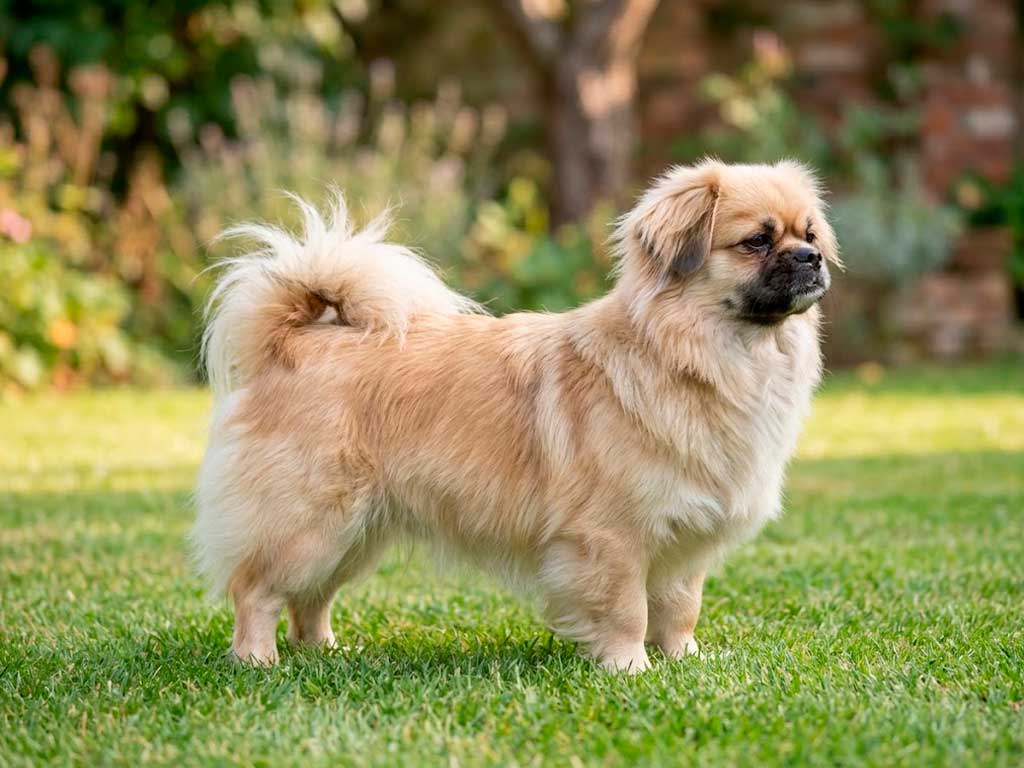
A Tibetan Spaniel is small, slightly longer than it is tall, and balanced in build. The Royal Kennel Club standard describes an ideal height of approximately 10 inches and an ideal weight of 9–15 pounds.
Its expression is one of its most recognizable features. The eyes are dark brown, oval, and expressive, while the head is relatively small in proportion to the body. The ears hang down and develop feathering as the dog matures.
The tail is richly plumed and commonly carried in a curl over the back when the dog moves. It adds to the breed’s distinctive silhouette.
Coat Colors and Texture
The Tibetan Spaniel has a silky topcoat and a fine, dense undercoat. The coat lies relatively flat across the body, with longer hair around the ears, backs of the legs, tail, and hindquarters. Some males develop a more noticeable mane around the neck.
Many colors and combinations are accepted under the Royal Kennel Club standard, except merle. Coat appearance varies between individual dogs, and females may carry less coat than males.
Despite its elegant appearance, the breed does not require elaborate styling. Consistent brushing and occasional bathing are usually more useful than frequent trimming.
Tibetan Spaniel Temperament: Affectionate, Alert, and Independent
A Tibetan Spaniel often forms a close attachment to its household. Many enjoy sitting near their favorite person, joining family activities, and keeping watch over what happens around them.
Their affection comes with an independent streak. A Tibetan Spaniel may understand a cue perfectly and still take a moment to decide whether responding is worth the effort. That can make training frustrating for owners who expect immediate obedience.
The breed is also alert to unfamiliar sounds and visitors. Barking can be part of everyday life, especially in homes where the dog has a clear view of the front door, street, or garden.
You can help manage this behavior without expecting the dog to lose its natural watchdog instincts. Reward calm responses, teach a reliable cue for settling down, and avoid shouting over barking. Loud reactions can make an alert dog even more excited.
Are Tibetan Spaniels Good Family Dogs?
They can be excellent companions for families that respect their size and boundaries. They generally enjoy being included in household life, and their modest exercise requirements can suit a range of homes.
Young children need guidance around the dog. Rough handling, grabbing, or disturbing a resting dog can lead to fear or defensive reactions, even in a friendly breed.
Teach children to let the dog approach voluntarily, handle it gently, and leave it alone while eating or sleeping. Supervision remains important.
Can a Tibetan Spaniel Live in an Apartment?
Yes. A Tibetan Spaniel can adapt well to apartment living when its exercise, companionship, and mental stimulation needs are met.
The main challenge may be noise. A dog that spends hours watching people pass the window could bark frequently, so window access and quiet-time training deserve attention.
Provide daily walks, short play sessions, and opportunities to investigate safe new environments. A small home can work well, but a dog still needs an interesting life.
Do Tibetan Spaniels Get Along With Other Pets?
Many can live comfortably with other dogs and household pets, especially when introductions are gradual and positive. Individual temperament and previous experiences matter more than breed reputation alone.
Supervise early interactions and give each animal a safe place to retreat. With cats and smaller pets, do not assume that compatibility is guaranteed simply because the Tibetan Spaniel is small.
Daily Exercise: Keep a Tibetan Spaniel Busy Without Overdoing It
Plan for around one hour of daily activity as a general starting point. The PDSA Tibetan Spaniel guide gives a similar recommendation and notes that the breed can enjoy family games and activities.
That time does not have to be one long walk. You can split it into a morning walk, an afternoon sniffing session, and a short game indoors.
Mental activity matters, too. Tibetan Spaniels are observant dogs, so give them opportunities to use their noses and explore safe surroundings.
Try activities such as:
- Letting your dog sniff during walks instead of rushing from one end of the route to the other.
- Hiding a few pieces of its daily food ration for a supervised search game.
- Practicing simple cues for a few minutes at a time.
- Offering puzzle feeders that are suitable for the dog’s size and chewing style.
Secure outdoor areas are important. A small dog can still slip through a gap or dash after something interesting, and recall is not reliable enough to replace a leash in an unfenced public area.
Adjust activity for age, fitness, weather, and veterinary advice. Puppies and dogs with health conditions may need a different routine.
Grooming a Tibetan Spaniel Without Making It a Chore
The coat is more manageable than its feathering might suggest. Brushing several times a week is a practical routine for most Tibetan Spaniels, with extra attention to areas where longer hair can tangle.
Focus on the ears, tail, backs of the legs, and areas where a harness or collar rubs. Work gently through knots rather than pulling at them. A suitable comb can help you find tangles close to the skin that a surface brush might miss.
A few other habits make grooming easier:
- Brush before bathing. Water can tighten existing tangles, so work through the coat first.
- Check the ears and paws. Look for dirt, debris, redness, or discomfort as part of the regular routine.
- Trim nails when needed. Nails that become too long can affect comfort and movement. Ask a groomer or veterinary professional to demonstrate if you are unsure how to trim them safely.
- Keep dental care consistent. Toothbrushing with dog-safe toothpaste helps reduce plaque. Small dogs can develop dental problems, so regular checks are worthwhile.
A full haircut is not usually necessary for a healthy coat. If matting becomes frequent or grooming is difficult, speak with a professional groomer about suitable options.
Feeding a Tibetan Spaniel: Nutrition and Portion Control
A Tibetan Spaniel needs a complete and balanced diet appropriate for its life stage, body condition, and activity level. Small size alone does not mean the dog needs a special diet, although a small-breed formula may offer kibble that is easier to eat.
Start with the feeding guidance on the food packaging, then adjust portions according to your dog’s weight and body condition. Package amounts are a starting point, not a universal rule.
You should be able to feel the ribs without pressing hard, and the dog should have a visible waist when viewed from above. If weight begins to creep up, measure meals carefully and count treats as part of the daily intake.
Is Fresh Dog Food a Good Option for a Tibetan Spaniel?
Fresh food can be an option when the recipe is complete and balanced for the dog’s life stage and fed in appropriate portions. The word “fresh” by itself does not guarantee nutritional adequacy.
One product to consider is JustFoodForDogs’ Sampler Variety Box, which offers several fresh-frozen recipes for adult dogs. It may help owners explore different recipes, but check the feeding instructions and nutritional statement for the specific product before using it as the main diet.

FROM JUSTFOODFORDOGS
Just Fresh
Resealable meals. No preservatives. Open, serve, refrigerate.
Shop Just FreshHappy Pet Zone may earn a commission when you click through to JustFoodForDogs, at no extra cost to you.
Choose a food labeled as complete and balanced for your dog’s needs if it will make up the full diet. If you plan to use a product only as a topper, keep the amount appropriate so it does not unbalance the overall nutrition.
For a broader overview of food choices and feeding habits, see our dog nutrition guide.
Make dietary changes gradually over several days unless your veterinarian recommends a different approach. If your Tibetan Spaniel has recurring digestive upset, allergies, or a medical condition, ask your veterinarian before switching foods.
Tibetan Spaniel Health: Conditions Owners Should Know About
Tibetan Spaniels can live well into their senior years, but they can be affected by inherited and other health conditions. Responsible breeding, routine veterinary care, dental maintenance, and watching for changes at home all play a role in long-term wellbeing.
Conditions reported in the breed include:
- Patellar luxation: The kneecap slips out of its normal position. Some dogs show intermittent skipping or hold a hind leg up for a few steps. Veterinary assessment is needed to determine the severity and appropriate treatment.
- Progressive retinal atrophy (PRA): This group of inherited eye conditions causes gradual retinal deterioration and can lead to vision loss. Changes may begin with difficulty seeing in dim light.
- Hip dysplasia: The hip joint develops abnormally, which can contribute to discomfort and arthritis. Signs can include stiffness, reluctance to jump, or changes in activity.
- Hip dysplasia: The hip joint develops abnormally, which can contribute to discomfort and arthritis. Signs can include stiffness, reluctance to jump, or changes in activity.
- Entropion: The eyelid turns inward, allowing hair to rub against the eye surface. This can cause irritation and discomfort.
- Distichiasis: Extra eyelashes grow in a position where they may rub against the eye and cause irritation.
These concerns are discussed in the PDSA’s breed information. Not every Tibetan Spaniel will develop them, and a symptom alone cannot confirm a diagnosis.

Happy Pet Zone may earn a commission when you click through to Lemonade, at no extra cost to you.
What Health Checks Should You Ask a Breeder About?
Ask for details of health screening recommended for the breed and evidence of any tests performed on the puppy’s parents. Discuss eye health and orthopedic history, including patellar and hip concerns, with the breeder and your veterinarian.
A responsible breeder should be willing to explain the health history of the line and answer questions without pressuring you to pay a deposit immediately.
After bringing your dog home, schedule routine veterinary examinations and keep vaccinations, parasite prevention, and dental care up to date. Contact a veterinarian if you notice new limping, persistent eye redness, apparent vision changes, or a lasting change in appetite or behavior.
This guide offers general breed information, not a diagnosis or a substitute for veterinary care. If your dog seems painful or its symptoms are worsening, arrange a veterinary assessment.
For additional guidance, browse our dog health resources.
Training a Tibetan Spaniel: Work With Its Independent Side
Tibetan Spaniels are intelligent, but intelligence does not always translate into automatic obedience. Many respond best when training is short, rewarding, and consistent.
Start with the basics: responding to their name, coming when called, walking on a loose leash, and settling on a mat. Use small rewards and end sessions before your dog loses interest.
Reward-based training is particularly useful for sensitive dogs. Harsh corrections can undermine trust and may increase anxiety or barking. If a behavior is difficult to manage, a qualified reward-based trainer can help you build a practical plan.
Socialization matters as well. Introduce your dog gradually to different people, sounds, surfaces, and calm dogs. The goal is to build confidence, not force the puppy into situations that overwhelm it.
How Do You Reduce Alert Barking?
Begin by identifying what triggers it. Your dog might react to people outside, a doorbell, other dogs, or unfamiliar sounds in the hallway.
Then practice a predictable routine:
- Reduce access to a window if passersby trigger repeated barking.
- Reward your dog when it notices a sound and stays quiet.
- Teach a cue such as “settle” in calm moments before using it around distractions.
- Give your dog an alternative activity, such as going to its mat or searching for a treat.
Progress takes repetition. The goal is to teach your Tibetan Spaniel when it can relax, while still allowing it to feel secure in its home.
Finding a Tibetan Spaniel Puppy or Considering Adoption
Searches for “Tibetan Spaniel puppies for sale” and “Tibetan Spaniel for sale” can lead to very different sellers. Take time to assess the source rather than choosing a puppy based on appearance or availability alone.
A responsible breeder should let you learn about the puppy’s environment, meet the mother where practical, discuss health screening, and ask questions about the home the puppy will join. Be cautious if a seller refuses to provide records, avoids basic questions, or pressures you to make a quick payment.
Ask about the puppy’s early experiences, feeding routine, veterinary care, and how it has been introduced to everyday sounds and handling. A good breeder will also be interested in your plans and expectations.
Adoption may be another route. Breed-specific rescue groups and general animal shelters can sometimes help you find a Tibetan Spaniel or a mix with similar characteristics. An adult dog can be a good choice if you want a clearer picture of its size and established temperament.
Before committing, budget for food, preventive veterinary care, grooming supplies, training, and unexpected medical expenses. The purchase price is only one part of the cost of owning a dog for more than a decade.
Is the Tibetan Spaniel the Right Dog for You?
The Tibetan Spaniel can suit someone who wants a small companion with a watchful personality and a strong connection to the household. It can adapt to apartment life and does not require the exercise levels of many working breeds.
There are trade-offs. Expect some alert barking, a coat that needs regular brushing, and a dog that may need extra encouragement during training. It may be a poor fit if you want a reliably quiet dog or plan to leave a companion animal alone for most of every day.
If you like the Tibetan Spaniel’s independent character, compare it with other small companion breeds before deciding. Our dog breed library is a useful place to continue your search.
The best next step is to meet adult Tibetan Spaniels if you can, speak with a responsible breeder or rescue organization, and think honestly about the dog’s needs alongside your daily routine.