Newfoundland Dog: The Gentle Giant Behind Peter Pan
Peter Pan’s nanny wasn’t human. J.M. Barrie made her a Newfoundland named Nana, and he wasn’t exaggerating the breed’s reputation by much.
This is a genuinely massive dog with an equally massive heart, calm enough to trust around children and strong enough to have once hauled fishing nets for a living.
I’ve worked with a few over the years, and “gentle giant” isn’t marketing, it’s just accurate. Here’s what actually living with one looks like.
History and Origin
Here’s something that surprises most people: the Newfoundland almost certainly didn’t originate on the Canadian island it’s named after. That island already had native peoples and wolf-like working dogs by the 15th century, used for hunting and hauling.
When European colonizers arrived, they kept only the most obedient, useful dogs, and those dogs interbred with others brought over by traders. Over generations, something resembling today’s Newfoundland began to emerge. By the early 1700s, stories reached Europe about extraordinary dogs that could haul heavy loads and help fishermen, and formal breeding took off from there.
That working partnership with fishermen shaped nearly everything about the breed, from the webbed feet to the water-resistant coat to the instinct that still shows up in backyard pools today.
Physical Characteristics
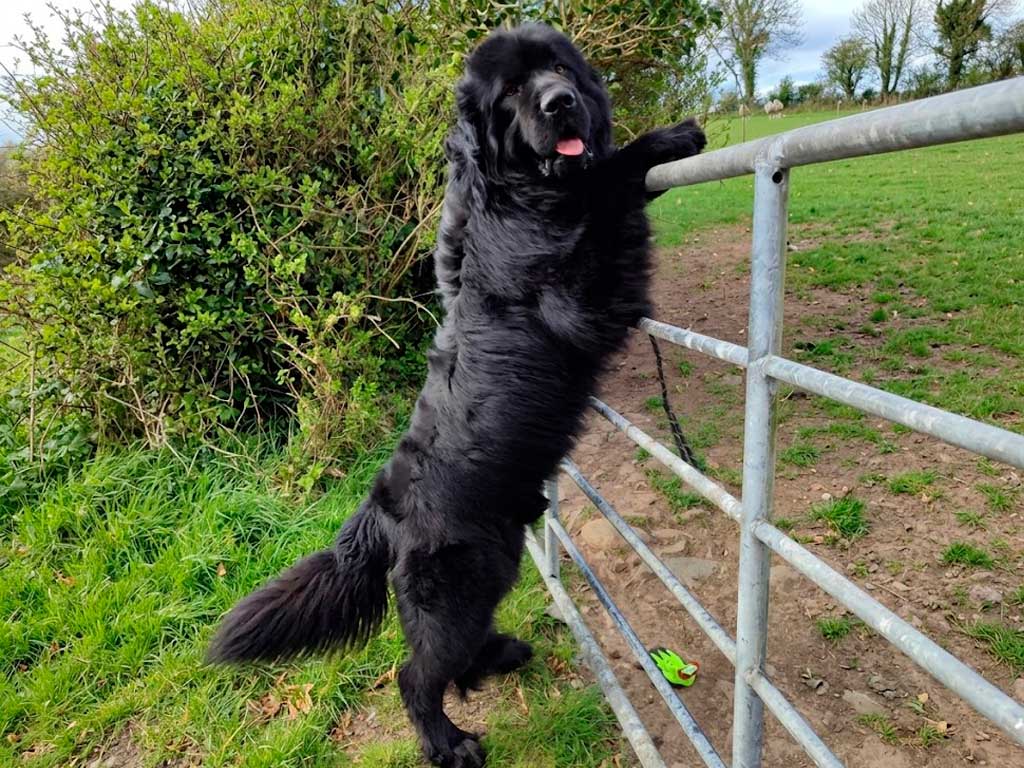
This is a genuinely giant breed. Adult males stand around 28 inches tall and weigh 140 to 150 pounds, while females run smaller at roughly 26 inches and 110 to 120 pounds.
As puppies, Newfoundlands look almost exactly like teddy bears. That phase doesn’t last, since this breed grows fast and doesn’t stop until it reaches its full, imposing size.
The coat comes in black, brown, or a black-and-white pattern known as Landseer. Underneath it is a dense, oily, waterproof double coat built for cold water work, not for looks.
Everything about the build points to function over form: a broad chest, webbed feet built for swimming, and the raw strength to haul loads through open water for hours at a time.
Temperament and Personality
Newfoundlands are docile, calm, and genuinely excellent family dogs. They get along well with both people and other animals, which is a big part of why they’ve earned a reputation as one of the most likeable breeds around.
That protective instinct runs deep, and it shows up in an oddly specific way: this breed has a strong drive to pull people out of water, whether they need it or not. Expect your dog to “rescue” you mid-swim more than once.
Despite the calm temperament, this is a genuinely energetic, social dog underneath the size. It wants to be involved in whatever the family is doing, not off in a corner somewhere.
Care Guide
Diet and Nutrition
Giant breeds come with giant appetites, and they need a different mineral and vitamin balance than smaller dogs to support their joints and cartilage properly. This breed is also prone to bloat, so smaller, more frequent meals tend to lower that risk compared to one large bowl a day.
Exercise Requirements
Supervise exercise carefully during puppyhood, since too much strain on growing bones and joints can cause lasting damage. Water is where this breed truly comes alive: swimming is a favorite activity, and for good reason given its working history.
A healthy adult needs at least an hour of activity daily, and will happily take more if you can offer it.
Grooming Needs
That dense double coat needs serious daily commitment. Brush every day, paying particular attention to the longer fur on the legs, where mats form fastest.
Between the coat and the breed’s famously heavy drooling, this isn’t a low-maintenance dog to keep around a spotless home. Budget real time for the upkeep.
Training and Education
Give it time. This breed responds best to patient, consistent training, and its eagerness to please makes the process smoother than with more independent-minded breeds.
Purina lists this as a breed best suited to experienced owners, mostly due to sheer size rather than a difficult temperament. A dog this large needs solid manners early, before its strength becomes harder to manage.
Health and Longevity
Most Newfoundlands live 8 to 10 years, which is typical for a breed this size. Like many large dogs, they’re prone to hip and elbow dysplasia, a joint condition that can cause pain and mobility problems.
Certain bladder disorders and heart conditions also show up more often in this breed than average. I’m a trainer, not a vet, so treat this as general awareness rather than a diagnosis, and bring any real concerns to your veterinarian.
Is the Newfoundland Right for You?
This breed fits families with space, patience for serious grooming, and genuine love for a dog that wants to be part of everything. It’s not the right choice for anyone hoping for a low-shedding, low-drool companion, or living somewhere too tight for a dog this size.
If you’re drawn to other calm giant breeds, our guides to the Leonberger and Bernese Mountain Dog cover two more gentle giants worth comparing. Not sure this is the right breed at all? Our Dog Breed Quiz can help you find a better match based on your home and lifestyle.
Frequently Asked Questions
Are Newfoundlands good with kids?
Yes, genuinely so. The breed’s calm, protective temperament is a big part of why it has such a strong family-dog reputation, though supervision still matters given the sheer size difference.
Do Newfoundlands drool a lot?
Yes, heavily. This is one of the more intense droolers among large breeds, and it’s worth planning for before bringing one home.
How much grooming does a Newfoundland need?
Daily brushing is the baseline, given the dense double coat. Skipping days leads to mats fast, especially on the legs.
Are Newfoundlands good swimmers?
Excellent ones. Their history includes helping fishermen and hauling loads through water, and most Newfoundlands genuinely love to swim.
Is the Newfoundland a good first dog?
Not usually. Purina recommends this breed for owners with some prior experience, mainly because of its size and grooming demands rather than a difficult temperament.
How big does a Newfoundland get?
Males typically reach around 140 to 150 pounds and 28 inches tall, while females run somewhat smaller. Either way, this breed firmly falls into the giant size class.