Smells to Stop Cats Spraying: 10 Safe Natural Scents That Actually Work
If you are searching for smells to stop cats spraying, you are probably staring at a stained door frame or a ruined couch cushion right now. It is frustrating, and it is also completely fixable.
We have tested and researched these scent-based solutions extensively, and we know exactly which ones work and which ones carry hidden risks that most articles never mention.
Below, you will find 10 scents cats genuinely dislike, plus the one step almost everyone skips that makes these smells actually work.
Quick Facts: Smells to Stop Cats Spraying
- Safest scents: Citrus, vinegar, rosemary, and vanilla
- Use with caution: Eucalyptus, lavender, peppermint, coffee, garlic, and onion, all of which carry real toxicity risk if misused
- First step always: Clean with an enzymatic cleaner before applying any deterrent scent
- Timeline: Most owners see improvement within 1–2 weeks of consistent use
- Never skip: A vet check if spraying starts suddenly, since it can signal a UTI or bladder issue
Why Do Cats Spray in the First Place?
Before you reach for any scent, it helps to understand what is driving the behavior. Spraying is not the same as regular peeing outside the litter box.
When a cat sprays, they back up to a vertical surface, quiver their tail, and release a small amount of urine as a scent message for other cats. It is communication, not an accident.
Cats spray for a few common reasons:
- Territorial marking, especially when they sense an unfamiliar cat outside a window or door
- Stress and anxiety, often triggered by a new pet, a move, or a change in routine, tying into the same emotional sensitivity we cover in our guide on how cats read and respond to their environment
- Unneutered hormones, since intact male and female cats spray far more often
- Underlying medical issues, including urinary tract infections and bladder problems
If your cat is unneutered, scheduling that procedure with your vet will do more to stop spraying than any scent on this list. Similarly, if the behavior started suddenly, a quick vet visit rules out pain or illness as the real cause.
Start Here: Clean the Area First
Scents only work if your cat cannot still smell their original mark underneath them. Regular soap and water will not cut it, because it does not break down the uric acid crystals in cat urine.
You need an enzymatic cleaner instead. These products use bacteria-based enzymes that digest the odor-causing compounds rather than just masking them.
We have had great results with the Nature’s Miracle Advanced Platinum No More Spraying spray. It is formulated specifically to break down spray marks and includes a bittering agent that discourages cats from returning to the same spot, so it pairs perfectly with the natural scents below.
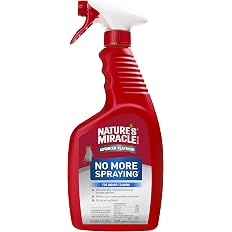
Nature’s Miracle Advanced Platinum No More Spraying Training Spray, 24 oz
Helps prevent cats from marking the same spot. Designed for indoor training, with essential oils to help repel cats. Safe for pets and home when used as directed.
Check Price on Amazon“This particular spray provided an immediate breakthrough. Applied just twice to the problem area, it successfully disrupted the marking cycle without interfering with normal litter box usage. The formula stands out for its high concentration requiring minimal product per application and long-lasting efficacy between uses. It features a light, minty aroma (similar to Vicks VapoRub) rather than harsh chemical odors, and cleans up effortlessly. For cat owners at their wit’s end with persistent marking, this is one of the most reliable solutions we’ve tested.”
— A Happy Pet Zone reader on the Nature’s Miracle spray
This article contains an affiliate link. If you purchase through it, we may earn a small commission at no extra cost to you. See our affiliate disclosure for details.
Once the old scent marker is fully gone, the deterrent smells below have a real chance to work.
10 Natural Smells to Stop Cats Spraying
These are the scents cats consistently avoid. We have also flagged the ones that carry safety risks, since not every “natural” option is actually safe to use around a cat.
1. Citrus
Citrus is the most reliable smell to stop cats spraying, and it is also the safest. Cats find the sharp scent of lemons, oranges, and grapefruit overwhelming, while it stays pleasant for us.
How to use it: Place fresh citrus peels in problem areas and swap them out every few days as the scent fades. You can also dilute a small amount of citrus essential oil in water for a light surface spray, but always test an inconspicuous spot first.
2. Vinegar
White vinegar does double duty. Its sharp, acidic smell repels cats, and it also helps neutralize any lingering urine odor that might tempt your cat back.
How to use it: Mix equal parts white vinegar and water in a spray bottle. Apply it to the target surface, then reapply every day or two, since the scent fades faster than citrus.
3. Eucalyptus (use with caution)
Eucalyptus has a strong, medicinal smell that cats want nothing to do with. However, undiluted eucalyptus oil can irritate a cat’s respiratory system and is toxic if licked off fur or ingested.
How to use it safely: Skip the essential oil in water mixtures entirely. Instead, place a few dried eucalyptus leaves in a small sachet and keep it in the target area, well out of your cat’s reach. Never use eucalyptus oil in a diffuser in a room your cat spends time in.
4. Lavender (use with caution)
Lavender smells calming to us, but cats find it overpowering. Unfortunately, lavender essential oil is also toxic to cats if ingested or absorbed through the skin.
How to use it safely: Fill a small cloth sachet with dried lavender buds and place it near the problem spot. Avoid lavender sprays, diffusers, or infused cleaning water, since these increase the risk of exposure.
5. Rosemary
Rosemary’s herbaceous, piney aroma is another scent cats tend to avoid, and it is a low-risk option compared to the essential oils above.
How to use it: Grow a rosemary plant near an outdoor problem spot, or fill small cloth bags with dried rosemary and place them indoors where your cat has been marking.
6. Peppermint (use with extreme caution)
Peppermint plants smell fresh and cool to us, and cats generally steer clear of them. That said, peppermint essential oil is highly toxic to cats and should never be used in any form around them.
How to use it safely: A small potted peppermint plant, kept where your cat cannot chew on it, is the only method we recommend. Skip peppermint oils, sprays, and diffusers completely.
7. Vanilla
Vanilla is one of the gentler options on this list and is generally considered safe for use around pets when kept out of reach.
How to use it: Place a few drops of vanilla extract on a cotton ball and tuck it near the marked area, or scatter pieces of a used vanilla pod. Replace it every few days as the scent weakens.
8. Coffee Grounds (use with caution)
The bitter smell of coffee grounds turns most cats away, and the coarse texture is unpleasant for them to walk across. However, caffeine is toxic to cats in even small amounts if ingested.
How to use it safely: Only use this method outdoors, and keep grounds in a spot your cat cannot dig through or lick clean. Indoors, choose one of the safer scents above instead.
9. Black Pepper
Ground black pepper is a simple, targeted deterrent, especially for cats who like to dig in potted plants.
How to use it: Sprinkle a light layer of black pepper on the soil surface of houseplants. If your cat gets close, a mild sneeze creates a harmless negative association with the spot.
10. Garlic and Onion (use with caution, outdoors only)
The compound allicin in garlic and onion is genuinely offensive to a cat’s nose, but both are toxic to cats if eaten and should never be used where your cat could access and chew them.
How to use it safely: Reserve this method for outdoor garden beds only, placing whole cloves or pieces around the base of plants your cat digs in. Never use garlic or onion powder indoors or anywhere your cat sleeps or eats.
How to Use These Scents Safely
A few ground rules apply no matter which scent you choose. Following them protects your cat while you work on stopping the spraying.
- Never apply any essential oil directly to your cat’s fur, paws, or skin
- Avoid oil diffusers in rooms where your cat spends significant time, since even ambient exposure can affect them
- Keep any scented sachets, peels, or grounds out of chewing and licking range
- If your cat shows drooling, vomiting, or unusual lethargy after any scent exposure, contact your vet immediately
This article is intended for general guidance. It is not a substitute for advice from your veterinarian, especially if the spraying started suddenly or your cat shows other signs of illness.
When Scents Aren’t Enough
Scents work best as one part of a bigger plan, not a standalone fix. If spraying continues, look at the bigger picture too.
Make sure every cat in the house has their own litter box, plus one extra. Reduce your cat’s view of outdoor cats by closing blinds near frequently sprayed windows. Consider a pheromone diffuser to help lower overall stress in the home.
If none of this resolves the behavior within a few weeks, a veterinary behaviorist can help identify triggers you might be missing.
Start with the enzymatic cleaner and citrus peels this week. They are the easiest changes to make and they address both the smell your cat is chasing and the smell that keeps them away. For more scent-based tricks, check out our guide on 7 surprising smells cats absolutely hate.