Smooth-Haired Dachshund: The Easy-Care Coat
Have you ever met a small dog that seems convinced it can handle just about anything? The Smooth-Haired Dachshund has that kind of confidence. With its glossy coat, long body, short legs, and alert expression, this German hunting breed brings plenty of personality into a surprisingly compact package.
Living with one means getting to know more than its distinctive shape. Smooth-Haired Dachshunds are curious, devoted to their families, and often determined to follow an interesting scent wherever it leads. They also need thoughtful training and special attention to their backs.
If you’re considering a Smooth-Haired Dachshund puppy or wondering whether this breed suits your home, here’s what to know about its temperament, grooming, exercise, health, and nutrition.
Smooth-Haired Dachshund at a Glance
- Origin: Germany
- Breed group: Hound
- Coat: Short, smooth, close-fitting, and glossy
- Sizes: Standard and miniature, depending on the kennel club’s classification
- Typical miniature weight: Around 10 pounds (4.5 kg)
- Personality: Curious, courageous, affectionate, and independent
- Exercise: Daily walks, play, and opportunities to explore safely
- Grooming: Relatively low maintenance, with regular brushing
- Common health concern: Intervertebral disc disease (IVDD)
- Best suited to: Owners who can offer companionship, consistent training, and sensible back care
What Is a Smooth-Haired Dachshund?
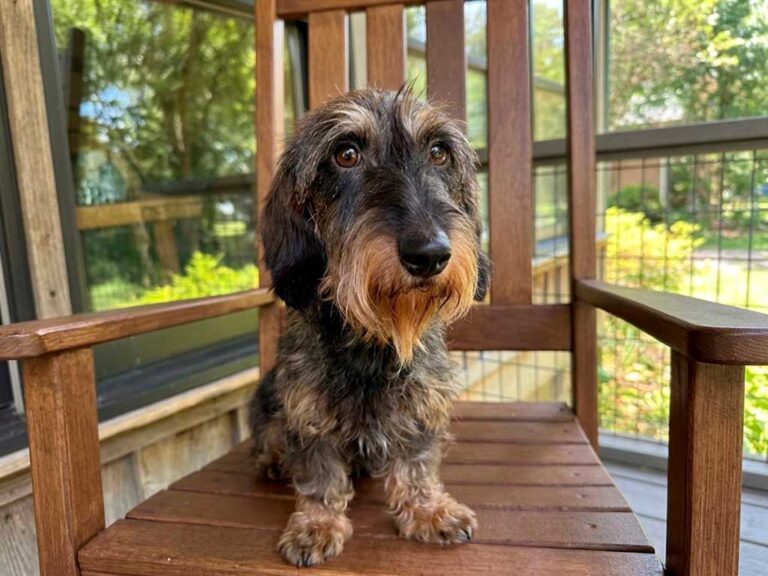
The Smooth-Haired Dachshund is the short-coated variety of the Dachshund breed. Its coat lies close to the body, giving the dog a neat outline and making routine grooming fairly simple.
Dachshunds originated in Germany. Their long bodies and short legs helped them pursue animals underground, including badgers and rabbits. Their name is commonly translated as “badger dog,” reflecting this working history.
The breed’s hunting background still influences its behavior today. A Smooth-Haired Dachshund may enjoy curling up beside you, then suddenly become fascinated by a scent beneath a hedge. That curiosity is part of its character, although it can make recall and outdoor supervision especially important.
The Canadian Kennel Club recognizes miniature Smooth-Haired Dachshunds as a smaller variety developed to pursue rabbits and other small quarry. Breed standards and size classifications differ between countries, so check the standard used by your local kennel club when comparing dogs.
Size, Appearance, and Coat Colors
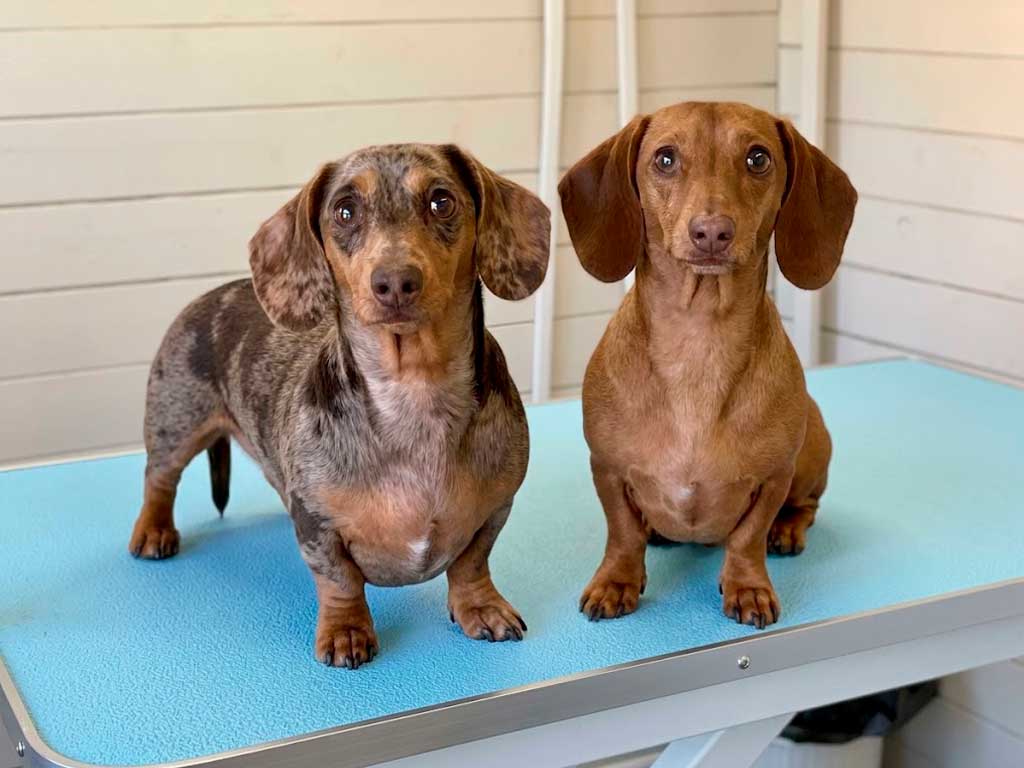
A Smooth-Haired Dachshund has a long, muscular body, short legs, a deep chest, and a tapered tail. Its coat is short, thick, smooth, and shiny. The ears usually lie close to the head, and the expression is alert and curious.
Although the breed looks low to the ground, it should still have a strong, balanced appearance. A Dachshund should not look weak or excessively heavy.
Standard vs. Miniature Smooth-Haired Dachshunds
The main distinction is size. Standard Dachshunds are larger, while miniature Dachshunds were developed to work with smaller quarry.
The Canadian Kennel Club lists an ideal weight of approximately 10 pounds (4.5 kg) for miniature Dachshunds. In the UK, the Royal Kennel Club prefers miniature Dachshunds to weigh under 5 kg. Some breed standards classify size using chest circumference rather than weight, so these figures should not be treated as universal rules.
Ask a breeder which size classification applies to the puppy’s parents and registration. A healthy body condition is more important than reaching a particular number on the scale.
Which colors do Smooth-Haired Dachshunds come in?
Smooth-Haired Dachshunds appear in several recognized colors and patterns. Depending on the applicable breed standard, these may include:
- Red: A solid red coat, ranging from lighter to deeper shades.
- Black and tan: A black coat with tan markings on areas such as the muzzle, chest, legs, and eyebrows.
- Chocolate and tan: Brown coloring with lighter tan markings.
- Dapple: Irregular lighter patches over a darker base color.
- Brindle: Darker stripes over a lighter background in accepted varieties.
- Cream or shaded red: Lighter or darker variations recognized under some standards.
Not every color is accepted by every kennel club. Some colors may also be associated with health concerns, so avoid choosing a puppy based on appearance alone.
Dapple breeding deserves particular attention. The Royal Kennel Club warns against mating two dapple Dachshunds because puppies from these pairings have an increased risk of hearing and vision problems. Ask the breeder about the parents’ colors and relevant health testing.
Temperament: Affectionate, Alert, and Full of Opinions
Smooth-Haired Dachshunds are often lively, devoted companions. Many enjoy being near their people and want to know what is happening around the home. They can be playful and affectionate, but they also have an independent streak that reflects their working history.
Their noses are a big part of everyday life. A walk may take longer because your dog wants to investigate every interesting patch of grass. This is normal for a scent-driven breed, and safe sniffing opportunities can make walks more rewarding.
Some Dachshunds bark when they hear unfamiliar sounds or notice activity outside. Early training can help you manage alert barking before it becomes disruptive. Give your dog something useful to do, reward calm behavior, and avoid shouting, which may increase excitement.
Are Smooth-Haired Dachshunds good family dogs?
They can be wonderful family companions when children learn how to handle them gently. Their small size can make them vulnerable to accidental injuries, especially if a child picks one up awkwardly or allows it to jump from a height.
Teach children to:
- Let the dog rest without being disturbed.
- Avoid pulling its ears, tail, or legs.
- Sit on the floor for calm interactions when appropriate.
- Ask an adult before lifting or moving the dog.
- Give the dog space when it is eating or chewing.
Adults should supervise interactions between dogs and young children. Even a friendly dog may snap if frightened or hurt.
Do Smooth-Haired Dachshunds get along with other pets?
Some live happily with other dogs and cats, especially when introduced gradually. Individual temperament and early socialization make a difference.
Their prey drive can be a challenge around rabbits, guinea pigs, and other small animals. A Dachshund may view a small pet as something to chase, even if it is gentle with people. Use secure separation and never rely on training alone to make unsupervised contact safe.
Exercise Needs: More Than a Short Walk
The Smooth-Haired Dachshund may have short legs, but it still needs regular activity. Purina recommends at least 30 minutes of daily exercise, while the Royal Kennel Club lists up to an hour per day for the breed. The right amount depends on age, fitness, health, and individual energy levels.
A balanced routine might include:
- A daily walk with time to sniff.
- Short play sessions on safe, level ground.
- Indoor scent games or treat searches.
- Brief reward-based training sessions.
- Supervised exploration in a secure garden or enclosed area.
Puppies need age-appropriate activity, and older dogs may need a gentler routine. Ask your veterinarian how to adjust exercise if your dog has a back problem, arthritis, or another medical condition.
Protecting the back during exercise
Dachshunds have a long spine supported by relatively short legs. Repeated high jumps, rough play, and poorly managed stairs can put unnecessary strain on their backs.
Use pet steps or a suitable ramp to help your dog access furniture when appropriate. Prevent repeated jumping on and off beds or sofas, and supervise play with larger dogs.
You don’t need to keep a healthy Dachshund inactive. Regular, controlled exercise helps maintain muscle tone and body condition. The aim is to encourage movement while reducing avoidable risks.
Training a Smooth-Haired Dachshund
Dachshunds are intelligent, but their independent nature can make training feel different from working with a dog that naturally checks in with its handler. They may understand a cue perfectly and still decide that a scent deserves more attention.
Keep sessions short, reward the behavior you want, and practise in places with gradually increasing distractions. Harsh corrections can undermine trust and may make a worried or excited dog harder to manage.
Focus first on these skills:
- Recall: Start indoors and reward your dog for coming to you. Practise in a secure outdoor space before increasing distractions. Keep your dog on a lead in open areas until its recall is reliable.
- Loose-leash walking: Reward your dog for walking beside you without pulling. Let it sniff during suitable breaks so walks do not become a constant struggle.
- Settling: Teach your dog to relax on a mat or bed. Reward calm behavior when visitors arrive or household activity increases.
- Settling: Teach your dog to relax on a mat or bed. Reward calm behavior when visitors arrive or household activity increases.
- Leave it: Practise with low-value objects before using the cue around food, rubbish, or other tempting items.
- Alone-time training: Build up short periods of separation gradually. Provide a safe resting area and suitable enrichment, and avoid suddenly leaving a puppy alone for long stretches.
Digging may also appear because Dachshunds were bred to pursue animals underground. Provide safe sniffing games and consider a designated digging area if your dog enjoys moving soil. Check fences for gaps because a determined Dachshund may try to investigate what lies on the other side.
Grooming a Smooth-Haired Dachshund
One advantage of the Smooth-Haired Dachshund is its easy-care coat. It doesn’t need the regular trimming or extensive brushing associated with some longer-coated breeds.
The Canadian Kennel Club describes the coat as short, thick, smooth, and shining. A soft brush or grooming glove used once or twice a week will usually help remove loose hair and keep the coat looking neat.
A practical routine includes:
- Brushing: Use a soft brush or grooming glove to collect loose hair.
- Bathing: Bathe when necessary with a dog-safe shampoo, then dry your dog thoroughly.
- Ear checks: Look for redness, discharge, unpleasant odor, or persistent scratching.
- Nail care: Trim nails as needed so they do not become excessively long.
- Dental care: Brush with dog-safe toothpaste and arrange routine veterinary dental checks.
- Paw and skin checks: After walks, look for cuts, irritation, or debris between the toes.
Smooth-Haired Dachshunds do shed, even though their coats are short. Regular brushing can help manage loose hair around the home.
Because the dog’s belly and legs sit close to the ground, check for scratches after walks through rough vegetation. Take care when lifting your dog into a bath, and support its chest and hindquarters to keep the back stable.
Health Problems to Know About
A Smooth-Haired Dachshund can live for many years with suitable care. The Royal Kennel Club lists a lifespan of over 12 years for the breed, although individual longevity varies with genetics, health, and lifestyle.
The breed’s long-backed shape makes spinal health especially important. Responsible breeding, sensible exercise, weight management, and prompt veterinary care all play a role.
Intervertebral disc disease (IVDD)
IVDD affects the cushioning discs between the bones of the spine. A disc may bulge or rupture and place pressure on the spinal cord. Signs can range from pain to weakness and serious movement problems.
Watch for:
- Reluctance to jump, climb, or move.
- A hunched back or unusual posture.
- Crying out when picked up.
- Shaking or signs of pain.
- Weakness, wobbling, or difficulty walking.
- Dragging a limb or suddenly being unable to stand.
Contact your veterinarian promptly if you suspect back pain. Sudden weakness, paralysis, or an inability to walk requires emergency veterinary attention. Keep your dog as still as possible while arranging care, and do not try to manipulate its spine.
Weight management
Extra weight places more strain on a Dachshund’s back and joints. Measure meals, account for treats, and check body condition regularly rather than relying on weight alone.
You should be able to feel the ribs without pressing hard, while the waist should remain visible from above. Ask your veterinarian for guidance if your dog is gaining weight or needs to lose it.
Other health considerations
Some Dachshunds may develop eye conditions, dental disease, or other inherited and age-related problems. The specific risks vary by individual and family line.
Ask breeders about the health history of both parents and which screening tests are recommended for their lines. The Royal Kennel Club highlights spinal screening for IVDD and encourages attention to genetic diversity. Keep records of your dog’s veterinary checks and discuss breed-related screening with your veterinarian.
This information is general guidance and does not replace veterinary advice. A veterinarian who knows your dog can recommend suitable preventive care and investigate any changes in behavior, appetite, or movement.
Feeding a Smooth-Haired Dachshund
A balanced diet helps support a Dachshund’s energy, muscle condition, and healthy weight. Choose a complete food appropriate for your dog’s life stage, and adjust portions to its activity level and body condition.
Puppies need food formulated for growth, while adults and seniors may have different energy requirements. Follow the feeding guidance for the specific food as a starting point, then ask your veterinarian whether the portions suit your dog.
A few habits make feeding easier:
- Measure meals rather than filling the bowl by eye.
- Keep fresh drinking water available.
- Count treats as part of the daily food allowance.
- Avoid frequent table scraps that add calories without balanced nutrition.
- Monitor body condition and adjust portions with veterinary guidance.
Many Dachshunds are enthusiastic eaters. Begging can be persuasive, but adding extras throughout the day can gradually lead to excess weight.
Should you consider JustFoodForDogs?
If you’re exploring fresh dog food, JustFoodForDogs is one option to compare. Review the available recipes, feeding instructions, storage needs, and cost to see whether they fit your dog’s routine.

FROM JUSTFOODFORDOGS
Just Fresh
Resealable meals. No preservatives. Open, serve, refrigerate.
Shop Just FreshHappy Pet Zone may earn a commission when you click through to JustFoodForDogs, at no extra cost to you.
Check that the specific recipe is complete and balanced for your dog’s life stage. Fresh food is not automatically the best choice for every dog, and dogs with medical conditions may need a tailored diet recommended by their veterinarian.
For more guidance on choosing food and managing portions, read our dog nutrition guide. If you change your dog’s diet, a gradual transition is usually helpful unless your veterinarian advises otherwise. Monitor appetite and stool during the switch.
Finding a Smooth-Haired Dachshund Puppy
If you’re searching for Smooth-Haired Dachshund puppies for sale, take time to assess the breeder rather than choosing based on color, photographs, or price alone.
A responsible breeder should be able to discuss the puppies’ health, temperament, early care, and the health history of their parents. Ask which health checks have been completed and request the relevant documentation.
Look for a puppy that has been raised in a clean environment and introduced gently to normal household experiences. The breeder should welcome reasonable questions and want to know whether the breed suits your home.
Be cautious if a seller pressures you to pay immediately, refuses to let you verify the puppy’s background, or cannot provide clear health and ownership records. A registration document on its own does not guarantee good breeding practices.
Before committing, ask:
- What health screening has been carried out on the parents?
- Have the puppies received appropriate veterinary care for their age?
- What food are they eating?
- How have they been socialized?
- What support is available after the puppy comes home?
Adoption is another possibility. Dachshund rescues and general shelters sometimes have Smooth-Haired Dachshunds or Dachshund mixes looking for homes. An adult dog may be a good choice if you’d prefer a clearer picture of its size and established temperament.
Whichever route you choose, plan for veterinary care, training, grooming supplies, and safe access around the home before bringing your dog home.
Is a Smooth-Haired Dachshund the Right Dog for You?
The Smooth-Haired Dachshund may be a good fit if you want a small companion with a lively personality and a relatively simple grooming routine. Many adapt well to apartments and smaller homes, provided they receive daily exercise and companionship.
Think carefully about the breed if you need a reliably quiet dog or expect immediate obedience without regular training. A Dachshund’s hunting instincts can make it persistent around scents and small animals, and barking may require patient management.
Back care is another everyday responsibility. You will need to manage jumping, support your dog when lifting it, and keep its weight within a healthy range. These habits are worth establishing early.
Before choosing a puppy, make sure the breed’s needs fit your schedule and home. Speak with a reputable breeder or rescue, ask about health, and prepare a routine that includes walks, training, and preventive veterinary care.