Miniature Wire-Haired Dachshund: A Long-Lived Breed
Miniature Wire-Haired Dachshund: Personality, Grooming, Health, and Care
Could a small dog with a rough coat, bushy eyebrows, and a bold personality fit your home? The Miniature Wire-Haired Dachshund has the size of a lap companion and the instincts of a determined little hunter. That combination makes this breed entertaining, affectionate, and occasionally quite a handful.
Before bringing one home, it helps to understand what life with this dog involves. Its wiry coat needs specific care, its hunting instincts influence training, and its long back deserves protection throughout its life.
Miniature Wire-Haired Dachshund at a Glance
- Breed type: Miniature Dachshund, wire-haired variety
- Origin: Germany
- Typical weight: Around 10 pounds (4.5 kg), although individual dogs vary
- Coat: Short, harsh, dense, and wiry, with a beard and bushy eyebrows
- Personality: Lively, curious, confident, affectionate, and independent
- Exercise: Daily walks, sniffing opportunities, and play
- Grooming: Regular brushing and periodic professional coat maintenance
- Main health consideration: Back and spinal health
- Best suited to: Owners who enjoy an involved companion and can provide consistent training
What Makes the Miniature Wire-Haired Dachshund Different?
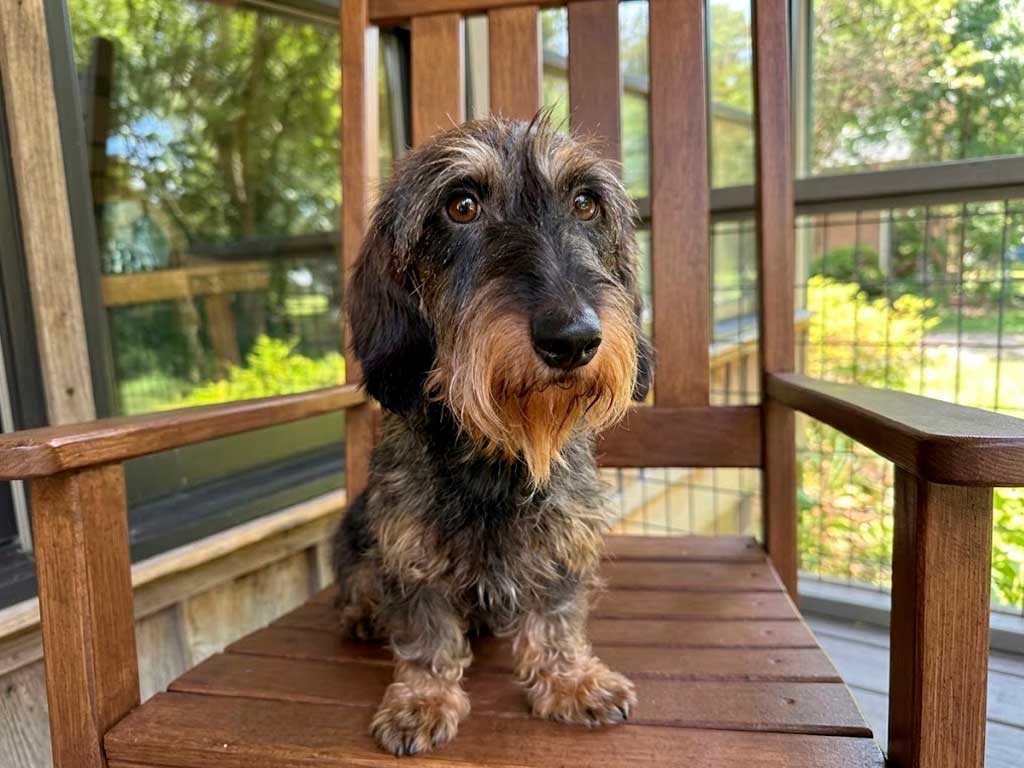
The Miniature Wire-Haired Dachshund combines the familiar long body and short legs of the Dachshund with a rough coat and distinctive facial furnishings. Its beard and eyebrows give it a slightly scruffy expression, while its alert manner hints at the working dog behind the appearance.
Dachshunds originated in Germany, where they were developed to track and pursue animals such as badgers and rabbits. The miniature variety was useful for hunting smaller quarry. The wire-haired coat became a defining feature of one of the breed’s three main coat types, alongside smooth-haired and long-haired Dachshunds.
That history still matters in a modern home. A Miniature Wire-Haired Dachshund may enjoy curling up beside you, but it can also be quick to investigate an interesting smell, dig in the garden, or bark at something moving outside.
The Canadian Kennel Club describes the miniature wire-haired variety as outgoing and lively, with a terrier-like appearance. Those qualities help explain why these dogs can be such engaging companions.
Size, Appearance, and Coat Colors
A Miniature Wire-Haired Dachshund is small, but it should still look sturdy and well-muscled. Its body is elongated, its legs are short, and its chest and front legs reflect the strength needed for its original work.
The Canadian Kennel Club gives an ideal weight of approximately 10 pounds (4.5 kg). The Royal Kennel Club’s UK guidance prefers miniature Dachshunds to weigh under 5 kg. Actual adult size varies, so weight alone should not determine whether a dog is healthy.
The coat is one of the easiest ways to recognize this variety. It should feel harsh and dense, with shorter, softer hairs beneath or between the coarser hairs. The beard and bushy eyebrows are characteristic, while the hair on the ears is generally smoother and shorter.
Which colors are common?
Miniature Wire-Haired Dachshunds may have several accepted colors and patterns. Common examples include:
- Red: A warm red coat, sometimes with darker hairs mixed in.
- Black and tan: A dark coat with tan markings on areas such as the muzzle, chest, legs, and above the eyes.
- Chocolate and tan: A brown coat with tan markings.
- Wild boar: A mixed-color coat with individual hairs showing different shades.
- Dapple: Lighter patches appear against a darker base color.
Color should be a secondary consideration when choosing a puppy. Health, temperament, responsible breeding, and the dog’s suitability for your household matter much more.
Dapple breeding deserves particular care. The Royal Kennel Club warns against mating two dapple Dachshunds because the resulting puppies can face a higher risk of hearing and vision problems. Ask a breeder about the parents’ colors, health testing, and breeding decisions rather than relying on a coat photograph.
Personality: Small Dog, Serious Hunting Instincts
The Miniature Wire-Haired Dachshund is often lively, curious, and confident. Many enjoy spending time with their families and following people from room to room. They can be playful at home, yet alert when they hear unfamiliar sounds.
Independence is part of the package. These dogs were developed to make decisions while working away from their handlers, so they may not respond to every cue immediately. A scent on the pavement can be more interesting than a perfectly timed request to come back.
Their terrier-like spark can also show up in the garden. Digging, investigating gaps, and chasing small animals may come naturally. Providing appropriate outlets for these behaviors is usually more productive than expecting the instincts to disappear.
Are Miniature Wire-Haired Dachshunds good family dogs?
They can be good companions for families that understand how to handle a small dog respectfully. Early socialization and supervision are especially important when children are young.
Teach children to let the dog rest undisturbed, avoid pulling its ears or beard, and support its body when picking it up. Because of the Dachshund’s long back, rough handling and awkward lifting can cause injury.
Some individuals are sociable with other dogs, while others may be reserved around unfamiliar animals. Introductions should be calm and gradual. Small pets such as rabbits or guinea pigs also require extra caution because a Dachshund’s prey drive can make close contact unsafe.
Can this breed live in an apartment?
Yes, a Miniature Wire-Haired Dachshund can adapt to apartment living if its daily needs are met. It still needs regular outdoor exercise, toilet breaks, mental stimulation, and opportunities to sniff and explore.
Barking may be a challenge in shared buildings. These dogs often notice visitors, hallway sounds, and activity outside the window. Reward quiet behavior and teach a reliable response to everyday noises before barking becomes a household routine.
Exercise and Training: Keep Both Mind and Body Busy
Miniature Wire-Haired Dachshunds need daily movement despite their short legs. Purina’s breed guidance recommends at least 30 minutes of exercise a day, with the amount adjusted to the individual dog’s age, fitness, and health. Some dogs will enjoy more activity, provided it is suitable for their build.
A useful routine can include:
- A steady walk with time to sniff.
- Short play sessions on safe, level ground.
- Scent games that let your dog search for hidden treats.
- Brief reward-based training sessions.
- Supervised exploration in a secure area.
Avoid pushing a puppy through strenuous exercise or allowing repeated jumping from furniture. Your veterinarian can help you decide how activity should change as your dog grows older or develops health concerns.
How to train a Miniature Wire-Haired Dachshund
Use rewards, patience, and consistency. Dachshunds are intelligent, but their independent streak can make repetitive or harsh training frustrating for everyone.
Start with a few useful skills:
- Responding to their name: Reward your dog whenever it turns toward you.
- Coming when called: Practise indoors first, then in secure outdoor spaces with gradually increasing distractions.
- Walking on a harness and lead: Reward calm walking and allow safe sniffing breaks.
- Settling quietly: Praise relaxed behavior on a bed or mat.
- Leaving an item alone: Teach a positive “leave it” cue to help manage food, rubbish, and tempting objects.
A secure recall is particularly important because a Dachshund may follow a scent before considering your request. Keep your dog on a lead outside enclosed areas until its recall is reliable, and remember that even a well-trained dog can be distracted by prey.
Digging also needs a plan. Check fencing for gaps and consider giving your dog a designated digging area where the behavior is safe. Scent games and food puzzles can help occupy a busy mind when outdoor activity is limited.
Grooming the Wire-Haired Coat
The rough coat is practical and distinctive, but it does need more attention than its short length might suggest. Regular grooming removes loose hair, helps you spot skin problems, and keeps the beard and facial furnishings manageable.
Purina recommends grooming this variety regularly, while the Canadian Kennel Club explains that hand-stripping is used to maintain the coat’s characteristic texture. Depending on the dog’s coat and whether it is kept as a pet or show dog, a professional groomer may recommend a combination of brushing, stripping, rolling, and selective trimming.
A simple grooming routine
- Brush several times a week. Use a suitable brush or comb to remove loose hair and check for tangles, especially around the beard, legs, and underside.
- Learn about hand-stripping. Hand-stripping removes dead outer coat hairs and helps preserve the harsh texture. Ask an experienced wire-coat groomer to demonstrate the technique before trying it yourself.
- Keep the beard clean. Food and moisture can collect around the muzzle. Wipe the area when needed and dry it gently.
- Check the ears. Look for redness, discharge, odor, or persistent scratching. Clean only as recommended by your veterinarian, and avoid inserting cotton swabs deep into the ear canal.
- Trim nails as needed. Nails that become too long can affect comfortable movement. If your dog resists nail care, ask a groomer or veterinary professional to help you build a calm routine.
- Brush the teeth. Regular toothbrushing with dog-safe toothpaste helps maintain oral health. Small dogs can develop dental problems, so routine veterinary checks matter.
Clipping the coat may change its texture, depending on the dog’s coat and how it is maintained. Discuss the options with a groomer familiar with wire-haired Dachshunds before choosing a routine.
Health Concerns and Protecting the Dachshund’s Back
The Dachshund’s long back and short legs are central to its appearance, but this body shape also creates important health considerations. Intervertebral disc disease (IVDD), a disorder involving the cushioning discs between the spinal bones, is one of the main concerns.
A disc can bulge or rupture and put pressure on the spinal cord. Signs can include back or neck pain, reluctance to move, a hunched posture, weakness, or difficulty walking. Severe cases can lead to paralysis.
Contact a veterinarian promptly if your dog shows signs of back pain or a sudden change in movement. Sudden weakness, dragging limbs, or inability to walk needs urgent veterinary attention. Do not attempt to treat suspected spinal problems at home.
Everyday habits that help protect the back
- Keep your dog at a healthy weight. Extra weight increases the load on its back and joints.
- Limit repeated jumping. Use pet steps or a ramp where appropriate, and teach your dog to wait for help instead of leaping from furniture.
- Support the body when lifting. Place one hand beneath the chest and the other under the hindquarters, keeping the back supported.
- Manage stairs. Repeated stair climbing may be unsuitable for some Dachshunds. Ask your veterinarian what is appropriate for your dog.
- Choose controlled exercise. Regular, moderate activity helps maintain fitness without encouraging risky leaps or rough play.
Other conditions reported in miniature wire-haired Dachshunds include progressive retinal atrophy, Lafora’s disease, and Cushing’s syndrome. These conditions do not affect every dog, and only a veterinarian can assess symptoms and recommend testing.
When speaking with a breeder, ask which health screenings are appropriate for the parents. Purina’s breed guidance lists DNA testing for progressive retinal atrophy and Lafora’s disease, as well as an IVDD screening scheme. Request documentation and discuss any concerns with your veterinarian.
Routine veterinary care, dental checks, parasite prevention, and age-appropriate vaccinations are also part of responsible ownership.
Feeding a Miniature Wire-Haired Dachshund
A small dog needs food that supplies complete nutrition in portions suited to its size and energy needs. The right amount depends on age, body weight, activity, body condition, and the calorie content of the food. Feeding charts are useful starting points, but they do not replace monitoring your dog’s weight and condition.
Choose a complete and balanced food appropriate for your dog’s life stage. Measure meals instead of estimating portions, and count treats as part of the day’s intake. Dachshunds can be very persuasive around food, but frequent extras make it easy for weight to creep up.
Puppies, adults, and seniors may need different feeding plans. If your dog has a medical condition, food intolerance, or recurring digestive problems, ask your veterinarian before making a major dietary change.
Is JustFoodForDogs worth considering?
If you are interested in fresh dog food, JustFoodForDogs is one option to explore. Compare its available recipes, feeding instructions, storage requirements, and costs with your dog’s needs before deciding whether it suits your household.

FROM JUSTFOODFORDOGS
Just Fresh
Resealable meals. No preservatives. Open, serve, refrigerate.
Shop Just FreshHappy Pet Zone may earn a commission when you click through to JustFoodForDogs, at no extra cost to you.
Check that the specific recipe is complete and balanced for your dog’s life stage. A fresh-food label alone does not establish that a diet is right for every dog, and some dogs need a more tailored nutritional plan.
For more help with portions and food choices, read our dog nutrition guide. If you are switching foods, make the transition gradually unless your veterinarian advises otherwise. Watch your dog’s appetite, stool, and body condition during the change.
Finding a Miniature Wire-Haired Dachshund Puppy
Searches for miniature wire-haired Dachshund puppies for sale can bring up breeders with very different standards. Take your time choosing a source, and do not let a particular coat color or a quick sale rush the decision.
A responsible breeder should be willing to discuss health, temperament, socialization, and the needs of the breed. Ask to see the puppy with its mother when possible, review available veterinary records, and request documentation of relevant health tests. The breeder should also ask you questions about your home and experience.
Be cautious if a seller refuses to answer basic questions, pressures you to pay immediately, or offers to send a puppy without a reasonable opportunity to verify its background. Photos and registration paperwork alone do not prove that a puppy has been responsibly bred.
Before committing, ask:
- What health screening has been carried out on the parents?
- Have the puppies received appropriate veterinary care for their age?
- How have they been introduced to everyday household sounds and handling?
- What food are they eating now?
- What support is available if questions arise after the puppy comes home?
Adoption is another option. Dachshund rescues and general animal shelters sometimes have miniature or wire-haired Dachshunds, including adult dogs whose personalities are easier to assess. Ask about their history, behavior around children or other pets, and any known back problems.
Is a Miniature Wire-Haired Dachshund Right for You?
This breed may suit you if you want a small companion with a curious mind and a lively personality. It can adapt to different homes, including apartments, provided it gets daily exercise, training, and enough company.
Think carefully if you need a dog that is naturally quiet, immediately obedient, or happy to spend long periods alone without preparation. The wire coat also requires regular attention, and professional grooming may add to the cost of ownership.
Back care deserves a place in your plans from the beginning. Ramps, safe handling, weight management, and thoughtful exercise are everyday considerations, not tasks to leave until a problem appears.
Before choosing a puppy, make a realistic plan for grooming, veterinary care, training, and daily walks. Then speak with a reputable breeder or rescue and look for a dog whose needs match your lifestyle.