Miniature Pinscher: The Complete Breed Guide
Thinking about a Miniature Pinscher? This guide covers everything from its ratting history to daily exercise and grooming needs, so you know exactly what living with this bold little dog looks like.
Happy Pet Zone has covered dozens of toy breeds, and few pack as much personality into such a small frame as the Miniature Pinscher.
You’ll also learn why this breed isn’t simply a mini Doberman, despite the common mix-up. Let’s start with where this feisty little dog actually came from.
History and Origin
The Miniature Pinscher descends from the smooth-haired German Pinscher, not from the Doberman as many people assume. Breeders originally developed this dog to hunt rats and vermin around farms and homes.
This breed’s history is relatively short compared to many working dogs, emerging roughly 100 years ago. That makes it one of the more recently established breeds in the Pinscher family.
Three Pinscher breeds exist today: the German Pinscher, the larger Doberman, and the Miniature Pinscher, the smallest of the three. Despite the size difference, the Doberman isn’t actually related to the other two.
The word “pinscher” translates to “terrier” in German, and that heritage shows clearly in this breed’s fearless, energetic personality.
Physical Characteristics
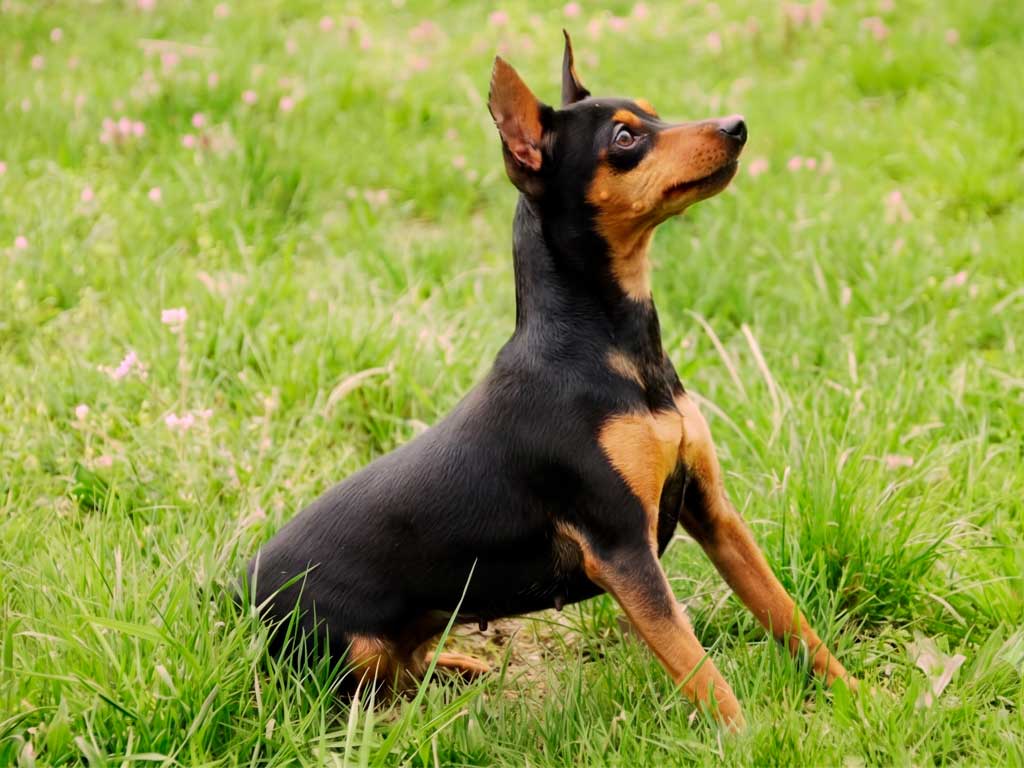
The Miniature Pinscher carries a toy-sized frame with a surprisingly sturdy build. Adults typically stand between 25 and 30 cm tall and weigh 4 to 6 kg.
This breed’s coat stays short, smooth, and glossy, requiring far less upkeep than longer-coated toy breeds. Colors include black, blue, and chocolate, often paired with well-defined tan markings, along with solid deep red shades.
Despite its compact size, the Miniature Pinscher moves with a confident, high-stepping gait that gives it an elegant, alert appearance. This breed’s small stomach means it needs frequent, small meals rather than large portions.
Health conditions to watch for include patellar luxation, Legg-Perthes disease, urinary stone formation, and mitral valve issues affecting the heart.
| Quick Facts | |
|---|---|
| Life Expectancy | 12–14 years |
| Weight | 4–6 kg |
| Height | 25–30 cm |
| Size | Small (Toy) |
| Coat | Short, smooth, glossy |
| Exercise Needs | About 30 minutes daily |
Temperament and Personality
Don’t expect a docile lapdog from this breed. The Miniature Pinscher carries genuine terrier spirit, bold, fearless, and endlessly curious about its surroundings.
This dog stays alert at all times and barks readily whenever something unusual catches its attention. That vigilance makes the Miniature Pinscher a surprisingly effective watchdog for its size.
Independence runs deep in this breed’s personality, which can make training feel like a negotiation rather than simple obedience. Patience pays off with consistent, engaging methods.
With children, supervision matters given this dog’s small size and assertive nature. Early socialization helps this breed adjust to other pets and unfamiliar situations more comfortably.
This breed doesn’t tolerate long stretches alone particularly well. A bored Miniature Pinscher tends to find its own entertainment, often through barking or mischief.
Care Guide
Diet and Nutrition
Feed your Miniature Pinscher a diet formulated specifically for small breeds. This dog’s fast metabolism burns through energy quickly despite its tiny stomach capacity.
Small, frequent meals work better than one or two large portions throughout the day. Kibble sized for smaller mouths also encourages better chewing and digestion.
Work with a veterinarian to fine-tune portions based on your dog’s age, weight, and activity level. Consistent feeding times help maintain steady energy throughout the day.
Exercise Requirements
This breed only needs about 30 minutes of daily exercise, though most Miniature Pinschers happily take more if offered. A couple of short walks usually covers the basics.
Cold weather calls for extra protection, since this breed’s short coat provides limited insulation. A dog sweater or coat helps during winter walks.
Mental stimulation matters just as much as physical activity for this alert, curious breed. Puzzle toys and short training sessions help satisfy its active mind.
Grooming Needs
Brush your Miniature Pinscher’s short coat every two weeks to keep it clean and reduce loose hair around the house. This breed’s grooming needs stay minimal compared to longer-coated dogs.
During shedding season, more frequent brushing helps remove dead hair faster. This breed isn’t hypoallergenic, so allergy sufferers should keep that in mind.
Routine nail trims, ear checks, and dental care round out a complete grooming routine for this low-maintenance coat.
Training and Education
The Miniature Pinscher responds best to positive reinforcement paired with plenty of patience. This breed’s independent streak means harsh corrections often backfire, building stubbornness instead of cooperation.
Start training and socialization early, since this dog’s terrier instincts and vocal tendencies benefit from consistent guidance from puppyhood onward. A reliable “quiet” cue should top the priority list.
Canine enrichment activities, like short training games or scent-based play, channel this breed’s sharp, curious mind productively. A bored Miniature Pinscher tends to develop excessive barking or destructive habits without enough mental engagement.
Health and Longevity
Miniature Pinschers typically live between 12 and 14 years, a solid lifespan for a toy breed. Like many small dogs, this breed can face patellar luxation, a condition where the kneecap slips out of place.
Other concerns include Legg-Perthes disease, which affects the hip joint, along with urinary stone formation and mitral valve disease affecting heart function.
This information is educational and doesn’t replace professional veterinary guidance. Always consult a licensed veterinarian for diagnosis, treatment, or specific health concerns about your dog.
Routine veterinary checkups help catch these conditions early. Combined with a balanced diet and appropriate exercise, preventive care supports a long, healthy life for this breed.
Is This the Right Dog for You?
Consider a Miniature Pinscher if you want an alert, confident companion and don’t mind frequent barking. This breed does best with owners who have some prior dog experience.
Apartment living works well for this breed, given its low exercise needs and compact size. However, its watchdog instincts might create friction with close neighbors.
Families with older children often do well with this breed, though supervision matters given the dog’s small size. Households with calmer pets tend to see smoother introductions with early socialization.
First-time owners might find this breed’s independent streak and vocal tendencies challenging without guidance from an experienced trainer.
Frequently Asked Questions (FAQ)
Is the Miniature Pinscher good for families?
Yes, especially families with older children who understand how to handle a small, assertive dog. Supervision remains important given this breed’s size.
Does the Miniature Pinscher need a lot of exercise?
No, about 30 minutes of daily activity covers this breed’s needs, though many dogs happily do more if given the chance.
Is the Miniature Pinscher easy to train?
It can be challenging due to its independent streak. Consistent, positive reinforcement training works best with this breed.
Is the Miniature Pinscher a Doberman in miniature?
No. Despite the common assumption, this breed isn’t related to the Doberman. It descends from the German Pinscher instead.
Is the Miniature Pinscher a good guard dog?
Yes. Its alertness and readiness to bark at anything unusual make it an effective watchdog despite its small size.
Start with consistent training and a “quiet” cue, since these two habits shape how manageable a Miniature Pinscher’s vocal, independent personality becomes. Get that foundation right, and this breed’s fearless charm makes for a genuinely entertaining companion.
For more toy and companion breed profiles, check out our Finnish Lapphund guide on Happy Pet Zone.