Tetra Algae Control & Water Clarity Treatments Guide
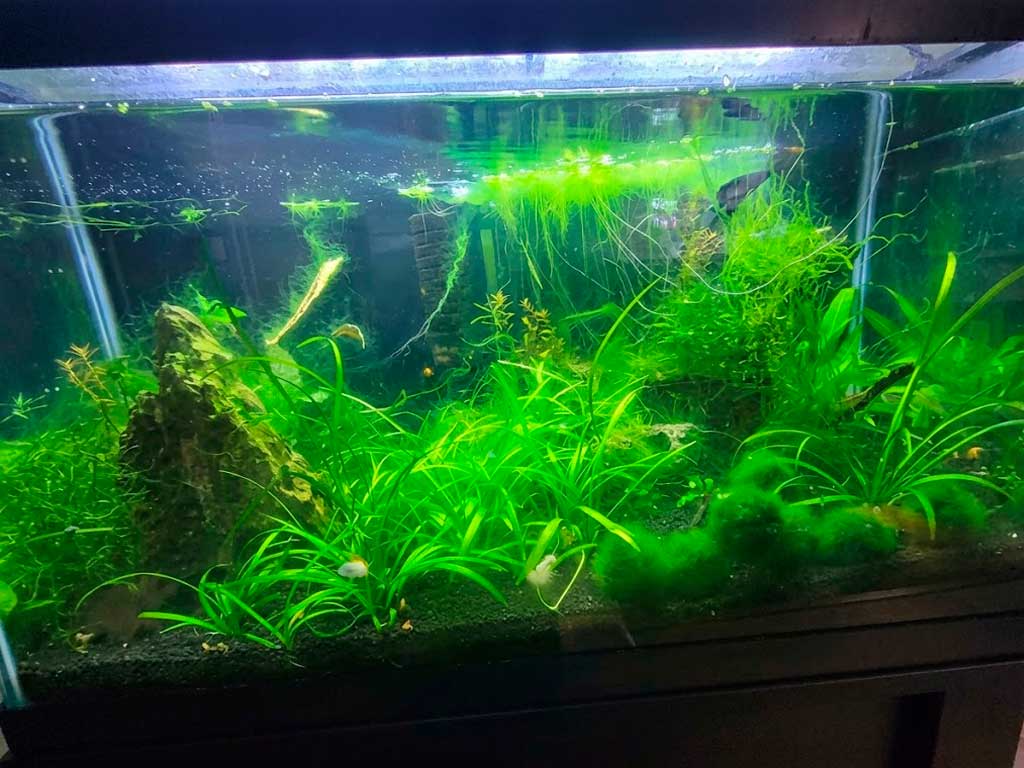
“Algae control” gets used as a catch-all term for three genuinely different problems: algae actually growing on glass and decor, cloudy water that has nothing to do with algae, and a disease outbreak like ich that people sometimes confuse with a water quality issue.
Treating the wrong problem with the wrong product wastes money at best and stresses fish at worst.
This guide separates those three jobs and covers where Tetra No More Algae, Water Clarifier, and Ick Guard each fit, plus the conditioners that support water stability in the background.
For algae specifically growing on surfaces rather than suspended in the water, our filamentous algae removal guide covers manual and root-cause approaches in more depth.
Fix the Root Cause First, Chemicals Second
Algae blooms and persistently cloudy water almost always trace back to the same handful of causes: excess nutrients from overfeeding or a heavy bioload, too many hours of light or direct sunlight hitting the tank, an undersized or dirty filter, and infrequent water changes letting waste accumulate.
Any algae or clarity product works better, and needs to be used less often, once these underlying causes are actually addressed rather than papered over.
Practical fixes that cost nothing: cut lighting to 6 to 8 hours a day, feed only what fish clear in two minutes, keep a consistent 20 to 30% weekly water change schedule, and make sure the filter is sized and cleaned properly. Do these before reaching for a bottle, and you’ll likely need the bottle less.
Tetra No More Algae: What It Actually Does, and the Real Caution
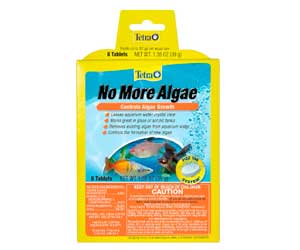
Tetra No More Algae is a chemical algaecide, and it works by disrupting algae cell function rather than by filtering anything out. Here’s the part worth being direct about: chemical algaecides in this category, not just Tetra’s, work because algae cells lack the protective cellulose wall that plant cells have, but the margin between killing algae and stressing everything else in the tank, fish gills, shrimp, live plants, is genuinely narrow.
Overdosing, dosing a tank that’s already stressed, or dosing around sensitive livestock like shrimp or scaleless fish is where things go wrong.
If you use it: follow the labeled dose exactly, never estimate upward, remove activated carbon from the filter during treatment so it doesn’t strip the product out, dose for the full recommended number of days rather than stopping early or extending it on your own, and keep a close eye on your fish for the first few hours after dosing.
If anything looks off, gasping, unusual lethargy, do an immediate partial water change. And treat it as a temporary knockdown, not a fix, algae that returns within a couple weeks means the underlying cause, light or nutrients, hasn’t actually been addressed.
FROM AMAZON.COM
Tetra No More Algae
Chemical algae knockdown; dose exactly as labeled and pair with root-cause fixes for lasting results.
Buy on Amazon.comHappy Pet Zone may earn a commission when you click through to Amazon.com, at no extra cost to you. As an Amazon Associate, we earn from qualifying purchases.
Tetra Water Clarifier: A Gentler, Different Job
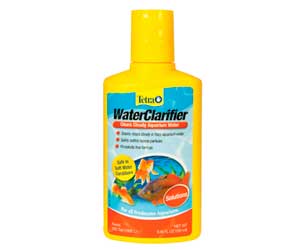
Water Clarifier isn’t an algaecide and shouldn’t be confused with one. It’s a flocculant, it causes the fine suspended particles making water look hazy or milky to clump together into larger particles your filter can actually catch.
That makes it useful after gravel vacuuming stirs up sediment, after a bacterial bloom in a new tank, or for fine dust that a filter alone isn’t pulling out. It doesn’t kill anything and carries none of the risk profile an algaecide does, but it also won’t touch algae growing on glass or decor, that’s a different problem with a different tool.
FROM AMAZON.COM
Tetra Water Clarifier
Clumps fine suspended particles so your filter can catch them, a gentler fix for hazy water.
Buy on Amazon.comHappy Pet Zone may earn a commission when you click through to Amazon.com, at no extra cost to you. As an Amazon Associate, we earn from qualifying purchases.
Tetra Ick Guard: A Disease Treatment, Not a Water Product
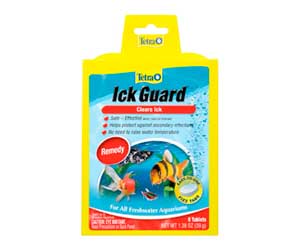
Ick Guard treats Ichthyophthirius, the parasite behind the white-spot disease most fishkeepers just call ich, and it doesn’t belong in the same mental category as algae or clarity products at all. It’s a medication, used when fish are actually showing the telltale white spots and typically dosed over several days per the label, often alongside raised temperature to speed the parasite’s life cycle.
This isn’t medical advice for your specific situation, and if you’re unsure whether what you’re seeing is ich or something else, it’s worth getting a second opinion from an aquatics specialist or vet before treating.
FROM AMAZON.COM
Tetra Ick Guard
Treats active ich (white-spot disease) outbreaks; follow the labeled course fully.
Buy on Amazon.comHappy Pet Zone may earn a commission when you click through to Amazon.com, at no extra cost to you. As an Amazon Associate, we earn from qualifying purchases.
The Conditioners That Prevent Problems Before They Start
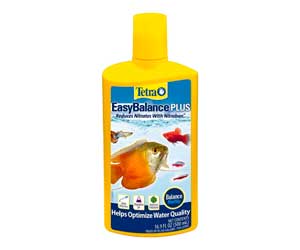
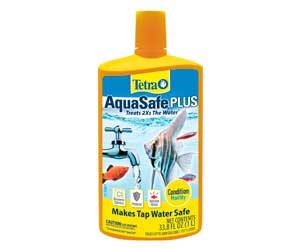
Stable water chemistry doesn’t just make fish more comfortable, it makes them more resistant to the stress-triggered outbreaks that lead to reaching for Ick Guard in the first place, and stable nutrients mean less to fuel an algae bloom. Tetra AquaSafe Plus and Tetra EasyBalance handle dechlorination and ongoing parameter stability respectively, covered in full in our Tetra water conditioners guide.
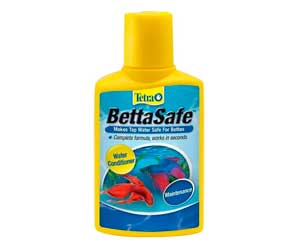
For betta owners specifically, Tetra BettaSafe is a conditioner sized and formulated for the smaller volumes a betta is usually kept in, with the same dechlorinating job as AquaSafe but a dosing scale that matches a bowl or small tank rather than a full aquarium.
FROM AMAZON.COM
Tetra EasyBalance Plus
Ongoing parameter stability that reduces the swings fish find stressful between water changes.
Buy on Amazon.comHappy Pet Zone may earn a commission when you click through to Amazon.com, at no extra cost to you. As an Amazon Associate, we earn from qualifying purchases.
FROM AMAZON.COM
Tetra AquaSafe Plus
Dechlorinates and supports the slime coat, the baseline every water change should start with.
Buy on Amazon.comHappy Pet Zone may earn a commission when you click through to Amazon.com, at no extra cost to you. As an Amazon Associate, we earn from qualifying purchases.
FROM AMAZON.COM
Tetra BettaSafe
Dechlorinating conditioner sized and dosed for a betta’s smaller bowl or tank volume.
Buy on Amazon.comHappy Pet Zone may earn a commission when you click through to Amazon.com, at no extra cost to you. As an Amazon Associate, we earn from qualifying purchases.
Three separate jobs, three separate products: algaecide for active growth, clarifier for cloudiness, medication for disease, and none of them substitute for the routine maintenance that keeps you from needing any of them very often. For the rest of the Tetra lineup, see the full Tetra products guide.