Bavarian Mountain Hound: The Complete Breed Guide
Thinking about a Bavarian Mountain Hound? Give me a minute before you go any further, because this one’s different from most breed guides on this site.
This is a specialist tracking dog first, and I’d be doing you a disservice if I sold it to you as anything else.
History and Origin
The Bavarian Mountain Hound was developed in the late 1800s by crossing the larger Hanover Hound with red mountain hounds, with a touch of Tyrolean hound worked in along the way. Breeders wanted something lighter and more agile than the Hanover — a dog built specifically to track wounded game through steep, craggy terrain.
A breed club formed in Munich in 1912, and the goal never changed since: preserve a working nose above everything else. Even today, breed societies require dogs to pass a tracking test before they’re approved for breeding, so only dogs that can actually do the job get to reproduce.
Physical Characteristics
This is a medium-sized, athletic hound, slightly longer than tall, weighing 44 to 55 pounds as an adult. Males stand roughly 18.5 to 20.5 inches at the shoulder, females a bit shorter.
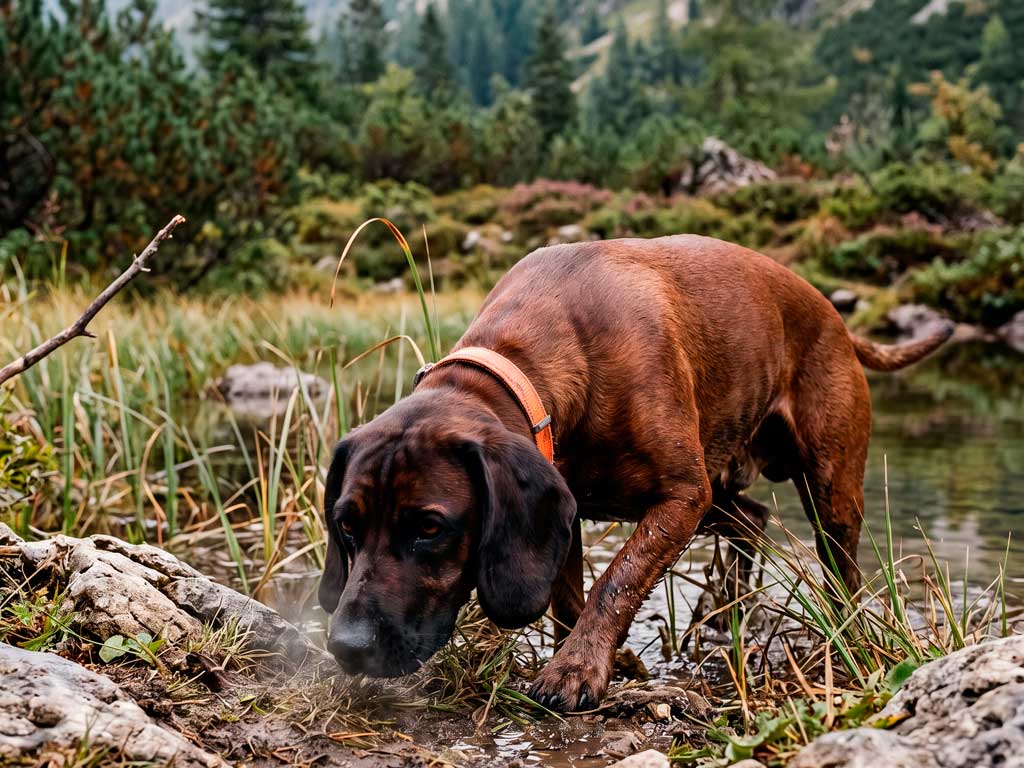
The coat is short, dense, and strikingly glossy — usually a deep reddish-fawn with a black mask, sometimes plain red or brown. People genuinely stop to ask about this dog wherever it goes; that deer-red coat looks almost polished.
Temperament and Personality
Here’s the thing — owners who work with this breed regularly call them “cat-dogs,” and once you understand the personality, that nickname makes complete sense. They’re independent, intensely loyal to their person, and reserved with strangers rather than instantly friendly.
They’re also remarkably smart, which cuts both ways. A bored or under-stimulated Bavarian Mountain Hound can get genuinely mischievous — some owners describe them as capable of doing things they clearly know they shouldn’t, purely out of spite when they’re unhappy. Give this dog a job, and that same intelligence becomes a joy to work with.
Care Guide
Diet and Nutrition
Large, active dogs need a nutrient balance built for their size and energy output, not a generic formula. This breed is also prone to bloat and stomach upset, so smaller, more frequent meals work better than one large daily feeding.
Exercise Requirements
Plan on a minimum of two hours of activity daily, and understand that exercise alone won’t cut it. This dog needs its nose engaged — tracking games, scent work, or genuine trailing practice matter more than a long walk around the block.
Without mental stimulation through scent work specifically, even a physically tired Bavarian Mountain Hound can struggle to settle. Owners who’ve raised working lines are blunt about this: a walk isn’t enough, and a bored dog of this breed is a genuinely difficult dog to live with.
Grooming Needs
This is the easy part. The short coat needs only a weekly brush and barely sheds at all, which is a rare bit of low-maintenance news for a breed this demanding in every other way.
Training and Education
Trust me on this one: recall training isn’t optional with this breed, it’s the whole ballgame. Once a Bavarian Mountain Hound picks up an interesting scent, it can tune out every command you’re shouting after it.
Serious breeders start tracking work as early as 12 weeks old, letting the puppy follow short scent trails without correction — you guide the setup, not the dog’s nose. Early socialization matters enormously too, given how reserved this breed naturally is with unfamiliar people.
Health and Longevity
Bavarian Mountain Hounds are a generally healthy breed with a lifespan of 12 to 15 years. Hip dysplasia shows up with some regularity, as it does in most medium-to-large breeds, making a pre-breeding hip evaluation an important screening step.
This article offers general, informed guidance rather than a diagnosis. Talk to a licensed veterinarian about hip screening and any health concerns specific to your dog.
Is This the Right Dog for You?
Here’s where I need to be straight with you. In Germany, you legally cannot own a Bavarian Mountain Hound unless you’re an active hunter with access to land — and breed societies elsewhere actively discourage city or apartment ownership for the same reason. This dog needs a genuine job, not just a big yard.
If you hunt, stalk deer, or do serious scent work and can give this breed real tracking practice, it’s an extraordinary partner — loyal almost to a fault, and gifted with one of the best noses in the sporting world. If you’re picturing a family pet that lounges around a suburban home, this isn’t your breed, and honestly, most people who work with them would tell you the same thing.
Frequently Asked Questions (FAQs)
Are Bavarian Mountain Hounds good family pets?
Not typically. This is a working scent-tracking breed that needs a genuine job and daily mental engagement through nose work, which makes it a poor fit for most average pet households.
How long can a Bavarian Mountain Hound track a scent?
Up to 48 hours on a cold trail, without getting distracted by fresher scents crossing the line. It’s one of the most capable noses in the hound world.
Do Bavarian Mountain Hounds shed a lot?
No, remarkably little for a dog with this activity level. Weekly brushing is typically enough to keep the short coat in good shape.
How much does a Bavarian Mountain Hound cost?
Pricing varies significantly by breeder and working-line pedigree, and litters from proven tracking lines can be genuinely hard to find outside specialist hunting communities. Budget for a long wait list over a quick purchase.
If you’re an active hunter with real tracking work to offer, this breed rewards you with a bond few other dogs match. If you’re not, there are plenty of loyal, nose-driven breeds on this site better suited to life as a family companion.