Bichon Frise Dog Breed: Temperament, Care & Owner’s Guide
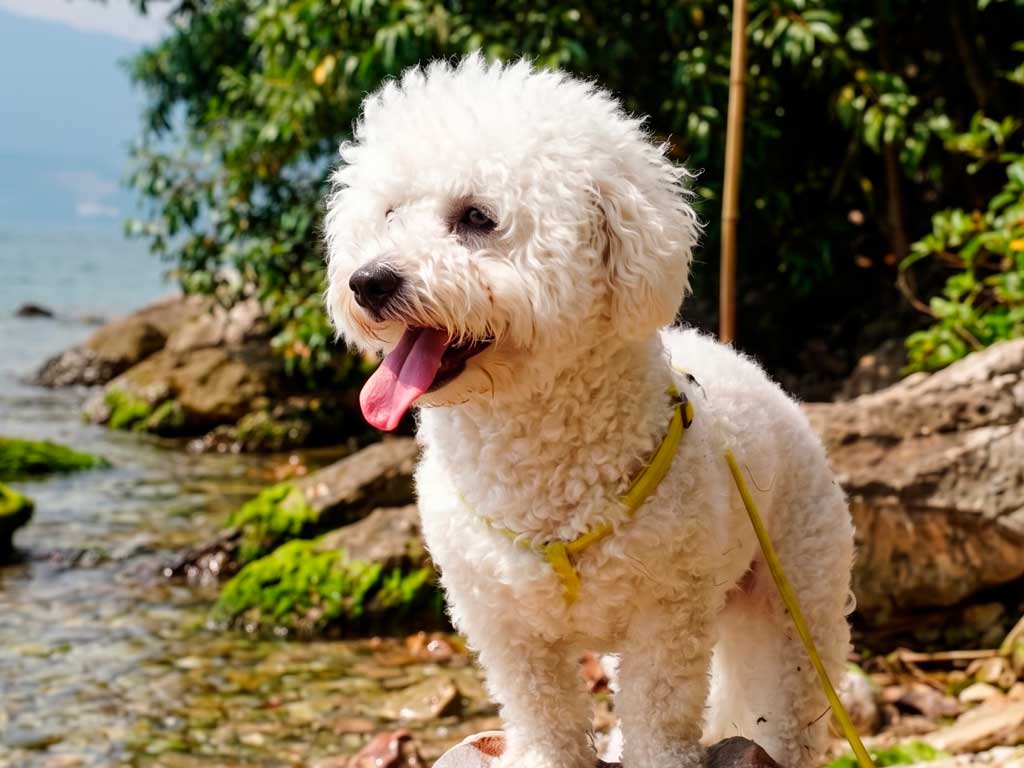
The Bichon Frise dog breed looks like a stuffed toy. Behaves like the life of the party. And somehow never seems to run out of energy or enthusiasm.
But behind that bouncy white pom-pom exterior is a dog with a real personality, specific health considerations, and grooming demands that first-time owners often underestimate.
In this guide, you’ll get the full picture on everything that matters: where this cheerful little dog came from, what it’s genuinely like to live with one, and what you need to know before bringing one home.
History and Origin
The Bichon Frise has a surprisingly international backstory — and its exact origins are still a matter of friendly debate.
The breed belongs to the Bichon family, a group of small, curly-coated companion dogs that developed across various Mediterranean islands over the course of many centuries. The Bichon Frise specifically is believed to trace back to Tenerife in the Canary Islands, where small fluffy dogs were bred as companions long before the breed took its more refined form in continental Europe.
The name itself is a blend of two French words — bichon (a term for a small fluffy dog, possibly derived from barbichon, meaning small poodle) and frisé (meaning curly). The full French phrase was bichon à poil frisé — curly-haired small dog — which English speakers simplified to Bichon Frise.
By the 14th century, sailors were reportedly bringing these small dogs from Tenerife back to Europe, where they quickly found favor among nobility in France and Spain. The breed appears in royal portraits from both countries, and the Spanish painter Francisco de Goya was so captivated by them that he featured Bichons in multiple works. By the 16th century, the breed had become a fixture of European aristocratic life.
After falling out of fashion following the French Revolution, the Bichon Frise experienced a dramatic revival in the early 20th century. French breeders formalized the breed standard in 1933, and the American Kennel Club officially recognized the Bichon Frise in 1972. Today it remains one of the most popular small breeds in both the US and UK, consistently ranking among the top choices for families and first-time owners.
One interesting historical footnote: the original Bichon Frise from Tenerife is technically one of three distinct Bichon varieties. The other two — the Maltese and the Bolognese — developed independently in Malta and Bologna respectively, though all three share common ancestry.
Physical Characteristics
The Bichon Frise is a compact, well-proportioned toy dog that carries itself with a confident, lively bearing that belies its small size.
Key physical stats at a glance:
- Height: 23–28 cm (9–11 inches) at the shoulder, for both males and females
- Weight: 3–6 kg (7–13 lbs) for both sexes
- Coat: Double-layered — a soft, dense undercoat beneath loosely curled outer hair
- Colors: White is the breed standard; cream, apricot, and buff markings may appear, particularly in puppies
- Lifespan: 12–15 years
The Bichon’s trademark appearance — that rounded, powder-puff silhouette — is achieved through careful grooming rather than the coat’s natural growth pattern. Without regular trimming, the hair grows long and somewhat flat rather than maintaining the iconic rounded shape. The deep black eyes and black nose contrasting against the snow-white coat give the Bichon its characteristically bright, alert expression.
Despite looking delicate, the Bichon Frise is surprisingly solid and sturdy for its size. It has a balanced, square body profile and moves with a lively, springy gait that reflects its naturally upbeat temperament. The tail curves gracefully over the back like a plume — one of the breed’s most immediately recognizable features at a distance.
Temperament and Personality
If you want a dog that is genuinely happy almost all the time, the Bichon Frise is a strong contender.
This breed has an infectious, irrepressible cheerfulness that owners consistently describe as one of its most endearing qualities. It is curious, playful, and sociable with virtually everyone it meets — people, children, other dogs, and household cats alike. The Bichon Frise doesn’t have a suspicious bone in its body. It approaches the world with open enthusiasm and seems to genuinely enjoy being the center of attention.
That social nature is a double-edged quality worth understanding upfront. The Bichon Frise does not tolerate solitude well. It bonds strongly with its family and genuinely needs human company to thrive. Left alone for extended periods on a regular basis, a Bichon will become anxious, restless, and often vocal. Separation anxiety is one of the most commonly reported behavioral challenges with this breed, and it almost always has roots in insufficient gradual alone-time training during puppyhood.
The breed’s energy level is also worth flagging. The Bichon Frise scores a full 5 out of 5 on energy — which is high for a toy dog. It has bursts of what owners affectionately call the “Bichon buzz” — short, explosive sprinting sessions where the dog tears around the room seemingly for the sheer joy of it. These are completely normal and actually a healthy outlet. A well-exercised Bichon is a significantly calmer and more settled indoor companion than one that hasn’t had adequate activity.
One personality trait that surprises some owners: the Bichon Frise can be quietly stubborn. It is described in breed literature as somewhat sensitive — it does not respond well to harsh correction or raised voices, and it can hold what breeders diplomatically call a “grudge.” This isn’t aggression; it’s simply a sensitivity that means firm-but-gentle handling is genuinely important with this breed.
Care Guide
Diet and Nutrition
The Bichon Frise is a small dog with a fast metabolism and a compact digestive system. That combination calls for a specific nutritional approach.
Choose a high-quality small-breed formula with real animal protein — chicken, turkey, or fish — listed first in the ingredients. Small-breed kibble is formulated with the right nutrient ratios for toy dogs and is appropriately sized for smaller jaws, which encourages proper chewing and supports better digestion.
Feed adult Bichons two measured meals per day rather than leaving food available continuously. Free-feeding makes portion control difficult and can quickly lead to weight gain that stresses the dog’s small joints and cardiovascular system. Treats are fine as training rewards but should stay within 10% of total daily calories — a surprisingly easy limit to exceed with a dog this small.
One dietary consideration specific to the Bichon Frise: this breed is prone to skin allergies, and food sensitivities can sometimes manifest as skin irritation or chronic itching. If your Bichon develops persistent coat or skin issues, consult your vet about whether a limited-ingredient or novel-protein diet might be appropriate before assuming the problem is environmental.
Exercise Requirements
The Bichon Frise needs at least 30 minutes of exercise daily — and most individuals will happily take more. The breed adapts well to the family’s activity level, but a minimum baseline of two short walks per day is essential for physical and mental wellbeing.
The good news is that this exercise doesn’t need to be intense. Brisk neighborhood walks, garden play sessions, and indoor games all count. The Bichon is not a breed that demands long hikes or vigorous athletic activity. However, it does need its brain engaged alongside its body. Mental stimulation — puzzle feeders, training games, hide-and-seek with treats — is equally important for a breed this clever and this easily bored.
The Bichon Frise’s adaptability to apartment living is one of its genuine practical advantages. It does not require a yard, it doesn’t need vast open spaces, and it can thrive in a city flat as long as it gets its daily walks and enough human interaction. This makes it one of the most versatile small breeds for urban owners.
Grooming Needs
Here is where many new Bichon owners get their biggest surprise: the coat is a daily commitment without exception.
The Bichon Frise does not shed significantly — and that’s genuinely good news for your furniture and clothing. However, the trade-off is that the coat doesn’t release dead hair naturally. Instead, it tangles. Without daily brushing and combing, the soft undercoat mats against the skin at a remarkable speed, and removing established mats is uncomfortable and time-consuming for both dog and owner.
Daily brushing with a slicker brush, followed by a thorough comb-through, is the standard routine. Pay particular attention to the areas behind the ears, under the armpits, and around the collar — these are the spots where matting forms fastest. The coat should also be trimmed every five to six weeks to maintain both the classic rounded silhouette and the coat’s overall health.
Professional grooming is strongly recommended for the full trim, particularly if you want to maintain the show-ring look. However, many owners choose a shorter, lower-maintenance “puppy clip” between professional visits, which significantly reduces daily brushing time without compromising coat health.
Additionally, the Bichon Frise’s white coat makes tear staining particularly visible. Regular gentle cleaning of the area beneath the eyes is a necessary part of the grooming routine, especially in dogs with naturally heavy tearing.
Training and Education
The Bichon Frise earns a 5 out of 5 on trainability — and it genuinely deserves that rating.
This is a breed that wants to learn. It is alert, eager to please, and responds to positive reinforcement with impressive speed. Short training sessions of 10–15 minutes using treats, praise, and play-based rewards produce excellent results with most Bichons. The breed picks up basic obedience commands quickly and retains them reliably once established.
The critical word throughout all Bichon training is gentle. This breed does not respond well to harsh tones, physical correction, or frustration from its handler. Push too hard, raise your voice, or rush the process, and you’ll encounter that quiet stubbornness the breed is known for. Back off, reset with something the dog already knows well, end on a success, and start fresh next session.
The two most important training investments for a Bichon Frise puppy are recall and gradual alone-time habituation. Recall because the Bichon can get distracted and overly excited in the presence of other dogs or people. Alone-time training because, as noted above, separation anxiety is a real and common issue with this breed — and far easier to prevent through early, systematic desensitization than to correct once established.
Beyond basic obedience, the Bichon genuinely excels at canine sports like agility and rally obedience. Its combination of athleticism, intelligence, and desire to engage with its handler makes it a natural competitor — something many owners don’t discover until they’ve already had their Bichon for years.
Health and Longevity
With a lifespan of 12–15 years — and UK dogs reportedly averaging over 16 — the Bichon Frise is one of the longer-lived small breeds. That’s the good news. However, unlike the Bolognese or Bergamasco, the Bichon does come with several documented health conditions worth knowing about before you commit.
Patellar luxation is the most common orthopedic issue in the breed — a slipping kneecap that affects many small dogs and can range from mild and manageable to requiring surgical intervention. Skin allergies are also very common in Bichons, manifesting as chronic itching, coat changes, or recurrent ear infections. Identifying the allergen — whether environmental, dietary, or contact-based — is a process that often requires veterinary collaboration.
Additional conditions to be aware of include cataracts (clouding of the eye lens that can progress to blindness), bladder stones (mineral accumulations that cause pain and urinary difficulty), portosystemic shunt (a liver condition where blood bypasses normal filtration), and diabetes mellitus. The Kennel Club recommends that breeding dogs participate in an eye screening scheme to reduce the incidence of inherited eye conditions.
None of these conditions make the Bichon Frise an unhealthy breed — many individuals live full, problem-free lives. However, they do underscore the importance of sourcing a puppy from a reputable breeder who screens their dogs and of scheduling twice-yearly veterinary checkups throughout the dog’s life.
Is This the Right Dog for You?
The Bichon Frise is one of the most genuinely versatile small breeds available — but it’s still a specific kind of dog that suits a specific kind of owner best.
This breed is an excellent fit if you:
- Want a cheerful, high-energy companion that thrives on human interaction
- Live in an apartment or smaller space without a yard
- Have children or other pets — the Bichon is exceptionally social with both
- Are a first-time dog owner willing to invest in daily grooming
- Spend significant time at home or can arrange regular company for the dog
- Want a low-shedding, hypoallergenic-friendly breed
Think carefully before getting a Bichon Frise if you:
- Work long hours away from home without a plan for the dog’s companionship
- Are unwilling or unable to commit to daily brushing and regular professional grooming
- Prefer a more independent, low-maintenance dog
- Want a quiet dog — the Bichon will alert bark, and a bored or anxious Bichon is considerably noisier
- Have very young toddlers who might play too roughly — supervision is always required regardless of breed
In the right home, the Bichon Frise delivers something genuinely special: unshakeable good humor, adaptable energy, and a level of sociability that makes it one of the easiest dogs in the world to love.
FAQs
Is the Bichon Frise really hypoallergenic?
No dog breed is 100% hypoallergenic, but the Bichon Frise is one of the closest options available. It sheds minimally and produces less airborne dander than most breeds. That said, allergy sufferers should spend time with the breed before committing, as individual reactions vary significantly even to low-shedding dogs.
How often does a Bichon Frise need professional grooming?
Every five to six weeks for a full trim if you want to maintain the classic rounded shape. Between appointments, daily brushing and combing at home is essential to prevent matting. Many owners opt for a shorter “puppy cut” to reduce daily maintenance time — this is perfectly healthy for the dog and doesn’t affect its temperament or wellbeing.
Can a Bichon Frise be left alone during the day?
For short periods, yes — especially if trained gradually from puppyhood to feel safe and settled when alone. However, the Bichon Frise scores just 1 out of 5 on tolerance for solitude. It is not suited to households where it would regularly spend a full workday without human company. If this is your situation, a dog walker, doggy daycare, or a second pet for company are worth considering seriously.
Are Bichon Frises good with children?
Yes, generally very well — with appropriate supervision. The Bichon is sturdy enough to handle gentle play with older children and patient enough for family life. With very young toddlers, adult supervision during all interactions is essential, as with any breed. Teaching children how to handle small dogs respectfully is equally important.
Do Bichon Frises smell?
No — the Bichon Frise is considered a low-odor breed. Its minimal shedding means less of the natural oils that can cause a “dog smell” to accumulate in the coat. The exception is if the dog has an underlying skin condition, ear infection, or dental disease, all of which can cause odor. Regular grooming, ear cleaning, and dental care keep most Bichons fresh and clean-smelling throughout their lives.