Budgie vs. Parakeet: Are They the Same Bird?
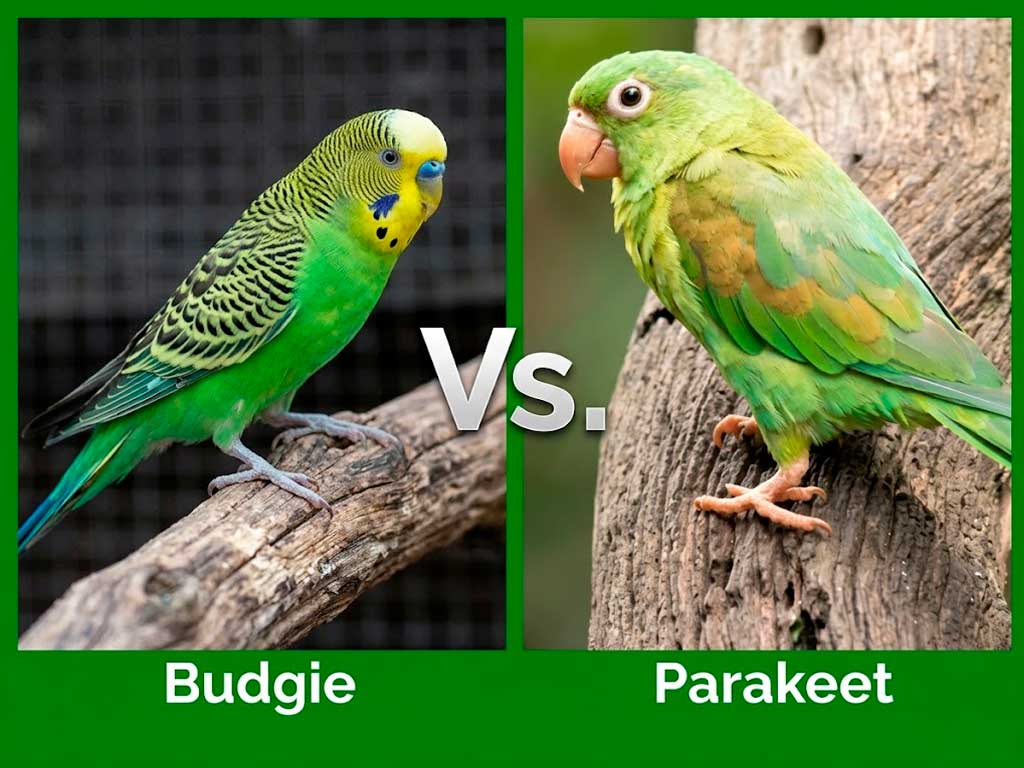
Short answer: if you’re in the United States, yes, “budgie” and “parakeet” almost always mean the same bird. Outside the US, the answer gets more complicated, since “parakeet” is an umbrella term covering dozens of small, long-tailed parrot species, and the budgie is just one of them, even if it’s the most famous.
This guide breaks down exactly where the confusion comes from, what a budgerigar is at the species level, why Americans settled on a different name for it, and what “parakeet” really refers to everywhere else. If you already know you want this bird, our full budgerigar care guide covers housing, diet, and how to tell males from females.
Where the Word “Parakeet” Comes From
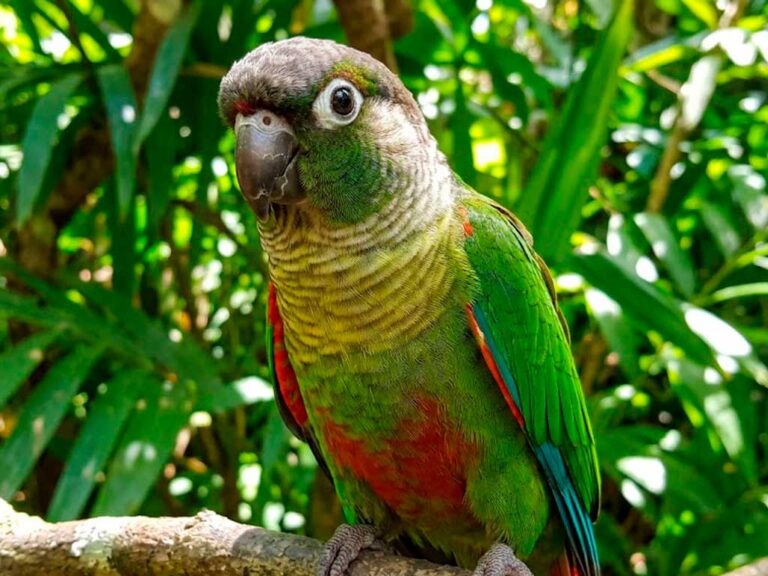
“Parakeet” isn’t a species name. It’s a descriptive term, roughly meaning a small parrot with a long, tapered tail, and it’s been applied to dozens of unrelated species across Africa, Asia, Australia, and the Americas for centuries. Indian ringnecks, Bourke’s parakeets, lineolated parakeets, red-rumped parakeets, and the monk parakeet (also called the Quaker parrot) all genuinely earn the name. None of them are budgies.
That’s the root of the confusion: “parakeet” describes a body shape and size, not a family tree. A budgerigar happens to fit that description perfectly, which is exactly how it ended up borrowing the name in the first place.
Ornithologists sidestep the confusion entirely by working with scientific names rather than common ones. In formal taxonomy, “parakeet” carries no weight at all, only genus and species names do, which is one reason field guides and scientific papers rarely use the word without immediately clarifying which bird they mean.
What Is a Budgerigar, Exactly?
The budgerigar, scientific name Melopsittacus undulatus, is a single, specific species native to the dry grasslands of Australia. Wild budgies are smaller than the pet-shop birds most people picture, colored bright green with black-barred yellow markings across the back and wings.
The species has a documented path into homes worldwide. Naturalist John Gould brought budgerigars to Europe in the 1830s, and they became fashionable among wealthy households before spreading to the general public through displays like the one at Antwerp Zoo in the 1850s. Australia banned budgie exports in 1894, which pushed European breeders to start producing them domestically instead, a shift that eventually produced the huge range of color mutations, more than 70 documented today, that budgies come in now.
Budgies didn’t reach the United States in real numbers until the late 1920s and didn’t become broadly popular until the 1950s. Today, they’re commonly cited as the third most popular pet in America, after cats and dogs. Wild budgies still live across the Australian outback today, traveling in flocks that can number in the thousands and following rainfall to find seeding grasses, a nomadic lifestyle that has little in common with life in a living-room cage.
Why Americans Call Budgies “Parakeets”
By the time budgerigars arrived in the US pet trade, “parakeet” was already the generic term American pet stores used for small, long-tailed parrots, and the budgie became so dominant in that category that the two words effectively merged in everyday American usage. Ask for a “parakeet” at a US pet store today and you’ll be shown budgies, full stop.
This isn’t a mistake so much as a settled regional convention. Major US pet brands and veterinary sources use “parakeet” and “budgie” interchangeably for this exact reason, one explicitly noting that “parakeet” can technically refer to a wide range of parrots but that, for practical purposes, it means the budgerigar in an American context.
What “Parakeet” Really Means Outside the US
In the UK, Australia, and most of the rest of the world, “budgie” stays specific to Melopsittacus undulatus, while “parakeet” keeps its broader, original meaning. Ask for a parakeet in London or Sydney and you might get asked which one: an Indian ringneck, an Alexandrine, a Bourke’s, or something else entirely.
A few distinct parakeet species worth knowing, none of which are budgies:
- Indian ringneck parakeets, larger and longer-tailed, popular for their talking ability
- Bourke’s parakeets, a soft pink-and-blue Australian species known for a gentle temperament
- Lineolated parakeets, small, quiet, and increasingly popular as an apartment-friendly alternative to budgies
- Red-rumped parakeets, another Australian species, less commonly kept than budgies but sometimes confused with them
- Monk parakeets, better known on this site as the Quaker parrot, covered in our Quaker Parrot Care Guide
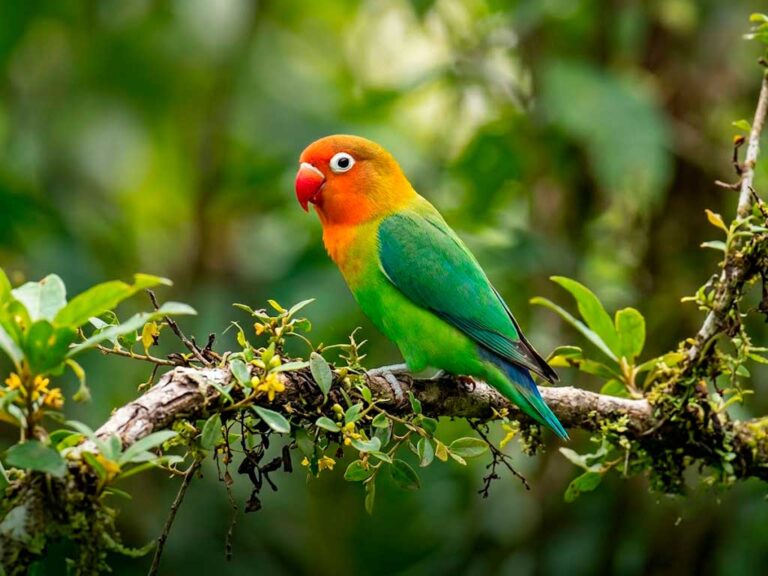
People also sometimes loosely call cockatiels and lovebirds “parakeets,” even though neither one is, which only adds to the tangle.
Does the Naming Confusion Affect Care?
Practically speaking, no, as long as you know which bird you actually have. A budgie is a budgie regardless of what the pet store sign called it, and its diet, cage requirements, and lifespan don’t change based on regional vocabulary.
Where the confusion does cause real problems is online research and product shopping. Someone outside the US searching “parakeet care” may land on articles or forums discussing an Indian ringneck or a Bourke’s parakeet without realizing the advice doesn’t apply to their budgie, since housing size, noise level, and diet specifics differ meaningfully between these species. Always confirm the species name, ideally the scientific name, before applying care advice from an unfamiliar source.
American Budgie vs. English Budgie
Here’s a layer of confusion that has nothing to do with the parakeet question at all: there are two recognizable types of budgie, and they’re still the same species.
The American budgie is the smaller, more streamlined bird most US owners picture, close to the original wild type in build. Its English counterpart, sometimes called the exhibition or show budgie, has been selectively bred to be noticeably larger and fluffier, with a more prominent head, and tends to be calmer and more docile. That extra size comes at a cost: English budgies often have shorter lifespans than American budgies due to the inbreeding involved in developing the larger exhibition standard.
Neither type is a different species, and neither is more or less a “real” budgie. The difference is closer to the distinction between a working-line and a show-line dog breed than anything taxonomic.
Quick Comparison
| Term | What It Actually Means |
|---|---|
| Budgerigar / budgie | One specific species, Melopsittacus undulatus, native to Australia |
| Parakeet (US usage) | Used interchangeably with “budgie” |
| Parakeet (UK/Australia/global usage) | An umbrella term for many small, long-tailed parrot species, including but not limited to budgies |
| American budgie | The smaller, more streamlined budgie type common in the US |
| English budgie | A larger, fluffier exhibition budgie type, same species |
So Which One Should You Get?
If you already know you want a budgie, the name you use to shop for one doesn’t change the bird. Budgies are easygoing, small enough for an apartment, and genuinely capable of building a surprisingly large vocabulary, which is exactly why our full budgerigar care guide walks through diet, cage size, and how to tell males from females.
If you’re drawn to the idea of a “parakeet” in the broader sense, it’s worth deciding whether you actually want a budgie or one of the other true parakeet species, since care needs, noise level, and personality vary meaningfully between them.