Norfolk Terrier: Small Dog, Big Lap-Time Energy
Have you ever met a dog that looks ready to curl up on your lap but still approaches every walk like an expedition? That is part of the Norfolk Terrier’s charm. This small British terrier combines an affectionate nature with the confidence, curiosity, and determination of a working dog.
The Norfolk Terrier is a compact companion with a wiry coat, folded ears, and a surprisingly adventurous personality. It can adapt to apartment living or a house with a garden, provided its daily needs are met. Before choosing one, though, it helps to understand its exercise requirements, grooming routine, and instinct to chase small animals.
If you are comparing small dog breeds, the Norfolk Terrier deserves a closer look. Here is what daily life with one can really involve.
Norfolk Terrier Quick Facts
- Breed group: Terrier
- Origin: England
- Size: Small
- Height: Around 10 inches (25 cm) at the shoulder
- Weight: Typically about 9–12 pounds (4–5.5 kg)
- Life expectancy: Approximately 12–15 years
- Temperament: Affectionate, alert, lively, and confident
- Coat: Hard, wiry, weather-resistant double coat
- Common colors: Red, wheaten, black and tan, and grizzle
- Exercise: Daily walks, active play, and mental stimulation
- Grooming: Regular brushing and periodic hand-stripping
- Best suited to: People who want an active companion and can provide consistent training and company
These figures describe typical breed characteristics. Individual Norfolk Terriers may differ in size, activity level, and temperament.
What Makes the Norfolk Terrier Different?
The Norfolk Terrier may be small enough to fit comfortably beside you on the sofa, but it was never developed simply to be a lapdog. Its original purpose was practical: helping control rats and other small vermin.
That background explains much of its behavior today. A Norfolk Terrier may investigate every corner of a garden, follow an interesting scent, or become intensely interested in a squirrel during a walk. These instincts are normal for the breed, although training helps you manage them safely.
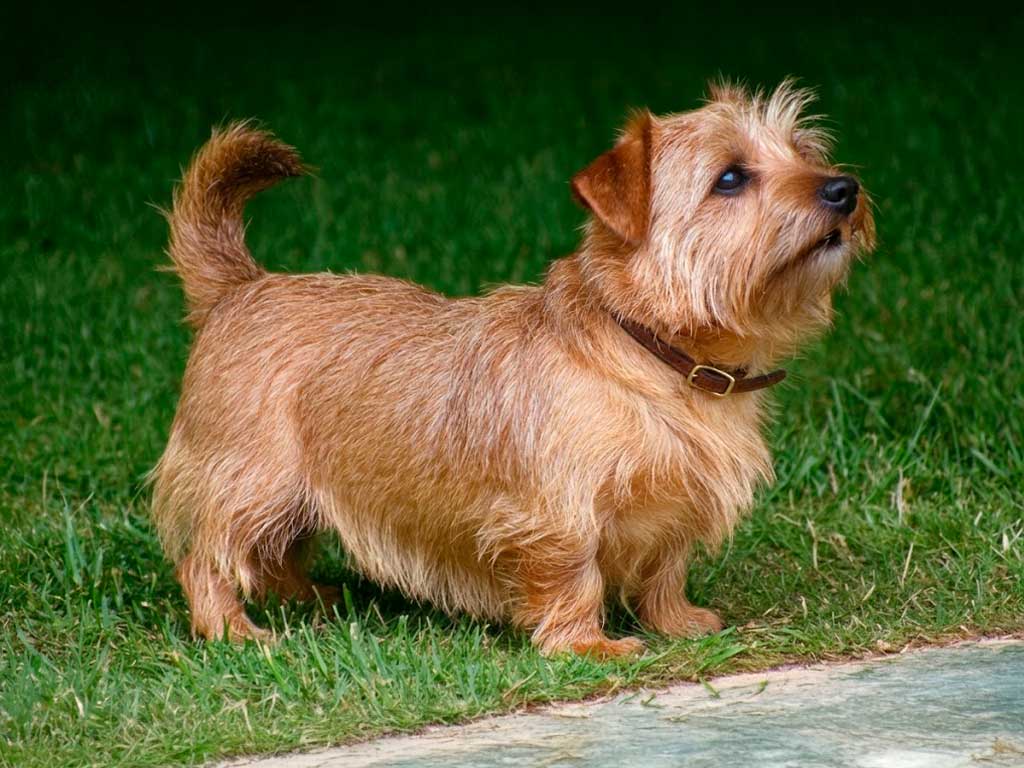
Its appearance is another distinguishing feature. The Norfolk has a compact body, short legs, a broad head, and ears that fold forward close to its cheeks. Its hard coat offers protection during outdoor activity without requiring elaborate daily styling.
The breed also tends to form close bonds with its family. Many enjoy being near their people and relaxing indoors after an active day. They generally do not thrive when treated as outdoor-only dogs or left without enough interaction.
That combination of affection and independence is important to understand. A Norfolk Terrier can be a devoted companion, but it still needs opportunities to explore, learn, and behave like a terrier.
Norfolk Terrier vs. Norwich Terrier: How to Tell Them Apart
The Norfolk Terrier and Norwich Terrier share a history, similar body types, and many personality traits. They were once grouped under the Norwich Terrier name, but they are now recognized as separate breeds.
The easiest way to tell them apart is by looking at their ears.
- Norfolk Terrier: Ears fold forward and hang close to the cheeks.
- Norwich Terrier: Ears stand upright and point upward.
Both breeds are small, sturdy, energetic, and confident. Their coats also share similar textures and accepted colors, so coat color alone is not a reliable way to identify them.
The distinction matters when researching breeders, comparing breed standards, or looking for a particular dog. If you are interested in the erect-eared variety, read our Norwich Terrier breed guide.
A Short History of the Norfolk Terrier
The Norfolk Terrier developed in England during the late 19th and early 20th centuries. Small working terriers were valued for their ability to hunt vermin, particularly around farms, stables, and other places where rodents caused problems.
A horse trainer named Frank Jones is associated with the development of the breed. Early dogs became known as Jones Terriers and were also included under the Norwich Terrier name.
The dogs appeared in both erect-eared and drop-eared varieties. In 1965, the drop-eared type was officially separated and became known as the Norfolk Terrier. The erect-eared variety retained the Norwich Terrier name.
That shared ancestry explains why the two breeds remain so similar in appearance and character. Both were bred to work confidently despite their small size, and neither has entirely lost those instincts.
Today, Norfolk Terriers are kept primarily as companion dogs. Their working background still influences their behavior, so owners should expect a curious, active dog rather than one content to sleep all day.
What Is a Norfolk Terrier’s Temperament Like?
Norfolk Terriers are often described as affectionate, lively, alert, and sociable. They enjoy being involved in household activities and can be playful well into adulthood.
Their confidence can be entertaining, especially when a small dog approaches a new situation without hesitation. That same confidence sometimes becomes stubbornness when a Norfolk Terrier has discovered something more interesting than its owner.
A successful routine balances companionship with clear boundaries. Reward the behavior you want, give your dog appropriate outlets for its energy, and keep expectations consistent.
Are Norfolk Terriers Good for First-Time Owners?
They can be a good choice for first-time dog owners who are prepared to learn about terrier behavior. Their small size and affectionate nature are appealing, and basic training can be manageable when lessons are consistent.
However, they are not completely effortless dogs. Their prey drive, barking, digging, and independent streak require patience. A new owner should be ready to practice recall, leash manners, and calm behavior from the beginning.
Before bringing one home, consider whether you can provide daily exercise and companionship. A small dog still needs time, structure, and veterinary care.
Are Norfolk Terriers Good Family Dogs?
A Norfolk Terrier can be a good companion for a family, especially one with older children who understand how to handle a small dog respectfully.
Because the breed is compact, rough play or accidental falls can cause injuries. Teach children not to pull the dog’s ears or coat, disturb it while eating, or force interaction when it wants to rest.
Adult supervision is essential around young children. Even a friendly dog needs space and predictable handling to feel safe.
Can Norfolk Terriers Live With Cats?
Some Norfolk Terriers live successfully with cats, especially when introductions begin early and proceed gradually. However, the breed’s original role as a vermin hunter means chasing instincts can be strong.
Do not assume that a Norfolk Terrier will automatically accept a cat or other small pet. Introduce animals through safe barriers, reward calm behavior, and provide escape routes for the cat. Continue supervising interactions until you are confident they are safe.
Small animals such as hamsters, guinea pigs, rabbits, and pet rodents need particular protection. Even a well-socialized dog can react instinctively to quick movements.
Do Norfolk Terriers Bark a Lot?
Norfolk Terriers are alert dogs and may bark when they hear unusual noises, notice visitors, or see movement outdoors. Some are more vocal than others.
You can help manage barking by identifying its triggers and rewarding quiet behavior. If your dog repeatedly barks at people passing the window, limit its view of the street and offer another activity.
Avoid shouting over your dog. That can add excitement to an already noisy situation without teaching it what to do instead.
Exercise: Keeping a Small Terrier Busy
A Norfolk Terrier needs regular physical activity despite its small stature. For many healthy adults, about an hour of daily activity is a useful starting point, adjusted for age, health, and individual energy.
That time does not need to be one long walk. A mixture of walking, sniffing, play, and training can make the day more satisfying.
Try building a routine around these activities:
- Walks with time to sniff: Let your dog investigate safe areas instead of rushing through every outing.
- Interactive play: Use suitable toys for short games of fetch or tug.
- Scent games: Hide treats around a room and encourage your dog to find them.
- Reward-based training: Practice recall, loose-leash walking, and settling calmly.
- Supervised outdoor exploration: Provide opportunities to explore a secure garden or enclosed space.
Norfolk Terriers often enjoy digging. If you have a garden, a designated digging patch can give that instinct an appropriate outlet. Reward your dog for using the approved area and redirect it when it starts excavating flower beds.
A garden does not replace walks or companionship. Dogs still benefit from exploring different environments and spending time with their people.
Because the breed may chase wildlife, use a leash in unsecured areas. Practice recall in controlled settings before trusting your dog around distractions.
Grooming a Norfolk Terrier’s Wiry Coat
The Norfolk Terrier has a hard, straight outer coat and a softer undercoat. Its weather-resistant texture suits an active dog, but maintaining it properly requires more than an occasional bath.
Brush the coat once or twice a week to remove loose hair and debris. Pay attention to areas where tangles can develop, especially around the legs, belly, and furnishings.
What Is Hand-Stripping?
Hand-stripping removes mature outer hairs to maintain the coat’s characteristic wiry texture. It is commonly used for Norfolk Terriers and other traditional wire-coated breeds.
Many dogs need hand-stripping periodically, often around a couple of times a year, although the schedule depends on the coat and grooming approach. A groomer experienced with terriers can assess your dog’s coat and explain what is appropriate.
Clipping is another option, but it can gradually soften the coat’s texture and change its appearance. If maintaining the traditional coat matters to you, discuss grooming methods before choosing a regular groomer.
Introduce handling gradually, using treats and short sessions. Never pull forcefully at tangled hair or continue a grooming session if your dog is distressed.
Everyday Grooming Checklist
Along with coat care, make these checks part of your routine:
- Brush your dog’s teeth regularly with dog-safe toothpaste.
- Trim nails before they become too long.
- Check the ears for redness, odor, or unusual discharge.
- Look over the skin after outdoor adventures.
- Check the coat for burrs, grass seeds, and parasites.
- Bathe when needed with a suitable dog shampoo.
Norfolk Terriers are not hypoallergenic. Their coat may shed less noticeably than some other coats, but no dog breed is completely free of allergens.
Norfolk Terrier Training Tips
Norfolk Terriers are bright and curious. They can learn household rules and basic cues, but their attention may wander when a scent or movement catches their interest.
Keep training sessions short and rewarding. Food rewards, praise, and play can help your dog stay engaged without making lessons feel repetitive.
Focus on a few useful skills first:
- Recall: Practice coming when called in a secure area, gradually adding distractions. Do not rely on recall alone near roads or wildlife.
- Loose-leash walking: Reward your dog for walking beside you without pulling toward every smell.
- Leave it: Teach your dog to disengage from objects, food, or animals when asked. Start with easy exercises before practicing outdoors.
- Settle: Reward calm behavior on a bed or mat so your dog learns that relaxing is part of daily life.
- Handling: Get your dog comfortable with gentle checks of its paws, ears, mouth, and coat. This can make veterinary visits and grooming easier.
Socialization should include positive, controlled experiences with people, dogs, sounds, and new environments. Avoid forcing your puppy into interactions that frighten it.
Consistency matters more than the length of a single training session. Practice a little each day, and make sure everyone in the household follows the same rules.
Norfolk Terrier Health and Lifespan
Norfolk Terriers commonly live around 12–15 years, although an individual dog’s lifespan depends on genetics, general health, lifestyle, and veterinary care.
The breed is generally considered hardy, but small dogs can still develop health problems. Patellar luxation, in which the kneecap shifts out of its normal position, is one condition worth knowing about.
Watch for signs such as intermittent limping, skipping a step, discomfort during movement, or reluctance to jump. These signs can have several causes, so a veterinarian should assess them rather than assuming the problem is patellar luxation.
Responsible breeding and preventive care are important. The Royal Kennel Club currently lists no recommended breed-specific pre-breeding health screening scheme for the Norfolk Terrier, but prospective owners should still ask breeders about the health of the parents, family history, and any tests performed.
A breeder should answer questions openly and provide available records. Be cautious of anyone who guarantees that a puppy will never develop a health problem.
To support your dog’s wellbeing:
- Schedule regular veterinary checkups.
- Keep vaccinations and parasite prevention up to date according to veterinary advice.
- Maintain a healthy body condition.
- Provide appropriate exercise without forcing activity when your dog is unwell.
- Brush teeth regularly and seek advice about dental care.
- Contact your veterinarian if you notice persistent limping, appetite changes, unusual tiredness, or other concerning symptoms.
This information is general guidance, not a diagnosis. Your veterinarian can recommend care based on your dog’s age, history, and individual needs.
Feeding a Norfolk Terrier: Diet and Nutrition
A Norfolk Terrier needs a complete and balanced diet suited to its life stage, activity level, and body condition. Because this is a small breed, measuring portions carefully can help prevent excess weight.
Choose a food formulated for puppies, adults, or senior dogs as appropriate. Feeding instructions on the package provide a starting point, but the correct amount depends on the food’s calorie content and your dog’s needs.
Divide the daily ration into meals that fit your dog’s routine. Training treats count toward daily calories, so keep them modest and adjust meal portions when necessary.
Is JustFoodForDogs a Good Option for Norfolk Terriers?
If you are considering fresh food, JustFoodForDogs is one option to research. Review the nutritional information for the specific recipe and confirm that it is complete and balanced for your dog’s life stage.

FROM JUSTFOODFORDOGS
Just Fresh
Resealable meals. No preservatives. Open, serve, refrigerate.
Shop Just FreshHappy Pet Zone may earn a commission when you click through to JustFoodForDogs, at no extra cost to you.
Fresh food is not automatically the right choice for every dog. Price, storage, feeding instructions, and your dog’s individual needs all matter. If your Norfolk Terrier has a medical condition or needs a special diet, consult your veterinarian before changing its food.
Introduce a new diet gradually according to the manufacturer’s guidance, and monitor your dog’s appetite, stool, and body condition during the transition.
For more practical advice, explore our dog nutrition guide. It covers food choices, feeding portions, and other considerations that can help you make an informed decision.
Finding a Norfolk Terrier Puppy or Adopting an Adult
If you are searching for a Norfolk Terrier for sale, take time to research the breeder rather than choosing based on price or appearance alone. This is a relatively uncommon breed in many areas, so availability and waiting times can vary.
A responsible breeder should be willing to discuss the puppies’ parents, health history, early socialization, and the care provided before they go home. Ask to see relevant records and, when possible, meet the mother and observe the puppies in their environment.
Be cautious if a seller pressures you to pay immediately, refuses to answer questions, or will not provide basic documentation. Extremely small puppies marketed as “miniature” or “teacup” Norfolk Terriers also deserve scrutiny. These labels do not establish that a dog is healthier or represents a recognized variety.
Could Adoption Be the Right Choice?
Norfolk Terrier adoption may take patience because the breed is less common than many popular companion dogs. Check reputable rescue organizations, local shelters, and breed-specific groups for Norfolk Terriers or mixes needing homes.
An adult dog may already have established habits, and its history may help you understand how it behaves around children, cats, or other dogs. Ask what is known about its health, training, and daily needs.
Whether you adopt or buy, choose based on temperament, health, and compatibility with your household. A good match matters much more than finding a puppy quickly.
Is the Norfolk Terrier the Right Dog for You?
The Norfolk Terrier can suit someone who wants a small dog with a lively personality and a strong connection to family life. It can adapt to different homes, including apartments, as long as its exercise and mental stimulation needs are met.
It may be less suitable if you need a dog that stays quiet most of the time, requires almost no grooming, or can be left alone for long stretches every day. Its instincts are part of the package, and managing them is an ongoing responsibility.
Before deciding, ask yourself:
- Can I provide daily walks and interactive play?
- Am I prepared to manage barking, digging, and chasing?
- Can I make time for training and socialization?
- Will I keep up with brushing, nail care, and dental hygiene?
- Can I budget for food, grooming, preventive care, and unexpected veterinary expenses?
If the answers are yes, the Norfolk Terrier may be a rewarding companion. Meet the breed in person if possible, speak with responsible breeders or rescue organizations, and make your decision based on the dog’s needs as well as its appeal.