Burgos Pointer Dog Breed: The Complete Guide for Active Owners
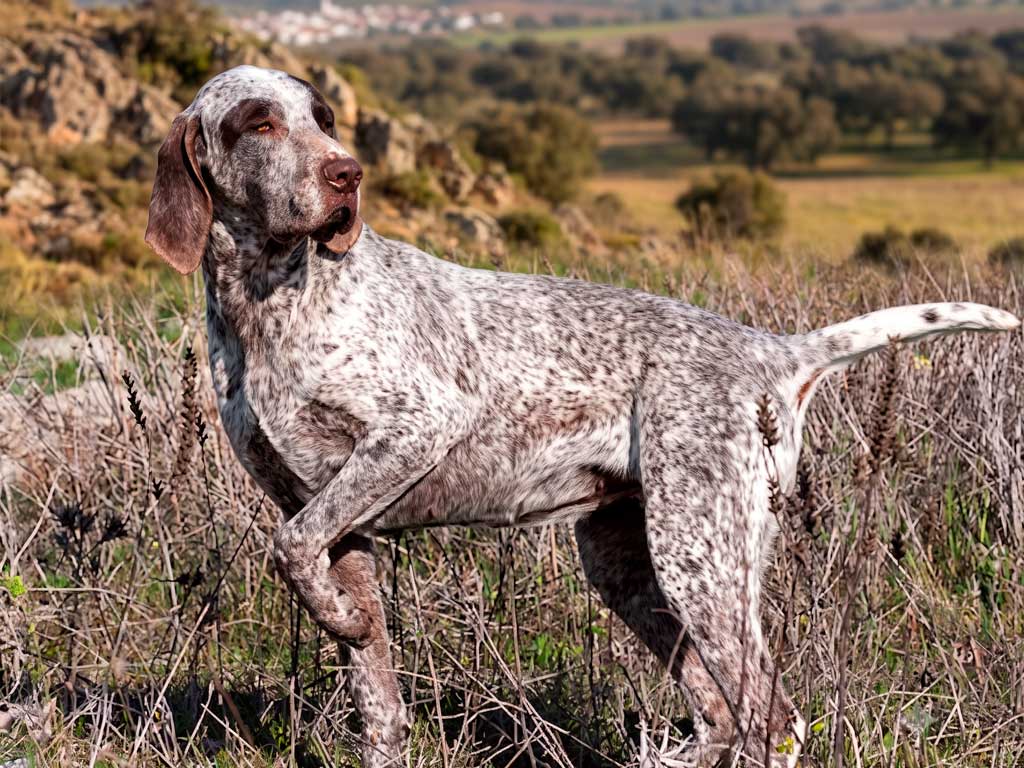
The Burgos Pointer is a Spanish pointing dog from the province of Burgos, and the FCI keeps it in Group 7 under a working trial. Height at the withers runs 62 to 67 cm (24.4 to 26.4 in) for males and 59 to 64 cm (23.2 to 25.2 in) for bitches, and at that height a working dog carries roughly 25 to 35 kg (55 to 77 lb), because the standard fixes no weight at all. No study has fixed a lifespan for the breed, and the figure Spanish owners and clubs quote is 12 to 14 years.
It is a calm, heavy-boned pointer with a nose that outranks its handler, and it was built to find partridge in dry Castilian country. It suits a household with land, two hours a day, and either a shooting season or a serious substitute for one. Apartment living does not fit it, and neither does a first-time owner who expects a pointer to stay close because it was asked nicely.
A Pointer From Burgos
The FCI standard is short and old, dated 1982 in its current form, and it describes a square dog of medium frame with a large head and pendulous ears. Nothing in it is decorative: every proportion is there to explain how the dog covers ground and holds scent.
The breed’s own association calls the early history confusing, and that is refreshing. Written records are thin, the breed crystallized around Burgos because that province had the partridges, the roads and the monasteries that kept hunting dogs, and the name settled in the nineteenth century.
| Feature | Burgos Pointer |
|---|---|
| FCI group | Group 7, continental pointing dogs |
| Type | Braque |
| Working trial | Required |
| Height | Males 62 to 67 cm (24.4 to 26.4 in), bitches 59 to 64 cm (23.2 to 25.2 in) |
| Weight | Not fixed by the standard |
| Coat | Short, dense, white and liver |
| Lifespan | No published figure, 12 to 14 years quoted |
The Nose Decides Before You Do
The standard is explicit about what the dog is for: pointing fur and feather, with a keen sense of smell, and it is judged with a working trial attached. That sentence should decide how you keep it. A Burgos Pointer does not run a field because you are watching; it runs it because the scent is there, and the freeze that follows is instinct rather than obedience. Off lead in open country with game, the dog is working and you are the assistant. The breed is biddable at home and single-minded in cover, and no amount of recall practice changes which of those two settings a partridge triggers. If you cannot offer controlled work on scent, this is a hard dog to keep honestly.
The Ear Is the Signature
The standard spends unusual care on the ear. It is large, triangular, set at eye level, and it hangs in a corkscrew, meeting the corner of the lips without reaching the nose. A dog whose ears hang flat is a different animal in the ring.
That shape is also the breed’s most practical liability. A heavy pendulous ear closes over the canal, and a dog that works dry stubble and then swims in a cold river gives moisture and debris somewhere to sit. Ear checks after every hard day are not fussing; they are the maintenance this anatomy requires.
The ear is the identification feature as well. Breeders and judges read the set and the curl before they read anything else, which is why a Burgos Pointer with short or high-set ears is a dog that draws comment even when everything else is right.
None of that makes the ear a problem to solve. It makes it the part of the dog that tells you what you are looking at.
That is the Spanish association’s own walkthrough of the standard, in Spanish, and the shapes it points out are the ones this section describes.
The Calm Dog in the House
The standard’s temperament line is one of the more generous in the pointing group: robust, balanced, calm and sedate, with an excellent temperament and real docility. The field version of that is a dog that switches off completely between outings.
- Indoors the breed is quiet, and it wants to be in the same room as its people, not in a run.
- Children are usually safe company, because the dog is slow to react and not easily startled.
- Other dogs are tolerated, with the usual friction between entire males.
- Cats and poultry are a training question, and a pointing dog’s interest in birds is not a moral failing.
- Being alone is the weak point, because a dog this attached to its handler notices an empty house.
The Hips Nobody Was Checking
For most of the breed’s modern history, nobody radiographed its hips. A doctoral thesis defended at the University of León in 2011 said so directly: no radiographic control of hip laxity had been carried out in the Burgos Pointer, and when the author scored 59 dogs to FCI standards, 60% showed signs of hip dysplasia.
The same work measured 68 dogs with the PennHIP distraction index and found a mean of 0.49, with a range from 0.08 to 0.99. Its recommendation was blunt: only dogs graded A, B or C should be bred, or a distraction index below 0.52.
For a buyer, that history means the question is not whether the breed has hip problems but whether the litter in front of you comes from lines that were checked after 2011.
What to ask, in this order: both parents’ FCI hip grades, the date of the radiograph, and whether the breeder has used the distraction index. A breeder who has neither is not necessarily dishonest, and is not a breeder you can evaluate.

Lemonade Pet Insurance
Explore customizable pet insurance coverage and learn whether Lemonade is the right fit for your dog or cat.
- Customizable coverage options
- Online policy management
Coat, Ears, and the Weekly Routine
Ears, Every Week
The corkscrew ear needs looking at on a schedule, not when it starts to smell. A wipe of the visible canal, a check for grass seeds after stubble, and a drying session after water cover most of it.
The Coat Is a Field Coat
Short and dense, and it sheds the field instead of holding it. A rubber curry once a week and a check of the feathering behind the ears and on the tail is the whole routine.
Two Hours, With a Job in It
The working figure is two hours a day, and the useful half is scent work, not distance. A long line walk through cover, a hidden dummy, or a tracking game spends the dog’s engine better than a jog on pavement.
Steadiness Is the Skill
Training a pointing dog is mostly about the moment before the flush. The point itself is instinct; what has to be taught is that the dog holds it while you walk past, and that is steadiness, not obedience.
Sessions should be short and end while the dog still wants more. The breed is described as docile and intelligent, and both qualities turn into stubbornness when a drill runs too long.
Recall has a limit that honesty requires you to accept. In cover, with scent in the air, a Burgos Pointer is working, and the long line is the tool that keeps the dog safe until the steadiness is reliable.
Feeding a Dog That Works in Bursts
A pointer’s week is uneven: long days in the field, then quiet days in the house. The ration should follow that pattern, with portions set by the ribs, not by the bowl.
Two meals a day for adults, and a gap between eating and work, because a deep-chested dog that runs on a full stomach is asking for trouble.
Treats come out of the day’s allowance. This is a breed that gains weight quietly once the season ends and the exercise halves.
Shop for Your Breed

Just Food For Dogs – Fresh Frozen
Fresh meals. Gently cooked, then frozen to lock in nutrients. 100% Human Grade Ingredients. Gently Cooked in the USA. #1 Vet-Recommended Fresh Food.
Shop on JustFoodForDogs
Raw Paws Pet Food – Frozen Raw Pet Food
Feeding your pet a frozen raw pet food diet is a simple way to deliver real, whole-food nutrition in its most natural form.
Shop on RawPawsPetFood
Bravecto Chews for Dogs
Bravecto is a long-lasting flea and tick protection option for your dog. 1 dose of Bravecto chew provides up to 12 weeks of powerful protection, which is nearly 3 times longer than a monthly treatment.
Shop on BestVetCare.com
Deworming Treatments for Dogs
BestVetCare offers you a wide range of worm treatments which come in a variety of forms such as oral paste, tablets, granules, and liquid solutions.
Shop on BestVetCare.comHappyPetZone participates in various affiliate programs with brands and retailers. We may receive a commission on purchases made through our links, at no extra cost to you.
Where This Goes Wrong
| Mistake | What it looks like in practice |
|---|---|
| Buying for the look | A heavy pointer in a small garden, with no scent work and no season |
| Skipping the hip papers | A dog with a sixty percent breed risk and no information about its own parents |
| Treating recall as a training problem | A dog lost to a partridge, a road, or a fence line |
| Assuming calm means low drive | A dog that sleeps all day and demolishes the garden at dusk |
If none of those describe you, start from the dog breeds hub before you look at a litter.
The Other Pointers
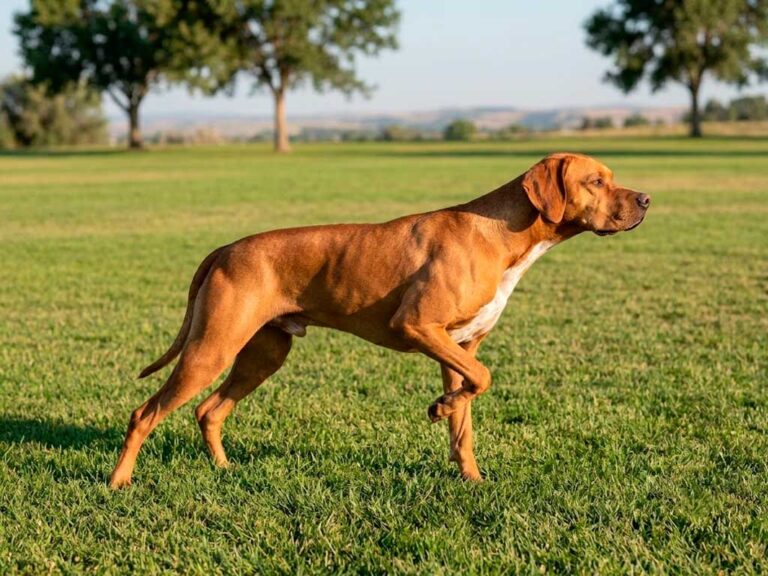
- The Pachón Navarro is the other old Spanish pointer, with the split nose that gives it its name.
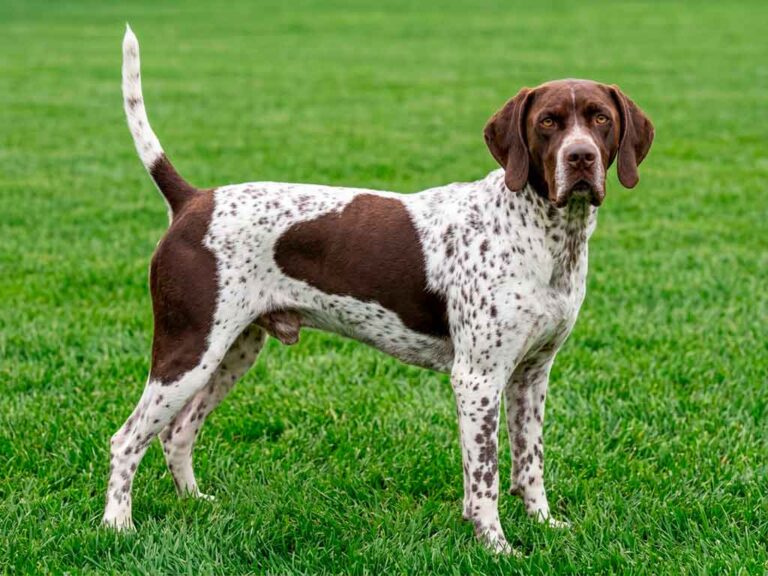
- The Portuguese Pointer is the Iberian cousin, smaller and closer-coated, with the same working brief.
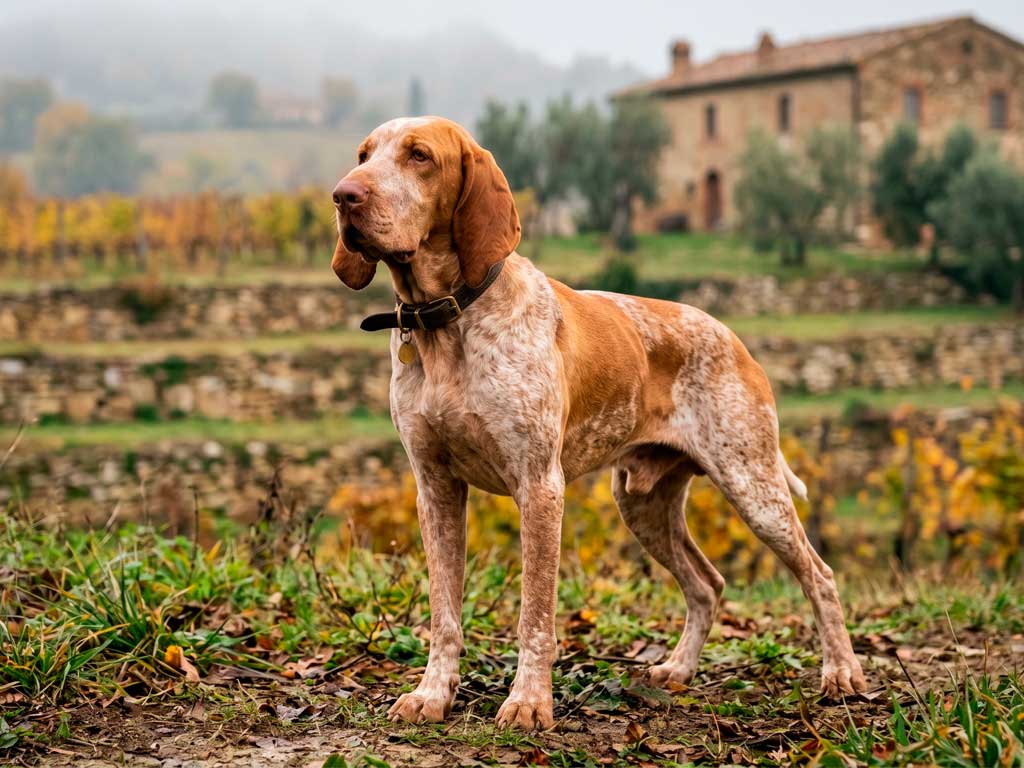
- The Bracco Italiano is the Italian braque, taller and heavier, and the nearest thing to a continental twin.
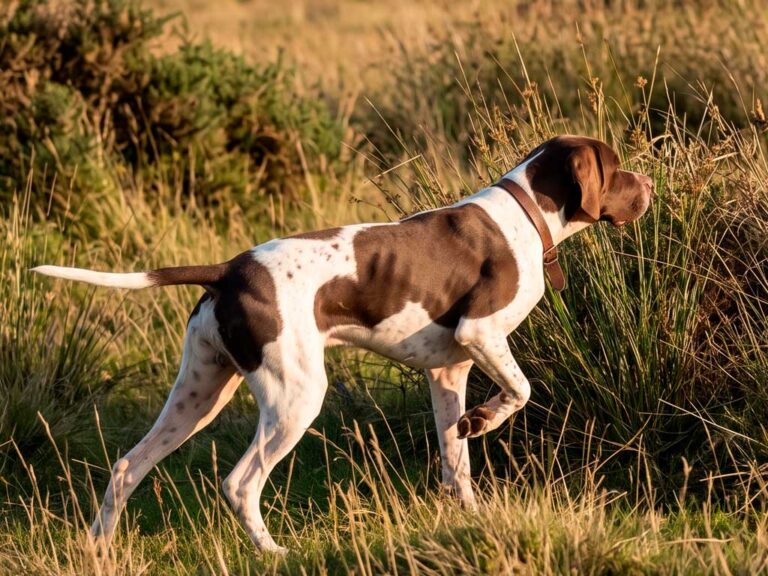
- The English Pointer is the faster, finer-boned athlete, and a different temperament entirely.
Frequently Asked Questions
Four questions that come up before anyone imports a puppy.
Sources
- Fédération Cynologique Internationale, Perdiguero de Burgos breed standard No. 90, full text (1998).
- Melo Alonso, B., Índice de distracción en el diagnóstico de la displasia de cadera en razas caninas autóctonas castellano-leonesas: el Perdiguero de Burgos, Universidad de León (2011).
- Asociación Española del Perro Perdiguero de Burgos, standard, history and working tests (2026).