Gordon Setter: Scotland’s Only Native Gundog
For a while, early Gordon Setters seemed to think they were sheepdogs. Breeders eventually bred that flock-herding instinct back out, but it’s just one of many odd turns in this breed’s history. The gordon setter is Scotland’s only native gundog, built for hunting grouse across miles of open moor. I’ve worked with a handful over the years, and they’re gentler than their size suggests, right up until they catch the scent of a bird. Here’s what the breed is actually like to live with.
History and Origin
The gordon setter’s roots trace back to 1620, when a “black and tan pointing dog” was already known in Scotland. That early dog descended from the Perdiguero de Burgos, a Spanish pointing breed, along with several old spaniel lines.
The breed owes its English name to the 4th Duke of Gordon, who formally established it at his Banffshire castle in 1827. Before that, it was simply known as the Black and Tan Setter, a name that describes the dog better than it ever did the man behind it. It remains the only gundog breed native to Scotland, developed specifically to hunt game birds, especially grouse, across demanding terrain.
Here’s a detail most people get wrong: the Duke wasn’t actually picky about coat color. He cared about working ability, and darker dogs were genuinely harder for hunters to spot on the moor, which was useful. The black-and-tan preference came later, once the breed gained popularity at dog shows.
There’s also a strange footnote in the breed’s development. At some point, breeders are believed to have added Collie blood, since Gordon Setters went through a phase of trying to herd the birds they were meant to be pointing at.
Physical Characteristics
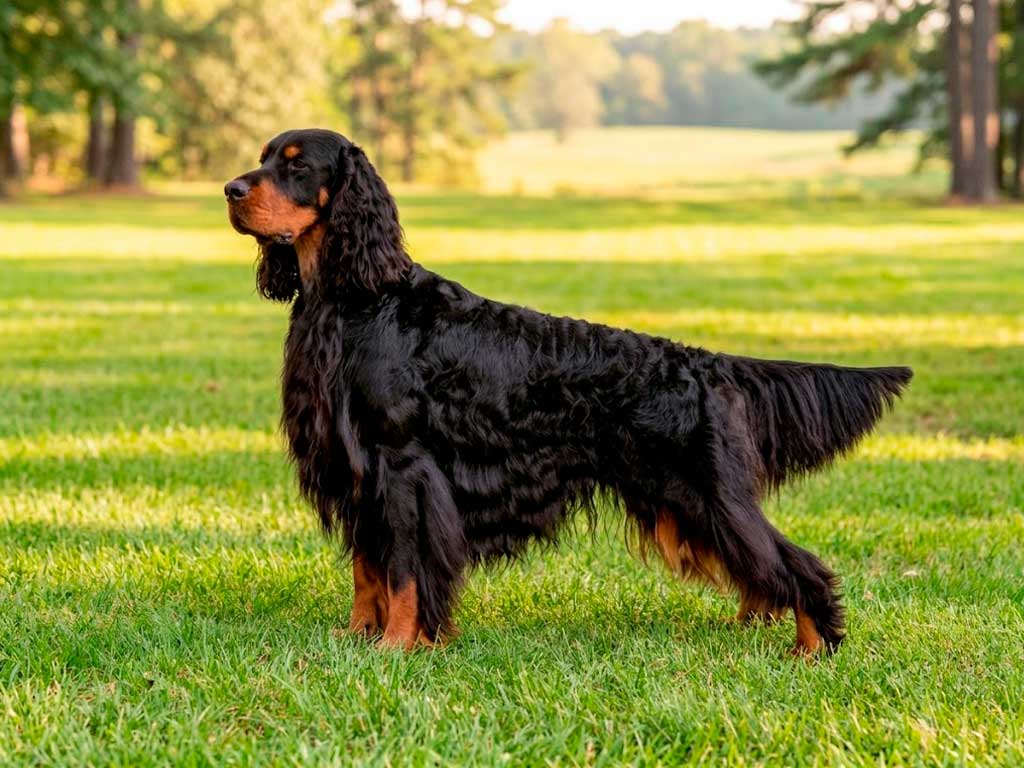
This is a large, powerfully built dog with a deep chest and muscular legs. Adult males stand around 26 inches tall and weigh close to 65 pounds, while females run a bit smaller at roughly 24 inches and 56 pounds.
The coat is silky and flat, always black and tan, with long feathering on the legs, chest, belly, ears, and tail. That elegant look pairs with genuine stamina; this breed was built to hunt for hours, not minutes.
The Kennel Club places it in the Gundog group, and the build backs that up completely. Nothing about this dog is decorative.
Temperament and Personality
Gordon setters are gentle, sensitive dogs that make excellent companions when they get enough exercise. Skip that exercise regularly, and the same dog can turn genuinely hyperactive.
They’re sociable and deeply devoted to their people, though they tend to warm up to strangers slowly rather than immediately. Give a new visitor a little time before expecting a warm welcome.
Trust me on this one: this breed carries a stronger, more independent streak than most other gundogs. Consistent training matters more here than owners expect going in.
Despite the working history, this isn’t a guard dog. Purina notes the breed doesn’t tend toward wariness or territorial behavior, which fits its friendly, people-focused nature.
That devotion cuts both ways, though. A Gordon Setter left alone for long stretches tends to struggle more than a naturally independent breed would, so this isn’t the right dog for a household that’s away all day, every day.
Care Guide
A working gundog needs a routine that matches its background, not a scaled-down version of one.
Diet and Nutrition
Large breeds need a different nutrient balance than smaller dogs, including different mineral and vitamin ratios. This breed can also be prone to bloat, so smaller, more frequent meals tend to lower that risk compared to one large bowl a day.
Exercise Requirements
This breed was bred for strength and endurance, and it has a reputation as one of the hardest-working gundogs out there. As a companion dog, that translates to a real exercise requirement: more than two hours a day for an adult.
Activities that tap into the hunting instinct work especially well here. Tracking exercises or field trials give this dog a job, not just a walk.
Grooming Needs
The semi-long coat needs regular brushing, at least twice a week, to stay free of tangles. Pay extra attention to the feathering on the legs and tail, since that’s where mats form first.
Those long, pendulous ears need regular cleaning, too. They’re prone to infection if moisture and debris build up unnoticed.
Training and Education
Give it time. This breed’s independent streak means training takes patience, not force, and a rushed approach tends to backfire.
A few things that help:
- Start early, since this breed’s stronger personality benefits from consistent boundaries from puppyhood.
- Use activities that engage the hunting instinct, like scent work, as a reward for good training sessions.
- Stay patient with strangers. Let the dog warm up at its own pace instead of forcing interactions.
- Keep training positive. A dog this sensitive shuts down around harsh corrections.
Health and Longevity
Most Gordon Setters live between 10 and 12 years. Like many breeds, they can face hereditary eye disorders and hip dysplasia, a condition that can affect mobility over time.
Hip and eye exams matter before any dog is bred, and they’re worth discussing with your vet even for a companion dog. I’m a trainer, not a vet, so treat this as general guidance rather than a diagnosis, and bring any real concerns straight to a professional.
Is the Gordon Setter Right for You?
This breed fits active households ready to provide serious daily exercise and consistent training, ideally with some outdoor space. It’s not the right fit for anyone hoping for a low-energy companion or a natural guard dog.
If you’re drawn to other high-energy gundog breeds, our guides to the English Pointer and German Shorthaired Pointer cover two more serious hunting companions worth comparing. Not sure this is the right breed at all? Our Dog Breed Quiz can help you find a better match based on your home and routine.
Frequently Asked Questions
Is the gordon setter good for first-time owners?
Purina actually lists this breed as suitable for owners without prior experience, though the exercise and training commitment is still real. It’s more forgiving than some gundog breeds, not effortless.
Do Gordon Setters make good guard dogs?
No. This breed is friendly and not territorial, so it doesn’t function as a natural watchdog or guard dog.
How much exercise does a gordon setter need?
More than two hours a day for an adult dog, ideally including activities that use its natural hunting instincts.
Are Gordon Setters good with kids?
Generally yes, especially in an active household. As with any large dog, supervision with very young children is still important.
Do Gordon Setters shed a lot?
They shed a moderate amount and are not considered hypoallergenic. Regular brushing helps manage loose hair from that semi-long coat.
How is a gordon setter different from an Irish Setter?
Color and build are the fastest tells. Gordon Setters are always black and tan and built noticeably heavier, while Irish Setters run leaner and come in a solid mahogany red.