Tropheus Moorii Care Guide: Parameters, Diet & Tank Mates
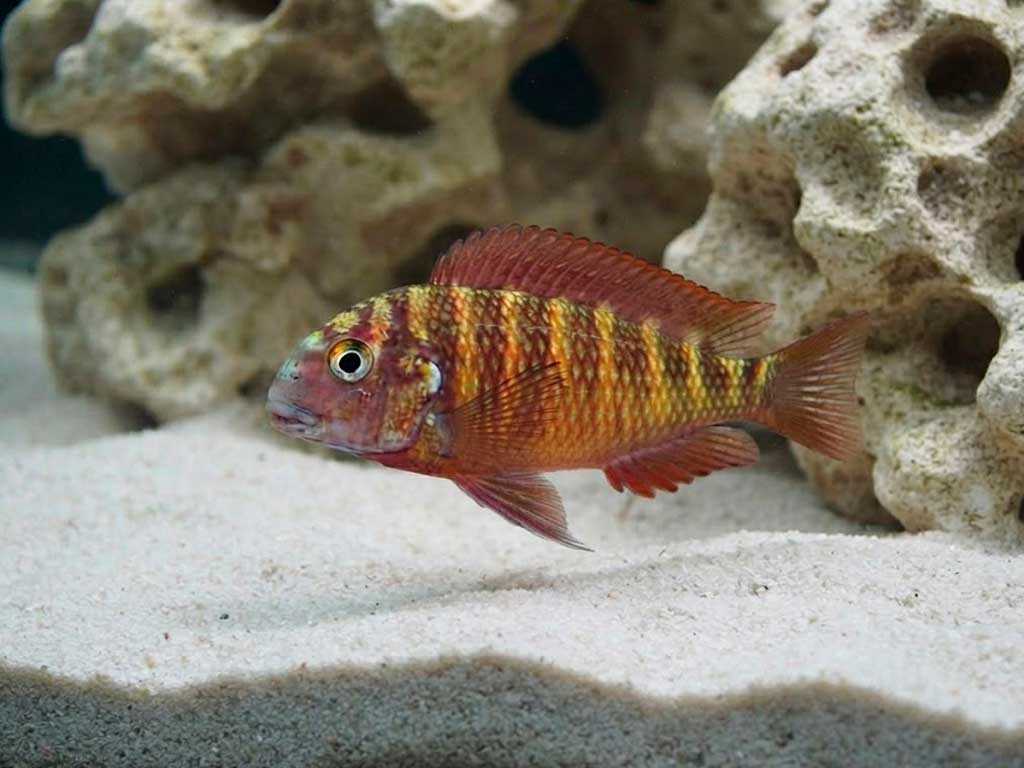
Keeping a Tropheus Moorii group brings incredible energy and vibrant color to a specialized African cichlid setup. Endemic to the rocky shallows of Lake Tanganyika, these active herbivores require specific environmental conditions and strict dietary care to thrive in captivity.
Whether you are setting up your first colony or refining your husbandry techniques, understanding their unique social structure and digestive sensitivities is essential for long-term success.
Natural Habitat and Origins of the Blunthead Cichlid
The Tropheus Moorii, commonly known as the blunthead cichlid, inhabits the shallow, sunlit rocky zones of Lake Tanganyika. In the wild, they spend their days darting across boulder surfaces, grazing on thick layers of filamentous algae and micro-organisms.
Because of their geographical distribution across various rocky outcrops, over 40 distinct color morphs exist. These range from deep blacks and yellows to striking red and green variations depending on the specific collection locality.
Essential Aquarium Parameters for Lake Tanganyika Conditions
Replicating their natural environment means maintaining hard, alkaline water with absolute stability. Even minor parameter swings can stress these sensitive fish.
- Water Temperature: Keep the aquarium between 23°C and 27°C (73°F to 81°F).
- pH Levels: Maintain a high pH ranging from 8.0 to 9.0.
- Water Hardness: Aim for a total hardness (GH) of 8 to 25 dGH.
- Filtration: Invest in powerful filtration to maintain pristine water quality with zero ammonia and nitrites.
Regular water changes of 20% to 30% weekly are mandatory to keep nitrate levels low and safeguard your colony.
Setting Up the Ideal Tank Layout
[Imagen: Tropheus moorii colony grazing on rockwork in a freshwater aquarium + Tropheus moorii]
Housing these active swimmers requires careful planning. A single specimen cannot be kept alone, and colonies demand generous space to disperse natural aggression.
- Tank Size: A minimum tank capacity of 150x45x45 cm (roughly 300+ liters or 80+ gallons) is recommended for a small group, though larger setups are always better.
- Rockwork: Construct extensive rock formations, caves, and slate walls along the back and sides. This breaks lines of sight and provides crucial territories for establishing a pecking order.
- Substrate: Fine sand is ideal, allowing natural sifting behavior and aiding overall digestive health.
- Lighting: Provide bright lighting to encourage natural algae growth on your rocks, which supplements their daily foraging.
Strict Herbivorous Diet and Feeding Rules
The number one rule in Tropheus care is avoiding protein-rich animal meats. Their long intestinal tracts are built exclusively for processing plant matter. Feeding them bloodworms or beefheart frequently leads to fatal digestive blockages, often referred to as “bloat”.
- Staple Foods: Base their diet on high-quality spirulina flakes and specialized herbivorous cichlid pellets.
- Vegetable Supplements: Offer blanched spinach, zucchini, and sheets of nori regularly.
- Occasional Treats: Small portions of high-fiber frozen foods like Cyclops or Mysis shrimp can be given sparingly.
Feed small portions multiple times a day rather than one heavy meal. You can learn more about specialized nutritional requirements through resources like Seriously Fish.
Social Structure and Tank Mates
Tropheus Moorii are famously feisty with conspecifics. Keeping them singly or in pairs results in relentless bullying, so they must always be maintained in large groups of six to twelve individuals or more.
A large colony diffuses aggression across many fish rather than targeting a single weak individual.
When choosing tank mates, select peaceful species from Lake Tanganyika that share the same dietary and water requirements, such as certain Julidochromis or Eretmodus species.
Avoid mixing different color morphs or species within the genus to prevent hybridization and intense territorial warfare. For a broader taxonomic overview of this cichlid family, consult references on Fishipedia.