Leopard Gourami Care Guide: The Congo’s Master of Camouflage
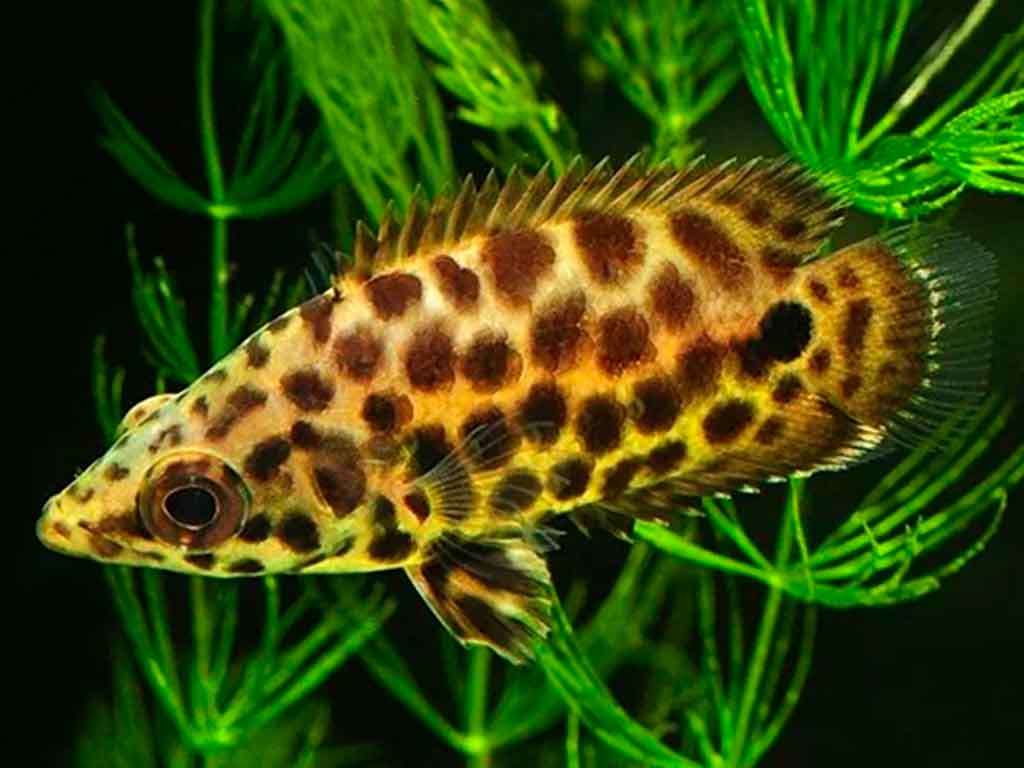
A leopard gourami looks like a dead leaf drifting through dark water. Then, in a fraction of a second, that leaf becomes a hunter. This guide walks you through everything you need to keep this African oddball thriving, from tank setup to tankmate selection.
Quick Facts
- Scientific name: Ctenopoma acutirostre
- Common names: Leopard gourami, leopard bushfish, leopard ctenopoma, spotted climbing perch
- Origin: Congo River basin, Central Africa
- Adult size: 4 to 6 inches (10 to 15 cm), occasionally larger
- Minimum tank size: 30 gallons (114 liters)
- Temperament: Predatory but not aggressive toward similarly sized fish
- Diet: Carnivore
- Lifespan: 10 to 15 years with proper care
- Care level: Intermediate
We have kept and researched Ctenopoma acutirostre extensively, and we know how confusing the conflicting size and care information online can be. Below, you will find real answers, not recycled product descriptions. One detail worth knowing before you buy: this fish is not actually a true gourami at all, and that distinction changes how you should care for it.
What Is a Leopard Gourami, Really?
The name “leopard gourami” is a marketing label, not a scientific one. True gouramis belong to the genus Trichogaster and hail from Asia.
Ctenopoma acutirostre, however, comes from Africa. It belongs to the Anabantidae family, a group of labyrinth fish related to gouramis but distinct from them.
This matters because true gouramis are mostly peaceful grazers. Your leopard gourami, meanwhile, is a dedicated ambush predator. Treating it like a peaceful community gourami is the single biggest mistake new owners make.
The Labyrinth Organ
Like bettas and true gouramis, this species has a labyrinth organ. This specialized structure lets it gulp air directly from the surface.
That adaptation helps it survive in the oxygen-poor, slow-moving waters of its native habitat. Consequently, you will often see your fish rise for a quick breath, even in a well-oxygenated tank. This is completely normal behavior, not a sign of distress.
Leopard Gourami Natural Habitat and Origin
The leopard gourami calls the Congo River basin home, spanning the Democratic Republic of Congo, the Republic of Congo, and the Central African Republic. It favors slow tributaries, backwaters, and flooded forest margins rather than the main river channel.
In the wild, it lives among submerged roots, fallen branches, and thick mats of decomposing leaf litter. This debris is not just shelter. It is camouflage, and camouflage is this fish’s entire hunting strategy.
Because of this heritage, your aquarium setup should mimic dim, structurally complex water rather than an open, brightly lit tank.
Appearance and Size: Setting the Record Straight
Few topics generate more confusion online than how big this fish actually gets. Different sources report wildly different numbers, so let’s clear it up.
Here is the reconciled picture:
| Source | Reported size |
|---|---|
| Scientific literature | 4 to 6 inches (100 to 150 mm) standard length |
| Typical aquarium specimens | 4 to 5 inches |
| Occasional reports | Up to 6 to 8 inches in exceptional cases |
The takeaway: plan your tank around a fish that will likely reach 4 to 6 inches, but budget extra swimming room in case yours grows toward the larger end of that range. Undersizing the tank is a common and avoidable mistake.
Coloration and Body Shape
The body is tall and laterally flattened, an evolutionary shape built for mimicking a floating leaf. Base coloration ranges from reddish brown to golden yellow, overlaid with irregular dark blotches that give the species its “leopard” nickname.
A large, extendable mouth and prominent eyes complete the look of a patient hunter. Many specimens also carry a dark “eyespot” near the base of the tail, a pattern that tends to fade with age.
Temperament and Behavior
Don’t let the word “predator” scare you off. This fish rarely bothers tankmates it cannot physically eat.
Instead, it spends long stretches motionless, tilted at odd angles beneath a leaf or inside a shaded nook. When prey finally wanders close, the strike is nearly instantaneous: the mouth flares open, creates a vacuum, and the meal disappears in a blink.
Owners often describe this species as surprisingly intelligent. Over time, it learns to recognize you and will approach the glass at feeding time, a rewarding form of interaction for anyone who enjoys observing behavior over flashy color.
Minor scuffles can occur between males, usually limited to body-wagging displays rather than real injury.
Tank Size and Aquarium Setup
A single adult needs at least 30 gallons (114 liters), though we recommend starting at 40 gallons if you plan to add tankmates, which you almost certainly will.
Decoration: Build the Shadows
Shade is not optional here; it is essential to this fish’s wellbeing. Aim for the following:
- Driftwood and root structures to create hiding spots and mimic submerged branches.
- Broad-leafed plants such as Amazon swords or large Anubias, which the fish will hide beneath.
- Floating plants to diffuse overhead light and lower stress.
- Dried leaf litter, like Indian almond leaves, to replicate the natural substrate and release beneficial tannins.
Fine sand works better than coarse gravel, since it more closely resembles the soft riverbed sediment of the Congo basin.
Water Parameters
| Parameter | Recommended range |
|---|---|
| Temperature | 75 to 82°F (24 to 28°C) |
| pH | 6.0 to 7.5 |
| Hardness (GH) | Soft to moderately hard |
| Ammonia/Nitrite | 0 ppm |
| Nitrate | Below 30 ppm |
Stable water quality matters more than hitting an exact number. Perform regular partial water changes and avoid sudden parameter swings.
Diet and feeding of the Leopard Gourami
This species is a strict carnivore, and getting the diet right prevents both malnutrition and aggression toward tankmates.
What to feed:
- Frozen bloodworms, brine shrimp, mysis, and krill
- Chopped or whole shrimp and mussel meat
- Occasional live foods like earthworms or ghost shrimp to encourage natural hunting behavior
- Larger-granule sinking pellets, once the fish accepts prepared foods
Flake food is usually ignored entirely, so do not rely on it. New arrivals can also be shy eaters at first. If yours refuses food, try soaking pellets in bloodworm juice or offering live food to trigger its hunting instinct.
Avoid feeding beef heart or other mammalian meat. These proteins contain fats the fish cannot properly metabolize, which can lead to organ strain over time.
Tank Mates: The Rule That Matters Most
Here is the golden rule of stocking a leopard gourami tank: if a fish fits in its mouth, eventually it will end up there.
Safe Tankmates
- Larger tetras, such as silver dollars
- Peaceful cichlids of similar size, like geophagus or Heros severus
- Robust catfish, including large corydoras, synodontis, and larger plecos
- Adult bala sharks or denison barbs
Fish and Invertebrates to Avoid
- Small fish under 2 to 2.5 inches, including guppies, neon tetras, and rasboras
- Shrimp such as neocaridina or caridina species, which this fish views as a favorite snack
- Highly aggressive or territorial cichlids, since the leopard gourami’s slow, timid nature makes it a poor match for pushy tankmates
Choosing tankmates carefully is not optional with this species. It is the single factor most likely to determine whether your tank thrives or turns into an expensive lesson.
Breeding the Leopard Gourami
Captive breeding reports remain uncommon, which makes this a genuine challenge for experienced aquarists rather than a beginner project.
The process resembles betta breeding on a larger scale. Males construct a bubble nest at the surface, frequently tucked beneath floating vegetation.
After spawning, the male collects the eggs in his mouth and deposits them in the nest. At this point, the female should be removed, since these fish provide no parental cooperation beyond the male’s nest-guarding.
Eggs typically hatch within 48 hours. Fry can accept baby brine shrimp shortly after becoming free-swimming, though survival rates tend to be low, partly due to cannibalism among siblings. Sexual maturity may not arrive until the fish is several years old, so patience is essential.
Common Health Issues
Leopard gouramis are generally hardy fish when kept in stable, clean water. Most health problems trace back to poor water quality or stress rather than the species itself being fragile.
Watch for common warning signs such as clamped fins, unusual hiding beyond its normal ambush behavior, or loss of appetite lasting more than a few days. These can point to standard freshwater ailments like ich or fin rot, both of which respond well to prompt treatment in most cases.
This article is for informational purposes and does not replace guidance from an aquatic veterinarian. If your fish shows persistent signs of illness, consult a professional before starting any treatment.
Leopard Gourami vs. True Gouramis: Key Differences
Since the naming confusion trips up so many buyers, here is a direct comparison.
| Trait | Leopard Gourami | True Gouramis (Trichogaster) |
|---|---|---|
| Origin | Africa (Congo basin) | Asia |
| Diet | Strict carnivore | Omnivore |
| Temperament | Ambush predator | Peaceful grazer |
| Ideal tankmates | Large, robust fish | Wide range of peaceful community fish |
Understanding this difference before you buy will save you from stocking mistakes that are hard to reverse once fish are already in the tank.
Is the Leopard Gourami Right for You?
This fish rewards patient, observant aquarists. If you enjoy watching subtle behavior unfold rather than a constantly active display tank, this species delivers in a way few others can.
However, skip this fish if you already keep small nano species or shrimp you want to protect. Similarly, hold off if you cannot commit to a 30-gallon-plus tank with heavy decoration.
If you have the space and the right tankmates in mind, a leopard gourami makes an unforgettable centerpiece.
Frequently Asked Questions
Is a leopard gourami actually a gourami?
Not technically. It belongs to the Anabantidae family and comes from Africa, while true gouramis of the genus Trichogaster are Asian. The name persists mainly for marketing reasons.
How big does a leopard gourami get?
Most specimens reach 4 to 6 inches (10 to 15 cm) as adults. Occasional individuals grow larger, so plan tank size around the upper end of that range.
What size tank does a leopard gourami need?
A minimum of 30 gallons works for a single adult, though 40 gallons or more gives better swimming room, especially once tankmates are added.
Can leopard gouramis live with shrimp?
No. Shrimp such as neocaridina and caridina species are a natural prey item and will disappear quickly in a shared tank.
Why does my leopard gourami hide all the time?
Hiding is natural ambush behavior, not necessarily distress. Sparse decoration or overly bright lighting tends to make it worse, so add more plants, driftwood, and shade.
What do leopard gouramis eat?
They are carnivores that thrive on frozen bloodworms, brine shrimp, shrimp meat, and occasional live foods. Flake food is generally ignored.
Are leopard gouramis aggressive?
Not in the traditional sense. They are predatory toward fish small enough to eat but typically ignore tankmates too large to be considered prey.
How long do leopard gouramis live?
With stable water quality and a proper diet, this species commonly lives 10 to 15 years, making it a genuine long-term commitment.
Can leopard gouramis breed in a home aquarium?
Yes, though successful breeding is uncommon and considered an intermediate to advanced project involving bubble-nest spawning.
What water parameters do leopard gouramis need?
Aim for 75 to 82°F, a pH between 6.0 and 7.5, and consistently low ammonia and nitrite. Soft to moderately hard water suits them best.
If you are setting up an aquarium built around African oddballs, the Frontosa cichlid makes an excellent next read, since it shares many of the same water chemistry preferences from Africa’s Great Lakes region.