Acanthocobitis Urophthalmus: Care Guide for the Endangered Banded Mountain Loach
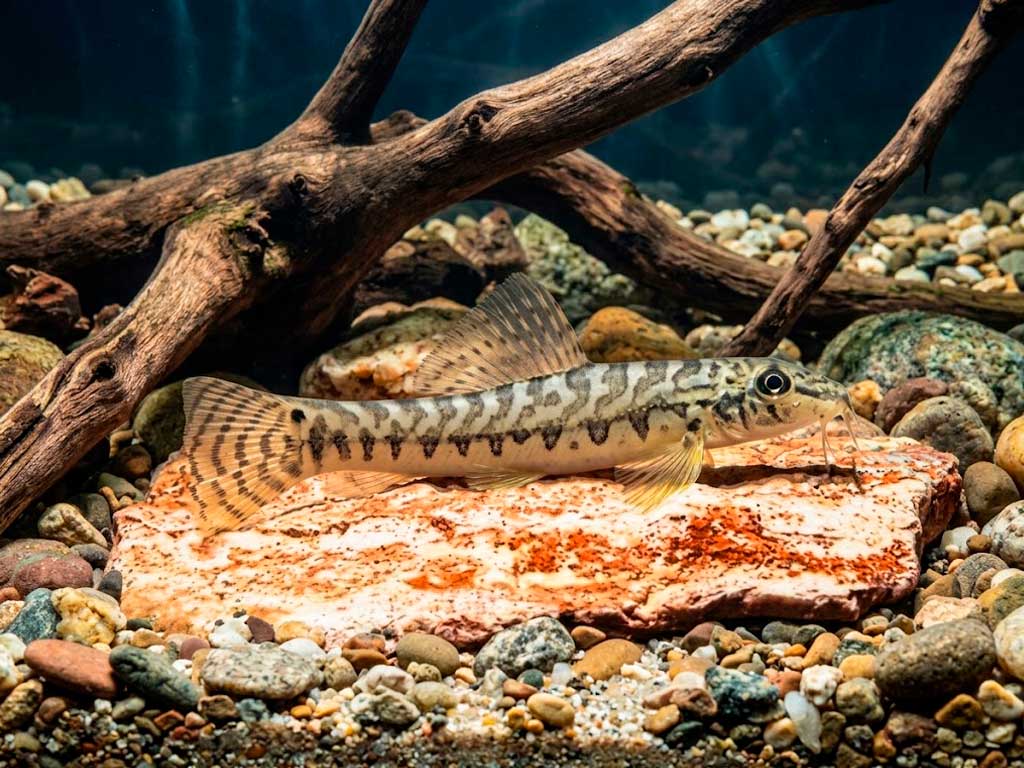
Acanthocobitis urophthalmus is small enough to overlook, endangered enough to worry about, and popular enough in the aquarium trade that both facts matter at once. In practice, this Sri Lankan endemic occupies a genuinely tiny native range, and it’s actively commercialized as an aquarium fish despite carrying an Endangered rating from the IUCN.
This guide covers what that combination means for anyone considering the species, alongside the practical setup it actually needs.
Quick Identity Card
| Trait | Detail |
| Scientific name | Acanthocobitis urophthalmus (Günther, 1868), now Paracanthocobitis urophthalma |
| Common names | Banded Mountain Loach, Ocellated Loach, Tiger Loach |
| Family / Order | Nemacheilidae, Cypriniformes |
| Origin | Southwestern Sri Lanka, Kelani River to Nilwala River lowlands only |
| Adult size | Up to 4 to 5 cm |
| Diet | Invertebrates and detritus in the wild |
| Temperament | Peaceful, hardy |
| Water temperature | 18 to 25°C (68 to 77°F) |
| pH | 6.0 to 7.5 |
| GH (hardness) | Soft to medium, up to 12 dGH |
| Sexual dimorphism | None known |
| Breeding | None reported |
| IUCN status | Endangered (assessed 2019), yet commercially traded |
Origin and Natural Habitat
This species occupies one of the smallest native ranges covered anywhere in this series: the lowlands of southwestern Sri Lanka, restricted specifically to the stretch between the Kelani River and the Nilwala River. Nothing about that range has expanded through introduction or trade the way some other species on this site have.
It turns up across a range of stream types, from larger river mainstreams down to small brooks, though it tends to avoid steep-gradient mountain streams. Shallower riffles running over small pebbles suit it best, and viewed from above, its natural coloration reads as genuinely inconspicuous, functional camouflage against a pebble bottom.
Identification
The species name explains its most recognizable feature directly: uro- (tail) plus ophthalmus (eye), referring to a black, white-edged ocellus sitting at the base of the upper caudal lobe. That eyespot remains the clearest field mark even as the rest of the banded pattern varies.
At a maximum size of around 4 to 5 cm, this ranks among the smallest species covered in this loach series so far, genuinely tiny even by Nemacheilidae standards.
Behavior and Temperament
Multiple independent sources describe this species the same way: hardy and among the favorites of the aquarium trade. That combination of resilience and popularity is exactly what makes its conservation status worth paying attention to rather than dismissing.
No sexual dimorphism has been documented, which means visual sexing isn’t a reliable option for anyone hoping to set up a breeding group.
Diet and Feeding
In the wild, this species probably feeds on invertebrates and detritus picked from the streambed. That opportunistic feeding style carries over cleanly into aquarium care.
Most foods get accepted without fuss: commercial sinking formulations, bottom-dwelling live foods, and frozen options like bloodworm or brine shrimp all work. The feeding guide for ornamental fish covers the broader principles of building a varied rotation, though this species is genuinely one of the less fussy eaters in the loach fiches covered so far.
Tank Requirements and Water Parameters
A setup built to resemble the gravel and sand bottom hill streams of Sri Lanka suits this species best, with plenty of stones and shelters worked into the layout for hiding spots. High flow rate and well-oxygenated water matter here as much as they do for any other stream-specialist loach on this site.
Water parameters stay manageable: temperature between 18 and 25°C (68 to 77°F), pH from 6.0 to 7.5, and general hardness on the soft-to-medium side, up to 12 dGH. The water chemistry guide covers testing and holding those parameters within range consistently.
Tankmates and Compatibility
This species reads as peaceful and hardy across the available accounts, without the bolder or more territorial tendencies documented for relatives like Acanthocobitis pictilis. It should mix reasonably well in a community setup built around other small, peaceful stream fish.
Given the shared genus history with Acanthocobitis botia, tankmate logic runs similar across the group: fast-current, similarly-sized fish from the same general region tend to work best.
Breeding
No breeding has been reported for this species, whether in the wild or in captivity. Combined with the lack of documented sexual dimorphism, that leaves anyone attempting it working almost entirely from scratch.
Conservation Status
The IUCN Red List classifies Acanthocobitis urophthalmus as Endangered, assessed under criterion B2ab(iii) in August 2019. That rating reflects a genuinely restricted range and ongoing habitat decline, not a borderline call.
Here’s what actually matters most about this species: FishBase describes it explicitly as a commercial favorite in the aquarium fish trade, meaning collection for the hobby is an active, ongoing pressure on a population that’s already confined to a narrow stretch of Sri Lankan lowland streams.
Anyone considering this species should weigh that combination seriously, prioritizing captive-bred stock if it’s available and asking real questions about sourcing if it isn’t.