Weimaraner Mastery: The Essential Guide to Europe’s Premier Noble Hunter
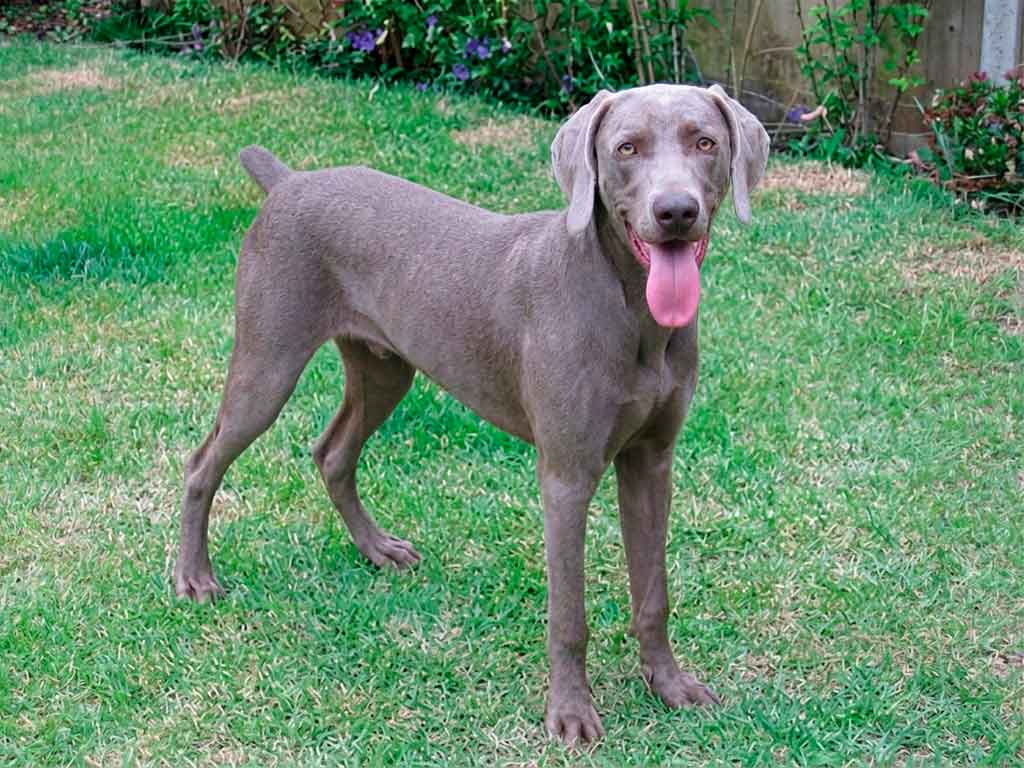
The Weimaraner belongs to Group 7, section 1.1, the continental pointing dogs, and it is a breed that cannot be judged without a working trial. Its utilization clause is the longest in this series: the dog must possess all the talents required of him and be usable for all work in field, wood and water, in a performance-oriented manner, before and after the shot.
A male is 59 to 70 cm (23.2 to 27.6 in) tall and 30 to 40 kg (66 to 88 lb) heavy; a bitch 57 to 65 cm and 25 to 35 kg (55 to 77 lb). The colour is silver, roe or mouse grey and shades of them, with only small white markings on the chest and toes.
It suits an owner who has a job for a dog: a shoot, a tracking hobby, or a serious sport. A household that wants a companion first and a working dog never should choose another breed.
Before and After the Shot
That phrase is the breed’s whole design. A versatile gundog works before the shot, finding and pointing game, and after it, tracking a wounded animal and retrieving from water. It is not one skill but a set of them, and the Weimaraner was bred to hold them all.
The history runs through the court of Weimar in the first third of the nineteenth century, when the dogs were still close to the old Leithund blood, the tracking hound that worked on a long line. The FCI calls the breed likely the oldest German pointing breed, pure-bred since 1900.
| Feature | Weimaraner |
|---|---|
| FCI group | Group 7, continental pointing dogs |
| Official use | Versatile hunting dog |
| Working trial | Required |
| Height | Males 59 to 70 cm (23.2 to 27.6 in), bitches 57 to 65 cm |
| Weight | Males 30 to 40 kg (66 to 88 lb), bitches 25 to 35 kg |
| Coat | Short and smooth, or long and soft with feathering |
| Colour | Silver, roe or mouse grey |
A short video look at the breed, best watched for its overall build and coat rather than as a judgement of any single dog.
The long-haired variety is not a curiosity. It appeared from about 1900, is fully recognised, and is judged to the same standard with the same rights. It is rarer, and it is the same dog with a coat that needs a comb.
The Puppy That Trembles
Two neurological conditions are worth knowing by name before you buy, because both are testable and both look alarming in a young dog.
Hypomyelination, sometimes called tremor syndrome, is caused by a mutation in FNIP2. Puppies show a tremor from about twelve to fourteen days of age, and in most cases it largely resolves by three or four months. A carrier frequency of about 4.3% has been estimated in the breed, which is high enough that two carriers can meet.
Spinal dysraphism is the more serious of the two, associated with a mutation in NKX2-8 at a frequency of roughly 1.4%. It affects the way the dog moves and stands, and it is inherited in a way that makes a DNA test the only honest answer.
Neither condition is a reason to avoid the breed. They are a reason to ask for the tests on both parents, and to walk away from a breeder who has never heard of them.
In the House
The standard describes a dog that is versatile, easily trained, steady and passionate in the field, with a remarkable ability to pick up scent, and it adds a line that matters at home: he is a good watchdog, without aggressiveness however.
| Situation | What to expect |
|---|---|
| A visitor at the door | Watched and announced, and then sociable once you accept them |
| Children of the family | Good company, and boisterous enough to knock one over |
| Another dog | Often fine, with friction over food and space |
| A cat or a rabbit | A chase, because the prey drive is the job |
| A day alone | The breed’s weak point, and the source of most of its rehomings |
The Health List
The AKC is blunt about the breed’s most serious risk: gastric torsion. The Weimaraner is deep-chested, and bloat is the emergency that ends the story if it is not caught in hours.
The two neurological conditions above come next. Hips are not the breed’s problem and the elbow is not either, which is a genuine advantage in a gundog of this size.
The ears are the routine issue, because a hunting dog with drop ears owns a warm, damp canal. Look inside them weekly, and dry after a swim.

Lemonade Pet Insurance
Explore customizable pet insurance coverage and learn whether Lemonade is the right fit for your dog or cat.
- Customizable coverage options
- Online policy management
Coat, Ears, and the Grey
The Short Coat
Smooth, dense and easy: a curry comb once a week, and a bath only after something dead. The colour is the maintenance, because a pale grey dog shows every mark.
The Long Coat
Soft, with feathering on the ears, the legs and the tail, and it needs a comb twice a week and a trim every few months. The long-haired dog is the same animal with more work attached.
Ears and Paws
The ears hang, so inspect them weekly and dry them after every outing in water. The paws take a beating on rough ground, and a hunting dog’s pads are worth a look after every long day.
Training a Versatile Dog
The breed learns fast, works for a partnership and needs a job with a purpose. Drills for their own sake bore it; a line with a scent at the end does not.
Tracking is the natural first discipline. A Weimaraner that is taught to follow a blood trail has a job for life, and the exercise is as good for the owner as for the dog.
Recall is the compromise every gundog owner makes. The dog will come when it is not working a scent; when it is, a long line and a fenced field are the honest tools.
Feeding a Deep-Chested Athlete
Food is weighed and split into two, and the bowl comes up afterwards, because a deep chest and a hurried meal are a bad pair.
A dog in the field burns far more than a sedentary one, so the portion tracks the work, not the calendar. Judge the body by hand and by eye, and let the scales settle the argument once a month.
Keep the hour before and after a meal quiet, and the water bowl full.
Shop for Your Breed

Just Food For Dogs – Fresh Frozen
Fresh meals. Gently cooked, then frozen to lock in nutrients. 100% Human Grade Ingredients. Gently Cooked in the USA. #1 Vet-Recommended Fresh Food.
Shop on JustFoodForDogs
Raw Paws Pet Food – Frozen Raw Pet Food
Feeding your pet a frozen raw pet food diet is a simple way to deliver real, whole-food nutrition in its most natural form.
Shop on RawPawsPetFood
Bravecto Chews for Dogs
Bravecto is a long-lasting flea and tick protection option for your dog. 1 dose of Bravecto chew provides up to 12 weeks of powerful protection, which is nearly 3 times longer than a monthly treatment.
Shop on BestVetCare.com
Deworming Treatments for Dogs
BestVetCare offers you a wide range of worm treatments which come in a variety of forms such as oral paste, tablets, granules, and liquid solutions.
Shop on BestVetCare.comHappyPetZone participates in various affiliate programs with brands and retailers. We may receive a commission on purchases made through our links, at no extra cost to you.
The Decision
| What it asks | What you get |
|---|---|
| A job: a shoot, a trail, a sport | A dog that is calm because it is fulfilled |
| Two hours a day and real running | A gundog that sleeps instead of destroying |
| DNA results for FNIP2 and NKX2-8 | A puppy whose future is known |
| A household that is home during the day | A dog that does not redecorate |
| Acceptance that it is a hunter | The most versatile dog in the house |
If that is the week you can offer, the dog breeds hub lists the other gundogs.
The Other Gundogs
- The Hungarian Vizsla is the closest rival in temperament, softer and even more handler-focused.
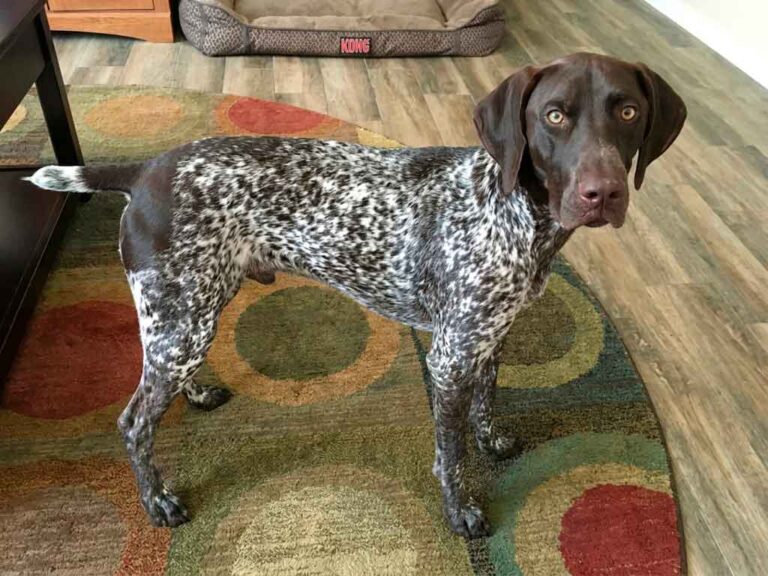
- The German Shorthaired Pointer is the German counterpart, lighter and faster in the field.
- The German Wirehaired Pointer is the tougher, bearded version of the same idea.
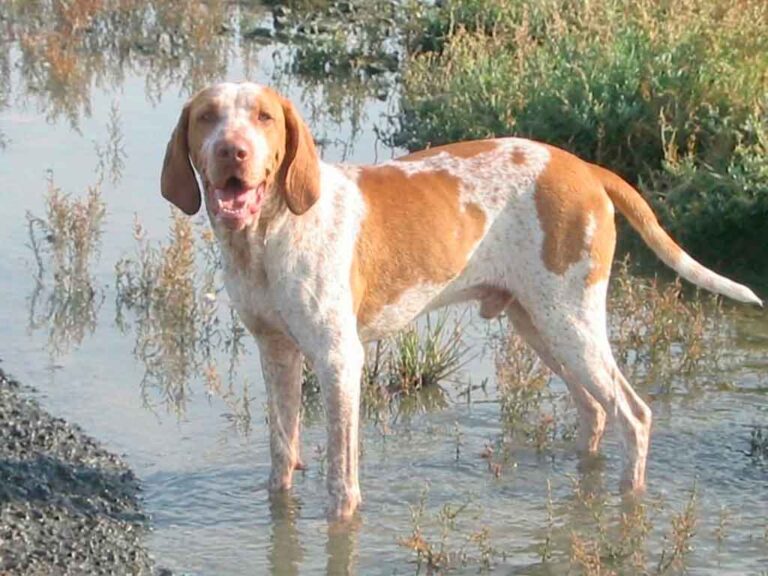
- The Bracco Italiano is the Italian pointer, slower, heavier and gentler.


Frequently Asked Questions
Sources
- Fédération Cynologique Internationale, Weimaraner breed standard No. 99, full text (2015).
- A frameshift mutation in NKX2-8 is associated with spinal dysraphism in Weimaraners, PLOS Genetics (2013).
- A FNIP2 mutation causes hypomyelination in Weimaraners, Glia (2014).
- American Kennel Club, Weimaraner breed profile and health statement (2026).