Cat Asks for Food but Won’t Eat? 7 Causes and What to Do
Your cat asks for food but won’t eat when you put the bowl down, leaving you wondering whether your pet is being picky or feeling unwell. This behavior can happen when a cat has dental pain, nausea, an underlying illness, stress, food aversion, or difficulty smelling food.
The most important clue is what happens after your cat approaches the bowl. Does your cat sniff the food and walk away? Lick it without taking a bite? Cry for food but refuse every meal? Or try to chew before backing away?
These details can help you describe the problem to your veterinarian, although they cannot confirm a diagnosis at home. This guide explains seven possible causes, signs to watch for, practical steps you can take, and when your cat needs veterinary attention.
Quick answer: A cat may ask for food but refuse to eat because of dental or oral pain, mouth or jaw injuries, illness-related nausea, stress, food preferences, or a reduced sense of smell. If your cat is not eating at all, contact your veterinarian promptly. A cat that goes without food for about 24 hours needs immediate veterinary attention, and kittens or cats with other concerning symptoms may need help sooner.
Why Does My Cat Ask for Food but Won’t Eat?
Cats can show interest in food even when something prevents them from eating comfortably. The smell of a meal, a familiar feeding routine, or hunger may bring your cat to the bowl, but pain, nausea, or another problem can stop the cat from taking a bite.
The behavior itself does not identify the cause. Look at the full pattern, including how much your cat has eaten, whether the problem started suddenly, and whether other symptoms have appeared.
For example, a cat that drops kibble while chewing may have oral discomfort. A cat that sniffs food and turns away may feel nauseated or dislike the food’s smell. A cat that eats normally when the household is quiet may be responding to stress or competition around the feeding area.
These are useful clues, not definitive diagnoses. Several different problems can produce similar behavior.
1. Dental Disease and Oral Pain
Dental disease is one of the important medical reasons a cat may approach food but refuse to eat. Your cat may feel hungry and recognize the food but experience pain when biting, chewing, or moving the mouth.
Common feline dental problems include gingivitis, periodontal disease, and tooth resorption. These conditions can cause inflammation, discomfort, and damage to the structures supporting the teeth. Some cats hide oral pain, so a normal-looking face does not rule out a dental problem.
Signs your cat may have dental pain
Look for changes such as:
- Approaching the bowl, then backing away.
- Dropping food while chewing.
- Chewing on one side of the mouth.
- Drooling more than usual.
- Bad breath.
- Pawing at the mouth or rubbing the face.
- Preferring soft food while refusing kibble.
- Eating less or losing weight.
Your cat may show only one of these signs. A change in eating behavior can be the first clue that something is wrong.
What you can do
Arrange a veterinary examination if you suspect dental pain. A veterinarian may need to examine the mouth closely and take dental X-rays to identify problems that cannot be seen during a basic visual check.
You can offer your cat’s usual wet food if it is normally part of the diet and your cat can eat it comfortably. However, do not force food into the mouth or assume that softer food will resolve the underlying problem.
Avoid brushing a painful mouth until your veterinarian has assessed it. Human toothpaste is not appropriate for cats and may contain ingredients that are unsafe for them.
Once your veterinarian confirms the cause, a steady routine helps prevent most of these problems. Our cat hygiene guide covers the basics.
2. Gingivostomatitis and Severe Mouth Inflammation
Gingivostomatitis is a painful inflammatory condition affecting the gums and other tissues inside a cat’s mouth. It can make eating uncomfortable enough that a cat approaches food but backs away after trying to take a bite.
This condition differs from mild gum irritation because the inflammation can be extensive and severe. Affected cats may struggle with both dry and wet food.
Signs to watch for
Possible warning signs include:
- Red or swollen gums.
- Excessive drooling.
- Bad breath.
- Difficulty chewing or swallowing.
- Crying or pulling away while attempting to eat.
- Reduced grooming or changes in behavior.
Some of these signs also occur with other oral diseases. A veterinary examination is needed to determine what is causing the discomfort.
What you can do
Contact your veterinarian promptly if your cat appears to have mouth pain or cannot eat normally. Treatment depends on the severity of the inflammation and the underlying cause.
Do not try to inspect deep inside your cat’s mouth if doing so causes distress or risks a bite. You also should not give human painkillers or use leftover medication from another pet.
Important: A cat that repeatedly approaches food but cannot eat may need more urgent attention than a cat that simply dislikes one particular meal. Painful oral conditions deserve prompt assessment, especially when food intake is falling.
3. Mouth or Jaw Injuries
A mouth or jaw injury can make eating difficult even when your cat still appears interested in food. Fractured teeth, jaw injuries, and other structural problems may interfere with biting, chewing, or swallowing.
In some cases, the problem follows a fall, an accident, or a fight. Other oral problems may develop without an event you witnessed.
How to recognize a possible injury
Watch for:
- Sudden refusal to eat after an accident.
- Blood around the mouth.
- Facial swelling.
- Difficulty closing the mouth.
- An unusual jaw position.
- Food falling out when your cat tries to chew.
- Crying, hiding, or resisting touch around the face.
These symptoms need veterinary attention. Do not attempt to reposition the jaw or manipulate a suspected fracture.
What you should do
If your cat has facial trauma, bleeding, obvious swelling, or difficulty opening or closing the mouth, seek urgent veterinary care.
Do not force the mouth open to inspect the injury. Avoid giving hard treats or trying to test whether your cat can chew. A veterinarian can assess the injury and determine whether imaging or other treatment is necessary.
If your cat suddenly cannot eat after an accident, do not wait until the next scheduled meal to see whether the problem resolves.
4. Systemic Illness and Nausea
Sometimes the problem is not in the mouth at all. A cat may ask for food while experiencing nausea or an illness that changes its appetite.
Kidney disease, diabetes, hyperthyroidism, gastrointestinal conditions, pancreatitis, and other health problems can affect eating behavior. Their effects vary: some conditions cause increased hunger, while others lead to reduced appetite or nausea.
This is why a cat that seems hungry but will not eat should not automatically be labelled a picky eater.
Why nausea can change eating behavior
A nauseated cat may approach the food, sniff it, lick its lips, and then walk away. Some cats drool, vomit, or repeatedly swallow. Others show little beyond a sudden loss of interest in food.
These signs are not specific to nausea. Dental pain, stress, and other medical problems can produce similar patterns.
Other symptoms that matter
Pay attention to changes such as:
- Vomiting or repeated retching.
- Unusual tiredness or hiding.
- Increased thirst or urination.
- Weight loss.
- Diarrhea or constipation.
- A change in normal grooming.
- Refusing several different foods.
Tell your veterinarian when the behavior began, what your cat has eaten, and whether you have noticed changes in drinking, urination, or litter box habits.
What you can do
Contact your veterinarian if your cat repeatedly refuses food, eats much less than usual, or shows other signs of illness. Seek urgent advice if your cat is weak, repeatedly vomiting, appears to be in significant pain, or cannot keep water down.
Do not give human medication or appetite stimulants unless a veterinarian has prescribed them for your cat. The right treatment depends on identifying the cause.
5. Stress and Changes in the Feeding Environment
Cats can be sensitive to their surroundings, and stress may interfere with eating. A cat may ask for food because the feeding routine is familiar, then hesitate when the feeding area feels unsafe or uncomfortable.
Changes in the household can contribute. These include moving home, introducing a new pet, visitors, loud noises, changes in feeding schedules, or conflict between cats.
The feeding setup itself can matter, too. A cat may avoid a bowl placed in a busy walkway or an area where another animal blocks access.
Signs stress may be contributing
You might notice that your cat:
- Eats only when the room is quiet.
- Watches other pets instead of eating.
- Approaches the bowl when you are nearby but leaves when you move away.
- Hides more often than usual.
- Eats less after a change in the household.
- Avoids a feeding area where another cat waits.
These clues can help you identify environmental factors, but they do not rule out medical illness. A cat can be stressed and unwell at the same time.
How to make feeding easier
Try offering meals in a quiet location where your cat can approach and leave without being cornered.
In a multi-cat home, provide separate feeding areas with enough distance to reduce competition. Make sure each cat can reach its food without passing another cat that blocks or intimidates it.
Keep the feeding routine predictable when possible. If a recent change appears to be causing stress, give your cat a calm space and time to adjust.
When to call the vet: If your cat continues to eat poorly, loses weight, or develops other symptoms, do not assume stress is the only cause. Persistent appetite changes deserve a veterinary assessment.
6. Food Preferences and Food Aversion
Some cats are particular about what they eat. A cat may reject a new flavour, a different texture, food served at an unfamiliar temperature, or a meal that smells different from usual.
Food aversion is another possibility. A cat may develop a negative association with a food after feeling nauseated or unwell while eating it. Changes in the household or feeding routine may also influence willingness to eat.
Still, a sudden refusal of a familiar food should not automatically be treated as fussiness.
How to tell whether the food itself may be the issue
Consider whether:
- You recently changed the brand, recipe, or texture.
- The food was left out for a long time.
- The package smells unusual or the food has changed appearance.
- Your cat refuses one food but eats its familiar diet normally.
- Your cat accepts treats but refuses its regular meals.
Eating treats does not prove that your cat is healthy. A cat with oral pain or nausea may accept certain foods while refusing others.
What you can do
Check the food’s freshness, storage instructions, and expiration date. Serve a fresh portion of your cat’s usual food in a clean bowl.
If your cat normally eats wet food, you can offer it at a comfortable room temperature. Some cats respond to the stronger aroma of slightly warmed food, but it should never be hot. Check the temperature carefully before serving.
Avoid offering a large number of unfamiliar foods in quick succession. Repeated changes can make it harder to identify what your cat will eat and may complicate the situation if nausea is present.
Do not force-feed your cat or syringe food into its mouth unless a veterinarian has specifically directed you on how to provide nutritional support. Forced feeding can worsen food aversion and carries other risks.
If your cat refuses all food or continues eating much less than usual, contact your veterinarian rather than relying on food changes alone.
7. A Reduced Sense of Smell or Taste
A cat’s sense of smell plays an important role in its interest in food. If your cat cannot smell a meal as well as usual, the food may seem less appealing even when hunger is present.
Nasal congestion from a respiratory illness can affect how a cat smells food. Other health problems may also change appetite or the way food is perceived. Changes in smell or taste should not be assumed to be a normal part of aging without considering other possible causes.
Signs to look for
You may notice:
- Sniffing food repeatedly without taking a bite.
- Less interest in meals that were previously appealing.
- Sneezing or nasal discharge.
- Watery eyes.
- Reduced appetite alongside other changes in behavior.
- Eating less over several meals.
A cat with congestion may have difficulty smelling food, but dental pain and nausea can look similar. The accompanying symptoms and a veterinary examination help distinguish the possibilities.
What you can do
Offer fresh food in a clean bowl and keep the feeding area free of strong household odours. If your cat normally eats wet food, serving it slightly warmed to room temperature may make its aroma more noticeable.
Do not use essential oils, strong fragrances, or human cold medicines to try to improve your cat’s appetite or breathing. Some products can be harmful to cats.
Contact your veterinarian if your cat has nasal discharge, persistent sneezing, breathing changes, or a reduced appetite. Difficulty breathing is an emergency and requires immediate veterinary care.
What to Do When Your Cat Asks for Food but Won’t Eat
If your cat repeatedly asks for food but refuses to eat it, focus on safety first. These steps can help you collect useful information and make feeding more comfortable while you arrange veterinary advice when needed.
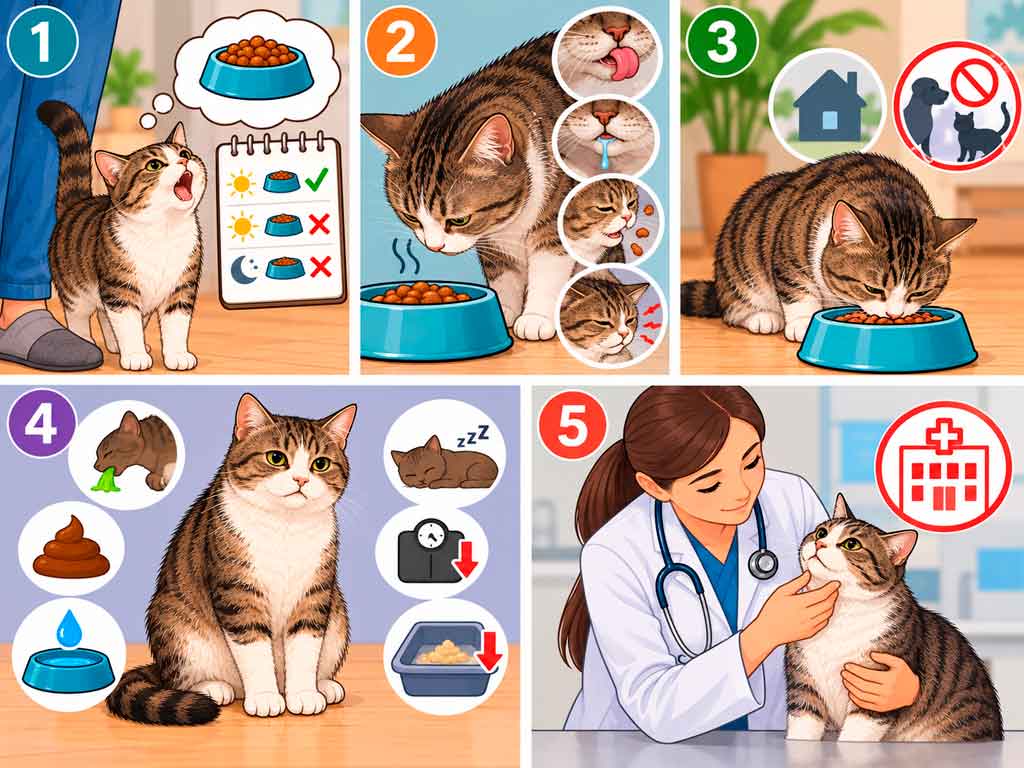
Step 1: Check how much your cat has actually eaten
Think about the last time your cat ate a normal meal. Note whether your cat has eaten nothing, taken a few bites, or eaten less than usual throughout the day.
Include treats and any food your cat may have eaten elsewhere. This information can help your veterinarian assess how serious the change may be.
Step 2: Observe what happens at the bowl
Watch from a comfortable distance without repeatedly pushing food toward your cat.
Does your cat sniff the food and leave? Does your cat try to chew but drop pieces? Is there lip licking, drooling, or apparent discomfort? Does your cat eat when other animals are out of the room?
Write down what you see. These details are more useful than assuming your cat is simply being fussy.
Step 3: Offer familiar food in a calm setting
Use a clean bowl and a fresh portion of your cat’s usual food. Choose a quiet feeding location, especially if there are other pets in the home.
You can offer the texture your cat normally prefers, provided it can be eaten comfortably. Avoid forcing food into the mouth. Avoid unfamiliar foods, and see our guide to key cat nutrients and foods to avoid.
Step 4: Check for other symptoms
Look for vomiting, diarrhea, drooling, weight loss, unusual tiredness, nasal discharge, changes in drinking, or changes in litter box habits.
If your cat appears weak, has difficulty breathing, shows significant pain, or cannot swallow normally, seek urgent veterinary care.
Step 5: Contact your veterinarian when appetite changes persist
A new pattern of refusing meals deserves attention, especially if your cat eats very little or refuses food entirely.
Do not wait for a specific number of hours if your cat has other concerning symptoms. Cornell’s Feline Health Center notes that appetite loss can seriously affect an adult cat’s health in as little as 24 hours, while very young kittens may be at risk much sooner.
Your veterinarian may examine your cat’s mouth, assess hydration and body condition, and recommend tests based on the symptoms.
When Is a Cat Refusing Food an Emergency?
A cat that refuses food may have a manageable feeding issue, but appetite loss can also signal a condition that needs prompt treatment.
Seek urgent veterinary advice if your cat:
- Has eaten nothing for about 24 hours.
- Is repeatedly vomiting or cannot keep water down.
- Appears weak, collapses, or is unusually difficult to rouse.
- Has difficulty breathing.
- Has significant facial swelling, mouth bleeding, or suspected jaw trauma.
- Appears unable to swallow or is in severe pain.
- Is a very young kitten that has stopped eating.
Do not wait 24 hours if your cat is already unwell or showing serious symptoms. Kittens, senior cats, and cats with existing medical conditions may need earlier assessment.
Cats that do not eat enough can develop serious complications, including hepatic lipidosis, a potentially life-threatening liver condition.
Prompt veterinary care helps identify the cause and determine whether nutritional support is needed. If your veterinarian has diagnosed a liver problem, diet choices matter, so ask about a suitable food plan.
What Not to Do When Your Cat Refuses Food
It is natural to want to get your cat eating again quickly. Some well-intentioned responses, however, can delay care or make the problem harder to manage.
Avoid these common mistakes:
- Do not assume your cat is being stubborn. Pain, nausea, and illness can all change eating behavior.
- Do not force food into your cat’s mouth. Forced feeding can increase food aversion and may cause complications.
- Do not give human medication. Some medicines that people use safely can be dangerous for cats.
- Do not keep switching foods without a plan. If your cat refuses meals repeatedly, investigate the cause rather than relying on new flavours.
- Do not wait several days to see what happens. A cat that stops eating needs prompt veterinary attention.
- Do not treat eating treats as proof that everything is fine. A cat may accept a preferred treat while still having an underlying problem.
If your cat refuses food, your goal is to identify what has changed and get appropriate help. Feeding tricks may be useful in some situations, but they cannot replace a veterinary examination when illness or pain is possible.
Disclaimer: Veterinary Advice
This article provides general educational information about feline eating behavior. It is not a diagnosis and does not replace an examination, diagnosis, or treatment plan from a licensed veterinarian.
A cat that asks for food but refuses to eat may have a medical condition that cannot be identified from behavior alone. Contact your veterinarian if your cat’s appetite changes, and seek urgent care for severe symptoms or prolonged refusal to eat. Never give human medication or force-feed your cat without veterinary guidance.
Frequently Asked Questions
Help Your Cat Get Back to Eating Safely
When a cat asks for food but won’t eat, the most useful first step is to observe what happens at the bowl and check for other changes in health or behavior.
Dental pain, severe mouth inflammation, injuries, illness-related nausea, stress, food aversion, and a reduced sense of smell can all affect eating. The same behavior can have several different explanations, so avoid trying to diagnose the problem from one sign alone.
Offer familiar food in a calm environment, record what your cat eats, and contact your veterinarian if the problem persists or your cat refuses food. If your cat is weak, in significant pain, having difficulty breathing, or unable to eat or swallow normally, seek urgent care.
Your cat’s feeding behavior is useful information. Acting on a sudden change early gives your veterinarian a better chance to identify the cause and help your cat safely.
Sources:
- Cornell Feline Health Center: Anorexia in Cats
- Cornell Feline Health Center: Feline Dental Disease
- VCA Animal Hospitals: Recognizing Signs of Illness in Cats
- PDSA: Why Your Cat Isn’t Eating