Cat Food: Key Nutrients and Dangerous Foods You Should Know
Feeding your cat the right cat food is one of the most important things you’ll do for their long-term health. Balanced nutrition doesn’t just fill their belly — it supports dental health, a stable digestive system, a healthy weight, and can add years to their life. Getting it wrong, on the other hand, can quietly cause serious problems long before you notice symptoms.
Cat nutrition isn’t a topic to take lightly. Cats are obligate carnivores, meaning their bodies are built to run on nutrients found almost exclusively in meat. Without the right proteins, vitamins, and minerals, cats can develop heart disease, vision problems, and even blindness. This guide breaks down exactly what your cat needs, what to avoid, and how to choose food with confidence.
Quick Facts: Cat Food
- Cats are obligate carnivores, requiring taurine and arginine found almost exclusively in animal protein
- Daily protein needs: Roughly 26% of dry matter intake for adult cats, higher for kittens
- Most dangerous “food” for cats: Lilies (all parts) — not a food, but a common and often fatal household toxin
- Treats: Should never exceed 10% of total daily calories
- Water: Cats on dry food alone often don’t drink enough; wet food helps close that gap
Types of Cat Food
Wet Food vs. Dry Food
Each type of food brings real, distinct benefits, and most cats do well with a combination of both.
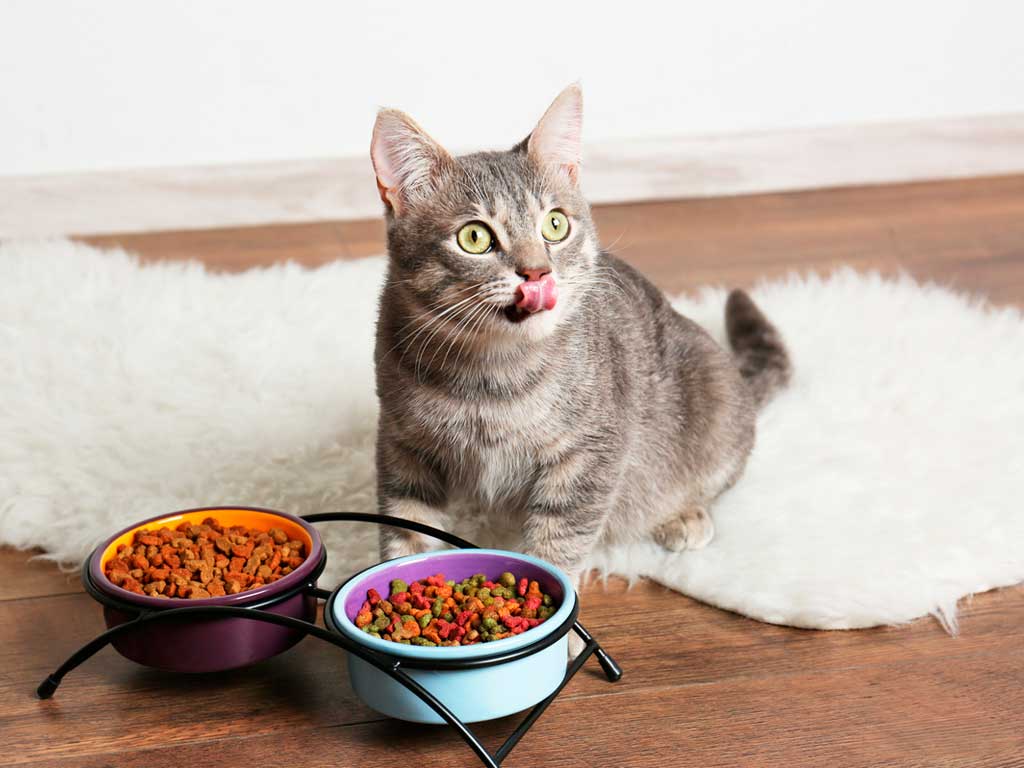
Dry food (kibble) is convenient, has a longer shelf life, and the mechanical crunching action can help reduce tartar buildup on teeth. A quality option worth considering is Meow Mix Gravy Bursts, Savory Chicken Flavor, which combines the convenience of dry kibble with a gravy-filled center many cats find more appealing than plain kibble.
Wet food has a much higher moisture content, which matters enormously for cats, since they have a naturally low thirst drive and often don’t drink enough water on a dry-food-only diet. It’s also generally easier for cats with dental issues or kidney concerns to eat. The Fancy Feast Seafood Collection Variety Pack is a solid option for rotating flavors while keeping portions controlled.
These are affiliate links, which means Happy Pet Zone may earn a small commission at no extra cost to you if you make a purchase. See our full Affiliate Disclaimer for details.
| Type | Pros | Watch For |
|---|---|---|
| Dry food | Convenient, supports dental health, longer shelf life | Lower moisture; not ideal as the sole diet for cats prone to urinary issues |
| Wet food | High moisture, easier to eat, often more palatable | Shorter shelf life once opened; generally more expensive per calorie |
Raw Feeding
Some owners opt for a raw diet, which can work well when carefully managed, since it mirrors what cats would eat in the wild. However, it requires real planning: improperly balanced raw diets risk nutrient deficiencies, and raw meat carries a genuine risk of bacterial contamination and intestinal parasites for both your cat and your household. Talk to your veterinarian before switching, and consider working with a veterinary nutritionist to formulate a balanced raw plan.
Essential Nutrients for Cats
Proteins and Amino Acids
Cats need specific amino acids, especially taurine and arginine, that are found almost exclusively in animal meat. Taurine deficiency is directly linked to a heart condition called dilated cardiomyopathy and to vision loss, since cats cannot synthesize enough taurine on their own the way dogs or humans can. Arginine deficiency is even more acute: without it, a cat’s body can’t properly clear ammonia from the bloodstream, which can become dangerous within hours.
Adult cats generally need a diet with roughly 26% protein on a dry matter basis, while kittens and nursing mothers need meaningfully more to support growth and milk production.
Vitamins and Minerals
Vitamins and minerals are just as essential as protein for a cat’s health. Vitamin A supports vision and skin health, but unlike dogs, cats can’t convert plant-based beta-carotene into vitamin A, so it must come from animal sources. Calcium and phosphorus need to stay in a proper ratio to support healthy bones. B vitamins support energy metabolism, and cats have a comparatively high requirement for them since they process protein for energy more than carbohydrates. A complete, balanced commercial cat food is formulated to hit these targets; homemade diets need careful formulation to avoid gaps.
Dangerous Foods and Substances for Cats
It’s tempting to share your plate with your cat, but a surprising number of common foods, and even some non-food household items, are genuinely dangerous.
Critical Safety Warning: Lilies. Every part of a lily plant, including the pollen and water in the vase, is highly toxic to cats and can cause fatal kidney failure within 24 to 72 hours. If you have cats, avoid keeping any lily species in your home entirely. If your cat has any contact with a lily, treat it as a veterinary emergency.
Beyond lilies, watch for:
- Onion and garlic (including powdered forms) — damage red blood cells and can cause anemia
- Chocolate and caffeine — contain theobromine and caffeine, both toxic to cats’ hearts and nervous systems
- Grapes and raisins — linked to kidney failure in cats, even in small amounts
- Milk and dairy products — most adult cats are lactose intolerant and can develop digestive upset
- Xylitol (in sugar-free gum, some peanut butters, and baked goods) — causes a dangerous drop in blood sugar
- Alcohol — even small amounts can cause severe poisoning in a cat’s small body
- Raw bread dough — continues to rise in the stomach and can produce alcohol as it ferments
- Dog food — not toxic outright, but lacks the taurine and other nutrients cats specifically need long-term
How to Choose the Right Food
- Factors to consider: Age, activity level, body condition, and any existing health conditions all shape what “right” looks like for your specific cat.
- Read the label: Look for a named animal protein (like “chicken” or “salmon”) as the first ingredient, and check for an AAFCO statement confirming the food is complete and balanced for your cat’s life stage.
- Consult your veterinarian: They can help you decide on the best diet based on bloodwork, body condition, and any medical history, especially if your cat has a chronic condition.
Frequency and Amount of Feeding
How much your cat needs depends on their weight, age, and activity level, but as a general starting point, most adult cats do well on two measured meals a day rather than free-feeding, which makes it far easier to notice appetite changes early. Dividing the daily amount into smaller portions throughout the day can also help prevent overeating and vomiting from eating too fast.
Treats and Supplements
Treats should stay low in sugar and carbohydrates and should never make up more than 10% of your cat’s total daily calories, since exceeding that can throw off the balance of their complete diet. Supplements can help in specific situations, like joint support for senior cats or omega fatty acids for skin and coat health, but they should always be discussed with your veterinarian first rather than added on your own.
Adequate Hydration
Water is essential, and dehydration is a quiet but common problem in cats, especially those eating a dry-food-only diet. Make sure fresh water is always available, and consider using wide, shallow bowls, since some cats dislike their whiskers touching the sides of a narrow bowl. A pet fountain can also encourage more drinking, since many cats prefer moving water.
Adapting Diet by Life Stage
A cat’s nutritional needs shift meaningfully as they age. Kittens need calorie- and protein-dense food to support rapid growth. Adult cats need a maintenance formula matched to their activity level. Senior cats often need fewer calories but may need higher-quality, more digestible protein to help preserve muscle mass. Switching formulas as your cat moves through these stages, always gradually over 7 to 10 days to avoid digestive upset, keeps their diet matched to what their body actually needs.
Special Diets for Health Problems
Cats with conditions like diabetes, kidney disease, or urinary crystals often need a prescription or specially formulated diet, not just a “healthy” commercial option. These therapeutic diets are calibrated for things like restricted phosphorus, controlled carbohydrates, or specific mineral balances that address the underlying condition, which is also true for cats managing liver disease. Never put a cat with a diagnosed health issue on a special diet without your veterinarian’s guidance, since the wrong therapeutic food can do real harm.
Frequently Asked Questions
What nutrients does cat food need to contain?
Cat food needs animal-based protein with taurine and arginine, essential fatty acids, and a balanced profile of vitamins and minerals like vitamin A, calcium, and phosphorus in the correct ratio.
Is wet or dry cat food better?
Neither is universally better; each has strengths. Wet food supports hydration and is easier to eat for cats with dental or kidney issues, while dry food is convenient and can support dental health through its texture.
What human foods are toxic to cats?
Onion, garlic, chocolate, grapes, raisins, xylitol, alcohol, and raw bread dough are all toxic. Lilies, while not a food, are one of the most dangerous substances a cat can encounter.
How much protein does a cat need in their diet?
Adult cats generally need around 26% protein on a dry matter basis, with kittens and nursing mothers requiring more to support growth and milk production.
Can cats eat dog food?
Occasionally in a pinch it won’t cause immediate harm, but dog food lacks adequate taurine and other nutrients cats need, so it’s not safe as a regular diet.
How often should I feed my cat?
Most adult cats do well with two measured meals a day, which also makes it easier to catch appetite changes early compared to free-feeding.
Do cats need supplements?
Not usually, if they’re eating a complete and balanced commercial diet. Supplements may help in specific situations like joint support or skin health, but should be vet-approved first.
Why is water intake important for cats?
Cats have a naturally low thirst drive and are prone to dehydration, especially on dry food alone, which can contribute to urinary and kidney issues over time.
How do I switch my cat to a new food safely?
Transition gradually over 7 to 10 days, mixing increasing amounts of the new food with the old, to avoid digestive upset.
What should I do if my cat eats something toxic?
Contact your veterinarian or an animal poison control hotline immediately, even if your cat seems fine, since some toxins like lily exposure show delayed symptoms.
Feeding your cat well isn’t complicated once you know what actually matters: real animal protein, the right vitamins and minerals, and a household free of the foods and plants that put them at risk. Always work with your veterinarian to fine-tune the details for your specific cat, and you’ll be giving them the foundation for a long, healthy life.