Briard Dog Breed: The Complete Guide for Devoted Owners

Curious about the Briard dog breed and whether this shaggy French shepherd fits your household? You’re looking at a loyal, courageous companion with a legendary history and a coat that demands real commitment.
This guide covers origin, temperament, grooming, and health so you know exactly what to expect.
Drawing on official breed standards and hands-on pet care expertise, we’ll walk through every essential detail. Let’s start with where this striking breed comes from.
History and Origin
Nobody knows the Briard’s exact origin, though most experts believe it emerged in medieval Europe. Eastern herding dogs likely crossed with local guardian breeds in France, eventually producing the Briard we know today.
A famous legend surrounds the breed’s history. According to the story, a man named Aubry de Montdidier was murdered, and his dog was the only witness.
The loyal dog relentlessly tracked the killer, and when the king learned of it, he ordered a duel between the dog and the accused man, a common medieval practice. The dog won.
The Briard’s physical stamina and working ability suggest a genuine link to that legendary dog. Furthermore, the breed’s name comes from the French region of Brie, where it developed its reputation as a skilled herder.
Physical Characteristics
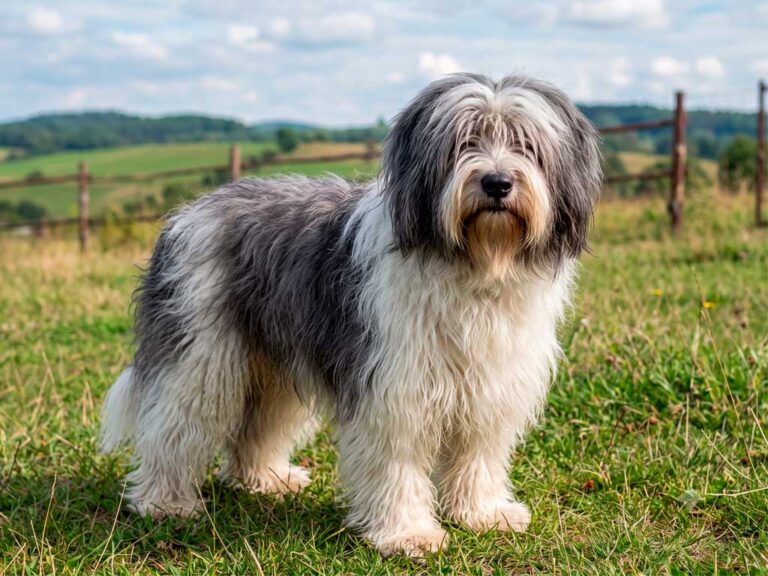
The Briard is a large, handsome dog with a striking double coat, yet it never looks heavy or bulky. Common colors include black and various shades of fawn, though slate gray also appears.
Muscular and well-proportioned, the breed carries a strong neck that highlights its head. Despite all that hair around the eyes, Briards actually have excellent vision.
Adult females stand between 23 and 26 inches tall and weigh around 75 pounds. Males run slightly larger, standing 24 to 27 inches and weighing roughly 85 pounds.
Temperament and Personality
Naturally protective, Briards are tough, alert, and courageous dogs. Without proper guidance, however, they can show mild aggression toward other dogs.
That said, a well-socialized Briard accepts other household pets once introductions happen correctly. This breed loves home life and genuinely thrives as part of the family, though it tends to stay wary around strangers.
Playtime brings out this dog’s energetic side, but games can escalate quickly. Consequently, supervision matters when young children are involved.
Care Guide
Diet and Nutrition
Large-breed dogs like the Briard need a nutrient balance different from smaller dogs, particularly around minerals and vitamins that support joint health. Choose a formula built for active, large-breed adults.
This breed also shows a tendency toward bloat and stomach upset. Smaller, more frequent meals throughout the day can help reduce that risk.
Exercise Requirements
Briards need serious exercise to match their high energy levels. Swimming and running rank among their favorite activities, and daily physical activity should exceed two hours.
Beyond physical exercise, training sessions provide essential mental stimulation. A Briard without enough of both quickly grows restless.
Grooming Needs
This breed’s coat requires considerable brushing, though no specialized tools are necessary. Regular brushing and combing through the rough double coat prevents matting and keeps shedding under control.
Line brushing, working upward through the coat layer by layer down to the skin, gives the best results. Additionally, keep the ears clean, trim excess hair around them, and remove hair between the paw pads regularly.
Training and Education
The Briard’s intelligence makes training rewarding, though its independent streak calls for patience. Positive reinforcement methods work far better than harsh corrections with this sensitive, loyal breed.
Early socialization plays a critical role here. Because Briards can grow wary of strangers and slightly territorial with other dogs, structured exposure to new people and animals during puppyhood pays off for years.
Owners should also expect a vocal, watchful dog. Teaching a reliable “quiet” command early makes daily life considerably easier.
Health and Longevity
The Briard typically lives between 10 and 12 years. Overall, the breed stays fairly healthy, though it can develop hereditary eye disorders and hip dysplasia.
Responsible breeders screen for both hip and eye issues before breeding. If you’re buying from a breeder, ask directly about these health clearances.
This article is for general educational purposes only and doesn’t replace professional veterinary advice. Always consult your veterinarian about your dog’s specific health needs.
Is This the Right Dog for You?
The Briard suits experienced owners who genuinely enjoy grooming and can commit to serious daily exercise. Active families who want a devoted, watchful companion will likely find this breed deeply rewarding.
On the other hand, anyone seeking a low-maintenance coat or a dog that’s instantly friendly with strangers should look elsewhere. This breed takes real time to trust new people.
Frequently Asked Questions (FAQs)
Is a Briard a good family dog? Yes, for experienced families willing to supervise playtime with young children. This breed forms deep, affectionate bonds with its household.
How much grooming does a Briard need? Expect daily brushing to prevent matting in the thick double coat, plus regular ear and paw maintenance.
Are Briards good with other dogs? They can be, but proper socialization matters. Without it, mild aggression toward unfamiliar dogs sometimes appears.
Do Briards bark a lot? Yes, this breed stays alert and vocal by nature, making it an effective watchdog for the home.
What makes the Briard unique among herding breeds? Beyond its history and coat, the Briard has double dewclaws on its hind legs, which improve balance on uneven terrain.
Start with a grooming routine you can realistically maintain every day. It’s the foundation that keeps this breed comfortable and healthy long term. For more working and herding breed guides, check out our Belgian Malinois, Tervuren, and Anatolian Shepherd articles at Happy Pet Zone.