Ball Python as a Pet: Complete Beginner Guide
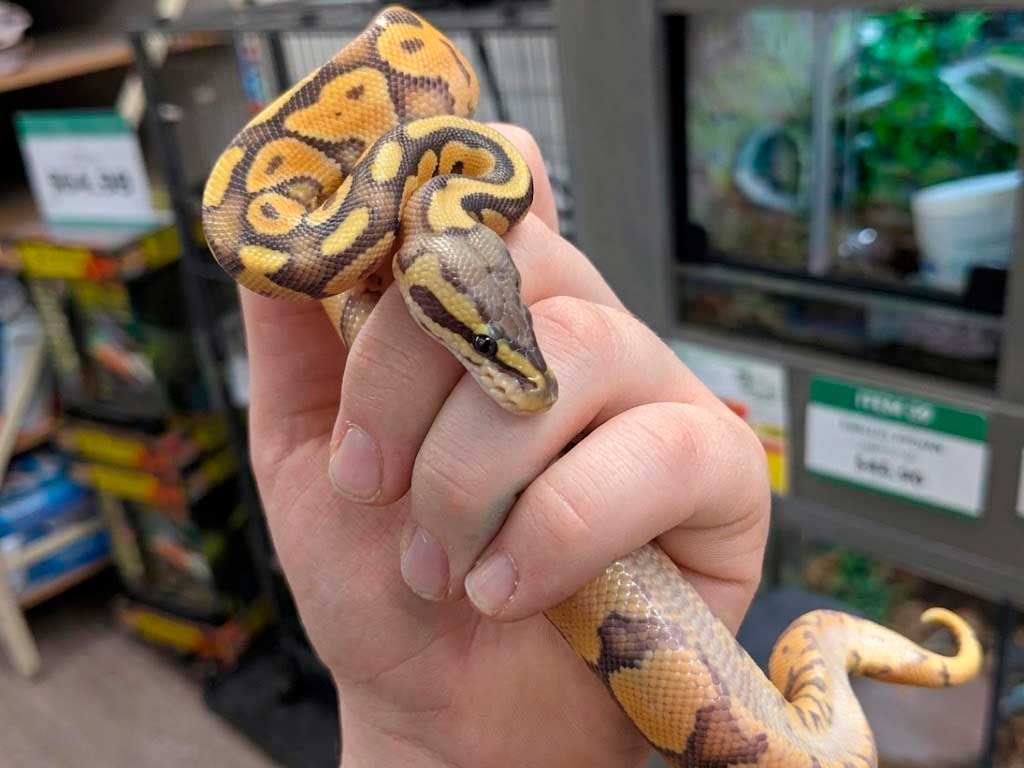
Contrary to what the word “python” conjures up, ball python care mostly involves managing a snake that would rather hide than confront anything at all.
When threatened, a ball python curls into a tight ball with its head tucked safely in the center, which is exactly where the name comes from, and it’s about as far from an aggressive constrictor as a snake gets.
I’ve kept everything from bearded dragons to corn snakes, and ball pythons are genuinely one of the calmest, most forgiving snakes for a first python owner.
Quick facts: Ball pythons (Python regius) are native to grasslands and open forests of West and Central Africa, growing 3-5 feet long. They live 20-30 years in captivity, sometimes past 50, compared to roughly 10 years in the wild, making a ball python as a pet a genuine multi-decade commitment.
Choosing a Ball Python and Sourcing Responsibly
Buy from a reputable captive-breeding source rather than an unverified import. Wild ball python populations face real pressure from poaching for the pet trade, and conservation groups specifically flag sourcing as the one thing prospective owners should check before buying a ball python as a pet.
A healthy ball python has clear eyes, smooth skin, and rounded body condition rather than visible spine or rib lines. Ongoing costs stay modest once the initial enclosure and heating setup is in place, since ball pythons eat far less often than most reptiles on this site.
Color and pattern morphs, from the classic normal pattern to pastel, spider, and clown variants, don’t change care needs at all, though a small number of morphs are prone to neurological issues worth researching before you buy a specific one.
Enclosure Setup: More Debate Than You’d Expect
Enclosure type is a genuinely contested topic among experienced keepers, and pretending otherwise oversimplifies things. PVC enclosures hold humidity well and work great with heat pads, glass tanks need real modification (covering most of the screen top) to hold humidity properly, and secure bins or breeder racks are legitimate options many rescues and breeders use successfully.
Whatever you choose, size the enclosure at least 36″x18″x12″ for an adult, start hatchlings smaller, and prioritize a secure, dim, cover-heavy setup over a large exposed one. A ball python that feels too exposed often stops eating, which matters more for this species than almost any other on this site.
Substrate
Coconut-based substrates like ReptiChip, cypress mulch, or a soil-and-coco-coir blend all hold humidity well without molding easily. Aspen works for lower-humidity setups but isn’t ideal here, and paper towels are the right call temporarily for quarantine or a sick snake.
Never use pine or cedar shavings under any circumstances, since both release phenols that damage a reptile’s respiratory system. Offer 2-3 inches of substrate so the snake can burrow, which is natural behavior worth supporting.
Temperature and Humidity
Aim for a hot spot around 88-90°F, a cool side of 72-80°F, and humidity near 60%. Night temperatures can drop slightly but shouldn’t regularly fall below 75°F, since ball pythons digest poorly when consistently cold.
Under-tank heat pads controlled by a thermostat are a safe, common choice, as are radiant heat panels and ceramic heat emitters. Skip heat rocks entirely and never use a red or “night” bulb, since reptiles can see red light and it disrupts their sleep cycle even when it looks dim to a person.
Any exposed heat element, including basking bulbs mounted without a guard, poses a real burn risk if a snake can reach it. If you use overhead lighting at all, cage it properly or keep it fully outside the enclosure rather than assuming distance alone is enough protection.
UVB: The Same Open Question as Corn Snakes
Ball pythons face the same UVB debate we cover in more depth in our corn snake care guide: most keepers don’t use it since ball pythons obtain vitamin D from whole prey, but a low-output 5% UVB tube is a reasonable addition if you want to hedge toward the more cautious side. Neither position has strong evidence of harm behind it.
Diet and Feeding
Feed frozen-thawed rodents rather than live ones. Live rodents fight back, and rescues regularly see real scarring and injuries in surrendered snakes from bites that frozen-thawed feeding avoids entirely.
Offer prey roughly as big as the widest part of the snake’s body, feeding hatchlings and juveniles weekly and adults every 10-14 days. If your snake refuses a meal, don’t panic — missed feedings, especially in winter, are common and rarely a health emergency on their own.
A picky eater often does better in a smaller, more secure enclosure than a large exposed one, and a properly warmed rodent (ball pythons hunt partly by heat) makes a real difference. Only consider assist-feeding after several months of refusal paired with weight loss, and only under a vet’s guidance.
Weigh your snake periodically and compare its body condition against a simple visual scale — a healthy ball python looks rounded rather than showing sharp spine or rib lines, and catching a slow weight trend early is easier than reversing a serious one later.
Handling and the “Balling” Defense
Scoop gently with support along the body rather than grabbing from above. Wait 24-48 hours after feeding before handling, since disturbing a snake mid-digestion can cause regurgitation.
If a ball python curls into a defensive ball, that’s a clear signal to back off rather than push through it. It’s a genuinely gentle defense mechanism as far as snakes go — ball pythons rarely bite, and most individuals become noticeably more confident with consistent, low-stress handling over time.
Keep handling sessions to 10-15 minutes at a time, and avoid handling during shedding, when reduced vision from cloudy eyes makes most snakes noticeably more defensive out of caution rather than aggression.
Shedding and Health Red Flags
Ball pythons need higher humidity than most homes naturally provide, so stuck shed around the eye caps and tail tip is one of the more common issues this species runs into. A humid hide with damp sphagnum moss and a gentle soak usually resolves it; never force off shed that isn’t ready to come away on its own.
Watch for small black specks on the snake or around the water dish, which can signal mites, along with open-mouth breathing, discharge from the mouth or nose, or any sign of a wobble or loss of coordination, which can point to a serious neurological issue in certain morphs. Persistent feeding refusal paired with weight loss, swelling, or a wound that isn’t healing all warrant a vet visit rather than a wait-and-see approach.
An annual checkup with a reptile-experienced exotic vet catches problems early, even when everything about your ball python seems completely normal.
This guide provides general educational information and isn’t a substitute for veterinary care. If your ball python shows any of the signs above, a reptile-experienced exotic vet is the right call, not a home remedy.
Frequently Asked Questions
Getting Ball Python Care Right From the Start
Every mistake covered in this guide comes back to the same handful of gaps: an enclosure too exposed for a shy snake, temperatures pushed too high or too low, or feeding troubleshooting skipped in favor of panic. Fix those and a ball python as a pet turns out to be one of the more forgiving reptile routines covered on this site.
Not as scary as it sounds, once the basics are actually in place.