Corn Snake as a Pet: Complete Beginner Guide
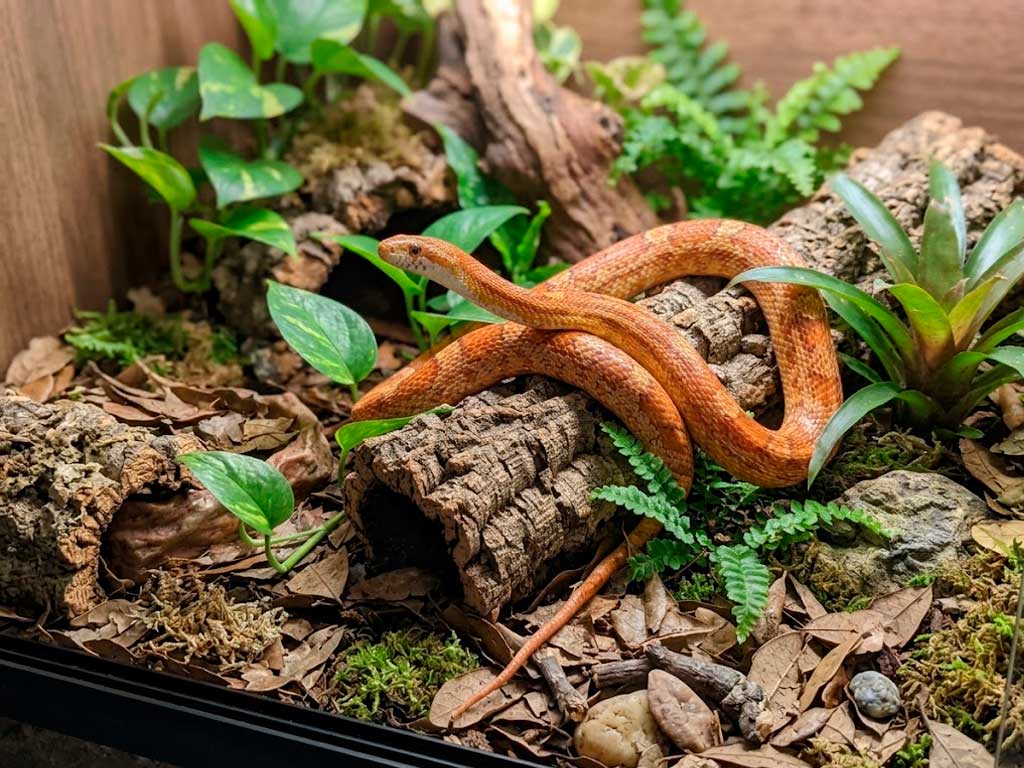
Contrary to their harmless reputation in captivity, wild corn snakes get mistaken for venomous copperheads often enough that people kill them out of pure fear.
A corn snake as a pet is about as far from that danger as a reptile gets they’re non-venomous constrictors, generally calm, and named for the checkerboard pattern on their belly that early settlers thought resembled Indian corn.
I’ve kept everything from bearded dragons to chameleons, and corn snakes are genuinely one of the most forgiving species on this list for a first-time snake owner.
Quick facts: Corn snakes (Pantherophis guttatus) are native to the southeastern United States, growing 3-5 feet long and living 15-20 years in captivity. They’re non-venomous constrictors, mostly terrestrial though capable climbers, and among the calmest snake species commonly kept as pets.
Choosing a Corn Snake and What It Costs
Buy from a reputable breeder rather than an impulse pickup, and ask how the snake has been feeding. A healthy corn snake has clear eyes, smooth skin without blisters, and flicks its tongue frequently when exploring its surroundings.
Budget beyond the snake’s purchase price. A properly sized enclosure, thermostat, heat source, and hides typically cost more than the animal itself, though ongoing costs stay modest since corn snakes eat far less often than most reptiles on this site. Common morphs like amelanistic, anerythristic, and snow vary in price based on rarity, but morph doesn’t change care requirements at all.
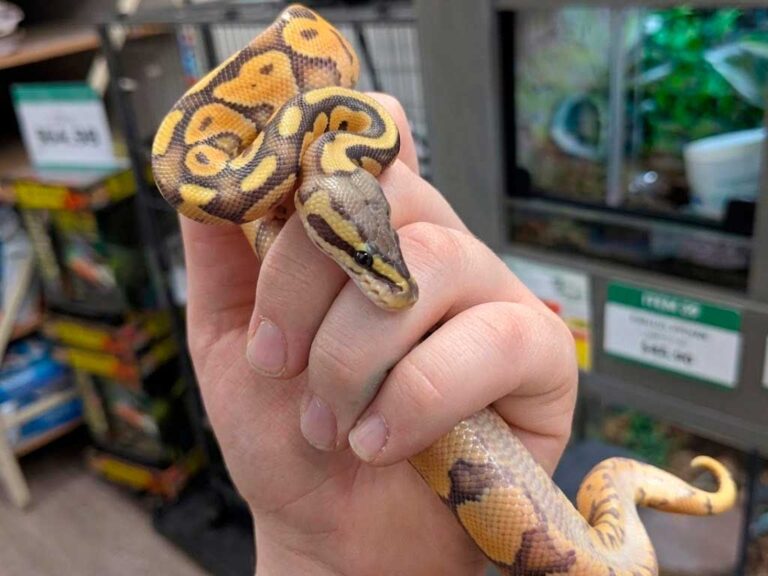
Corn snakes come in dozens of color and pattern variants, from the classic orange-and-brown wild type to snow, ghost, and okeetee morphs bred for decades by dedicated hobbyists. None of these color differences affect temperament, size, or husbandry needs, so pick based on what you find visually appealing rather than assuming one morph is easier to keep than another.
Enclosure Setup
Corn snakes are genuine escape artists, so a secure, latching lid matters as much as the enclosure’s size. Even a small gap gets tested repeatedly, and a snake that gets out is a real problem for the whole household.
A 40-gallon breeder tank or 36″L x 18″W x 18″H enclosure works well for an adult, with a 4’x2’x2′ setup even better if space allows. Start hatchlings in a 10-gallon tank and size up as they grow, since an oversized enclosure can actually stress a young snake by removing the sense of a confined, predator-free space.
Glass tanks with a secure, locking screen top work fine, as do PVC or wooden enclosures built specifically for reptiles. Give the snake at least two hides, one on the warm end and one on the cool end, so it never has to choose between feeling secure and staying at a comfortable temperature.
Substrate
Aspen shavings, cypress mulch, or a reptile-safe soil-and-sand blend all work well and let a corn snake burrow, which is a natural behavior worth supporting rather than blocking. Paper towels are fine short-term for quarantine or a snake with health issues, but they don’t allow for that burrowing instinct long-term.
Never use pine or cedar shavings under any circumstances — both release aromatic phenols that damage a reptile’s respiratory system over time. Skip loose sand on its own too, since it offers none of the burrowing benefit and can irritate the skin.
Temperature
Aim for a basking area around 82-88°F, with the cool end sitting closer to 70-75°F. That range sits slightly lower than some older care sheets suggest, and experienced keepers have flagged that anything approaching 90°F risks digestive problems and, in rare cases, neurological issues.
Night temperatures can drop into the low-to-mid 60s°F without concern, since corn snakes experience a natural cooling cycle in the wild. Always run heat sources through a thermostat, and check both ends daily with a digital thermometer rather than trusting the thermostat’s display alone.
UVB: Necessary or Not?
This is genuinely a debated question, and honest care advice should say so rather than pretend it’s settled. Some sources argue UVB isn’t necessary for corn snakes since they get vitamin D dietarily from whole prey, while others, including major animal welfare organizations, now recommend a low-output 2-7% UVB tube anyway as a general health positive.
There’s no solid evidence either position causes harm, so adding a low-level UVB gradient is a reasonable middle ground if you want to hedge toward the more cautious recommendation. We cover the same open question for ball pythons, another whole-prey feeder with the identical debate. If you skip it, a normal 12-hour light and dark cycle using ambient room lighting is still enough to support a healthy day-night rhythm.
Diet and Feeding
Feed frozen-thawed rodents rather than live ones whenever a snake will accept them. Live rodents fight back, and corn snake rescues report seeing real scarring and injuries from bites that frozen-thawed feeding avoids entirely.
Offer prey roughly as wide as the snake’s thickest point, starting with pinky mice for hatchlings and moving up sizes as the snake grows. Feed hatchlings and juveniles every 5-7 days, and adults every 10-14 days, weighing the snake periodically to confirm it’s neither underweight nor gaining too fast.
Handling: Reading the S-Shape Warning Sign
Scoop a corn snake gently with one hand under the body near the head and the other supporting the rest, rather than grabbing from above. Wait at least 48 hours after feeding before handling, since an early disturbance can cause regurgitation.
Watch for the neck pulling back into an S-shape when viewed from above — that’s a clear stress signal, and the right response is to leave the snake alone rather than push through it. Keep sessions to around 10-15 minutes, since a snake removed from its warm environment too long will start losing core body temperature.
Shedding and Brumation
Corn snakes shed in one complete piece, unlike the fragmented shedding pattern common in lizards such as bearded dragons. A humid hide helps the process along, and the old skin should come away easily once the snake starts rubbing against enclosure decor.
Some corn snakes go through brumation during cooler months, a natural slowdown similar to hibernation triggered by shorter daylight hours. Reduced appetite during this period is normal as long as the snake isn’t losing significant weight; a snake that stops eating and keeps dropping weight needs a vet visit rather than patience.
Health Red Flags and When to See a Vet
Retained eye caps after a shed need professional removal rather than a home attempt, since pulling at them risks real damage to the eye underneath. A reptile-experienced vet can do this safely in minutes.
Watch for small black specks on the snake or around the water dish, which can signal mites, along with blisters or discoloration on the belly that may point to scale rot from an enclosure kept too damp. Open-mouth breathing, discharge from the mouth or nose, and any sign of mouth rot all warrant prompt veterinary attention rather than a wait-and-see approach.
This guide provides general educational information and isn’t a substitute for veterinary care. If your corn snake shows any of the signs above, a reptile-experienced exotic vet is the right call, not a home remedy.
Frequently Asked Questions
Getting Corn Snake Care Right From the Start
Every mistake covered here comes back to the same handful of gaps: a lid that isn’t actually secure, temperatures pushed too high, or handling that starts before a stress signal gets recognized. Fix those and a corn snake as a pet turns out to be one of the more manageable reptiles covered on this site.
Not as scary as it sounds, once the basics are actually in place.