Acanthocobitis Botia: Care Guide for the Mottled Zipper Loach
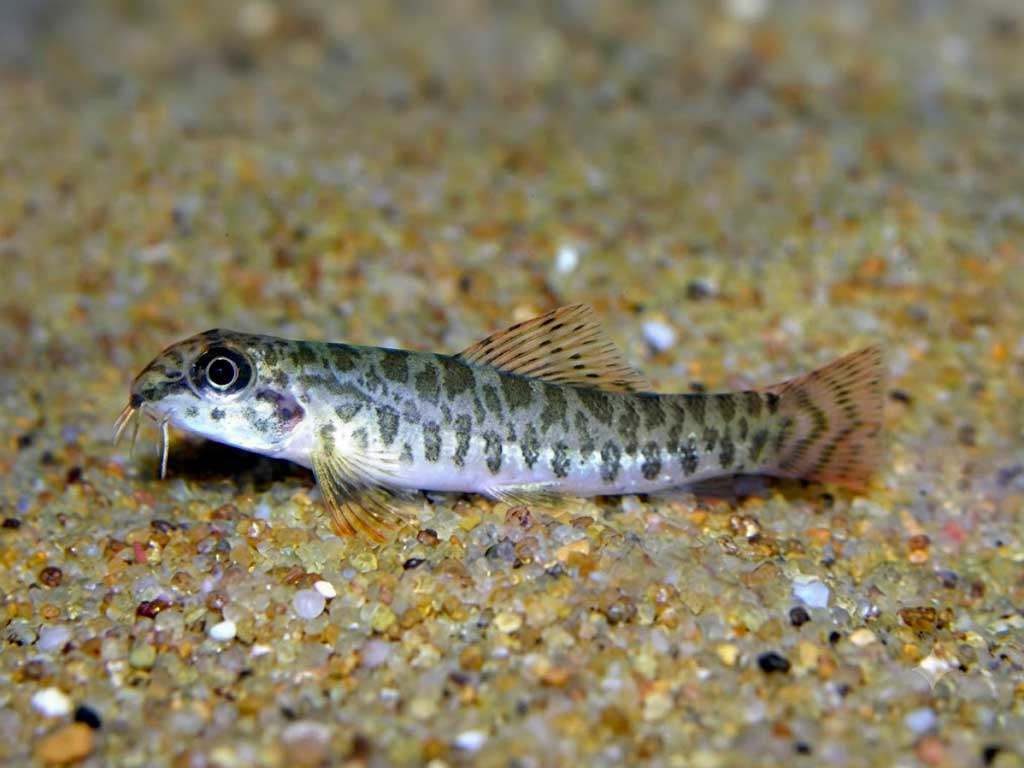
Acanthocobitis botia is an 8-15 cm zipper loach for a 75 cm, 68 L stream tank with strong current. It needs a group of six, a sand base and clean, oxygen-rich water. A single fish in a still tank hides and fades.
The zipper loach comes from the Brahmaputra River in Assam, India. It is sold as mottled loach, sand loach and eye-spot loach. The current valid name is Paracanthocobitis botia. This guide covers size, taxonomy, tank setup, diet, tank mates and the four lookalike species people search for.
Acanthocobitis Botia: Quick Facts
The table below gives the working numbers. Its current name and the trade name are both listed because sellers use both.
| Fact | Detail |
|---|---|
| Scientific name | Acanthocobitis botia (Hamilton, 1822); valid name Paracanthocobitis botia |
| Common names | Zipper loach, mottled loach, sand loach, eye-spot loach |
| Family | Nemacheilidae, Cypriniformes |
| Adult size | 8 to 10 cm (3 to 4 in); maximum 15.2 cm (6 in) SL |
| Temperature | 21 to 26°C (70 to 79°F) |
| pH | 6.0 to 7.5 |
| Hardness | 5 to 12 dGH |
| Minimum tank | 75 x 30 cm (30 x 12 in), about 68 L (18 US gal) |
| Lifespan | About 5 to 8 years |
| IUCN status | Least Concern |
Size and Identification
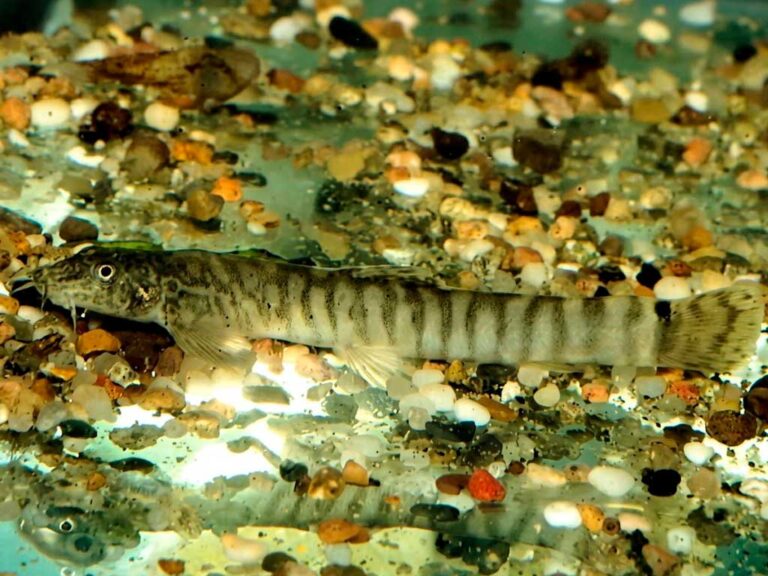
Most adults are 8 to 10 cm (3 to 4 in), but Seriously Fish lists a maximum of 152 mm (6 in) standard length. The body is elongated, the snout is rounded and the tail is emarginate. Its eye is high on the head, which gives the fish its alert look.
The juvenile pattern is the zipper: a row of dark, connected blotches along the lateral line, with saddle-shaped marks on the back. That pattern fades and breaks up with age. A dark ocellus at the top of the caudal peduncle stays visible, and it is the fastest field mark.
Taxonomy and the Name Behind the Name
The species was described from “northeastern Bengal” and was long thought to range from Pakistan to western Thailand. Singer and Page (2015) restricted the true species to the mainstem and tributaries of the Brahmaputra in Assam. Populations from Peninsular India, Sri Lanka, Myanmar and Thailand are now separate species. That is why the name on the label and the fish in the bag are not always the same thing.
That matters for buyers because most fish sold as “Acanthocobitis botia” come from outside the true range. They may be a closely related species, or a population that has not been formally separated. The care is similar, but the label is not a guarantee. A seller who knows the collection locality is more useful than one who repeats the trade name.
Origin and Habitat
The Brahmaputra is a large, seasonal river. It lives in stretches where leaf litter, sand, cobbles and boulders collect, often at the edge of the main flow. Water is warm in summer, cool in winter and never still. FishBase lists the species from the Brahmaputra basin and gives the maximum size.
That habitat translates into three aquarium requirements: a sand or fine-gravel base, a current lane, and leaf litter or driftwood for cover. A bare tank with a sponge filter is not a zipper loach tank.
Tank Size and Setup
A 75 x 30 cm (30 x 12 in) base, about 68 L (18 US gal), is the minimum for a group. The 90 cm (36 in) tank is better because the fish needs a current lane and a group of six needs floor space. It should turn over eight to twelve times per hour.
| Tank size | Recommendation |
|---|---|
| 45 L (12 US gal) | Too small for a group |
| 68 L (18 US gal), 75 cm (30 in) | Minimum for six |
| 90 L (24 US gal), 90 cm (36 in) | Better current lane |
| 120 L (32 US gal), 100 cm (39 in) | Ideal for a group and dither fish |
A group of six needs a 75 cm tank at minimum, and a 90 cm tank is better. The 68 L tank with six fish and a powerhead is a working setup, but it is not a tank for a second bottom loach. This group needs the floor, not just the volume. A 120 L tank gives the group room to spread out and the keeper room to keep the water clean. The 75 cm tank is a floor, not a suggestion. Measure it before you buy the fish.
- Use sand or fine gravel, not sharp chips.
- Add cobbles, driftwood and a few Indian almond leaves.
- Fit a powerhead or stream pump for the current lane.
- Use a tight lid, because loaches can jump.
Tank Setup Step by Step
A zipper loach tank is a stream edge, not a display reef. Build the bottom first, then the flow, then the group.
- Add a sand or fine-gravel base, then cobbles and driftwood.
- Place a powerhead at one end to create a current lane.
- Add Indian almond leaves or beech leaves for cover.
- Plant Java fern or Anubias on the wood, not in the sand.
- Cycle the tank and test pH, GH and nitrate before adding fish.
- Add the group together, not one fish at a time.
Water Parameters
The species is adaptable, but it needs oxygen and stable water. A table below gives the practical range.
| Parameter | Target |
|---|---|
| Temperature | 21 to 26°C (70 to 79°F) |
| pH | 6.0 to 7.5 |
| General hardness | 5 to 12 dGH |
| Ammonia and nitrite | 0 ppm |
| Nitrate | Below 20 ppm |
| Flow | 8 to 12 times tank volume per hour |
Change 25 to 30% of the water every week. The aquarium water chemistry guide explains how KH holds pH steady. Do not chase a pH of 6.0 if the tap water is stable at 7.0.
Water Flow and Filtration
The zipper loach comes from flowing water, and it needs a filter that turns the tank over eight to twelve times per hour. At 68 L, the tank needs 540 to 816 L per hour of combined flow. A single sponge filter is not enough.
Use a canister or a power filter plus a powerhead. Aim the current along the surface and down the front glass, so the fish has a lane and a quiet corner. A dead spot behind the rocks is fine; a dead tank is not.
Diet and Feeding
The zipper loach is a micropredator. Wild fish eat larval chironomids, mayflies and small invertebrates. Captive fish accept sinking pellets, but it needs live or frozen food to stay in condition.
| Food | Frequency |
|---|---|
| Sinking micro pellets | Once daily |
| Frozen bloodworm or daphnia | Three or four times a week |
| Live brine shrimp or cyclops | Two or three times a week |
| Blanched vegetable matter | Once a week |
Feed after lights out, when the fish is active. Remove what it does not eat by morning. A group of six needs more food than one fish, but the tank still has to stay clean.
Health and Quarantine
Wild-caught loaches arrive stressed and often thin. Quarantine for two to four weeks in a bare tank with a sponge filter, a few caves and a tight lid. Watch for white spots, clamped fins, a sunken belly and rapid breathing.
- White spots or flashing point to ich or poor water.
- A sunken belly means the fish has not eaten or has parasites.
- Red patches or frayed fins point to bacterial infection.
- A fish that hides and refuses food for several days needs a water test.
Test pH, ammonia and nitrate before you treat. A water change and a stable temperature solve more problems than a random medication. This article is educational and does not replace advice from a veterinarian who treats fish.
Behavior and Temperament
The species is peaceful and social. In the wild it lives in loose aggregations, and in the aquarium it does better in a group of six or more. A single fish hides, paces the glass and fades.
It is not aggressive, but some specimens nip the fins of rivals or long-finned tankmates. Keep it with short-finned, active fish, and give the group enough space to spread out. It is nocturnal at first and becomes bolder once settled.
Sexing and Group Behavior
Adult males are slimmer and carry a suborbital slit, a small cleft in the skin below the eye. Females are fuller-bodied, especially when carrying eggs. The difference is subtle from above and almost invisible in a dealer’s bag.
A group of six or more spreads the fish’s attention, drops the shyness and brings out the natural loose-shoal behavior. Two fish are a dominance contest: one takes the food, the other hides. A group also makes the tank look alive, because the fish move together instead of sitting in a corner.
4 Compatible Tank Mates
These four all have profiles in our freshwater fish library, and all four overlap with the zipper loach at 21 to 24°C. Choose one bottom loach, not three. The mid-water fish can be kept as a group.
| Species | Temperature overlap |
|---|---|
| White Cloud Mountain minnow | 21 to 24°C |
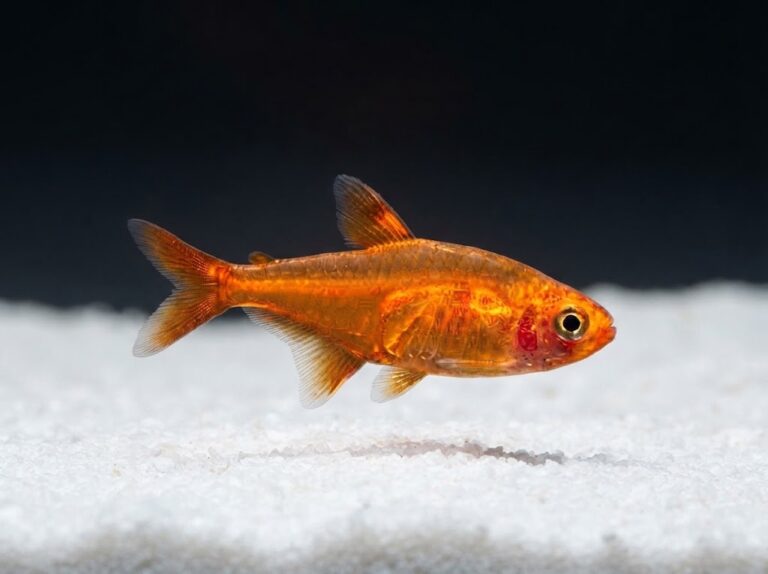
| Kubotai rasbora | 21 to 24°C |
| Zona loach | 21 to 24°C |
| Garo loach | 21 to 24°C |
The White Cloud Mountain minnow is the strongest dither fish for a cool stream tank. It stays in the upper layer, handles 21°C and does not compete for the bottom.
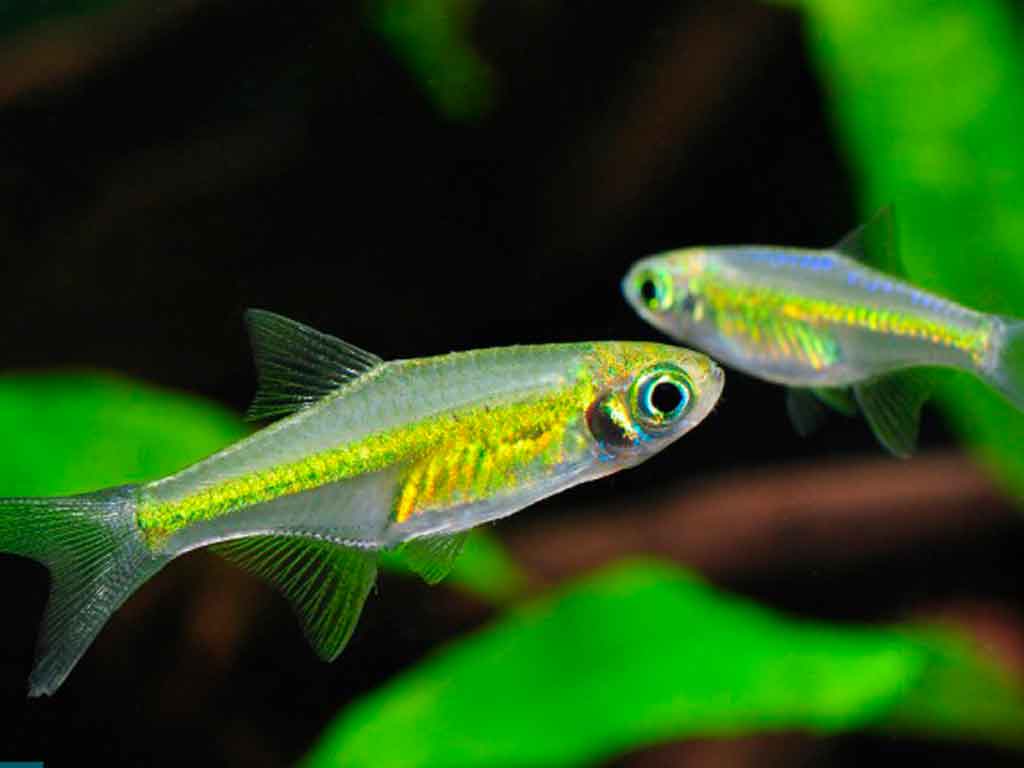
The Kubotai rasbora is a soft-water schooler that adds green to the middle layer. It stays out of the loach’s caves and takes the same small foods.
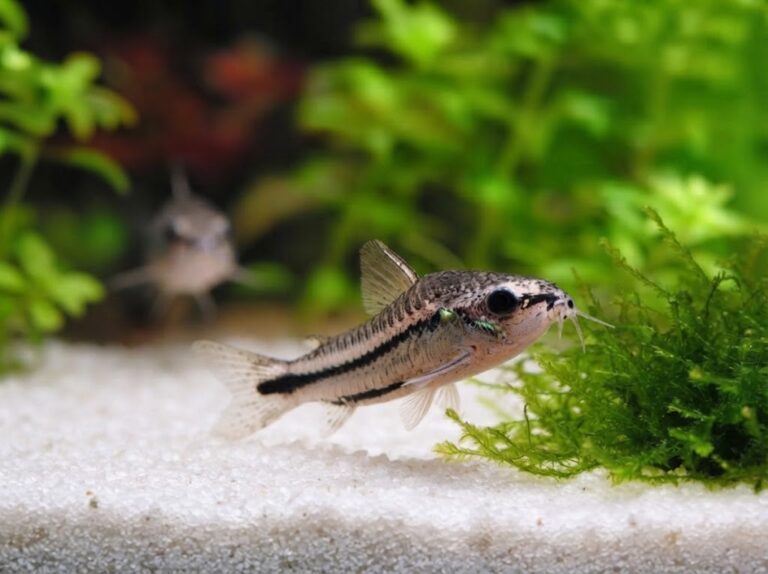
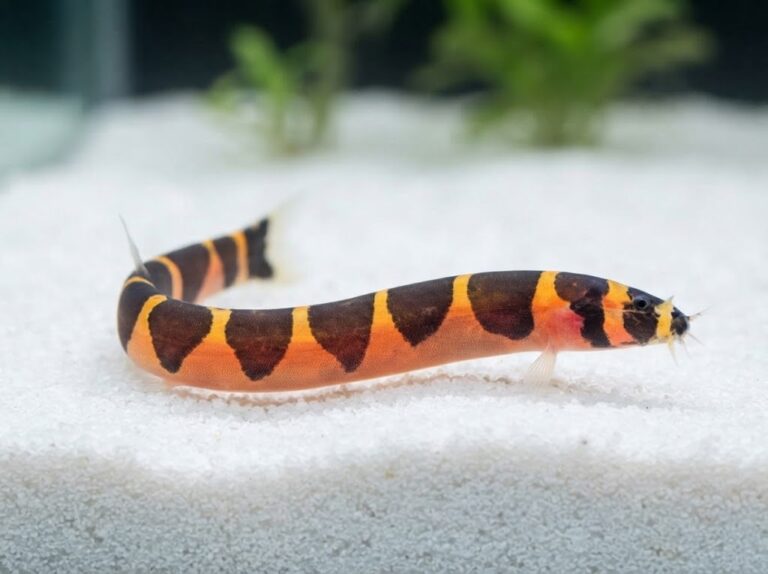
The zona loach is a close relative with a similar body and a different pattern. It competes for the same bottom, so keep it only in a 90 cm tank with separate rock piles.
The Garo loach is another stream loach from northeastern India. It needs cooler water and a stronger current, and it is not a good match for a 68 L tank with a group of zipper loaches.
Tank Mates to Avoid
- Botia dario and other large botiid loaches.
- Aggressive Schistura or other territorial nemacheilids.
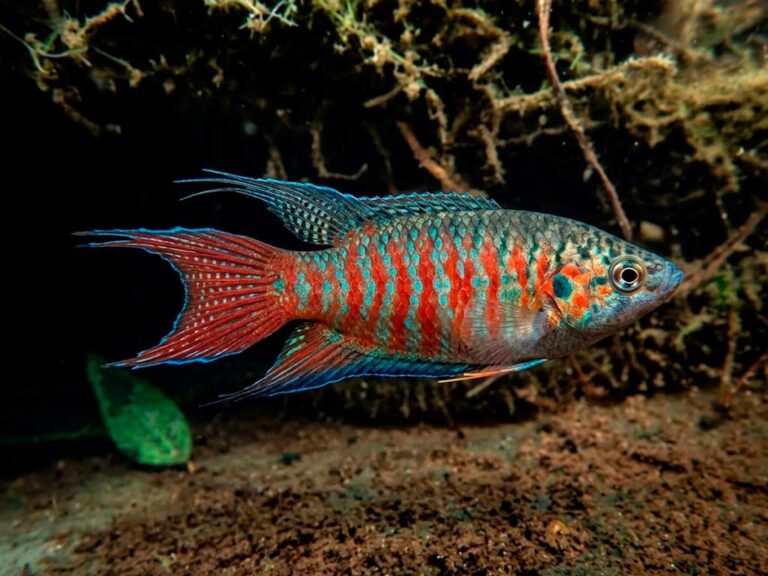
- Long-finned bettas, gouramis or angelfish that invite nipping.
- Large cichlids that treat the loach as a snack.
Buying and Acclimation
Buy six or more from the same shipment if you can. Mixing shipments risks introducing a disease to the whole group. Check that the fish are feeding, that the bellies are full and that the fins are intact.
Acclimate slowly, with the lights off. Drip for 30 to 45 minutes, net the fish into the tank and discard the store water. Keep the group in quarantine for two to four weeks before the display tank.
Similar Species
Four names come up constantly when people search for this fish. None of them is the zipper loach. The table below separates them.
| Species | Key difference |
|---|---|
| Botia dario | Botiidae; 15 cm; bold vertical bands; eats snails |
| Amblypharyngodon mola | Cyprinidae; 10 cm; silver mid-water fish, not a loach |
| Lepidocephalichthys guntea | Cobitidae; 12 cm; mottled cool-water loach |
| Mesonoemacheilus triangularis | Nemacheilidae; 8 cm; zodiac loach with a triangular pattern |
Botia dario is the Bengal loach, a botiid with bold vertical bands and a taste for snails. It grows larger, needs a bigger tank and is not a nemacheilid. A seller who uses “botia” for both is using the common name, not the taxonomy.
Amblypharyngodon mola is the mola carplet, a small silver cyprinid from South Asia. The mola is a mid-water schooler, not a bottom loach. It can share the water parameters, but it is not a substitute for a group of zipper loaches.
Lepidocephalichthys guntea is the guntea loach, a cool-water cobitid with a mottled body. It is hardier and more tolerant of low oxygen, but it is a different family and a different fish.
Mesonoemacheilus triangularis is the zodiac loach, a small nemacheilid with a triangular pattern. It is the closest lookalike in shape, but the pattern and the eye-spot separate it from the zipper loach.
Breeding
No confirmed home aquarium breeding exists. This species is probably a wild-caught import, and the few reports of fry in mature tanks involve very small numbers. Adults likely eat the eggs.
If you want to try, use a species tank with sand, cobbles and leaf litter, condition the group on live food, and separate the adults after spawning. Do not expect a commercial-scale result.
Lifespan
Most zipper loaches live about 5 to 8 years in a well-run tank. Its range depends on water quality, diet and how long the fish was in the trade before you bought it. A wild-caught adult may already be several years old. One group bought together will age together, so plan the tank for the whole group, not one fish.
Conservation Status
The IUCN Red List lists the species as Least Concern. That assessment predates the 2015 taxonomic revision, so it may reflect the broader species complex rather than the narrow Brahmaputra population. The aquarium trade is a pressure, but the species is not currently considered threatened. Buy from a seller who can document the source, and do not release fish into the wild.
Common Mistakes
- Buying one fish instead of a group of six.
- Using a still tank with no current.
- Keeping it with Botia dario and calling it the same fish.
- Using sharp gravel that damages the barbels.
- Feeding only dry pellets with no live or frozen food.
- Adding a second bottom loach to a 68 L tank.
- Buying a single fish and expecting it to be outgoing.
Frequently Asked Questions
What to Check Before You Buy
Measure the tank first. A 45 L tank is too small for a group, and a 68 L tank is the minimum. Then check the current, the sand and the lid. Without a current lane, the fish is stressed.
The 90 cm tank gives the group a lane and a quiet corner, which is the difference between hiding and behaving naturally. That tank is the project. Plan it first. Measure twice, stock once.
The fish will outlive the filter. It will outlive the tank too. Plan for that. It works. Plan well now. That is the whole rule. Measure twice, stock once. That is all. Plan now. It works. Plan well now. That is the whole rule. Measure twice, stock once. That is all.
Buy six or more, quarantine for two to four weeks and watch for white spots, clamped fins or a sunken belly. Compare the profiles in the freshwater fish library before you commit. The group is the point, not the single fish. A zipper loach alone is a fish in the wrong setup. The group in the right current is the fish you read about.
The zipper loach is not a beginner loach, but it is one of the easier nemacheilids. It tolerates a range of water, it eats prepared food and it does not need a chiller. What it does need is a group, a current lane and a sand base.
Those three things are not optional, and they are the difference between a fish that hides and a fish that behaves like the species in the wild. Build the tank for the group, and the group will do the rest.
A 75 cm tank is a floor, not a suggestion. Measure it before you buy. Plan twice, stock once. The fish is the easy part. The tank is the project. Plan well now. That is the whole rule. Measure twice, stock once.