Apistogramma Cacatuoides Care: The Complete Cockatoo Cichlid Guide
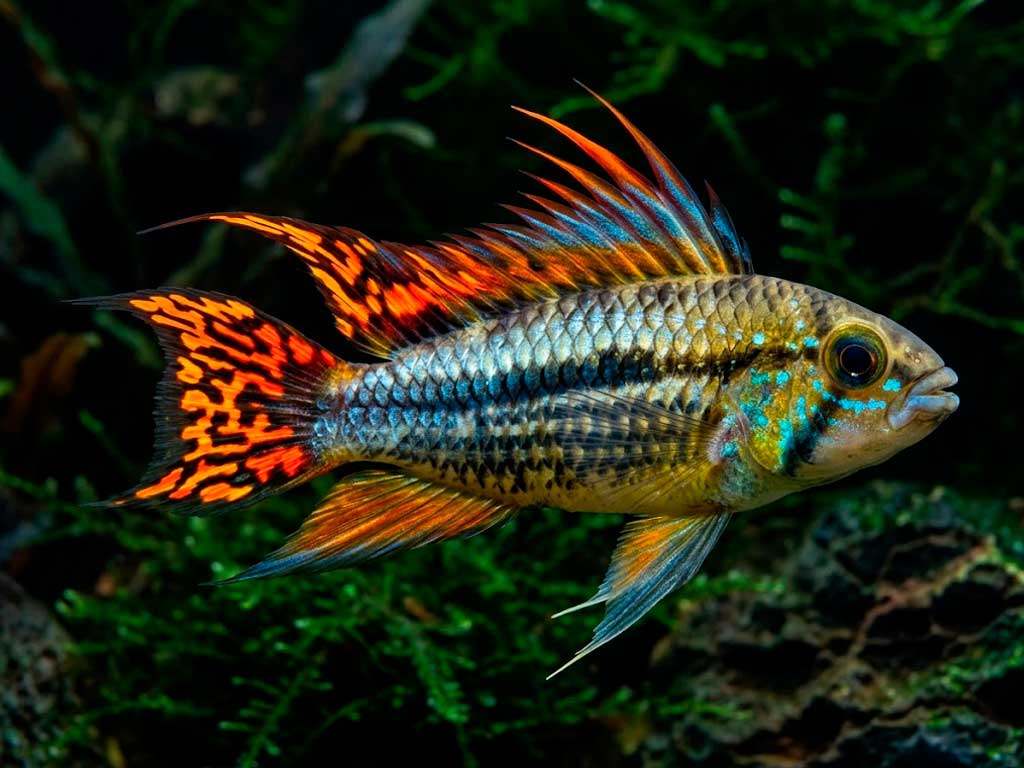
A mature male Apistogramma cacatuoides rarely tops three inches, yet he’ll stake out and defend a territory like a fish twice his size.
In practice, that mismatch between size and attitude is exactly why the cockatoo cichlid has become one of the most requested dwarf cichlids in the hobby, and getting the setup right the first time saves you the heartbreak of losing fish to territorial disputes you could have prevented.
What Is an Apistogramma Cacatuoides?
Apistogramma cacatuoides, commonly called the cockatoo cichlid or cockatoo dwarf cichlid, earns its name from the male’s dorsal fin. The first several rays extend well past the rest of the fin and are usually carried upright, resembling the display crest of a cockatoo.
The numbers don’t lie: this is one of the most line-bred dwarf cichlids on the market, which is why you’ll see color names like Double Red, Triple Red, and Orange Flash attached to fish that are genetically the same species as the plain wild-type import.
| Trait | Detail |
|---|---|
| Origin | Amazon basin: Brazil, Peru, Colombia |
| Adult size | Up to 3 in (7.5 cm), females smaller |
| Tank size | 20 gal (76 L) long minimum for a pair; 30–40 gal (113–151 L) for a harem |
| Temperature | 75–81°F (24–27°C) |
| pH | 5.5–7.5 |
| Hardness (dH) | 4–15, lower end preferred |
| Diet | Omnivore: flake, pellet, frozen, live |
| Temperament | Territorial, especially males toward males |
Natural Habitat and Why It Matters for Setup
In the wild, cockatoo cichlids inhabit slow-moving, shallow water over a substrate carpeted in leaf litter. The tangle of roots and decaying leaves gives them a maze of micro-territories to claim.
Replicating that structure in your tank isn’t decorative flair, it’s the single biggest factor in reducing aggression between fish sharing the same space.
Driftwood pieces, ceramic caves, and a scatter of dried catappa leaves recreate that structure closely. If you haven’t worked with catappa leaves before, our guide to using Indian almond leaves in the aquarium covers dosing and the tannin staining effect, which also nudges the water toward the soft, slightly acidic conditions this species prefers.
For the wood and cave side of the setup, our aquarium decoration guide breaks down which materials are safe and how to arrange them for sightline-breaking.
Tank Setup That Actually Reduces Aggression
A long, low footprint matters more than raw water volume for this species. They’re bottom-oriented fish, so floor space is what they’re actually competing over. A 20-gallon long beats a 20-gallon high every time.
Here’s what actually matters in the setup. Substrate: fine gravel or sand, since males spend a lot of time sifting it for food. Caves: at least one per female, openings facing away from each other.

FROM AMAZON.COM
Tetra 20 Gallon Complete Tropical Fish Tank Kit
Everything included: 20-gallon glass tank with hinged hood, LED light, filter, filter cartridge, and décor. Ready for freshwater fish.
Buy on Amazon.comAs an Amazon Associate, Happy Pet Zone earns from qualifying purchases, at no extra cost to you.
Plants: dense low cover such as Java fern and Java moss to break sightlines and ease tension. Dither fish: a small shoaling species swimming in the upper water column.
That last point surprises a lot of first-time keepers. Cockatoo cichlids read the presence of small, fast-moving fish overhead as a signal that no predator is nearby, which relaxes their guard. Nano tetras or small rasboras work well for this. Our galaxy rasbora care guide covers a species that fits this role nicely in a planted setup.
Water Parameters: Less Precision, More Consistency
Wild cockatoo cichlids come from water that swings seasonally between soft-acidic and harder-alkaline conditions, so this species tolerates more variation than most apistos.
A pH of 5.5 to 7.5 and a temperature of 75–81°F cover the practical range. What matters far more than hitting an exact number is keeping nitrates low through regular partial water changes. A 25 to 50% change weekly is a reasonable baseline for a lightly stocked tank. For the full picture on cycling and parameter management, our aquarium water chemistry guide is the right next stop.
Color Varieties: What You’re Actually Buying
Search demand for this species leans heavily commercial. Buyers want to know which variety they’re looking at before they pay for it. Here’s a quick reference.
| Variety | Key trait |
|---|---|
| Wild type | Muted, natural coloration, rarely sold in stores |
| Double Red | Red edging on dorsal and caudal fins |
| Triple Red | Heavier red saturation across all fins |
| Super Red | Deep, near-solid red fin coloration |
| Orange Flash | Orange-dominant body and finnage |
| Gold (xanthic) | Rare, pale gold base color |
All of these are the same species. The color names describe line-bred fin and body pigmentation, not separate morphs with different care needs. If a listing prices “Super Red” well above “Double Red,” you’re paying for selective breeding, not a hardier fish.
Tank Mates and Compatibility
One male per tank is the standing rule unless the tank is large enough (75 gallons or more) to let a second male establish his own territory out of sight of the dominant one.
Females are territorial too, but their territories are smaller. A common ratio is one male to two or three females, giving each female roughly 12–20 inches (30–50 cm) of tank length to herself.
For tank mates beyond dither fish, look for species that share the lower-to-mid water column and won’t compete directly for cave space. Our convict cichlid guide covers a related cave-spawning species and is a useful comparison if you’re deciding between the two for a community setup, though the two shouldn’t be housed together, since both compete for the same caves.
Feeding
Cockatoo cichlids aren’t fussy. Flake and pellet food covers baseline nutrition, but the fish condition better and color up faster with regular live or frozen additions such as brine shrimp, daphnia, and bloodworms.
If you’re building out a feeding routine across a mixed tank, our guide to feeding ornamental fish has a broader framework for balancing flake, frozen, and live foods across species.
Breeding
This species spawns readily once settled, and it’s one of the more approachable cichlids for a first breeding project.
- Condition the pair with live or frozen food several times a week to trigger breeding readiness.
- Watch for color change: a female ready to spawn develops a bold black-and-yellow pattern and starts inspecting caves.
- Let her choose the cave. She’ll often pick or dig one too small for the male to fully enter.
- Expect the male to guard from outside while the female handles egg care inside the cave.
- Eggs hatch in 3–4 days, depending on temperature.
- Fry become free-swimming about 4–5 days after hatching, at which point the female leads them out and becomes noticeably more aggressive defending them.
- Feed fry newly hatched brine shrimp and microworms multiple times a day once they’re swimming.
A quick safety note: sub-dominant males can take a beating from the dominant male during this process. If you’re keeping more than one male, have a backup tank ready in case one needs to be pulled out.