Cane Corso: The Complete Breed Guide
LeBron James has one. So does Vin Diesel. Brutus, LeBron’s Cane Corso, has racked up more social media attention than most celebrity pets, and that visibility has pushed this ancient Italian guardian breed into the mainstream.
This guide covers what that popularity often glosses over: real temperament, training demands, space requirements, and health risks. Everything below reflects verified breed-standard information and established behavioral science, not just Instagram highlights.
Here’s the number that matters most before anything else. Cane Corsos score just 2 out of 5 for tolerating time alone, despite standing among the most physically imposing breeds around. Size and independence don’t automatically go together, and this breed proves it.
History and Origin
The Cane Corso’s roots reach back to ancient Rome. Its name derives from the Latin cohors, meaning “protector” or “guardian,” a fitting label for a descendant of Roman war dogs used to guard property and hunt large game.
After the Roman Empire fell, the breed shifted toward calmer work: farm guarding and wild boar hunting across the Italian countryside. Numbers declined sharply through the 20th century until a small group of dedicated enthusiasts began a recovery effort in the 1970s, focused on preserving both the breed’s working ability and its distinctive look.
Official recognition followed in 1994 from Italy’s national kennel club, the Ente Nazionale della Cinofilia Italiana. The American Kennel Club recognized the breed in 2010, cementing its status as a loyal companion worldwide.
Physical Characteristics
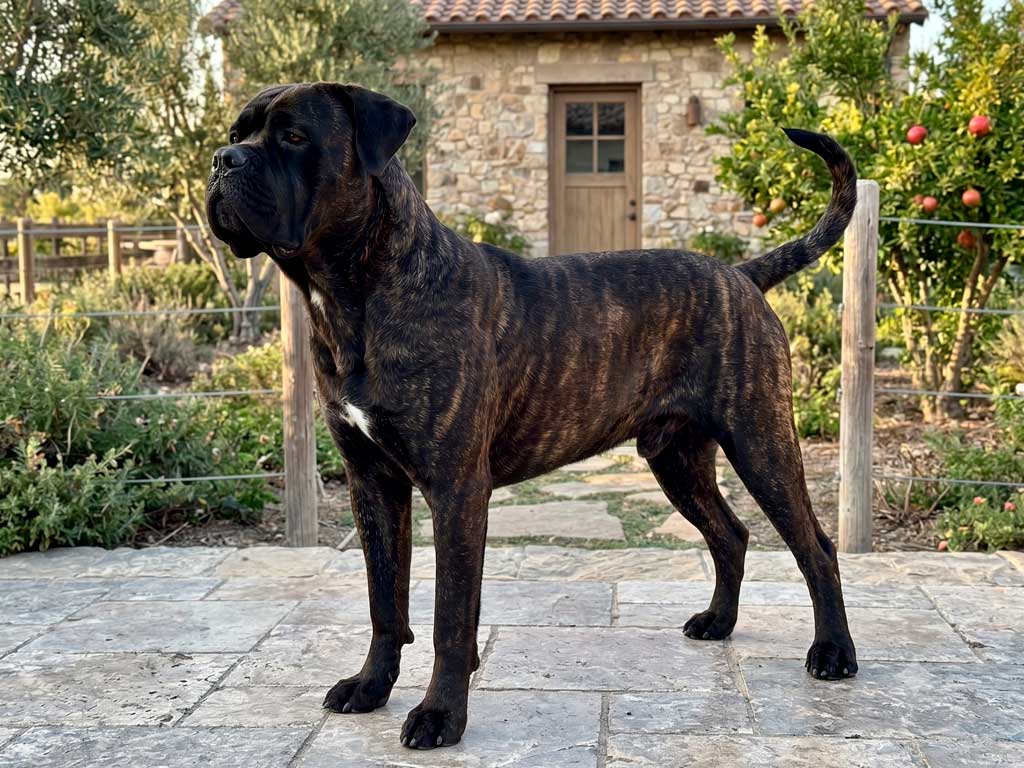
Adult Cane Corsos stand 58 to 71 cm tall and weigh between 41 and 50 kg, placing them firmly in the large breed category. Expect a broad chest, a wide square head, a prominent muzzle, and medium almond-shaped eyes.
The short, dense coat comes in black, gray, fawn, red, brindle, chocolate, and liver. Despite an intimidating frame, this breed carries itself with calm confidence rather than aggression.
Everything about the Cane Corso’s build signals strength paired with agility. This isn’t a bulky, slow-moving dog. It’s built for both power and speed.
Temperament and Personality
Loyalty defines this breed more than almost any other trait. A well-socialized Cane Corso bonds deeply with family, including children and other household pets, and shows genuine affection at home.
Strangers get a different response. Reserve and caution are the default, and without proper socialization that caution can tip into wariness or worse. Consistent mental and physical stimulation keeps this breed balanced and even-tempered.
Vocalizations set this breed apart too. Expect grunts, groans, and a range of expressive sounds used specifically to communicate with their owner. It’s a distinctive trait, and most owners come to find it charming rather than strange.
Care Guide
Diet and Nutrition
Age, weight, activity level, and overall health all factor into how much a Cane Corso should eat daily. Regular weigh-ins help confirm the diet is actually supporting healthy growth rather than excess weight gain.
This article provides general nutrition guidance only. Large breeds have specific dietary needs during growth, so consult your veterinarian for a feeding plan tailored to your dog.
Exercise Requirements
Plan on one to two hours of physical activity daily, combining walks, running, and play. Mental challenges matter just as much as physical ones for this intelligent breed.
Training exercises, agility courses, and puzzle toys all put that intelligence to good use. A Cane Corso without enough mental stimulation tends to find its own outlets, and those outlets are rarely convenient for owners.
Grooming Needs
The short, dense coat needs regular brushing and occasional bathing to stay in good shape. Shedding runs moderate year-round, with heavier seasonal drops during coat changes.
Ear and nail care round out the routine. Brush teeth several times weekly to prevent dental problems, and check skin regularly for signs of irritation, allergies, or parasites.
Training and Education
Consistency starting from puppyhood makes or breaks Cane Corso training. This is a smart, fast-learning breed, but stubbornness shows up often enough that patience matters just as much as skill.
Positive reinforcement produces the best results here. Clicker training works particularly well for building reliable obedience over time.
Socialization deserves equal priority. Expose puppies to a wide range of people, animals, and environments early, since this shapes how the adult dog handles unfamiliar situations later. Skipping this step is the single biggest mistake new Cane Corso owners make.
Health and Longevity
Cane Corsos live 9 to 12 years on average and face a manageable set of breed-specific health risks. Hip dysplasia tops the list, alongside eye conditions and gastric torsion, more commonly known as bloat.
Breed clubs recommend hip dysplasia screening as a priority health test. Growth continues until roughly 18 to 24 months in height and length, with muscle mass building until around age three.
This section offers general information only and doesn’t replace veterinary diagnosis. Bloat in particular can become an emergency quickly, so ask your vet about prevention strategies specific to large, deep-chested breeds.
Is This the Right Dog for You?
Space matters enormously for this breed. A Cane Corso isn’t suited to apartment living or cramped quarters. A home with a securely fenced yard, indoors and out, lets this dog thrive the way it needs to.
Experience helps considerably too. This breed’s protective instincts and size call for an owner who understands training and socialization from day one. Families with children can work well, though very young kids and elderly household members need extra consideration given the dog’s strength. Multi-dog households aren’t typically the best fit either.
Cane Corso Quick Facts
| Trait | Details |
|---|---|
| Life Expectancy | 9–12 years |
| Weight | 41–50 kg |
| Height | 58–71 cm |
| Coat | Short, dense |
| Shedding | Moderate |
| Grooming | Regular brushing, weekly bathing |
| Family Friendly | Good, with training |
| Good with Other Pets | Moderate, needs socialization |
| Tolerates Being Alone | Poor |
| Energy Level | High |
Cane Corso vs. Similar Breeds
| Breed | Size | Space Needs | Best For |
|---|---|---|---|
| Cane Corso | Large | House with yard | Experienced owners |
| Neapolitan Mastiff | Large | House with yard | Calm, experienced owners |
| Boxer | Medium-Large | Flexible | Active families |
| Rottweiler | Large | House with yard | Experienced, confident owners |
Frequently Asked Questions
Is the Cane Corso a dangerous breed? It can display aggressive behavior toward strangers or perceived threats without proper training and socialization, though the breed itself isn’t inherently dangerous when raised responsibly.
When does a Cane Corso stop growing? Height and length typically stop around 18 to 24 months, though muscle mass continues developing until roughly age three.
Does the Cane Corso shed a lot? Shedding stays moderate year-round with heavier seasonal drops, so regular brushing and bathing keep it manageable.
Are Cane Corsos good family dogs? Yes, with proper socialization, though they’re not ideal for homes with very young children or elderly residents due to their size and strength.
How much exercise does a Cane Corso need? One to two hours daily, combining physical activity like walking and running with mental stimulation such as training or puzzle toys.
Can a Cane Corso live in an apartment? Not comfortably. This breed needs a house with yard access to thrive physically and mentally.
Do Cane Corsos get along with other dogs? They tend to do fine with familiar dogs but can struggle with unfamiliar ones, making multi-dog households a harder fit.
What is the correct plural of Cane Corso? Cane Corsi, following the Latin origin of the name rather than an English-style plural.
What health problems affect Cane Corsos? Hip dysplasia, eye conditions, and gastric torsion (bloat) are the most commonly documented risks for this breed.
Can a Cane Corso be left alone? With proper training, sometimes, though this breed generally scores low on independence and prefers company.
If space and experience both check out, the next step is nailing down socialization before your Cane Corso puppy hits 16 weeks old. That window shapes temperament more than almost anything else you’ll do. For another large guardian breed with similar protective instincts, take a look at our Neapolitan Mastiff guide.