Bull Terrier: The Complete Breed Guide
Picture a dog built like a tank, topped with an egg-shaped head, and powered by the enthusiasm of a toddler on a sugar rush. That’s the Bull Terrier in one sentence, and somehow the reality is even more chaotic than it sounds.
This guide breaks down what actually makes this breed tick: temperament, history, training needs, health risks, and whether your household can handle the energy. The information here reflects verified breed-standard data and established canine behavior science.
Here’s the detail most owners underestimate before bringing one home. Bull Terriers rank 2 out of 5 for getting along with other pets and score high on stubbornness. That combination changes everything about how training and socialization need to happen.
History and Origin
The Bull Terrier traces back to Birmingham, England, where breeder and showman James Hinks began experimenting with bull-and-terrier crosses in the 1860s. He’d already made a name showing the old white bulldog and Dalmatians.
Early Bull Terriers worked as fighting and baiting dogs, animals people bet on rather than kept as companions. Hinks wanted something different: a refined, elegant dog suitable for gentlemen, not the pit.
He crossed in the now-extinct English White Terrier, along with Dalmatian, Greyhound, Spanish Pointer, and Foxhound bloodlines. Breed historians credit the Borzoi or a longhaired Collie for the distinctive egg-shaped head. A dog named Lord Gladiator, born in 1918, became the first to display that now-iconic profile.
Despite fighting-dog roots, Hinks’s version earned the nickname “The White Cavalier” for its generally good nature. Mid-19th-century dogfighting bans in the UK pushed the breed toward companion status, a role it settled into successfully.
Physical Characteristics
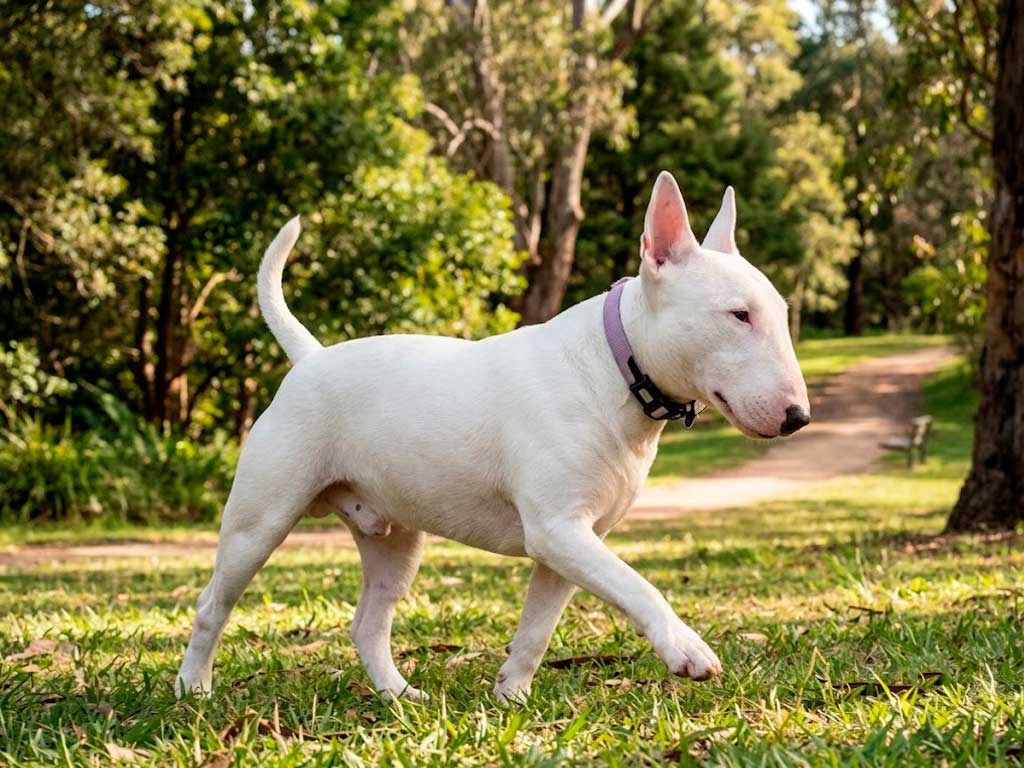
Bull Terriers stand 50 to 60 cm tall and weigh between 20 and 30 kg, putting them squarely in the medium-to-sturdy category. The build is dense and muscular, with broad shoulders and a chest that looks built for hauling cargo.
That famous head shape, egg-like with a Roman nose, has grown more pronounced over the decades of selective breeding. Small eyes carry a distinctly mischievous, almost grinning expression.
Coat colors include white, white with colored patches, red, fawn, brindle, and black. The short coat feels hard and glossy to the touch, with a softer undercoat developing during winter months.
Temperament and Personality
Enthusiasm doesn’t quite cover it. A Bull Terrier treats every single moment like it might contain a hidden treat, and that outlook is genuinely contagious. Living with one means embracing a bit of controlled chaos.
Personal space isn’t a concept this breed grasps. Combine that with a famously high pain tolerance and a body built like cement wrapped in fur, and clumsiness follows naturally. None of it is intentional.
Underneath the goofiness sits real intelligence and sensitivity, traits people miss when they write this breed off as just a tough guy in dog form. Positive reinforcement works far better than force, and harsh handling shuts this dog down fast.
Care Guide
Diet and Nutrition
A Bull Terrier’s diet needs the right balance across every major nutrient group, plus constant access to fresh water. Feed twice daily according to the guidelines on your specific food, and check body condition regularly.
This breed gains weight easily, even at a healthy baseline weight that already runs heavy. Portion control matters more here than with leaner breeds.
This article offers general nutrition guidance only. Talk to your veterinarian about a feeding plan suited to your dog’s age, weight, and activity level.
Exercise Requirements
Budget two hours of exercise daily, split into two walks with plenty of play built in. Variety keeps a Bull Terrier lean: swimming, off-leash running in secure spaces, hiking, and regular pavement walks all help.
Skipping exercise doesn’t just mean a bored dog. It means a bored dog with enough strength to reshape your furniture.
Grooming Needs
The short coat asks very little. One weekly brushing covers most of the year.
During shedding season, bump that up to two or three brushings weekly to keep loose fur off carpets, furniture, and clothing.
Training and Education
Training a Bull Terrier takes patience and a genuine sense of humor. This breed isn’t dumb, whatever the stubborn act suggests, but motivation has to come from creativity rather than force.
Fear-based or punitive methods simply don’t work. A Bull Terrier won’t perform for someone it doesn’t trust, and intimidation breeds shutdown, not compliance. Smart, consistent positive reinforcement gets far better results.
Focus training time on recall, “drop it,” and solid leash manners early. This breed’s public image hasn’t always been kind, and a dog dragging its owner down the street doesn’t help that reputation.
Health and Longevity
Bull Terriers live 10 to 13 years on average, though several breed-specific conditions deserve attention. Deafness shows up most often, particularly in white-coated individuals.
Other documented concerns include lethal acrodermatitis, a hereditary condition affecting white English Bull Terriers that can cause serious skin and developmental problems; lens luxation, where the eye’s lens shifts out of position and threatens vision; polycystic kidney disease, marked by cyst development that can impair kidney function; and mitral valve dysplasia, a heart condition affecting valve function.
This section is for general informational purposes only and does not replace veterinary diagnosis. Ask your vet about breed-specific screening, especially hearing tests for white puppies.
Is This the Right Dog for You?
The ideal Bull Terrier owner needs tons of patience, a strong sense of humor, and real self-control. Comparing this breed’s enthusiasm to a light breeze badly undersells the tornado you’re actually getting.
You’ll need to smile when your dog eats through a couch chasing a dropped crumb. Long walks, plenty of affection, and a firm grip on positive reinforcement all come with the territory. Basic home-repair skills help too.
Because of their size, volume, and occasional clumsiness, Bull Terriers suit households with children 12 and older better than homes with toddlers. Consider adopting through a rescue or shelter if you’re ready to bring one home, since many Bull Terriers currently need placement.
Bull Terrier Quick Facts
| Trait | Details |
|---|---|
| Life Expectancy | 10–13 years |
| Weight | 20–30 kg |
| Height | 50–60 cm |
| Coat | Short, hard, glossy |
| Shedding | Moderate |
| Grooming | Weekly brushing |
| Family Friendly | Best with kids 12+ |
| Good with Other Pets | Needs early socialization |
| Tolerates Being Alone | Fair, with training |
| Energy Level | Very high |
Bull Terrier vs. Similar Breeds
| Breed | Size | Good with Other Pets | Best For |
|---|---|---|---|
| Bull Terrier | Medium | Needs socialization | Experienced, patient owners |
| Staffordshire Bull Terrier | Medium | Better, with training | Active families |
| Miniature Bull Terrier | Small | Needs socialization | Smaller-space households |
| American Bulldog | Large | Needs socialization | Experienced, active owners |
Frequently Asked Questions
Is the Bull Terrier a dangerous breed? Not inherently. Behavior depends heavily on training, socialization, and individual temperament, though early training around people and other dogs matters since this is a strongly territorial breed.
Is the Bull Terrier banned anywhere? It’s not banned in the UK. Local laws vary by country and region, so check regulations where you live.
Is a Staffordshire Bull Terrier the same as a pit bull? No. The Staffordshire Bull Terrier and the American Pit Bull Terrier are distinct breeds, though they share some common ancestry.
How much exercise does a Bull Terrier need? About two hours daily, ideally split into two walks with extra play sessions worked in.
Are Bull Terriers good with children? They can be wonderful family companions once well socialized, but their size and intensity make them a better fit for children 12 and older.
Do Bull Terriers get along with other dogs? Not always. Early socialization is essential, since some individuals show little interest in other dogs.
Why do Bull Terriers go deaf? Deafness, especially in white-coated dogs, links to genetics tied to the same pigment genes responsible for the white coat.
How much grooming does a Bull Terrier need? Very little. One weekly brushing suffices most of the year, with more frequent brushing during shedding season.
Can a Bull Terrier be left alone? With proper training, yes, though this breed generally prefers company and can develop destructive habits if left alone too often.
What is the Bull Terrier’s temperament like? Playful, energetic, and deeply affectionate, with a stubborn streak that responds best to patient, reward-based training.
If you’re drawn to this breed’s personality but want something a bit smaller, our Miniature Bull Terrier guide covers the same spirit in a more compact package. Otherwise, start your prep work with the exercise routine above. It’s the single factor that determines whether your sofa survives the first year.