TetraMin & Tetra Fish Food Guide: The Right Food for Every Freshwater Fish
Fish mouths tell you almost everything about how to feed them. A fish with an upward-tilted mouth evolved to intercept food at the surface. A fish with a flat belly and a downward-facing mouth evolved to pick through the substrate. Feed both the same floating flake and one of them eats well while the other goes hungry.
This guide covers freshwater fish feeding specifically, community tropicals, goldfish, cichlids, bettas, pond koi, and bottom feeders, and where each Tetra food fits.
The species differences here aren’t cosmetic; goldfish and cichlids digest protein differently than a betta does, and feeding the wrong ratio long-term shows up as poor growth or bloating well before it shows up as anything dramatic.
Feeding Zone Matters More Than Most People Think
Freshwater fish generally split into three feeding groups. Surface and mid-water feeders, most community tropicals, bettas, and koi, have mouths angled to catch food as it falls or floats, which is why flakes and floating pellets work for them.
Bottom feeders, corydoras, plecos, loaches, and freshwater shrimp, have downward-facing mouths built for foraging along the substrate, and they need food that actually sinks and stays down rather than food they have to compete for at the surface.
Cichlids sit in between, many feed throughout the water column and are strong enough to out-compete smaller tankmates for whatever’s floating, which is part of why cichlid-specific foods are formulated to sink slower and spread the feeding window out.
Why the Same Flake Doesn’t Work for Every Species
Protein content is the biggest variable. Carnivorous species like bettas need a high-protein diet built around fish meal and similar ingredients; plant-leaning omnivores like goldfish do better on a lower-protein, higher-carbohydrate formula their gut is actually built to process.
Feed a goldfish a betta-grade protein diet long-term and you’ll usually see it in slower growth and worse water quality, since undigested excess protein breaks down into more ammonia.
Temperature plays a role too. Goldfish and koi are coldwater species with slower metabolisms than tropical community fish, so their food is formulated to digest more easily at lower temperatures.
All fish food should carry a reasonable spread of vitamins, A, the B-complex, C, D3, and E cover most of what supports growth, immune function, and color, but the ratio of protein to carbohydrate is what actually needs to match the species.
Species-to-Food Matching, at a Glance
| Fish type | Feeding zone | Best Tetra food |
|---|---|---|
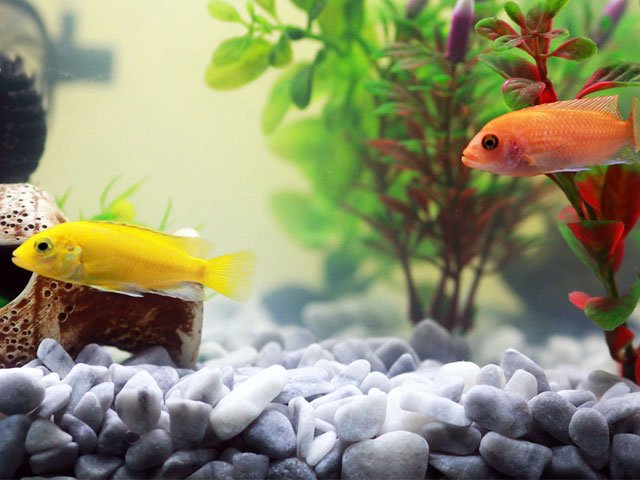
| Community tropicals (tetras, guppies, platies, mollies) | Mid / top | TetraMin |
| Ornamental tropicals, color-focused | Mid / top | TetraColor |
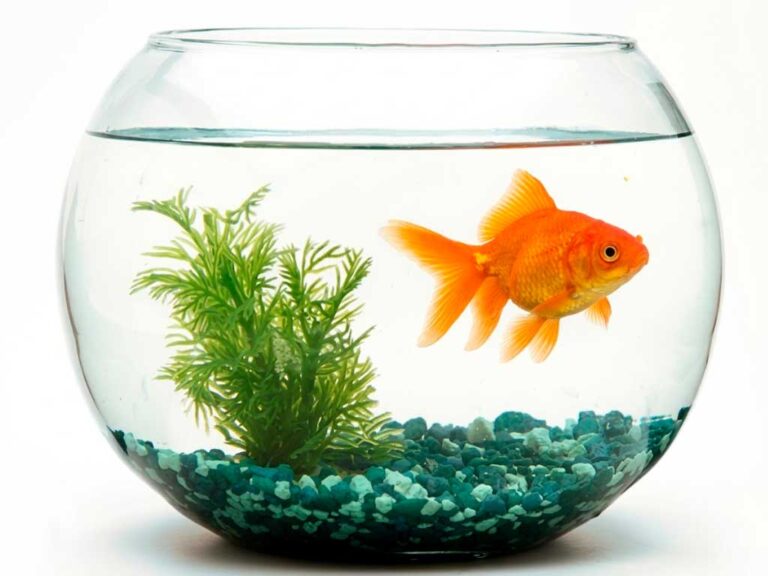
| Goldfish (coldwater) | Mid / bottom | Tetra Goldfish |
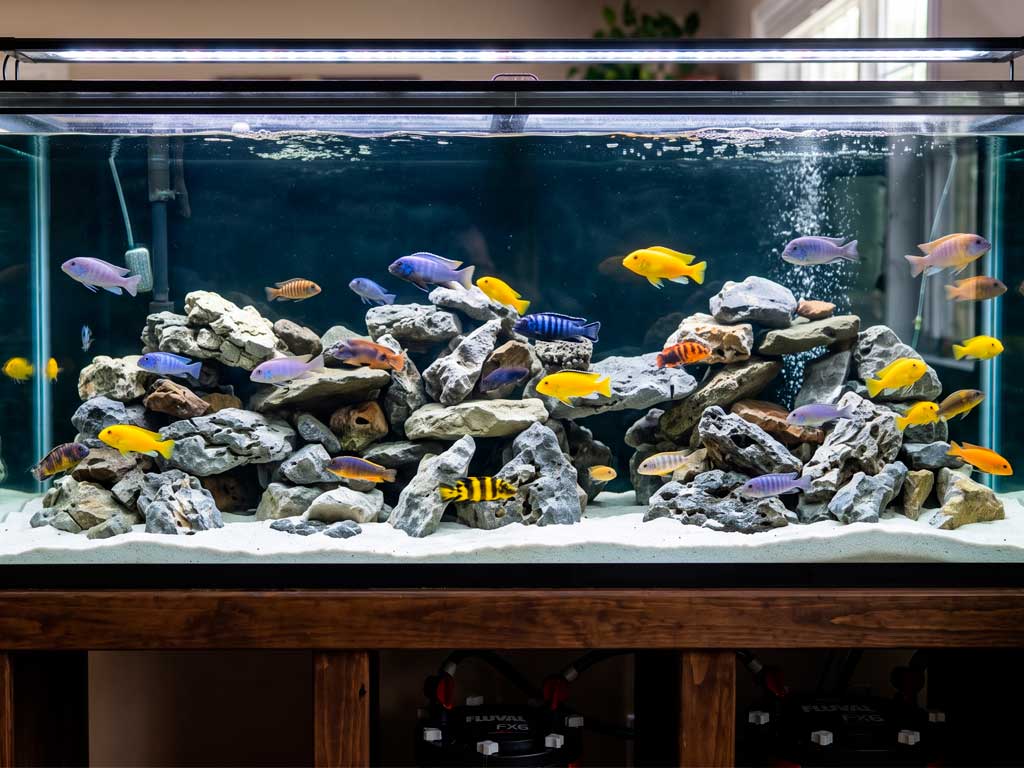
| African & Central American cichlids | Full column | Tetra Cichlid |
| Betta (single carnivore) | Top | Tetra Betta |
| Koi (outdoor pond) | Surface | Tetra Koi |
| Corydoras, plecos, shrimp, snails | Bottom | Tetra Shrimp Wafers |
TetraMin: The Community Tank Default
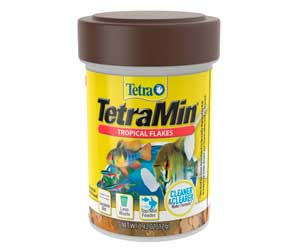
TetraMin flakes are built for the mixed community tank, tetras, guppies, platies, mollies, and similar omnivorous tropicals that all feed comfortably at the surface or mid-water. It’s balanced rather than specialized, which is exactly the point in a tank with several species sharing one feeding.
FROM AMAZON.COM
TetraMin Tropical Flakes
The balanced default for mixed community tanks of tetras, guppies, platies, and mollies.
Buy on Amazon.comHappy Pet Zone may earn a commission when you click through to Amazon.com, at no extra cost to you. As an Amazon Associate, we earn from qualifying purchases.
TetraColor: For Species You Want to See at Their Brightest
TetraColor uses the same base formula as TetraMin but leans on natural color enhancers, mostly carotenoids, that intensify red, orange, and yellow pigmentation over weeks of regular feeding. It’s a strong fit for platies, swordtails, and other tropicals bred specifically for color, and it works fine alongside TetraMin rather than needing to fully replace it.
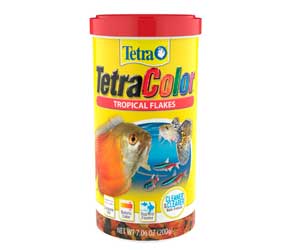
FROM AMAZON.COM
Tetra Color Tropical Flakes
Carotenoid-enhanced flakes that intensify red, orange, and yellow pigmentation over time.
Buy on Amazon.comHappy Pet Zone may earn a commission when you click through to Amazon.com, at no extra cost to you. As an Amazon Associate, we earn from qualifying purchases.
Tetra Goldfish: Built for a Different Digestive System
Goldfish are coldwater fish with a slower metabolism and a gut built to handle more plant matter than a tropical omnivore’s. Tetra Goldfish food is formulated lower in protein and higher in digestible carbohydrate than TetraMin, which matters more than it sounds, overfeeding a goldfish high-protein tropical flake is a common cause of the excess waste and cloudy water that gets blamed on the filter instead of the food.
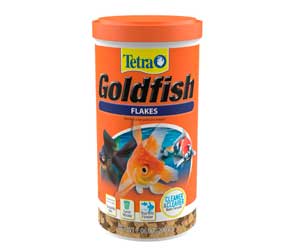
FROM AMAZON.COM
Tetra Goldfish Flakes
Lower protein, higher digestible carbohydrate, formulated for a coldwater goldfish’s gut.
Buy on Amazon.comHappy Pet Zone may earn a commission when you click through to Amazon.com, at no extra cost to you. As an Amazon Associate, we earn from qualifying purchases.
Tetra Cichlid: Higher Protein for Bigger, Bolder Fish
Cichlids, African rift lake species and Central American cichlids alike, are more aggressive feeders and generally larger than average community fish, and Tetra Cichlid sticks are formulated with more protein to match that size and activity level. The stick format also sinks slower than a flake, spreading the feeding window out instead of vanishing in the first ten seconds to whichever fish is fastest.
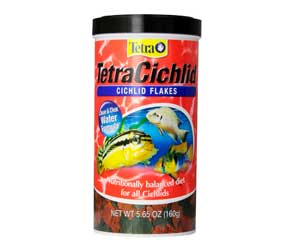
FROM AMAZON.COM
Tetra Cichlid Sticks
Higher-protein sticks sized and formulated for larger, more aggressive cichlid feeders.
Buy on Amazon.comHappy Pet Zone may earn a commission when you click through to Amazon.com, at no extra cost to you. As an Amazon Associate, we earn from qualifying purchases.
Tetra Betta: Small Pellet, High Protein, One Fish in Mind
Bettas are primarily carnivorous, with an upward-angled mouth built to snap food off the surface, and they’re usually kept alone rather than sharing a community feeding. Tetra Betta pellets are sized small enough for a betta’s mouth and formulated with more protein than a community flake, which matches what the species actually needs rather than what’s convenient to stock.
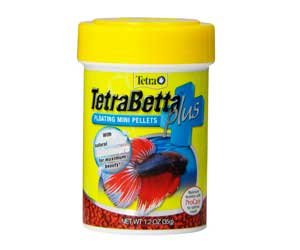
FROM AMAZON.COM
Tetra Betta Pellets
Small, high-protein pellets sized for a betta’s mouth and carnivorous diet.
Buy on Amazon.comHappy Pet Zone may earn a commission when you click through to Amazon.com, at no extra cost to you. As an Amazon Associate, we earn from qualifying purchases.
Tetra Koi: Feeding an Outdoor Pond
Koi share a lot with goldfish nutritionally, coldwater, plant-leaning omnivores, but at pond scale. Tetra Koi sticks float at the surface where koi naturally feed and lean on the same color-enhancing carotenoids as TetraColor, since koi are bred and valued specifically for their patterning. Feeding rate should track water temperature closely; koi barely eat below roughly 50°F (10°C), and overfeeding in cold water is a common way ponds end up with an ammonia problem going into winter.
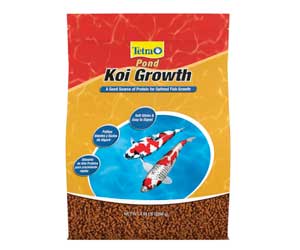
FROM AMAZON.COM
Tetra Koi Vibrance Sticks
Floating, color-enhancing sticks sized for pond koi, best dosed by water temperature.
Buy on Amazon.comHappy Pet Zone may earn a commission when you click through to Amazon.com, at no extra cost to you. As an Amazon Associate, we earn from qualifying purchases.
Tetra Shrimp Wafers: Feeding the Bottom of the Tank
Corydoras, plecos, freshwater shrimp, and snails all forage along the substrate and will mostly miss out on anything that floats or drifts down slowly, competing tankmates usually clean that up first. Tetra Shrimp Wafers sink fast and hold together on the bottom long enough for these species to actually feed, and the formula skews toward the plant matter and algae-derived nutrition that shrimp and plecos process well.
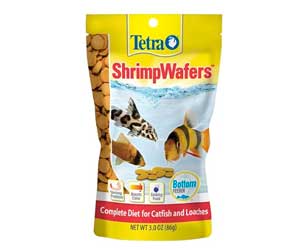
FROM AMAZON.COM
Tetra Shrimp Wafers
Fast-sinking wafers built for corydoras, plecos, shrimp, and snails at the bottom of the tank.
Buy on Amazon.comHappy Pet Zone may earn a commission when you click through to Amazon.com, at no extra cost to you. As an Amazon Associate, we earn from qualifying purchases.
Feeding Frequency and Portion Size
Twice a day is the standard baseline for most freshwater fish, with only what they can clear in about two minutes per feeding. Anything left over after that is excess waste breaking down into ammonia, not food your fish are actually benefiting from.
Rotating between two food types, a staple flake or pellet plus an occasional wafer or frozen option, also helps prevent the pickiness that can develop when a fish only ever sees one food for years.
For the water-quality side of overfeeding, our ammonia and nitrite troubleshooting guide covers what to do if feeding habits are pushing your readings up.
Match the food to the mouth, the metabolism, and the feeding zone, and most of what looks like a fussy fish turns out to just be the wrong food for that species. For general feeding practices beyond the Tetra lineup, see our ornamental fish feeding guide, and for the rest of the Tetra product line, the full Tetra products guide.