Rhodesian Ridgeback: The Powerful African Hunter With a Distinctive Ridge and Demanding Temperament
The Rhodesian Ridgeback represents a dramatic shift from small companion breeds. This large, muscular dog originates from southern Africa and carries centuries of heritage as a hunter of big game. Their most distinctive feature—a ridge of hair running backward along their spine—is immediately recognizable and culturally significant. However, beneath the impressive physique lies a challenging temperament that demands experienced ownership. The Rhodesian Ridgeback is emphatically not a breed for first-time dog owners. Understanding this magnificent but demanding breed requires recognizing both their remarkable capabilities and their specific health vulnerabilities, training demands, and behavioral traits. This comprehensive guide explores whether a Rhodesian Ridgeback fits your lifestyle and experience level.
History and Origin: The Hunterof the African Veld
The Rhodesian Ridgeback boasts a fascinating origin story deeply rooted in southern African hunting culture. Evidence suggests the Khoikhoi (formerly called Hottentots) people of southern Africa bred small ridged hunting dogs as early as the 15th century. These dogs were purpose-built hunters, tracking and cornering large game—lion, leopard, and other dangerous prey—without attacking. Once the quarry was cornered, the dogs would bark to alert hunters to their location. This remarkable hunting behavior became the breed’s defining trait.
During the 19th century, European colonists crossed these African ridge-backed dogs with their own mastiffs and hound breeds, creating what we recognize today as the Rhodesian Ridgeback. The breed takes its name from Rhodesia (now Zimbabwe), the region where development and refinement of the modern type occurred. The distinctive ridge—formed by hair growing in the opposite direction from the rest of the coat—remained the breed’s hallmark feature.
Today, while few Rhodesian Ridgebacks serve their original purpose as hunters, the breed retains powerful instincts and working dog mentality. They’ve transitioned to guardian and companion roles, though their heritage continuously influences their temperament and behavior.
Physical Characteristics: Muscular, Powerful, and Distinctive
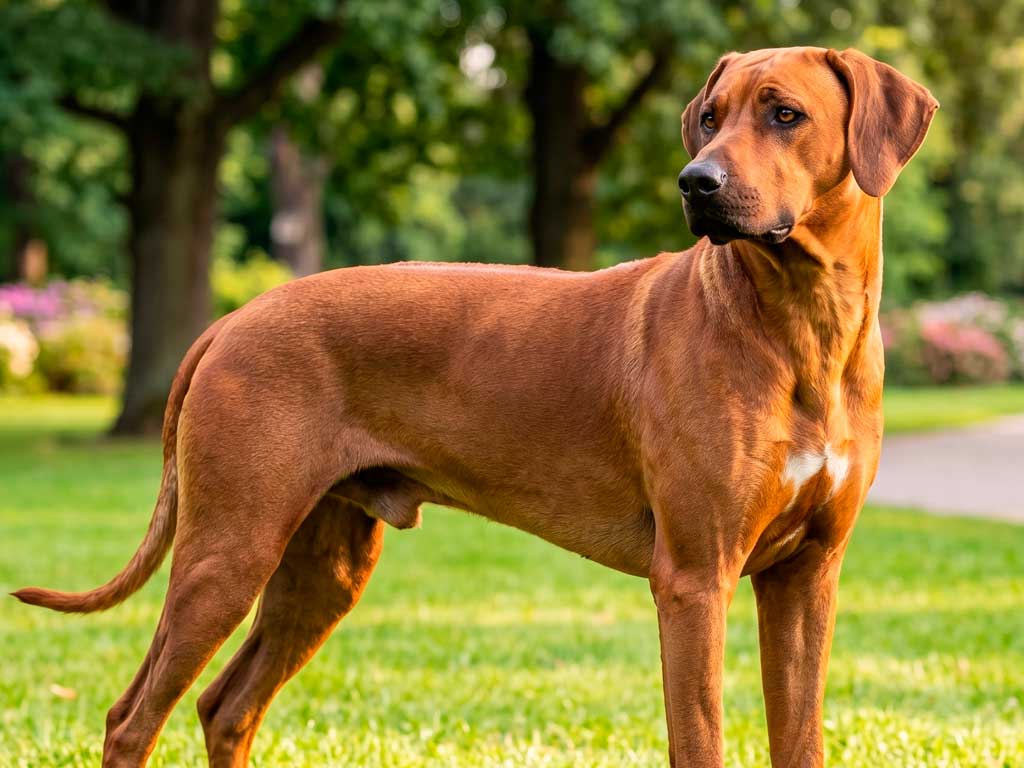
The Rhodesian Ridgeback is a large, powerfully built dog designed for endurance and athleticism. Male Ridgebacks typically stand 63 to 69 centimeters tall (25 to 27 inches) and weigh 30 to 39 kilograms (66 to 85 pounds). Females are slightly smaller, measuring 61 to 66 centimeters (24 to 26 inches) and weighing similar amounts. Their body structure conveys strength and balance—muscular without appearing bulky.
The breed’s defining characteristic is the ridge—a distinctive stripe of hair running along their spine that grows in the opposite direction from surrounding coat hair. This ridge is topped by two “crowns” (circular hair patterns that spiral in opposite directions). The ridge is present at birth and develops as the puppy matures. Interestingly, the Thai Ridgeback is the only other breed sharing this feature, making the ridge both distinctive and rare.
The coat is short, dense, and lies smooth against the body. Coloring ranges from light cream to deep reddish-brown, always appearing as a single, solid color. The short coat is remarkably easy to maintain, requiring minimal grooming.
Temperament and Personality: Powerful Will Requires Experienced Hands
The Rhodesian Ridgeback possesses a temperament as formidable as their physical presence. These dogs are strong-willed and decidedly independent—not inclined to obey simply because commanded. They think before acting and often appear to make their own decisions about compliance. This independent streak, while reflecting their hunting heritage, makes them poor choices for inexperienced owners who lack confidence in training and management.
At home, Ridgebacks are typically calm and relaxed, showing affection toward family members they trust. However, they remain highly alert and wary of strangers. This cautiousness stems from their guardian heritage—they naturally assess threats and strangers critically rather than greeting everyone with enthusiasm. This trait requires early socialization with varied people and environments to prevent excessive suspicion or aggression.
Critically, Rhodesian Ridgebacks retain strong hunting instincts. Small animals trigger prey drive, and off-leash time in unfenced areas is dangerous—they may pursue quarry and ignore recall commands. Even well-trained Ridgebacks should never be trusted completely off-leash outside secure fenced areas. The hunting drive can override training in moments.
Care Guide
Diet and Nutrition
Large-breed dogs require specialized nutrition different from smaller breeds. Rhodesian Ridgebacks need high-quality food formulated for large, active dogs with appropriate nutrient balance, including minerals and vitamins.
Critically, this breed is prone to gastric dilatation-volvulus (bloat)—a potentially life-threatening condition where the stomach twists on itself. Smaller, more frequent meals help reduce bloat risk. Feed twice or three times daily rather than one large meal. Avoid strenuous exercise immediately after eating. Consult your veterinarian about bloat prevention strategies and emergency protocols.
Exercise Requirements
Adult Rhodesian Ridgebacks need approximately 1-2 hours of daily exercise. These athletic dogs require sustained activity—long walks, running, or play—to burn energy and maintain behavioral stability. Insufficient exercise often manifests as destructive behavior, excessive barking, or poor decision-making.
However, exercise must occur in secure, fenced environments. The prey drive is too strong to rely on training and recall in open spaces. Many owners find organized activities like agility, obedience trials, or lure coursing provide excellent outlets for the breed’s physical and mental energy.
Grooming Needs
One advantage of Rhodesian Ridgebacks is their minimal grooming requirements. The short coat needs brushing only once weekly to remove loose hair. Occasional bathing suffices unless the dog becomes particularly dirty. This low-maintenance coat makes grooming a non-issue compared to long-coated breeds.
Training and Education
Training Rhodesian Ridgebacks requires consistency, confidence, and understanding of their independent nature. These dogs are intelligent but not motivated primarily by a desire to please their owners. Food motivation works better than praise alone. Positive reinforcement using high-value treats proves effective; punishment-based methods often backfire, creating stubborn resistance.
Early socialization is absolutely critical. Expose puppies to varied people, dogs, and environments to reduce natural wariness toward strangers and other animals. Training should address the strong prey drive early—inappropriate pursuit of cats or small dogs can be dangerous.
The breed is not recommended for inexperienced owners or families seeking an easily trained, naturally obedient companion. Rhodesian Ridgebacks require an owner with training experience and confidence in their ability to manage a powerful, independent dog.
Health and Longevity
Rhodesian Ridgebacks typically live 10 to 12 years—shorter lifespan than many dogs their size. The breed is predisposed to several genetic health concerns that require breeder screening and owner awareness.
Hip and elbow dysplasia cause joint deterioration and mobility problems. Gastric dilatation-volvulus (bloat) is a serious emergency where the stomach twists, requiring immediate veterinary intervention. Juvenile myoclonic epilepsy is a specific seizure disorder affecting puppies. Hypothyroidism (thyroid underactivity) causes energy loss, weight gain, and skin problems. Spinal dermoidal sinus is a congenital deformity correlating with the ridge’s presence in some individuals.
Before acquiring a Ridgeback puppy, ensure the breeder has conducted hip and elbow screening on parents and tests all puppies for dermoid sinus at birth. These hereditary conditions are serious and should factor into your decision.
Is This the Right Dog for You?
The Rhodesian Ridgeback suits experienced dog owners seeking powerful, independent companions in secure homes.
Choose a Rhodesian Ridgeback if you:
- Have significant dog training and ownership experience
- Want a large, powerful dog with distinctive appearance
- Live in a home with secure fencing
- Appreciate independent, alert dogs with strong personalities
- Can commit to 1-2 hours daily exercise
- Understand and accept strong prey drive limitations
- Have experienced veterinarian and understand bloat risks
- Want a naturally protective guardian
Consider another breed if you:
- Are a first-time dog owner
- Live in apartments or homes without secure fencing
- Need an easily trained, obedient companion
- Have small children or other small pets
- Cannot provide experienced, confident leadership
- Dislike aloof, wary temperaments
- Cannot tolerate significant health costs or risks
- Prefer affectionate, eager-to-please dogs
Frequently Asked Questions About Rhodesian Ridgebacks
1. What is the ridge and why is it important? The ridge is hair along the spine growing opposite to surrounding coat direction, topped by two opposite-spiraling “crowns.” It’s the breed’s signature feature and one of only two breeds with this trait. The ridge’s presence correlates with increased risk of spinal dermoid sinus, a congenital birth defect. All puppies require testing at birth; responsible breeders conduct this screening.
2. Are Rhodesian Ridgebacks dangerous? Not inherently, but they require experienced, confident ownership. They’re large, powerful dogs with strong prey drive and aloof temperaments toward strangers. Poor training, insufficient socialization, or inexperienced handling can create serious behavior problems. They’re unsuitable for first-time owners or families seeking naturally friendly, obedient dogs.
3. Why do Rhodesian Ridgebacks need experienced owners? Their independent nature, powerful build, strong prey drive, and natural wariness require confident leadership and experienced handling. Novice owners often struggle with the breed’s decision-making and may inadvertently reinforce poor behaviors. Training is essential and more demanding than many breeds.
4. How serious is bloat in Rhodesian Ridgebacks? Bloat (gastric dilatation-volvulus) is a life-threatening emergency where the stomach twists, cutting off blood supply. Symptoms include distended abdomen, retching, restlessness, and collapse. It requires emergency surgery. Feeding multiple smaller meals, avoiding pre- or post-exercise food, and knowing warning signs are critical. Many owners keep surgical funds available given the risk.
5. Can Rhodesian Ridgebacks live with cats and other pets? The strong prey drive makes this challenging. Small animals trigger hunting instinct, and off-leash interaction can be dangerous. Some Ridgebacks coexist peacefully with cats raised together, but relying on this is unwise. Proper management, training, and supervision are essential if keeping small animals.
Understanding This Formidable Breed
The Rhodesian Ridgeback represents one of the dog world’s most challenging breeds for inexperienced owners. Their powerful physique, independent temperament, strong prey drive, and specific health concerns demand experienced ownership, secure environments, and significant commitment.
However, for the right owner—someone with training experience, confidence in leadership, and appreciation for powerful, intelligent dogs—the Rhodesian Ridgeback offers incomparable presence and companionship. These magnificent hunters retain their ancestral dignity and capability, making them remarkable guardians and family members in appropriate homes.