Boxer Dog Breed: Everything You Need to Know Before Getting One
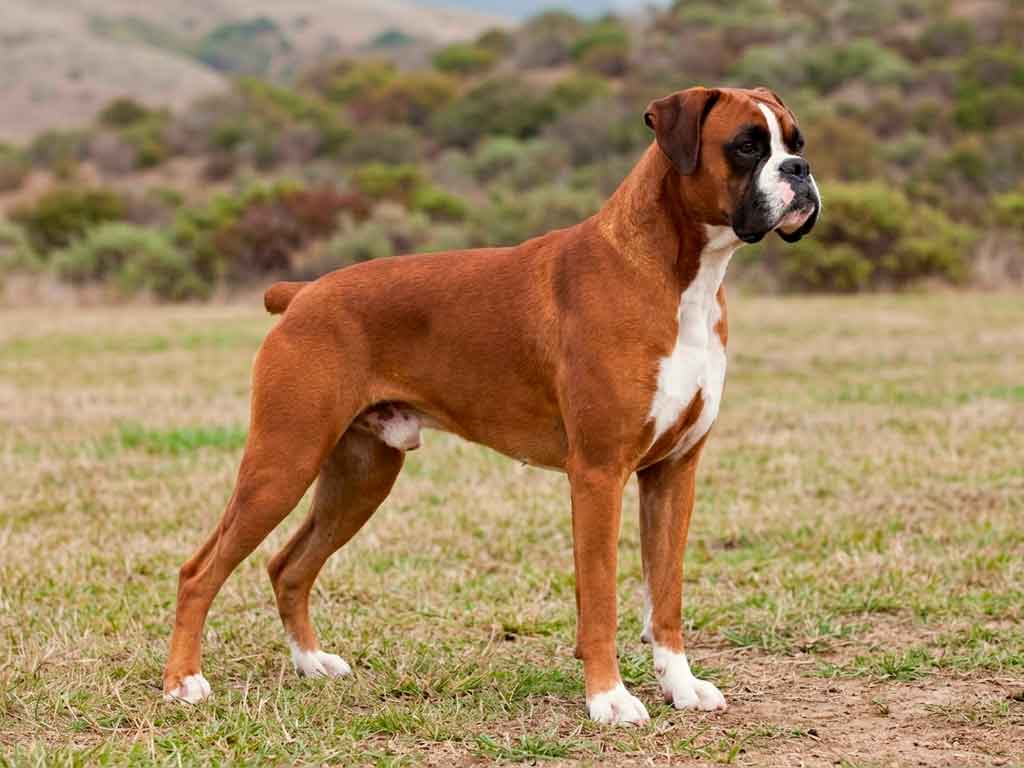
Boxer dog breed is a medium-sized German working dog with a square build, a short glossy coat, and an undershot jaw. The FCI places it in Group 2 among the Molossoid breeds and classifies it as a companion, guard, and working dog that still carries a working trial. Males stand 57 to 63 cm at the withers and females 53 to 59 cm, with males weighing over 30 kg at about 60 cm.
An athletic, playful dog, the Boxer dog breed bonds hard with its family and needs more daily movement than most breeds of its size. It is also a flat-faced breed with a documented heart risk, so exercise, heat, and cardiac screening shape ownership more than grooming ever will. Expect around two hours of activity a day, early training, and a breed that would rather be with you than alone.
These are the headline figures, with the source noted because the registries publish different numbers.
| Official name | Deutscher Boxer, Boxer |
| FCI standard | No. 144, Group 2, Section 2.1 Molossoid breeds |
| FCI utility | Companion, guard, and working dog |
| Working trial | With a working trial |
| Origin | Germany |
| Kennel Club (UK) group | Working |
| AKC recognition | 1904, Working Group |
| Height | Males 57 to 63 cm, females 53 to 59 cm at the withers |
| Weight | Males over 30 kg at about 60 cm, females about 25 kg at about 56 cm |
| Coat | Short, hard, glossy, and close fitting |
| Colours | Fawn or brindle, both with a black mask and optional white markings |
| Lifespan | 10 years and up |
| Exercise | About two hours a day, spread across the day |
| Suits | Active owners who want a trainable guardian and can commit to daily exercise |
What Is a Boxer Dog Breed?
The FCI standard describes the Boxer as a medium-sized, smooth-coated, sturdy dog of compact, square build and strong bone, with taut muscles and lively movement. Two proportions define the shape. The body is square, meaning the length of the back equals the height at the withers, and the depth of chest equals half the height, with the brisket reaching the elbows.
The head carries the breed’s signature. The muzzle is as broad and powerful as possible, the nose sits slightly higher than its root, and the lower jaw protrudes beyond the upper jaw, which makes the Boxer officially undershot. The standard also sets a 1 to 2 ratio between the length of the nose bridge and the length of the head, measured from the nose to the inner corner of the eye and from there to the occiput.
One detail separates the Boxer dog breed from most Molossoid breeds. The FCI classification includes a working trial, so a Boxer is a working dog on paper and not only a companion. That history shows up in the breed’s movement, its willingness to learn, and the sports it still competes in.
Where Does the Boxer Come From?
The immediate ancestor is the small Brabant Bullenbeisser, a hunting dog kept by huntsmen to seize game held by hounds and hold it until the handler arrived. That job rewarded a wide muzzle, widely spaced teeth, and a powerful grip, and breeders selected for exactly those features until the muzzle grew broad and the nose turned up.
The Kennel Club notes that the Bullenbeisser was crossed with the Bulldog, and that cross provided the basis for the modern Boxer. The Boxer dog breed took shape in Germany in the late 19th century. The American Kennel Club recognised the Boxer in 1904 and registers it in the Working Group, and it records that the Boxer was one of the first breeds selected in Germany for police training.
The Boxer dog breed also served in wartime as a messenger and pack carrier, work the Kennel Club still lists among its achievements. Those jobs explain a temperament that reads as serious when something needs guarding and silly the rest of the day.
What Does the Boxer Dog Breed Look Like?
The coat is short, hard, glossy, and close fitting, which shows the muscle underneath and makes grooming simple. Fawn comes in shades from light fawn to dark deer red, and brindle adds dark stripes running parallel to the ribs over a fawn ground. Both patterns carry a black mask, and the FCI confines that mask to the muzzle so the face does not look sombre.
White markings are allowed and the FCI says they should not be discarded, with one limit: white may not exceed one third of the ground colour. The ears are natural and of appropriate size, set wide apart on the highest part of the skull, lying close to the cheeks and turning forward with a crease when the dog is alert. The tail is set high and left at natural length.
Here is how the four main sources describe the size of the same dog.
| Source | What it publishes |
|---|---|
| FCI standard (No. 144) | Males 57 to 63 cm, females 53 to 59 cm; males over 30 kg, females about 25 kg |
| American Kennel Club | Working Group, recognised in 1904; a male can stand as high as 25 inches at the shoulder |
| Kennel Club (UK) | Working group, listed as a large breed with a short coat |
| Petplan breed profile | Medium to large, two hours of exercise a day, lifespan 10 years and up |
Convert the FCI figures and the gap closes: 57 to 63 cm is roughly 22 to 25 inches, which matches the American description of a male standing up to 25 inches. The registries disagree about labels rather than about dogs, and the Boxer sits between medium and large depending on which chart you read.
What Is a Boxer’s Temperament Like?
The FCI standard asks for a dog that is fearless, self-confident, calm, and equable, devoted to its household and watchful as a defender. It is explicit about the split that owners describe: harmless with family, distrustful of strangers, happy in play and fearless when a situation turns serious. The standard also calls the breed easy to train because of its willingness to obey and its natural keenness.
The American Kennel Club notes that Boxers are upbeat and playful, that their patience and protective nature earned them a reputation as a good dog with children, and that they take the watchdog role seriously. Early exposure to many people and animals is what keeps that guardian instinct from turning into suspicion of every visitor.
Two warnings come from the breed profiles rather than the standards. Petplan flags a tendency toward separation anxiety, which fits a breed this attached to its people. The AKC adds that Boxers are not always tolerant of other dogs of the same sex, while opposite sexes usually live together comfortably.
Shop for Your Breed

Just Food For Dogs – Fresh Frozen
Fresh meals. Gently cooked, then frozen to lock in nutrients. 100% Human Grade Ingredients. Gently Cooked in the USA. #1 Vet-Recommended Fresh Food.
Shop on JustFoodForDogs
Raw Paws Pet Food – Frozen Raw Pet Food
Feeding your pet a frozen raw pet food diet is a simple way to deliver real, whole-food nutrition in its most natural form.
Shop on RawPawsPetFood
Bravecto Chews for Dogs
Bravecto is a long-lasting flea and tick protection option for your dog. 1 dose of Bravecto chew provides up to 12 weeks of powerful protection, which is nearly 3 times longer than a monthly treatment.
Shop on BestVetCare.com
Deworming Treatments for Dogs
BestVetCare offers you a wide range of worm treatments which come in a variety of forms such as oral paste, tablets, granules, and liquid solutions.
Shop on BestVetCare.comHappyPetZone participates in various affiliate programs with brands and retailers. We may receive a commission on purchases made through our links, at no extra cost to you.
How Much Exercise Does a Boxer Need?
The Boxer dog breed needs about two hours of activity a day, spread across the day rather than packed into one outing. Petplan gives that figure and recommends splitting walks because the breed overheats easily. The AKC describes Boxers as very playful, high-energy dogs that need ample daily exercise, on leash or inside a securely fenced area, and states plainly that the Boxer must never be allowed to run loose.
The two-hour figure surprises owners who expect a Molossoid dog to be a couch companion. It makes sense once you watch a Boxer move. This is a dog built to leap, sprint in short bursts, and then recover, and it will invent its own exercise indoors if nobody provides any outdoors.
A daily pattern that works for most adults looks like this.
- A 45 minute walk in the cool part of the morning, with part of it on a long line in a safe field for sniffing and short bursts of speed.
- A training or play session at home in the middle of the day, because mental work tires a Boxer without heating it up.
- A second walk in the evening, kept shorter in warm weather and longer in cool weather.
- Free running only inside a fenced area, since a chasing instinct and an open road do not mix.
Heat changes the plan. The AKC states that the Boxer has little tolerance for extreme heat or cold, and Petplan notes that the short snout makes overheating likely in summer. Walk early, walk late, carry water, and swap the midday walk for indoor games when the temperature climbs.
How Do You Train a Boxer?
Train early, keep sessions short, and reward effort. The American Kennel Club calls early socialisation and puppy classes vital for channelling the breed’s energy, and notes that Boxers are highly intelligent yet become bored with repetition. A Boxer that has solved the same exercise ten times switches off, so add a new element rather than a twelfth repetition.
The breed profile from Petplan adds the practical side: puppy classes from around three to six months, positive reinforcement for a stubborn streak, lead training before the dog is too strong to hold, and crate training to help with housetraining. A Boxer that pulls at eight months is a serious problem at eighteen.
Five training priorities cover most of what this breed needs.
- Teach a settle cue in the house, because a high-energy dog that cannot switch off is hard to live with.
- Practise loose-lead walking daily from puppyhood, since a muscular adult is difficult to hold once the habit is set.
- Build a reliable recall on a long line before trusting any open space, because the breed’s chasing instinct outruns its training.
- Socialise with calm adult dogs of both sexes, because same-sex intolerance is common in this breed.
- Give the dog a job, because obedience, agility, scent work, and protection sports suit a Boxer better than a walk around the block.
How Do You Groom a Boxer?
Grooming the Boxer dog breed takes minutes, not hours. Anyone researching the Boxer dog breed should read the standard before the marketing. The AKC recommends a rubber curry brush or a hound glove once or twice a week, a bath only occasionally, nails trimmed at least monthly, and teeth brushed often, daily if possible. Petplan adds that the breed sheds heavily twice a year, in spring and autumn, in a short moult owners call blowing coat.
The breed’s skin is the part that needs attention. Boxers can react to harsh shampoos, so a mild product and a thorough rinse matter, and the facial folds need drying after a bath because trapped moisture invites infection. A weekly routine that covers the breed looks like this.
- Brush once or twice a week with a curry brush, and daily during the spring and autumn moult.
- Bathe roughly monthly at most, with a mild shampoo, and dry every fold afterward.
- Check the ears weekly for dark wax, redness, or odour, because the natural drop ear traps warmth.
- Trim the nails every three to four weeks, since a Boxer’s nails grow fast and hard.
- Run your hands over the body during each session, because the breed is prone to lumps that owners find before anyone else does.
What Health Problems Do Boxers Have?
The heart is the biggest risk in the Boxer dog breed. Boxers are screened for aortic stenosis and for arrhythmogenic right ventricular cardiomyopathy, a condition tied to a DNA variant and to abnormal heart rhythms that a Holter monitor records over 24 hours. Petplan warns that cardiomyopathy and aortic stenosis can both cause sudden death before any other symptom appears, which is why a routine murmur is worth investigating rather than watching.
Cancer sits close behind. Petplan reports that experts estimate up to two in five Boxers may develop some form of cancer, and that mast cell tumours and sarcomas are among the growths seen. That statistic is the strongest argument for checking every lump early, and for choosing a breeder who tracks longevity in their lines.
The rest of the list is familiar in large, deep-chested breeds: hypothyroidism, cruciate ligament disease, hip and elbow dysplasia, and degenerative myelopathy. Eye injuries and corneal ulcers appear often enough that Petplan calls them a common Boxer problem, and the flat face leaves the breed prone to overheating.
Screening differs by country, and the two kennel clubs do not ask for the same tests.
| Test or scheme | What it looks for |
|---|---|
| Cardiac examination (AS/SAS) | Aortic stenosis, a narrowing that strains the heart |
| Holter monitor, repeated yearly | Irregular rhythms linked to Boxer cardiomyopathy |
| ARVC DNA test | The genetic variant associated with the heart rhythm disorder |
| Thyroid evaluation | Hypothyroidism, which is more common in this breed |
| Hip and elbow scoring | Joint dysplasia, which a heavy athletic body aggravates |
| DM DNA test | Degenerative myelopathy, a progressive spinal cord disease |
Lifespan is reasonable for the size. Petplan gives 10 years and up, which is normal for a dog of this size. The FCI standard closes with a line that applies directly to buyers: only functionally and clinically healthy dogs with breed-typical conformation should be used for breeding.
A Boxer that collapses, struggles to breathe, or cannot settle after exertion needs a vet immediately, and a dog that faints during exercise needs cardiac assessment rather than rest. This guide is educational and does not replace veterinary advice for the dog in front of you.

Lemonade Pet Insurance
Explore customizable pet insurance coverage and learn whether Lemonade is the right fit for your dog or cat.
- Customizable coverage options
- Online policy management
How Do You Feed a Boxer?
Feeding the Boxer dog breed means a complete diet in a measured portion and a lean body, because extra weight loads joints that already carry a heavy frame. Petplan notes that Boxer puppies keep growing and broadening well into adulthood, so the switch to adult food is a conversation with a vet rather than a date on the bag.
Three habits keep the weight steady.
- Weigh the daily ration instead of scooping by eye, since a Boxer will finish whatever is offered.
- Split the ration into two meals so the dog is not working on a full stomach during exercise.
- Count training treats in the daily total, because rewards add up quickly in a food-motivated breed.
Is the Boxer Dog Breed Right for You?
The Boxer dog breed fits an active household that wants a trainable guardian and can give the dog two hours a day. It does not fit a home that is empty for ten hours, a first-time owner who wants a calm lap dog, or anyone unwilling to screen for heart disease. That attachment is what makes the dog rewarding to live with and what makes the breed demanding.
The breed works when these points are true.
- You can walk the dog twice a day and add training or play in between.
- Someone is home for most of the day, or the dog has company and a routine it can predict.
- You have a fenced space or reliable long line, because this breed should never run loose.
- You can budget for cardiac screening and breed-specific dog insurance before the first vet bill arrives.
Buying a Boxer dog breed puppy means asking for proof. Ask for cardiac results on both parents, including a Holter report where the breeder has one, plus hip, elbow, and thyroid results in writing. Ask how old the oldest dog in the line lived to be, because longevity data says more about a pedigree than any photograph.
If you are comparing working breeds, the Doberman guide covers a leaner guardian with its own cardiac risk, and the Great Dane guide covers the giant end of the same group. New owners should read the puppy care guide before the dog comes home, and the Dog Breeds hub lists every breed on the site.