Grand Bleu de Gascogne Breed Guide: Hunting Hound Essentials
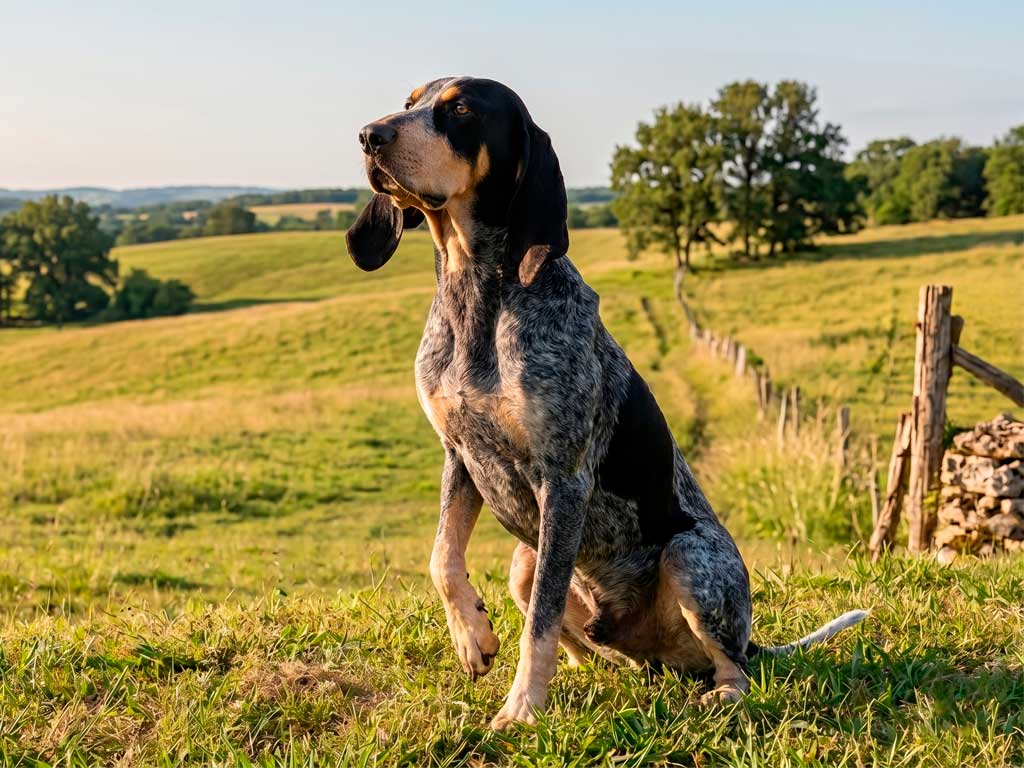
The Grand Bleu de Gascogne stands as one of Europe’s most distinctive hunting dogs, instantly recognizable by its striking blue-mottled coat and powerful build. Unlike companion breeds that adapt easily to family life, this French scent hound demands owners who understand pack mentality, respect the breed’s intense prey drive, and can provide the specialized environment these dogs require.
This guide explores whether the Grand Bleu de Gascogne is the right fit for your lifestyle and how to manage their unique needs.
Heritage: A Legacy from Medieval France
The Grand Bleu de Gascogne traces its lineage directly to the now-extinct Saint Hubert Hound (the medieval Bloodhound). During the Middle Ages, French nobility utilized these massive hounds to hunt wild boar, wolves, and bears across vast forests.
Unlike many modern breeds that transitioned toward indoor companionship, the Grand Bleu remained a dedicated working dog. Breeders prioritized the hunting instinct over domesticity. As a result, today’s Grand Bleu possesses a genetic blueprint built for pursuing game across multiple kilometers for hours on end.
Note on Ownership: You are not acquiring a pet that happens to hunt; you are adopting an animal whose entire nature revolves around the pursuit of game. Understanding this distinction is key to a successful partnership.
Physical Structure and Appearance
The Grand Bleu is an elegantly constructed, large hound. Males typically stand 64 to 70 centimeters (approximately 25 to 27.5 inches) at the shoulder, while females reach 60 to 65 centimeters (approximately 23.5 to 25.5 inches) usually weighing between 32 and 35 kilograms.
- The Signature Coat: Short and dense, the coat features “blue” coloring—a result of black mottling over a white background. This creates a striking salt-and-pepper appearance, often accented by tan or rust markings on the face, ears, and paws.
- Functional Ears: Their long, pendant ears serve a biological purpose, helping to capture and concentrate scent particles as they trail along the ground.
- Athletic Build: They possess a powerful frame that combines strength with refinement, allowing them to traverse challenging terrain with ease.
Temperament: The “Pack Mentality”
If you expect a dog that lives to please you, you may be surprised by the Grand Bleu. They possess a deep pack mentality, viewing themselves as members of a hunting team rather than individual family pets.
Understanding Their Vocalizations
The breed is famously vocal. They emit a deep, resonant baying howl that was originally intended to communicate with the rest of the pack across long distances. In a suburban setting, this is not “problem barking” that can be trained away—it is an intrinsic part of their communication.
The Nose vs. The Command
While they are generally friendly and gentle with people they know, their sense of smell is their primary directive. When a Grand Bleu catches an interesting scent, your commands may become “suggestions.” This is not defiance; it is their nature.
Essential Care Requirements
1. Exercise and Environment
A simple walk around the block will not suffice for this breed. They require at least two hours of daily, high-intensity exercise. Ideally, this should involve rural settings where they are free to nose-track and explore scent trails. Without this, these hounds can quickly develop destructive behaviors or separation anxiety.
2. Nutritional Needs
As a large, high-stamina breed, they require a diet rich in high-quality protein (25% or higher) to support muscle maintenance and hunting endurance. Consult with your veterinarian to balance calcium and phosphorus intake to support their skeletal health and joints.
3. Grooming and Hygiene
- Coat: Weekly brushing is sufficient to maintain their short coat.
- Ear Care: Given their pendant ears and outdoor lifestyle, check them weekly for moisture or debris to prevent infections.
- Dental Health: Regular tooth brushing is essential, especially for dogs active in the field.
Training: Work Over Obedience
Traditional obedience training often produces limited results with this breed. The most successful owners channel their drive into scent work, tracking, or nose-work games.
- Positive Reinforcement: These dogs shut down with harsh punishment. Use gentle, reward-based methods.
- Prey Drive: Even with excellent training, their instinct to pursue small animals remains strong. They are generally not suited for households with cats, rabbits, or other small pets.
Health and Longevity
The Grand Bleu de Gascogne is a robust and generally healthy breed with a lifespan of 10 to 12 years. While they do not suffer from many breed-specific conditions, potential owners should look for breeders who screen for:
- Hip and elbow dysplasia.
- Ear infections (largely manageable through proper hygiene).
Is the Grand Bleu de Gascogne Right for You?
| You are a match if… | You should reconsider if… |
| You live in a rural area with space to roam. | You live in an apartment or busy suburban area. |
| You are an experienced owner of hounds. | You need a dog that is easily trained for off-leash obedience. |
| You want a dedicated hunting partner. | You have cats or other small pets in the home. |
| You appreciate an independent, pack-oriented dog. | You need a quiet, low-energy companion. |
Interested in similar breeds?
Explore our guides to the Basset Bleu de Gascogne for a smaller version of this French tracker, or the classic Basset Hound for more information on the unique traits of scent-driven hounds.
Grand Bleu de Gascogne Frequently Asked Questions
Can a Grand Bleu ever become a reliable off-leash companion? With training and experience, many do—but reliability depends heavily on scent conditions and what they’ve detected. A Grand Bleu might walk perfectly off-leash through your neighborhood for years, then suddenly disappear when they catch a compelling scent. They’re not safe off-leash near wildlife unless trained specifically for reliable recall in hunting situations. Always use leashes in unfamiliar territory.
Are Grand Bleus good with families and children? They’re gentle and tolerant by nature, but their size and hunting enthusiasm can overwhelm small children. They require supervision with kids, particularly during play when their strength and energy might inadvertently knock over young ones. Older children who understand dog behavior and respect their space integrate better into Grand Bleu families.
What happens if you don’t hunt with a Grand Bleu? Many owners don’t actively hunt but engage their dogs in scent work and tracking activities instead. These alternatives satisfy the drive and prevent behavioral problems. However, the dog never truly fulfills their genetic purpose. Accepting this reality is essential if you choose non-hunting ownership.
How much space does a Grand Bleu actually need? Ideally, rural property where they can roam and explore. However, they can survive in smaller spaces if given 1.5 to 2+ hours of countryside activity daily. Urban Grand Bleus require dedicated owners willing to make substantial daily time commitments to exercise and scent work.
Do Grand Bleus get along with each other? They’re pack-oriented and usually coexist peacefully with other dogs, sometimes preferring multi-dog households. However, introducing them requires careful management. Their hunting focus means they’ll team up against prey animals, so don’t assume they’ll accept new family pets.