Fat-Tail Gerbil (Duprasi) Care Guide: A Different Kind of Gerbil
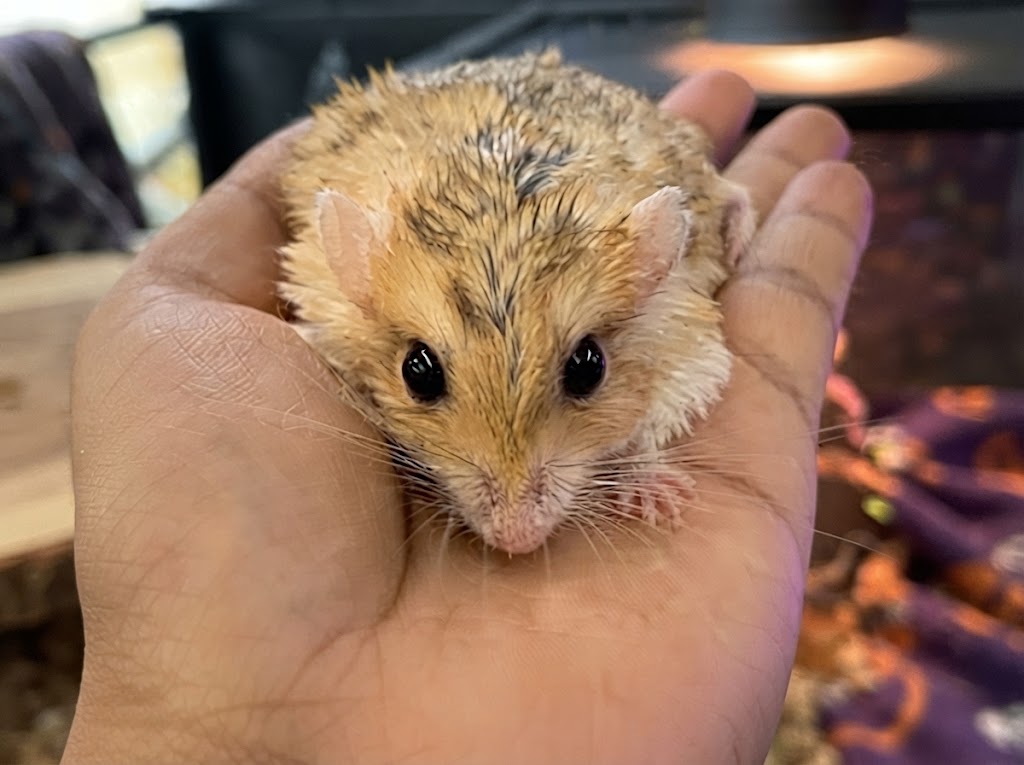
I almost bought one of these thinking it was just another gerbil color. It’s not.
The fat-tail gerbil, or duprasi, is a genuinely different species with different needs, and mixing up its care with a regular gerbil’s is one of the most common mistakes new owners make.
Duprasi Quick Facts
| Fact | Detail |
|---|---|
| Scientific name | Pachyuromys duprasi |
| Lifespan | 4 to 6 years, sometimes longer |
| Adult size | 4 to 5 inches, chunkier than a Mongolian gerbil |
| Origin | Sahara desert (Algeria, Tunisia, Libya, Egypt) |
| Social needs | Usually solitary as adults |
| Diet | Insectivore-leaning omnivore |
What Makes a Duprasi Different from a Regular Gerbil
Bottom line: this isn’t a color variant of the gerbil you already know. It’s a separate species that only entered the pet trade decades after the Mongolian gerbil, and it looks the part.
A duprasi is short-legged, round-bodied, and blunt-faced, closer in shape to a tiny hamster than to a sleek, long-tailed gerbil. Its signature feature is a thick, club-shaped tail that stores fat reserves the way a camel’s hump does, built to get it through lean stretches in the Sahara. A healthy duprasi’s tail should look plump and firm, almost like a small sausage.
Temperament sets it apart too. Duprasi are noticeably calmer and slower-moving than Mongolian gerbils, which makes many owners find them easier to handle, even though their care requirements are stricter in other ways.
Wild duprasi dig extensive multi-chamber burrows, with separate areas for sleeping, nesting, and food storage, and that same instinct to dig and rearrange shows up constantly in a captive setup.
Housing: Drier and Cooler Than You’d Think
A single duprasi needs a minimum 20-gallon-long tank (roughly 30 by 12 inches), with a same-sex sibling pair needing more room still. Add 6 to 8 inches of digging-depth substrate, since duprasi are enthusiastic burrowers and will rework that layer constantly.
Glass or solid-walled enclosures work better than wire here for the same reason they do with Mongolian gerbils: wire doesn’t hold bedding for digging and can injure feet and noses. Ventilation still matters, so use a secure mesh lid rather than sealing the tank up completely.
Temperature and humidity matter more here than with most small pets. Keep the room between 68 and 77°F, and never let it climb toward 80°F, since this species overheats easily.
Humidity should stay low, roughly 30 to 40 percent; sustained dampness is genuinely poorly tolerated and linked to respiratory and skin problems in this desert-adapted animal.
A dedicated dish of chinchilla-safe sand for regular sand baths isn’t optional decor here. It’s essential for coat condition, the same way it is for a chinchilla.
Diet: The Insect-Heavy Difference
This is the single biggest departure from typical gerbil care. Duprasi lean insectivorous, not seed-and-grain-heavy like their Mongolian cousins. Mealworms, crickets, and other gut-loaded insects should make up a meaningful, regular portion of the diet, not an occasional treat.
Round that out with a modest gerbil or hamster seed mix and the occasional low-moisture vegetable. Skip generic, fatty rodent mixes and go light on fruit; both can push a duprasi toward obesity and hepatic lipidosis (fatty liver disease).
Too little insect protein carries its own risk, since a diet low in the calcium and phosphorus that insects provide can contribute to metabolic bone disease.
Solo Living: Why This Species Breaks the Gerbil Rule
If you read our regular gerbil care guide, you know Mongolian gerbils should never live alone. Duprasi flip that rule.
Most adult duprasi do best housed solitary. Same-sex littermates raised together from a young age can sometimes cohabit long-term, but pairing unfamiliar adults carries a real risk of serious fighting, more consistently than it does with Mongolian gerbils.
If you do keep two, watch closely for resource-guarding, chasing, or any sign the relationship has soured, and be ready to separate them.
Handling and Temperament
Duprasi have a reputation for being unusually docile and slow-moving. Most tolerate cupped-hand handling well once settled in, and rarely bite defensively the way a startled gerbil or hamster might.
Their short legs and round build mean they’re not built for jumping, so handle them low to the ground or over a soft surface just in case. Scoop from below rather than grabbing from above, which can trigger a fear response even in a calm individual.
Give a new duprasi about a week of minimal handling to settle in first, then build up daily, calm interaction from there. An older duprasi acquired as an adult may take longer to warm up than one handled consistently from a young age.
Health: Watch the Tail
The tail doubles as a health readout for this species. A thick, firm, evenly furred tail is a good sign, while a thin, wrinkled, or flabby one is among the earliest indicators of dehydration, chronic underfeeding, or illness, often showing up before other symptoms do.
Beyond the tail, watch for bright eyes, a dry nose with no discharge, firm droppings, and normal digging and sand-bathing behavior. Respiratory issues tied to excess humidity, metabolic bone disease from too little dietary calcium, and obesity from a seed-heavy diet are the main health risks specific to this species.
On the breeding side, if you’re not planning to breed, keep males and females separate regardless. Duprasi have a short gestation of around 25 days and typically produce small litters of two to four pups, with both parents involved in raising them, an unusual trait among small pets.
How Much Does a Fat-Tail Gerbil Cost?
Duprasi are considerably less common in the pet trade than Mongolian gerbils, and that rarity shows up in the price and in how hard they can be to actually find. Expect to pay more than you would for a standard gerbil, and budget time to track down a reputable exotic small-mammal breeder or specialty rescue rather than a typical pet store.