Bernese Mountain Dog: What You Really Need to Know Before Getting One
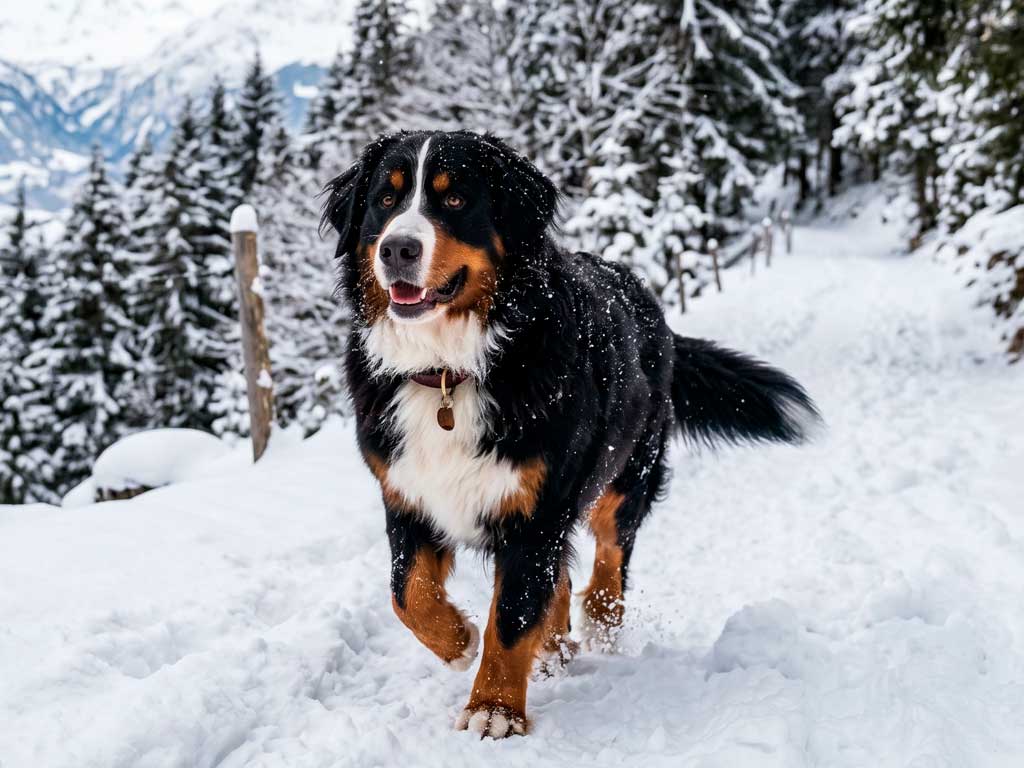
The Bernese Mountain Dog is one of the most visually stunning breeds in the world — a gentle giant with a silky tricolor coat, soulful dark eyes, and a temperament so warm it almost seems implausible in a dog that can weigh 44 kg.
But the Bernese comes with something most breed profiles don’t tell you upfront: an exceptionally short lifespan and a health checklist that deserves serious consideration before you fall completely in love with those fluffy ears.
This article covers everything honestly — the history, the personality, the care demands, the health realities, and a frank look at whether this magnificent dog truly fits your life.
History and Origin
The Bernese Mountain Dog has been working the Swiss Alps for roughly 2,000 years — a fact that explains both its physical robustness and its deeply cooperative temperament.
Its origins trace back to the Roman invasion of Helvetia, the ancient name for Switzerland. The Roman legions brought large Mastiff-type guard dogs with them, and these powerful animals are believed to have crossed with local Alpine herding dogs. The result was a breed capable of tolerating brutal mountain winters while remaining gentle enough to work alongside farmers and their families.
For centuries, Swiss farmers who couldn’t afford horses used Bernese Mountain Dogs to pull carts loaded with dairy products and textiles between villages. These dogs were documented pulling loads of up to ten times their own body weight — a testament to their physical power beneath that soft, cuddly exterior.
The breed takes its name from the Canton of Bern, the central Swiss region where it was most extensively developed. It was formally recognized by the UK Kennel Club in the Working group, a classification that honors its practical Alpine heritage.
Today, the Bernese functions almost entirely as a companion and family dog — a role it fills with extraordinary natural aptitude.
Physical Characteristics
There is no mistaking a Bernese Mountain Dog. The breed is always tricolor: a jet-black base coat with a bright white chest, muzzle, paws, and tail tip, and rich rust or chestnut markings separating the black and white on the legs and cheeks. The coloring is striking and consistent — there are no color variations in this breed.
Males stand between 64 and 70 cm and weigh up to 44 kg. Females are slightly smaller at 58 to 66 cm and around 40 kg. The coat itself is long, silky, and slightly wavy, with a dense undercoat built for cold Alpine conditions. It is undeniably beautiful — and it sheds prodigiously, scoring a full 5 out of 5 for shedding.
The Bernese carries itself with what the source material aptly calls an almost noble bearing. Its proud walk and calm, dignified expression make it a dog that turns heads everywhere it goes. This is not a breed that blends into the background.
Temperament and Personality
If you want a dog that loves absolutely everyone, the Bernese Mountain Dog might be the closest thing to that ideal you’ll find.
Breeders and owners consistently describe the same traits: affectionate, patient, calm, sociable, and almost universally gentle. The Bernese scores a perfect 5 out of 5 as a family dog — the highest rating possible — and that number genuinely reflects daily reality with this breed.
With children, the Bernese is exceptionally well-suited. It’s naturally patient, tolerant of the noise and chaos that children generate, and protective when it needs to be. The only caveat is size — a Bernese puppy or an enthusiastic adult can easily knock over a very small child without any intention to do so. Supervision with toddlers is always sensible, not because of aggression, but simply because of sheer physical mass.
The Bernese is also famously slow to mature. This breed retains puppy-like behavior and a playful, slightly goofy personality well into adulthood. Many owners report that their Bernese seems to understand when something makes their owner laugh and will deliberately repeat the behavior — a quality that makes living with one genuinely entertaining on a daily basis.
With other pets, the Bernese does well when properly socialized from puppyhood. It scores 3 out of 5 for getting along with other animals, which reflects the importance of early introduction rather than any innate hostility.
There is one critical behavioral note every prospective owner must understand: the Bernese Mountain Dog scores just 1 out of 5 for tolerating time alone. This breed lives for human companionship. Left alone for extended periods, it becomes anxious and unhappy — and that anxiety can manifest in destructive behavior. The Bernese thrives in a home where someone is present for the majority of the day. It is genuinely not a suitable choice for households where the dog would spend eight or more hours alone.
As a watchdog, the Bernese is alert and vocal enough to announce visitors with a bark, but it calms down quickly once it assesses that everything is fine. It’s a guardian more by presence than by aggression — its sheer size is often deterrent enough.
Care Guide
Diet and Nutrition
Feeding a Bernese Mountain Dog correctly requires attention to its size category. As a giant breed, the Bernese has substantially different nutritional requirements from smaller dogs, particularly in the balance of minerals and vitamins needed to support healthy joint and cartilage development across a long puppyhood.
Puppies should be fed food specifically formulated for large or giant breeds during their entire growth phase. Growth that happens too rapidly can contribute to skeletal problems — a real concern in a breed already predisposed to joint issues. Once adulthood is reached, a high-quality large-breed adult formula provides the correct nutrient balance.
Bloat, or gastric dilatation-volvulus (GDV), is a risk in the Bernese as it is in all deep-chested large breeds. The most effective preventive measure is dividing the daily food allowance into two or three smaller meals rather than one large feeding, and avoiding vigorous exercise for at least an hour on either side of mealtimes. Proper nutrition and weight management also meaningfully impact this breed’s longevity — well-fed, appropriately lean Bernese Mountain Dogs consistently live longer.
Exercise Requirements
Here is where the Bernese surprises many first-time owners. Despite its imposing size, this is not a high-octane, high-demand breed for exercise. One hour of moderate daily activity is sufficient for a healthy adult Bernese — a manageable commitment for most owners.
However, puppyhood requires careful management. The Bernese grows rapidly and its skeletal system is vulnerable during development. Excessive or high-impact exercise before the age of twelve months — including long runs, repeated stair climbing, or intense jumping — can cause lasting damage to joints and growth plates. For puppies, shorter, low-impact activity spread throughout the day is the appropriate approach.
Once fully mature, the Bernese enjoys walking, exploring outdoors, and participating in whatever the family is doing. It’s not a dog that demands two-hour runs — but it does need the daily opportunity to move and to be part of its family’s activities. A large, secure garden is ideal, though not strictly mandatory if daily walks are consistent.
Grooming Needs
This is the area of care that demands the most consistent attention. The Bernese Mountain Dog’s magnificent coat requires daily brushing to prevent tangles, remove loose hair, and maintain the coat’s natural luster. Skipping days leads quickly to matting, particularly around the ears, collar area, and behind the legs.
The Bernese is a significant shedder year-round, with heavier seasonal blowouts in spring and autumn. Anyone who is particular about hair-free clothing and furniture should think carefully before committing to this breed. The hair is long, tricolored, and highly visible on practically every surface.
Beyond brushing, the hair between the paw pads needs regular trimming to prevent slipping on smooth floors and to stop debris from accumulating. Ears should be checked and cleaned weekly, nails trimmed every two to three weeks, and teeth brushed regularly. Bathing every six to eight weeks keeps the coat clean without stripping its natural oils.
Training and Education
The Bernese Mountain Dog is a cooperative, intelligent breed that scores 4 out of 5 for trainability. It responds well to positive reinforcement, forms strong bonds with its trainer, and generally wants to please the people it loves.
That said, this is a giant breed — and a giant dog that hasn’t learned basic obedience is genuinely difficult to manage. Even the most gentle Bernese needs solid leash manners, reliable recall, and a clear understanding of household expectations. A 44 kg dog that pulls on the lead or jumps up at visitors causes real problems regardless of how friendly its intentions are.
Positive reinforcement using treats, praise, and play is consistently the most effective approach. The Bernese is sensitive and does not respond well to harsh corrections or heavy-handed training. Firmness and consistency are important — but they should always be delivered calmly.
Socialization from the earliest possible age is essential. Exposing a Bernese puppy to a wide variety of people, children, environments, sounds, and other animals shapes the confident, well-adjusted adult temperament this breed is fully capable of becoming.
Health and Longevity
Here is the conversation every prospective Bernese Mountain Dog owner needs to have — and the one that most breed profiles handle too gently.
The Bernese Mountain Dog has a lifespan of 6 to 10 years. For context, that’s among the shortest of any recognized breed. A dog acquired as a puppy may be gone within a decade, and many Bernese live closer to seven or eight years than ten. This is not a minor detail — it’s an emotional reality that every owner must be prepared to face.
The leading cause of death in the breed is cancer, particularly histiocytic sarcoma, a form of cancer that disproportionately affects Bernese Mountain Dogs compared to virtually every other breed. Lymphoma and hemangiosarcoma also occur with elevated frequency. Research into the genetic basis of these cancers is ongoing, but there is currently no screening program that eliminates the risk.
Beyond cancer, the Bernese is prone to hip dysplasia and elbow dysplasia — both conditions where the joint develops incorrectly and causes pain, lameness, and eventually severe arthritis. The UK Kennel Club runs formal hip and elbow screening programs, and dogs from health-tested parents have meaningfully lower rates of these conditions. Always ask breeders for the hip and elbow scores of both parents.
Degenerative myelopathy, a progressive condition causing gradual paralysis of the hind limbs, is also documented in the breed. Cruciate ligament disease, hot spots (moist dermatitis), and bloat round out the primary health concerns to be aware of.
Regular veterinary checkups — twice yearly from middle age onward — combined with appropriate weight management, joint supplements where recommended, and proactive health monitoring give the best chance of a full, comfortable life.
Is This the Right Dog for You?
The Bernese Mountain Dog is an exceptional companion for the right owner. But the right owner has very specific circumstances.
It’s the right dog if you have a large home with outdoor space, are home for the majority of each day, want a gentle and deeply affectionate family dog, and are emotionally and financially prepared for a potentially short lifespan and meaningful veterinary costs. It suits families with children, people who enjoy daily gentle exercise outdoors, and owners who find joy in regular grooming.
It’s genuinely not the right fit if you live in a small apartment, spend long hours away from home, are sensitive to dog hair on every surface, prefer a long-lived breed with a lower health burden, or aren’t in a position to handle the grief that comes with losing a beloved dog at a relatively young age.
For those who can embrace all of it — the size, the shedding, the health challenges, and yes, the shorter time — the Bernese Mountain Dog offers a quality of companionship that is rare and irreplaceable.
FAQs
How long do Bernese Mountain Dogs live?
The Bernese Mountain Dog has one of the shorter lifespans among recognized breeds, typically 6 to 10 years. Cancer is the leading cause of death, and many Bernese live closer to seven or eight years. This is one of the most important factors for prospective owners to consider before committing to the breed.
Are Bernese Mountain Dogs good with children?
Excellent — the Bernese scores a perfect 5 out of 5 as a family dog. It is naturally patient, gentle, and protective around children. The only practical consideration is its size; even a well-meaning Bernese can accidentally knock over a very young child. Supervision with toddlers is advisable.
Do Bernese Mountain Dogs shed a lot?
Yes, considerably. The Bernese scores 5 out of 5 for shedding, and its long tricolor hair is visible on furniture, clothing, and floors year-round. Seasonal shedding periods in spring and autumn are particularly heavy. Daily brushing is the minimum grooming commitment this breed requires.
Can a Bernese Mountain Dog be left alone?
Not comfortably. The Bernese scores just 1 out of 5 for tolerating time alone. It is deeply bonded to its family and becomes anxious when left alone for extended periods. This breed is best suited to households where someone is home for the majority of the day.
Are Bernese Mountain Dogs easy to train?
Generally yes — the Bernese scores 4 out of 5 for trainability and responds well to positive reinforcement. However, because of its giant size, basic obedience training is not optional. A well-trained Bernese is a joy to live with; an untrained one of 44 kg is genuinely difficult to manage. Early training and consistent socialization are strongly recommended.