Ember Tetra Care: Tank Size, Diet & Tank Mates
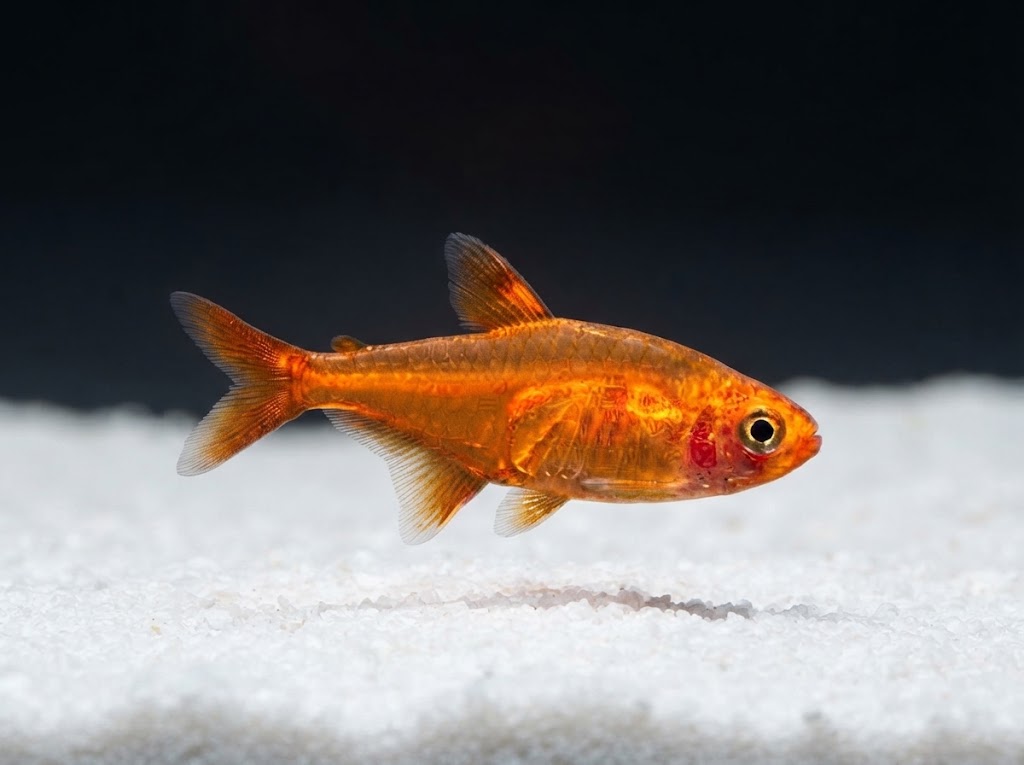
At just 0.8 inches (2 cm) long, the ember tetra (Hyphessobrycon amandae) is one of the smallest freshwater fish commonly kept in home aquariums. Its warm orange coloration stands out in planted tanks, particularly when a group swims over dark substrate.
However, its tiny size also affects feeding, tank mate selection, and the type of environment where it feels secure.
Successful ember tetra care starts with a fully cycled aquarium, stable warm water, gentle filtration, and a school of at least six fish. A 10-gallon tank is a practical starting point for a small group, while a larger aquarium offers more swimming space and flexibility for a community setup.
Ember Tetra Quick Facts
| Attribute | Details |
|---|---|
| Common name | Ember Tetra |
| Scientific name | Hyphessobrycon amandae |
| Adult size | About 0.8 inches (2 cm) |
| Minimum tank size | Around 10 US gallons for a suitable small school |
| Recommended group | At least 6; 10 or more often display more natural behavior |
| Temperature | Approximately 73–82°F (23–28°C) |
| pH | Around 5.5–7.0 |
| Water hardness | Soft to moderately hard water |
| Temperament | Peaceful |
| Swimming level | Middle of the aquarium |
| Diet | Omnivore |
| Lifespan | Often around 2–4 years, depending on care and conditions |
| Care level | Generally suitable for beginners with an established aquarium |
These values are practical care ranges rather than guarantees. Published recommendations differ slightly, particularly for temperature and minimum tank size. The important factors are a stable environment, appropriate group size, and enough space for the fish to feed and swim without being intimidated by larger tank mates.
What Is an Ember Tetra?
The ember tetra is a small characin native to Brazil, particularly the Araguaia River drainage. It inhabits slow-moving or still freshwater areas with vegetation and subdued water movement. These conditions help explain why ember tetras usually do well in planted aquariums with gentle filtration and sheltered areas.
Its most recognizable feature is its orange to reddish-orange body. Unlike neon tetras, ember tetras do not have a bright blue lateral stripe. Their compact size and peaceful temperament make them attractive for nano aquariums, although they should not be treated as decorative fish that can live comfortably in any small container.
Ember tetras are social fish. A group provides opportunities for natural shoaling behavior and often makes them more confident in open water. In practice, a school of 10 or more can be easier to observe than a handful of fish that spend much of their time hiding.
Ember Tetra Tank Size and Setup
A 10-gallon aquarium is a sensible starting point for a small school of ember tetras. A 15- or 20-gallon tank gives you more room to maintain a larger group or introduce carefully selected tank mates. The footprint matters, too: these fish benefit from open swimming space between planted areas.

FROM AMAZON.COM
Tetra 20 Gallon Complete Tropical Fish Tank Kit
Everything included: 20-gallon glass tank with hinged hood, LED light, filter, filter cartridge, and décor. Ready for freshwater fish.
Buy on Amazon.comAs an Amazon Associate, Happy Pet Zone earns from qualifying purchases, at no extra cost to you.
What Should an Ember Tetra Aquarium Include?
- A mature biological filter. The aquarium should be fully cycled before the fish arrive. Beneficial bacteria process waste, while regular testing helps confirm that ammonia and nitrite remain at zero.
- Live plants and cover. Java moss, Java fern, Anubias, Cryptocoryne, and other suitable aquarium plants provide sheltered areas without eliminating swimming space. Floating plants can soften strong lighting.
- Gentle water flow. Ember tetras are small fish that do not need a powerful current. A sponge filter or a filter with a diffused outlet can help keep water clean without creating excessive movement.
- Gentle water flow. Ember tetras are small fish that do not need a powerful current. A sponge filter or a filter with a diffused outlet can help keep water clean without creating excessive movement.
- Dark or natural-looking substrate. Dark gravel or sand can make their orange coloration stand out. This is primarily an aesthetic choice, not a biological requirement.
- Moderate lighting. Bright lighting without shaded areas can make the fish less comfortable and their color appear less intense. Plants and floating cover create a more varied environment.
- A secure lid. A well-fitting cover reduces the risk of fish jumping out when startled.
Do not crowd the aquarium with decorations. Leave a clear swimming lane through the middle, and arrange plants so the fish can retreat without becoming difficult to observe.
Ember Tetra Water Parameters
Ember tetras are generally associated with warm, soft, slightly acidic water. Captive-bred specimens may adapt to a reasonable range, but sudden changes in temperature or chemistry can cause stress. Rather than repeatedly adjusting the aquarium to chase a precise pH, aim for stable conditions that suit the fish.
| Water parameter | Practical guidance |
|---|---|
| Temperature | 73–82°F (23–28°C) |
| pH | Around 5.5–7.0 |
| Ammonia | 0 ppm |
| Nitrite | 0 ppm |
| Nitrate | Keep low with appropriate maintenance |
| Water hardness | Soft to moderately hard water |
| Water movement | Gentle to moderate |
| Water changes | Often around 20–30% weekly, adjusted to test results and stocking |
Use a reliable thermometer and aquarium test kit. Clear water can still contain harmful ammonia or nitrite, so appearance alone is not a useful measure of water quality.
When changing water, use a suitable conditioner where necessary and avoid large differences in temperature. If your tap water falls outside the preferred range, test it before purchasing the fish and plan a consistent approach rather than making abrupt adjustments after the aquarium is stocked.
What Do Ember Tetras Eat?
Ember tetras are omnivores that feed on tiny invertebrates, zooplankton, and other small food items in nature. In aquariums, their very small mouths determine which foods they can eat comfortably. Standard flakes and pellets may need to be crushed or replaced with foods designed for nano fish.
Suitable Foods for Ember Tetras
- High-quality micro flakes: Crush them finely enough for the fish to swallow without struggling.
- Nano pellets: Choose a size appropriate for their mouths rather than buying standard pellets intended for larger tropical fish.
- Frozen or live baby brine shrimp: These provide a suitable protein-rich food when offered in an appropriate size.
- Daphnia and cyclops: These small foods add variety and encourage natural feeding behavior.
- Other appropriately sized live or frozen foods: Offer only foods from reliable sources and use them as part of a varied diet.
Feed small portions once or twice daily, depending on the food and the condition of the fish. They should consume the food within a minute or two; excess food can decompose and affect water quality.
Watch the school during feeding. If fish repeatedly spit out food or appear to ignore it, the pieces may be too large. Adjust the particle size before assuming the fish have lost their appetite.
Six Compatible Ember Tetra Tank Mates
Ember tetras generally suit peaceful community aquariums with small fish that share compatible water conditions. The six species below are potential companions, but compatibility depends on the size of the aquarium, adult fish size, individual temperament, and access to food.
Keep each schooling species in an appropriate group of its own. Adding one fish from several schooling species is not a substitute for meeting their social needs.
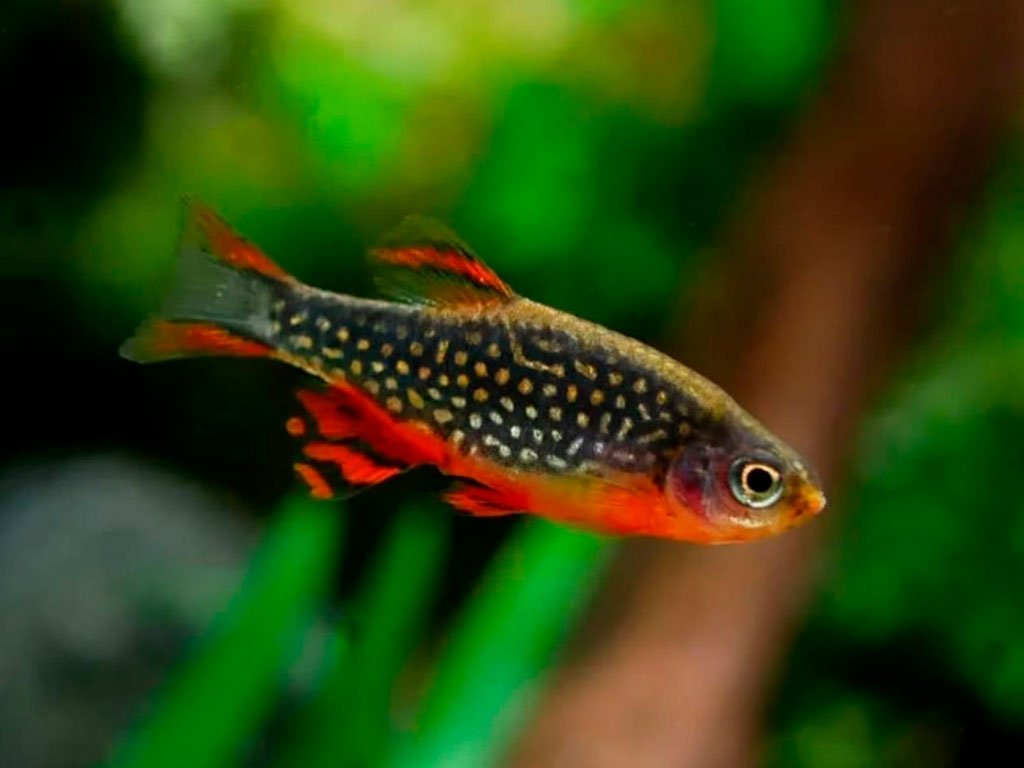
1. Chili Rasbora (Boraras brigittae)
Chili rasboras are tiny, peaceful fish that suit planted nano aquariums. Their red coloring contrasts with the ember tetra’s orange body, and both species benefit from cover and gentle water movement. Because they are very small, make sure food reaches both schools and that no larger tank mate outcompetes them.
2. Neon Tetra (Paracheirodon innesi)
Neon tetras can be compatible when the aquarium is maintained within the overlapping temperature and water-chemistry requirements of both species. Their blue and red markings contrast with the ember tetra’s warm coloration. Avoid running the tank at the extreme warm end of the ember tetra range if it would be unsuitable for the neon tetras.
3. Glowlight Tetra (Hemigrammus erythrozonus)
Glowlight tetras are peaceful schooling fish that can work in a larger planted community aquarium. Their glowing lateral stripe creates a different visual effect from the ember tetra’s solid orange body. Provide enough swimming room for both groups and avoid adding them to an aquarium that is already crowded.
4. Pygmy Corydoras (Corydoras pygmaeus)
Pygmy corydoras use the lower parts of the aquarium and can complement ember tetras that mainly swim in the middle water column. These small catfish are social and should be kept in a group of their own. Provide suitable substrate and make sure food reaches the bottom instead of being consumed only by midwater fish.
5. Otocinclus Catfish (Otocinclus species)
Otocinclus are small, peaceful algae-grazing fish that can suit a mature planted aquarium. They need established grazing surfaces and supplementary food when natural algae is insufficient. Do not add them to a new aquarium simply to control algae, and monitor their condition to make sure they are eating adequately.
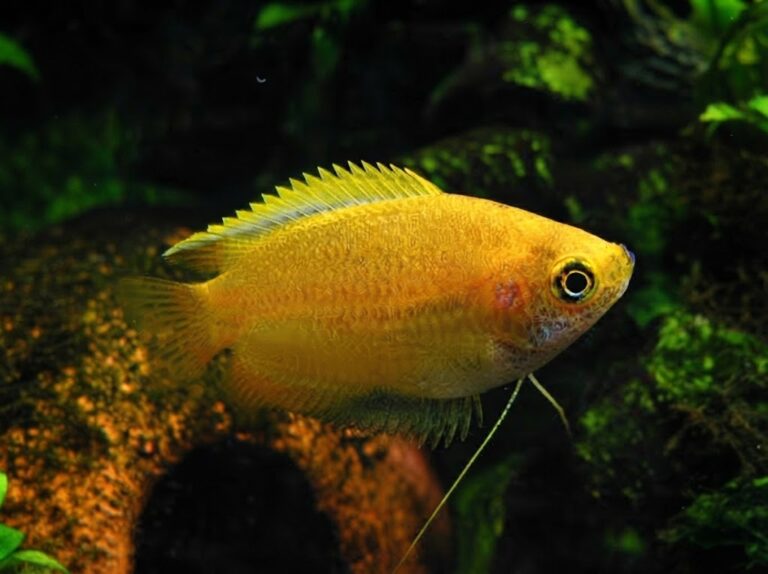
6. Honey Gourami (Trichogaster chuna)
Honey gouramis can be a suitable larger companion in a spacious, well-planted community aquarium. They generally have a calmer temperament than many larger gouramis, but individual behavior varies. Provide cover and enough room for the fish to occupy different areas, and watch for chasing or feeding competition after introduction.
Choosing Tank Mates Safely
Before combining species, compare their adult size, preferred temperature, pH, temperament, and social requirements. Similar water parameters do not automatically make two species compatible.
Avoid large predatory fish, aggressive cichlids, and boisterous fish that may chase ember tetras or outcompete them for food. Their small size makes them vulnerable even when the larger fish does not actively hunt them.
Introduce new fish carefully and observe the aquarium during feeding and throughout the first few days. If persistent chasing, hiding, injury, or missed meals occur, reassess the combination rather than assuming the fish will eventually adjust.
Ember Tetra Behavior and Color
Ember tetras usually swim in the middle water column and display loose shoaling behavior. They may spread out while exploring or feeding, then gather more closely when startled. A larger group often makes them more visible and confident, especially in a planted aquarium.
Their orange coloration can vary with lighting, stress, diet, and individual differences. Dark substrate and shaded areas may improve the visual contrast, but color alone is not a reliable measure of health. A pale fish that has just arrived may need time to settle, while persistent color loss accompanied by poor appetite or unusual swimming warrants investigation.
Keep the environment calm. Avoid tapping the glass, making abrupt lighting changes, or frequently rearranging plants and decorations.
Breeding Ember Tetras
Ember tetras scatter their eggs and do not provide parental care. Adults may eat the eggs, so a dedicated breeding aquarium is more practical than expecting fry to survive in a community tank.
For a breeding attempt, prepare a separate, mature setup with suitable water conditions, gentle filtration, and fine-leaved plants or a spawning medium. Condition the adults with varied, appropriately sized foods before introducing them to the breeding tank.
After spawning, remove the adults to reduce the risk of egg predation. The fry are extremely small and need appropriately sized first foods. Water quality must remain stable, and feeding should be frequent enough to support growth without leaving excess food to decay.
Breeding success depends on preparation and careful observation. If you are new to raising fish fry, research their initial feeding needs before attempting to breed the species.
Common Ember Tetra Health Problems
When ember tetras appear unwell, start by checking water quality, temperature, oxygenation, and behavior. Stress from transport, unsuitable tank mates, poor water conditions, or inadequate food can contribute to health problems.
| Warning sign | What to check |
|---|---|
| Pale or faded color | Stress, lighting, water quality, or illness |
| Rapid breathing | Oxygenation, temperature, ammonia, nitrite, or possible disease |
| Loss of appetite | Food particle size, water conditions, stress, or other symptoms |
| Persistent hiding | Bullying, stress, poor conditions, or illness |
| Clamped fins or abnormal swimming | Water quality, injury, stress, or possible disease |
| Visible spots, lesions, or unusual patches | Possible parasites, infection, injury, or other health problems |
These signs are not diagnoses. Different conditions can look similar, and treating the wrong problem may make matters worse.
Test the water promptly and correct any confirmed water-quality problem. If a fish remains unwell, consider quarantine where appropriate and seek advice from a qualified aquatic veterinarian or fish-health professional. Avoid adding medication to the entire aquarium without a clear reason.
Health note: This guide provides general aquarium-care information and cannot diagnose fish disease. Persistent symptoms, unexplained deaths, or suspected contagious illness require appropriate professional assessment.
Ember Tetra Care Mistakes to Avoid
- Keeping too few fish. Ember tetras are social. Plan for at least six and consider a larger group if the aquarium can support it.
- Using food that is too large. Their mouths are tiny, so crush flakes or select nano-sized foods.
- Adding fish to an uncycled tank. Confirm that the biological filter is established and that ammonia and nitrite remain at zero.
- Creating excessive water flow. Strong currents can make it difficult for these small fish to swim comfortably. Diffuse the outlet if necessary.
- Choosing tank mates based only on color or size. Consider temperament, water requirements, adult size, and feeding behavior before mixing species.
- Overfeeding. Offer small portions and remove excess food when practical. Uneaten food can undermine water quality.
- Expecting instant color after purchase. Fish may appear pale during transport and acclimation. Allow time for them to settle, but investigate persistent color loss or other symptoms.