Azolla Care Guide: How to Grow It in Aquariums
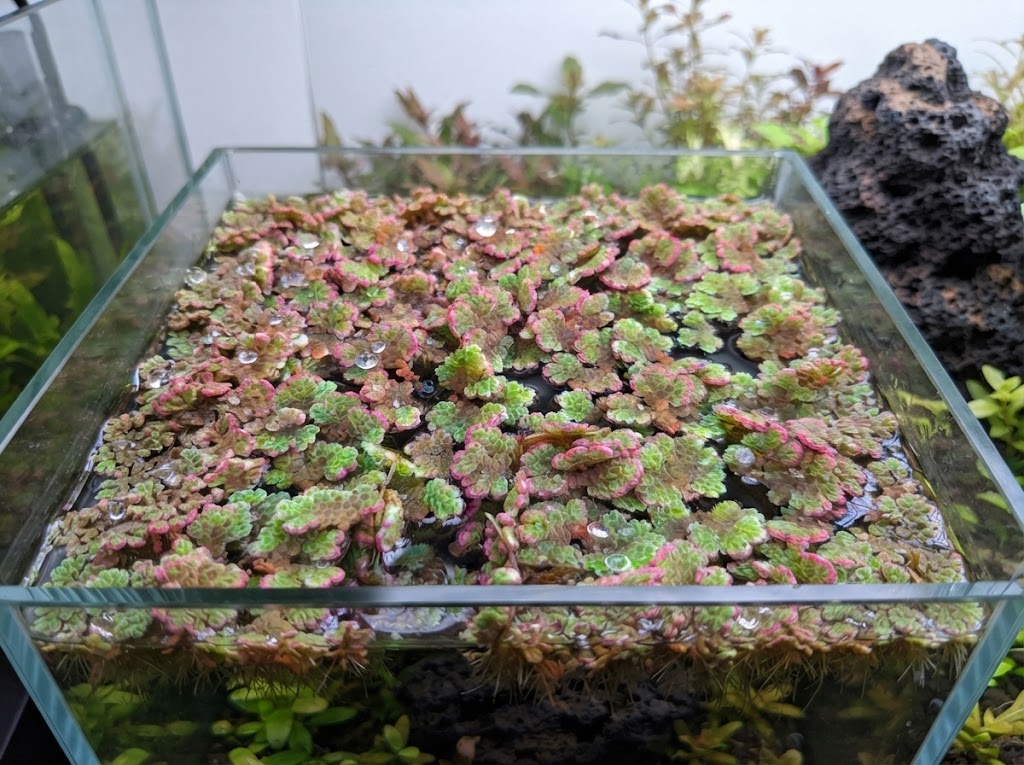
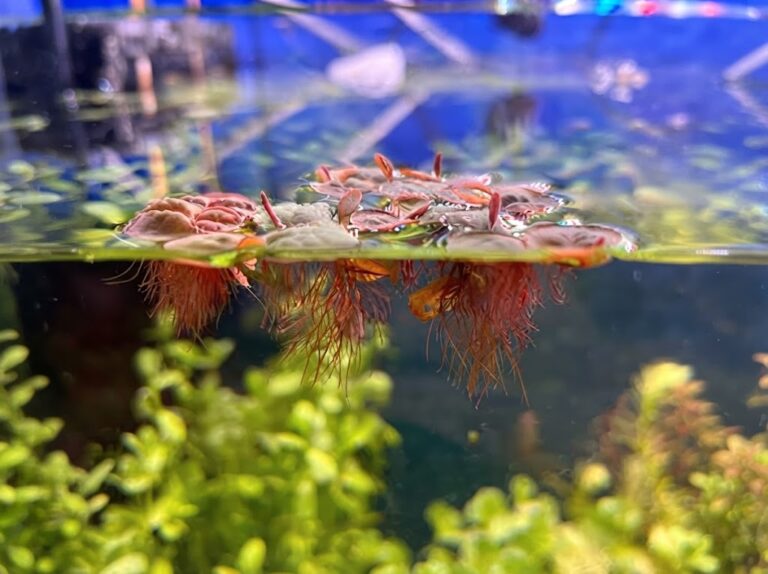
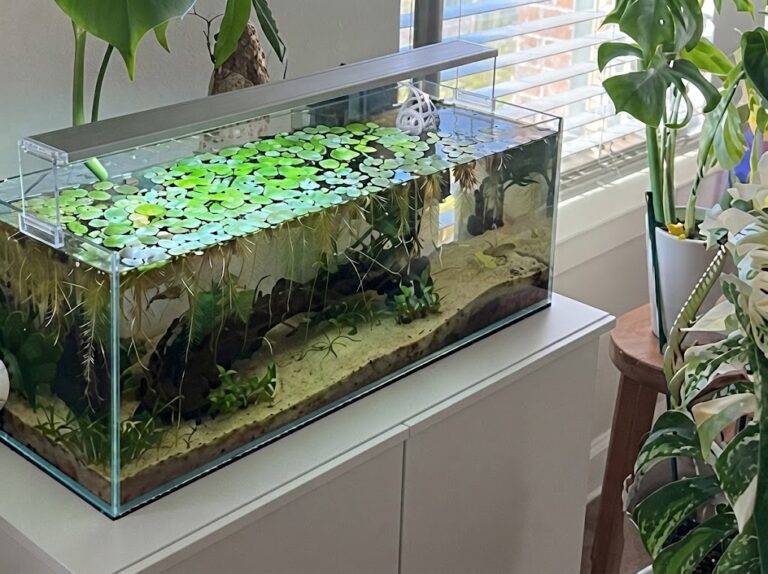
Azolla is a tiny floating fern that can turn the surface of a freshwater aquarium into a textured carpet of green, bronze, or reddish fronds.
It grows without a substrate, does not require injected CO₂, and can multiply quickly under suitable conditions. The part that catches many aquarists off guard is how much surface coverage it can produce from a small starting portion.
Azolla care comes down to three things: suitable light, a relatively calm water surface, and regular thinning. It also needs access to nutrients other than nitrogen, even though its relationship with nitrogen-fixing cyanobacteria gives it an unusual advantage over many aquarium plants.
Before adding it to your tank, consider the fish you keep, the light requirements of your submerged plants, and whether Azolla is permitted in your location. A floating plant can be easy to grow and still be a poor fit for a particular aquarium.
Azolla at a Glance
| Feature | Care information |
|---|---|
| Plant type | Small floating aquatic fern |
| Placement | Water surface only |
| Difficulty | Generally easy |
| Lighting | Moderate to bright, depending on conditions |
| CO₂ injection | Not normally required |
| Substrate | None |
| Growth | Rapid in favourable conditions |
| Propagation | Branching and fragmentation |
| Main maintenance task | Removing excess growth |
| Main concern | Excessive surface coverage and shading |
Azolla refers to a genus of small aquatic ferns. Species and trade names vary, so the exact temperature tolerance and other preferences depend on the plant you receive. Two commonly encountered names are Azolla filiculoides and Azolla caroliniana.
What Is Azolla?
Azolla is a free-floating fern with small, overlapping leaves called fronds. Fine roots hang into the water, while the leafy portion remains at the surface. It does not need to be planted in sand, gravel, or an aquarium soil.
One of its most unusual features is its partnership with nitrogen-fixing cyanobacteria. The association allows Azolla to obtain usable nitrogen from atmospheric nitrogen, which helps explain its ability to grow in conditions where some other plants struggle to obtain enough nitrogen from the water.
That does not make Azolla independent of all nutrients. It still requires phosphorus, potassium, iron, and other nutrients for healthy growth. If one of these becomes limiting, the colony may stop expanding or lose its normal colour.
Azolla is also used outside the aquarium hobby, particularly in agricultural systems where its growth and nitrogen-fixing relationship can be useful. Those applications have different goals and conditions from maintaining a balanced home aquarium.
Water Parameters for Azolla
Azolla can tolerate a range of freshwater conditions, but there is no single set of parameters that suits every species and aquarium strain. Use the supplier’s identification and care information when available.
For a newly introduced plant, start by checking these factors:
- Temperature: Many aquarium references list moderate freshwater temperatures, but tolerance differs between species. Persistent heat can weaken some Azolla varieties.
- pH and hardness: Several commonly sold forms tolerate a broad range of freshwater conditions. Stability is preferable to repeatedly adjusting the water to chase a target number.
- Water movement: The surface should be calm enough for the fronds to remain afloat and avoid being pushed into a filter intake.
- Nutrients: The plant absorbs nutrients from the water, so a nutrient-poor aquarium may limit growth even when lighting is adequate.
Avoid adding chemicals simply to change pH or hardness for Azolla. Consider the requirements of the fish and invertebrates living in the tank first.
Lighting: How to Keep Azolla Healthy
Azolla generally grows under moderate to bright lighting. The right intensity depends on the aquarium depth, light fixture, water clarity, and how much of the surface the plant covers.
Lighting also influences colour. Depending on the species and conditions, Azolla may remain green or develop bronze and reddish tones. Stronger light and cooler conditions can encourage red pigmentation in some forms, but a red colour is not a universal requirement for a healthy plant.
If your Azolla remains green, do not immediately assume something is wrong. Look at its growth, texture, and overall condition. A healthy green colony can be perfectly suitable for an aquarium.
If the fronds become pale or growth slows, check several factors before changing the light:
- Is the plant receiving consistent light each day?
- Is the surface crowded by other floating plants?
- Is the aquarium unusually warm?
- Are nutrients available in the water?
- Are the fronds being pushed underwater by filter flow?
Increasing light without considering these factors may not solve the underlying problem.
Does Azolla Need CO₂?
No additional CO₂ injection is normally needed for Azolla. Because it floats at the surface, it can access carbon dioxide from the air, and many aquarists grow it in low-tech freshwater tanks.
A CO₂ system designed for submerged plants is not a purchase you need to make solely for Azolla. If your aquarium already uses injected CO₂, the submerged plants may benefit from it, but Azolla itself is not a reason to increase the injection rate.
How to Add Azolla to an Aquarium
Azolla is not planted in the substrate. It is simply placed on the water surface.
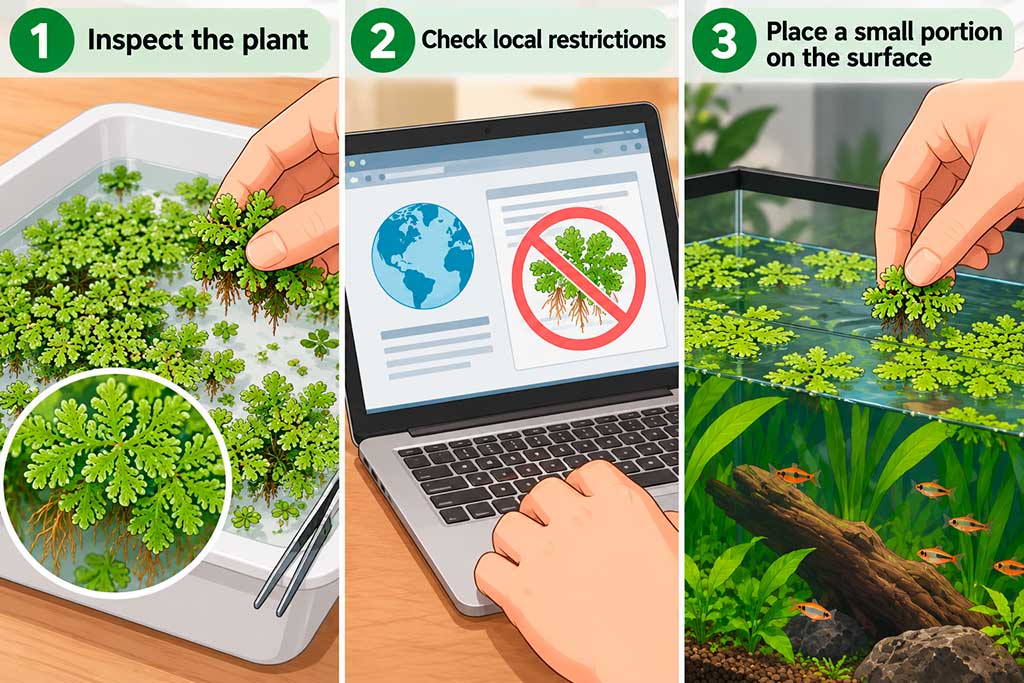
Step 1: Inspect the plant. Examine the portion before adding it. Duckweed and other tiny floating plants can be difficult to separate once they establish themselves. A shallow white tray makes unwanted hitchhikers easier to spot.
Step 2: Check local restrictions. Some Azolla species are regulated or prohibited in certain regions because they can become invasive. Confirm the current rules where you live before buying, trading, or transporting it.
Step 3: Place a small portion on the surface. Start with a modest amount. If the conditions suit the plant, it can spread without needing a large initial colony.
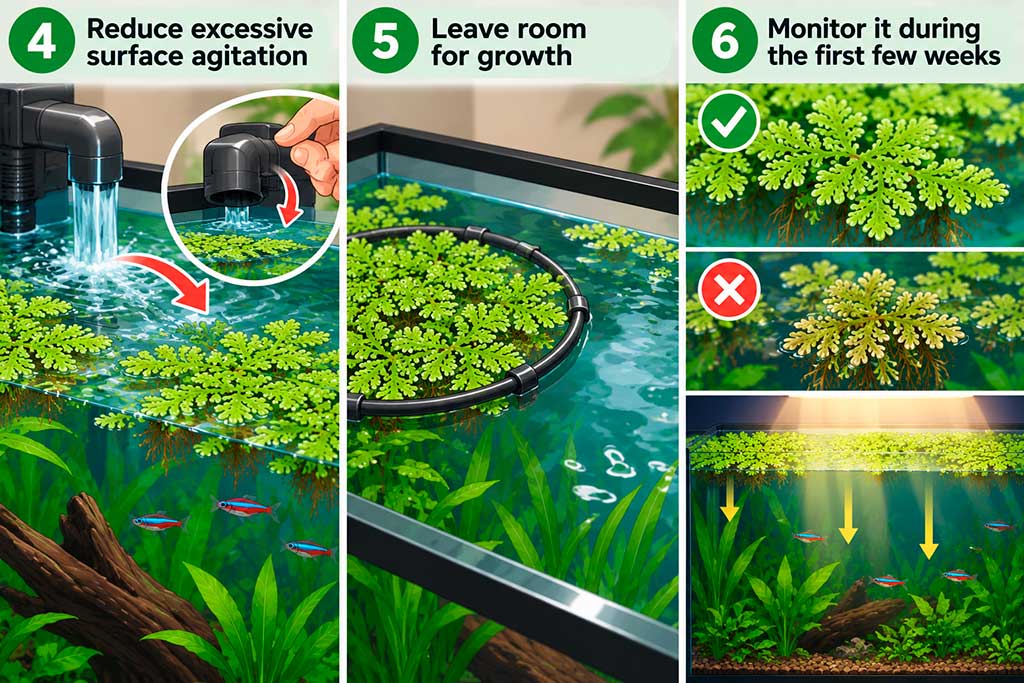
Step 4: Reduce excessive surface agitation. If the fronds are continually pushed underwater or gathered against the glass, adjust the filter outflow where safe to do so. Keep adequate circulation for the aquarium’s animals.
Step 5: Leave room for growth. Do not allow the plant to cover the entire surface. A floating ring or a simple floating barrier can help confine the colony to one area.
Step 6: Monitor it during the first few weeks. Check whether the fronds remain healthy, whether the colony is spreading, and how much light reaches the plants below.
How Fast Does Azolla Grow?
Azolla can multiply quickly when light, temperature, and nutrients are suitable. Small branches develop from existing growth, and fragments can establish new plants. A small starter portion may eventually cover a substantial part of the aquarium’s surface.
The speed is not fixed. Growth can slow when nutrients are limited, temperatures are unsuitable, or the colony becomes crowded. Strong surface movement can also damage or submerge fronds.
For that reason, regular thinning should begin before the plant forms a thick, continuous mat. Waiting until the entire surface is covered can make it harder to maintain the light and open-water areas needed by the rest of the aquarium.
How to Control Azolla and Keep the Surface Open
Azolla is easy to remove with a fine net. Lift out excess growth and inspect the edges of the aquarium, floating equipment, and filter intake for small fragments.
How much should you remove? There is no universal percentage. The appropriate coverage depends on the aquarium’s fish, other plants, and lighting. Start by leaving a clear section of water and adjust as you observe how the tank responds.
A dense surface mat can reduce the light reaching submerged plants. It may also restrict access to the surface for fish that breathe atmospheric air. Species such as bettas and gouramis need access to the surface, and other fish may benefit from open water for feeding and movement.
Remove excess Azolla gradually if the aquarium is already heavily covered. Large changes in plant biomass can alter the balance of nutrients and light, especially in a small tank.
Never dispose of unwanted Azolla by releasing it into a pond, stream, ditch, or other natural water body. Do not rinse it down a drain. Follow local invasive-plant guidance for secure disposal; where permitted, ensure the material is fully contained and cannot escape into waterways.
Does Azolla Remove Nitrates?
Azolla should not be treated as a dependable nitrate-removal plant in the same way as floating species that rely more heavily on nitrogen dissolved in the water.
Its nitrogen-fixing partnership changes how it obtains nitrogen. Although it absorbs other nutrients from the water, its nitrogen needs may not create the same demand for dissolved nitrate as they do in other aquatic plants.
If your main objective is reducing nitrate, test the water and review stocking levels, feeding, maintenance, and plant selection. Do not assume that adding Azolla alone will solve a nitrate problem.
Its rapid growth can still make it useful in some nutrient-management setups, but results depend on the conditions and on how much plant material is harvested and removed from the system.
Can Azolla Grow With Fish and Shrimp?
Azolla can coexist with many freshwater fish and invertebrates, but compatibility depends on behaviour and the amount of surface cover.
Small fish and shrimp may benefit from the shade and the tiny organisms that gather around floating plants. However, Azolla does not provide the long root curtains found on some other floating species, so it offers a different type of shelter.
Fish that graze on vegetation may eat or damage the fronds. Goldfish and koi, for example, can be disruptive to floating plant colonies. Strong filter flow and air stones may also push the plant around even when the animals themselves do not damage it.
Keep open surface areas for fish that regularly gulp air. Monitor the tank after adding Azolla rather than assuming that every species will respond in the same way.
Why Is My Azolla Turning Brown or Yellow?
Colour changes can have several causes. Check the plant’s overall condition before adding fertilizer or making a major adjustment.
- Pale or yellow fronds: This can indicate a nutrient issue, including possible iron limitation, but lighting, temperature, and general plant condition also matter. Do not diagnose an iron deficiency from colour alone.
- Brown or deteriorating fronds: Check whether the plant is being submerged by surface agitation, exposed to unsuitable temperatures, or left in a crowded mat where older layers receive too little light.
- Slow growth: Review light, temperature, and nutrient availability. Because Azolla can fix atmospheric nitrogen, adding a nitrogen supplement is not automatically the right response.
- Fronds sinking: Inspect the filter outflow and aeration. Persistent turbulence may push the plant underwater and damage the colony.
Remove severely deteriorated material and make changes one at a time. This makes it easier to identify the cause.
Do You Need Seachem Fertilizer for Azolla?
Most aquarists do not need to buy a dedicated fertilizer just to get Azolla started. The plant absorbs nutrients directly from the water, and the aquarium may already provide enough through feeding, fish waste, and an existing fertilization routine.
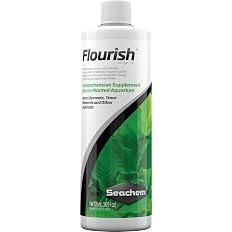
Seachem Flourish Comprehensive may be worth considering when a planted aquarium needs a general micronutrient supplement. It is optional, not a specific requirement for Azolla. Follow the product label and consider the needs of every plant and animal in the tank.
FROM AMAZON.COM
Seachem Flourish Freshwater Plant Supplement
A comprehensive plant supplement with minerals, trace elements, and vitamins to support healthy growth in freshwater planted tanks.
Buy on Amazon.comHappy Pet Zone may earn a commission when you click through to Amazon.com, at no extra cost to you. As an Amazon Associate, we earn from qualifying purchases.
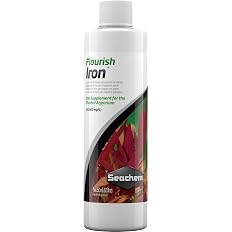
Seachem Flourish Iron should only be considered when there is a reasonable basis to suspect an iron shortage. Yellowing or pale fronds alone are not enough to prove that iron is the problem.
FROM AMAZON.COM
Seachem Flourish Iron 250 mL / 8.5 fl. oz.
Highly concentrated ferrous iron supplement for planted freshwater tanks. Corrects iron deficiency and supports vibrant green leaf color.
Buy on Amazon.comHappy Pet Zone may earn a commission when you click through to Amazon.com, at no extra cost to you. As an Amazon Associate, we earn from qualifying purchases.
Avoid adding several supplements at once. Excess fertilizer can contribute to unwanted algae or disturb the nutrient balance, and a product designed for planted aquariums is not automatically necessary for every plant species.
Azolla vs. Other Floating Aquarium Plants
Azolla is best suited to aquarists who want a small, textured floating fern and are prepared to manage its spread.
Duckweed is also tiny and spreads readily, but its individual fronds can be harder to remove completely. Salvinia has different leaf characteristics and may suit some aquariums with more surface movement. Amazon frogbit is a different option when longer roots and a more open floating rosette are desired.
The best choice depends on what you want from the surface layer. If your priority is maximum light for demanding submerged plants, any dense floating mat may create extra work. If you want shade and a natural surface appearance, Azolla can be worth considering as long as you maintain open water.
Frequently Asked Questions
Start with a small portion of correctly identified Azolla, a suitable light, and a calm area of the water surface. Keep an eye on the temperature and the plants below it, then thin the colony before it becomes a solid mat.
You do not need to buy a full range of plant supplements to get started. Let the aquarium’s actual conditions guide any later changes, and always dispose of excess plant material responsibly.