Digestive Care for Dogs: Could This Fresh Food Help Your Dog?
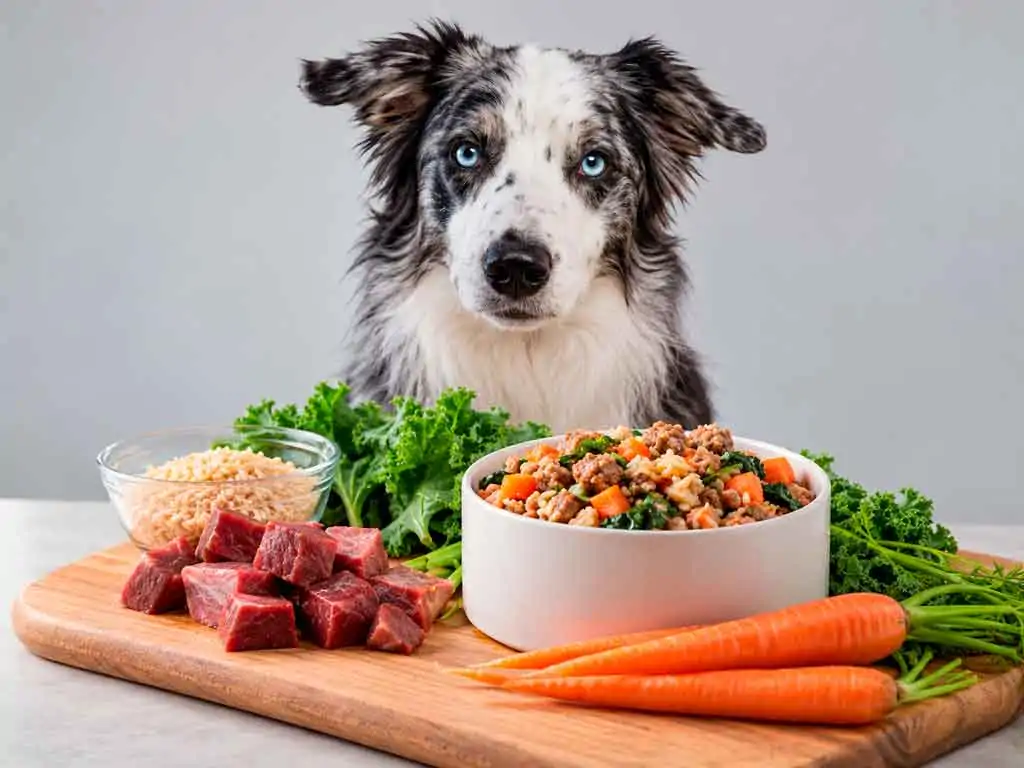
Is your dog struggling with loose stools, recurring digestive upset, or a sensitive stomach? Finding the right food can feel overwhelming, especially when every product promises better digestion.
Digestive care for dogs starts with understanding why your pet has stomach problems. Some dogs benefit from a carefully selected diet, while others need veterinary treatment before any food change can help.
JustFoodForDogs Digestive Care is a fresh, very low-fat veterinary diet designed for dogs with fat sensitivity and certain gastrointestinal concerns. Its whitefish-based recipe may be suitable for some dogs, but it is not the right choice for every digestive problem.
Here’s what you should know about its ingredients, potential benefits, scientific evidence, and when to ask your veterinarian whether this food makes sense for your dog.
What Is JustFoodForDogs Digestive Care?
JustFoodForDogs Digestive Care is a fresh, frozen veterinary diet formulated to provide complete and balanced nutrition while keeping fat content very low.
The recipe is designed for dogs whose digestive health may benefit from fat restriction. It uses whitefish as its primary animal protein, alongside rice, sweet potatoes, oils, and a specially formulated nutrient blend.
According to the manufacturer’s product information, the main ingredients are:
- Wild-caught whitefish, including cod, pollock, and haddock.
- Brown rice.
- Sweet potatoes.
- Sunflower oil.
- Flaxseed oil.
- A recipe-specific nutrient blend.
The formula is intended to support dogs with fat intolerance, food sensitivities, and selected gastrointestinal conditions. However, a veterinary diet should be chosen according to the dog’s diagnosis and nutritional needs, rather than digestive symptoms alone.
You can review the complete ingredients and current product details on the official Digestive Care product page.
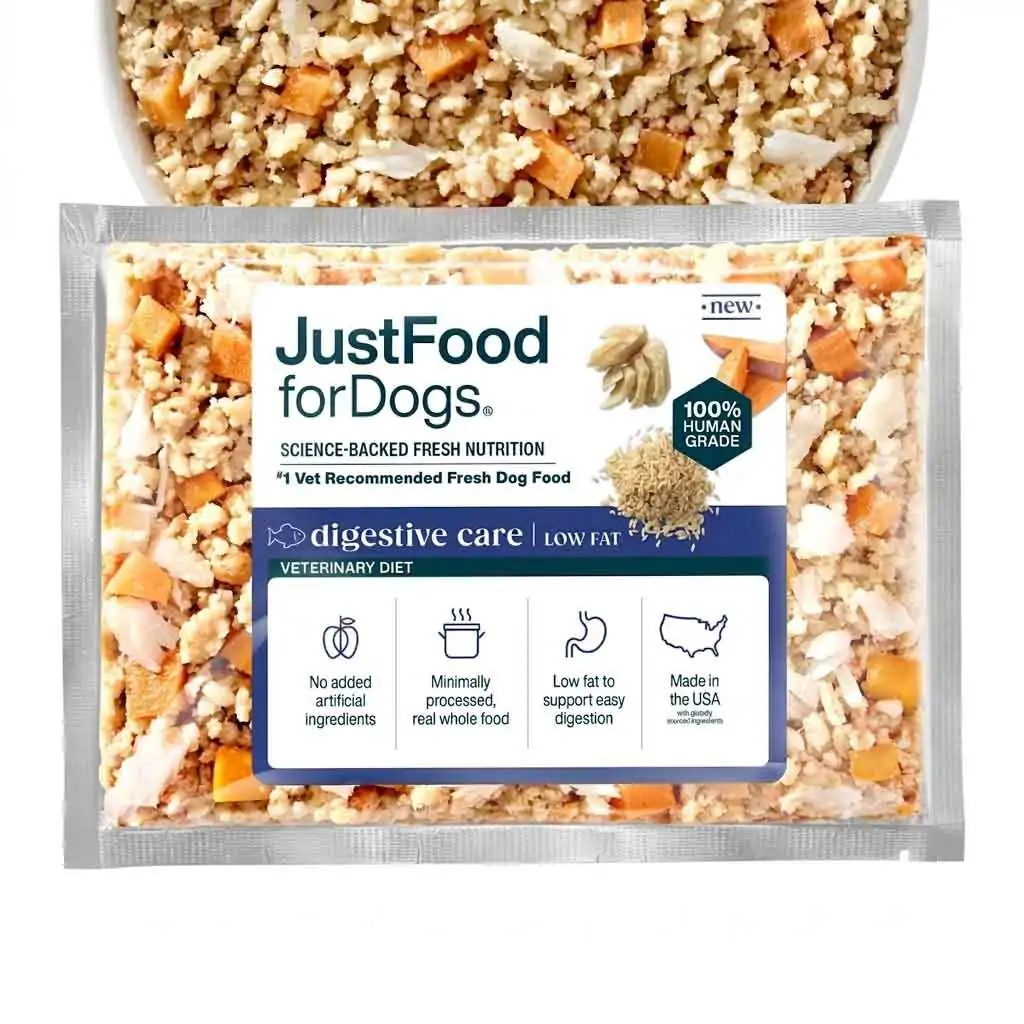
VETERINARY DIET FRESH DOG FOOD
Digestive Care
Designed to support dogs with specific dietary and health requirements, this formula may be suitable for certain veterinary care plans. Consult your veterinarian before purchasing to make sure it meets your dog’s individual needs.
- Human-grade ingredients
- No added preservatives
Happy Pet Zone may earn a commission from qualifying purchases made through affiliate links, at no extra cost to you.
How Can Digestive Care for Dogs Help?
Food can influence digestion, stool quality, and the amount of fat a dog’s gastrointestinal system must process. The most useful dietary approach depends on what is causing the symptoms.
1. It provides a very low-fat recipe
Fat is an important nutrient, but some dogs need a diet with carefully controlled fat levels.
For example, dogs with intestinal lymphangiectasia may benefit from substantial dietary fat restriction. This condition affects the lymphatic vessels in the intestinal wall and can interfere with normal nutrient absorption.
Some dogs with protein-losing enteropathy, a condition in which proteins are lost through the gastrointestinal tract, may also benefit from a low-fat diet. The decision depends on the underlying disease and the veterinarian’s assessment.
JustFoodForDogs lists a minimum crude fat content of 1% and a maximum of 4% in its guaranteed analysis. These figures describe the food as sold, including its moisture.
Important: The percentage printed on a wet or fresh food label cannot be compared directly with the percentage on dry kibble. Moisture content affects the calculation, so ask your veterinarian to compare foods on an appropriate basis.
2. It uses whitefish as its main animal protein
The recipe uses whitefish, including cod, pollock, and haddock.
A different protein source may be helpful when a veterinarian suspects that a particular food ingredient contributes to a dog’s digestive or allergic symptoms. However, changing protein sources alone does not diagnose or treat a food allergy.
If your dog needs a formal elimination diet, your veterinarian may recommend a specific hydrolyzed or novel-protein diet and a strict feeding trial. Treats, table scraps, flavored medications, and other foods can interfere with that process.
3. It includes rice and sweet potatoes
Brown rice and sweet potatoes contribute carbohydrates and dietary fiber to the recipe.
Fiber can affect stool consistency, but its effects depend on the type and amount of fiber, the dog’s condition, and the rest of the diet. More fiber is not automatically better for every dog with diarrhea.
The product’s manufacturer describes its fiber profile as balanced to support stool quality. That is a formulation goal, not proof that the food will resolve every cause of loose stools.
4. It is formulated as a complete and balanced diet
A food used for ongoing feeding must provide the nutrients a dog needs, not simply a few ingredients that seem gentle on the stomach.
The manufacturer states that Digestive Care is formulated to meet complete and balanced nutritional standards. Your veterinarian can help determine whether it is appropriate for your dog’s life stage, medical condition, calorie requirements, and long-term feeding plan.
Which Dogs May Benefit From a Low-Fat Digestive Diet?
Digestive Care may be worth discussing with your veterinarian if your dog has a condition for which fat restriction is part of the nutritional plan.
| Condition or concern | What to know |
|---|---|
| Intestinal lymphangiectasia | Dietary fat restriction is commonly considered as part of management. |
| Certain cases of protein-losing enteropathy | Some dogs respond to low-fat dietary management, depending on the underlying condition. |
| Fat intolerance | A veterinarian may recommend a controlled-fat diet after evaluating the symptoms. |
| Suspected food sensitivity | A different protein source may be relevant, but a proper dietary trial may be needed. |
| Occasional loose stools | The cause should be considered before switching to a specialized veterinary diet. |
| Recurrent vomiting or diarrhea | A veterinary examination is important because food is only one possible factor. |
The key distinction is that a low-fat diet is a targeted nutritional strategy, not a universal treatment for digestive problems.
Dogs with similar symptoms may need different diets. One dog might need fat restriction, another might benefit from a hydrolyzed-protein diet, and another may need treatment for parasites, infection, inflammation, or a different medical condition.
What Does Scientific Research Say About Low-Fat Dog Food?
There is veterinary research supporting low-fat dietary management for certain canine gastrointestinal conditions. However, evidence about low-fat diets in general should not be confused with clinical proof for a particular commercial recipe.
Research on intestinal lymphangiectasia
A 2014 study published in the Journal of Veterinary Internal Medicine evaluated dietary fat restriction in 24 dogs with intestinal lymphangiectasia.
Nineteen of the 24 dogs, approximately 79%, had a satisfactory response to dietary fat restriction.
This finding supports the potential value of fat restriction for appropriately selected dogs. It does not mean that 79% of dogs with any digestive problem will improve, or that the same response rate can be expected with JustFoodForDogs Digestive Care.
Read the study: The Clinical Efficacy of Dietary Fat Restriction in Treatment of Dogs with Intestinal Lymphangiectasia.
Research on protein-losing enteropathy
A 2023 prospective observational study examined low-fat diet management in 14 dogs with presumptive protein-losing enteropathy and ultrasound findings consistent with intestinal lymphangiectasia.
The study adds to the evidence that low-fat dietary management can be useful in selected cases. However, it involved a small group of dogs and different low-fat diets, not a controlled trial of JustFoodForDogs Digestive Care itself.
Read the study: Prospective Evaluation of Low-Fat Diet Monotherapy in Dogs with Presumptive Protein-Losing Enteropathy.
Research on chronic intestinal disease
A 2022 review of dietary management for chronic enteropathy in dogs explains that diet selection should be tailored to the individual patient. Different dogs may respond to different nutritional approaches.
More recently, a 2026 consensus statement and systematic review on chronic inflammatory enteropathy in dogs also emphasized selecting dietary trials according to the dog’s history, clinical signs, and diagnostic findings.
Read the research:
- Dietary management of chronic enteropathy in dogs.
- 2026 consensus statement on diagnosis and treatment of chronic inflammatory enteropathy in dogs.
Does this prove Digestive Care will work?
No. These studies support specific dietary strategies for certain diagnosed conditions. They do not establish that JustFoodForDogs Digestive Care cures gastrointestinal disease or will resolve every case of diarrhea, vomiting, or food sensitivity.
That distinction matters when choosing a veterinary diet. The strongest reason to consider this product is whether its nutritional profile matches your dog’s particular needs.
Is Digestive Care a Good Choice for a Dog With a Sensitive Stomach?
Not necessarily.
The phrase “sensitive stomach” can describe many different problems, from occasional changes in stool to persistent vomiting, diarrhea, gas, or abdominal discomfort.
A dog may react to a dietary change, eat something unsuitable, have parasites, or develop a medical condition requiring treatment. A specialized food may help in some cases, but it cannot identify the cause on its own.
Consider these situations:
Your dog has been diagnosed with a condition that requires fat restriction. Digestive Care may be worth discussing with your veterinarian because its very low-fat formulation is designed for fat-sensitive dogs.
Your dog has recurring digestive symptoms but no diagnosis. Arrange a veterinary assessment before assuming a low-fat diet is the answer. Your veterinarian may recommend stool testing, bloodwork, imaging, or a supervised dietary trial.
Your dog has suspected food allergies. Ask whether a formal elimination diet is more appropriate. A diet with a different protein source is not automatically a diagnostic allergy diet.
Your dog has mild, short-lived loose stools but otherwise seems well. A specialized veterinary food may not be necessary. Your veterinarian can advise you based on your dog’s age, health, symptoms, and recent food history.
For more general information about dog care, you can also explore Happy Pet Zone.
What Are the Main Advantages and Limitations?
Before buying a specialized food, consider both its intended benefits and its limitations.
Potential advantages
- Very low fat: May suit dogs whose veterinary treatment plan includes fat restriction.
- Whitefish-based protein: Provides a different animal protein source that may be relevant in selected dietary plans.
- Defined ingredient list: Makes it easier to review the main ingredients with your veterinarian.
- Complete and balanced formulation: The manufacturer states that the recipe is designed to meet nutritional requirements.
- Fresh, frozen format: May appeal to owners who prefer fresh food and can manage freezer storage.
Limitations to consider
- It is not a treatment for every digestive problem. The underlying cause still matters.
- It may not suit every medical condition. Some dogs need a different therapeutic diet.
- Fresh food requires careful handling. Follow the manufacturer’s storage, thawing, and refrigeration instructions.
- It may cost more than standard food. Calculate the daily feeding cost, not just the package price.
- The specific product needs more direct clinical evidence. Research on low-fat diets does not establish the effectiveness of this exact recipe for every condition.
How to Decide Whether This Food Is Right for Your Dog
Before changing your dog’s diet, work through these practical steps.
Step 1: Identify the symptoms
Write down what you have noticed and when it started.
Include the frequency and appearance of stools, vomiting episodes, appetite changes, energy level, weight changes, and any recent food or treat changes. These details can help your veterinarian decide what to investigate.
Step 2: Ask whether fat restriction is appropriate
Tell your veterinarian about Digestive Care and ask whether its fat content suits your dog’s diagnosis.
This is especially important if your dog has a chronic gastrointestinal condition, a history of pancreatitis, or another illness requiring nutritional management. Dietary recommendations vary, so do not assume every dog with pancreatitis or diarrhea needs the same food.
Step 3: Compare the complete nutritional profile
Look beyond the word “low-fat.” Your veterinarian may need to compare fat, calories, protein, fiber, moisture, and other nutrients.
A food’s guaranteed analysis is only one part of the decision. Your dog’s medical needs and daily calorie requirements matter too.
Step 4: Confirm the feeding plan
Ask how much to feed, how to transition if a transition is appropriate, and when to assess the response.
If your veterinarian recommends a therapeutic diet trial, follow the plan consistently. Adding other foods, table scraps, treats, or supplements without approval may make it harder to determine whether the diet is helping.
Step 5: Monitor your dog’s response
Keep track of stool quality, appetite, vomiting, comfort, weight, and energy. Report worsening symptoms or a lack of improvement to your veterinarian.
Do not continue a food trial indefinitely if your dog remains unwell. Persistent symptoms deserve reassessment.
How to Store and Serve Digestive Care
JustFoodForDogs Digestive Care is sold as a frozen food. The manufacturer provides specific storage and handling instructions.
According to its product information:
- Keep unopened food frozen according to the package instructions.
- Thaw food in the refrigerator.
- Use thawed, sealed packages within the stated shelf-life period.
- After opening, follow the manufacturer’s instructions for refrigeration and use.
- Handle food hygienically and clean bowls and preparation surfaces regularly.
Check the current package instructions before serving, since storage guidance and product details can change.
For portion sizes, use the manufacturer’s feeding guidance and confirm the amount with your veterinarian. The right quantity depends on your dog’s weight, activity, body condition, calorie needs, and medical plan.
Where Can You Buy JustFoodForDogs Digestive Care?
You can check availability, package sizes, current pricing, ingredients, and feeding information on the official JustFoodForDogs Digestive Care product page.
The manufacturer identifies this recipe as a veterinary diet and requests veterinarian information for shipping. Check the current requirements before ordering, and confirm with your veterinary team that the formula is appropriate for your dog.
Affiliate disclosure: Happy Pet Zone may earn a commission if you purchase through qualifying links in this article, at no additional cost to you. This does not change the need to choose food based on your dog’s individual health needs.
Frequently Asked Questions
A Final Word on Digestive Care for Dogs
When a dog has recurring digestive problems, choosing a food can feel like the fastest way to help. But the most useful first step is understanding what your dog needs nutritionally and whether an underlying medical condition requires treatment.
JustFoodForDogs Digestive Care offers a very low-fat, whitefish-based recipe that may be worth discussing with your veterinarian for selected gastrointestinal conditions. Research supports low-fat dietary management in certain cases, but that evidence should not be mistaken for proof that this specific food will resolve every digestive problem.
If your dog has ongoing symptoms, arrange a veterinary assessment and bring the food’s ingredient list and nutritional information to the appointment. That gives you a practical starting point for choosing a diet that fits your dog’s needs.
Veterinary disclaimer: This article is for educational purposes only and does not replace veterinary diagnosis, treatment, or individualized nutritional advice.
Seek prompt veterinary care if your dog has repeated vomiting, blood in the stool, black or tarry stools, marked lethargy, abdominal pain, dehydration, or refuses food.
Puppies, senior dogs, and dogs with existing medical conditions may need earlier assessment. Cornell University’s guide to canine diarrhea explains when symptoms warrant veterinary attention.
Scientific and Product References
- JustFoodForDogs Digestive Care: official product information.
- Okanishi et al. (2014). The Clinical Efficacy of Dietary Fat Restriction in Treatment of Dogs with Intestinal Lymphangiectasia. Journal of Veterinary Internal Medicine.
- Myers et al. (2023). Prospective Evaluation of Low-Fat Diet Monotherapy in Dogs with Presumptive Protein-Losing Enteropathy. Journal of the American Animal Hospital Association.
- Dietary management of chronic enteropathy in dogs. Journal of Small Animal Practice (2022).
- Consensus statement and systematic review on guidelines for the diagnosis and treatment of chronic inflammatory enteropathy in dogs. Journal of Veterinary Internal Medicine (2026).
- Cornell University College of Veterinary Medicine. Canine diarrhea: causes and when to seek veterinary care.