Vallisneria Care Guide: Planting, Growth & Varieties
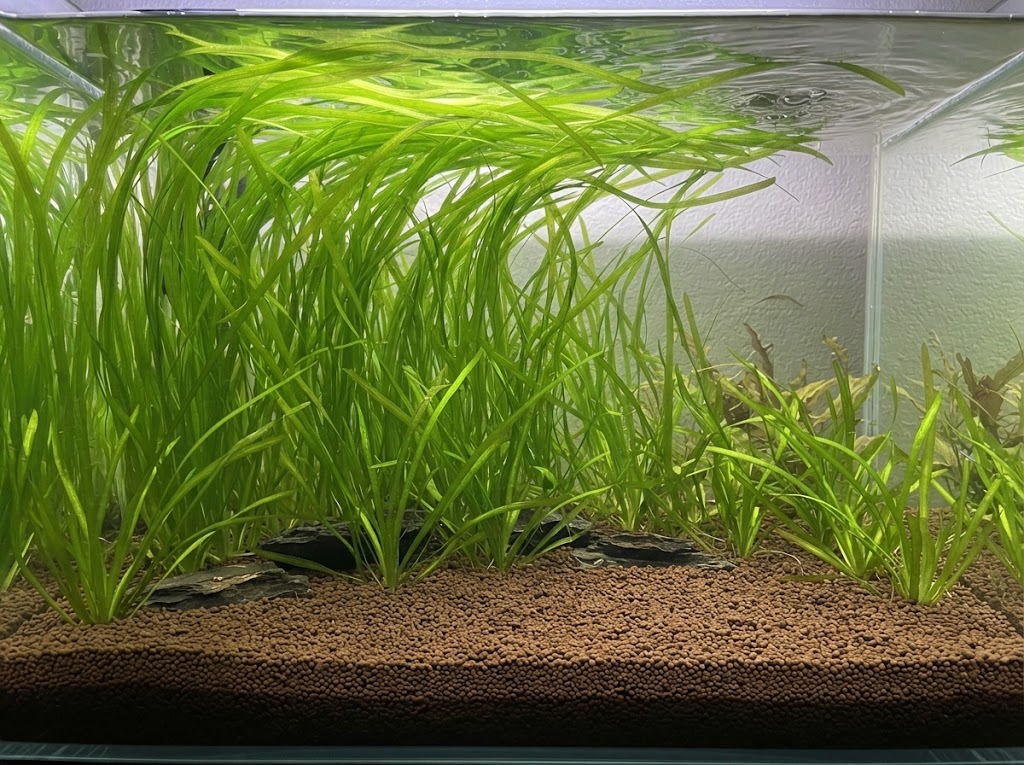
Vallisneria is one of the most useful aquarium plants for creating a tall, green background without adding a complicated maintenance routine. With suitable lighting, a planted substrate, and enough room to spread, vallisneria can grow into a dense stand of ribbon-like leaves that gives fish shelter and makes a freshwater aquarium look more natural.
It is particularly appealing to beginners because it can grow without injected carbon dioxide (CO₂). Once established, it produces new plants through runners, allowing a small group to gradually fill an area of the tank.
There is one detail worth planning for before you buy it: Vallisneria can grow taller and spread farther than expected. Choosing the right variety and planting it in the correct position will save you from repeatedly removing leaves or thinning a crowded background.
This guide covers the main Vallisneria varieties, water and lighting requirements, planting techniques, propagation, common problems, and the Seachem products that may be useful for its care.
Vallisneria at a Glance
| Feature | Details |
|---|---|
| Scientific name | Vallisneria species |
| Difficulty | Generally easy |
| Best placement | Midground or background, depending on variety |
| Lighting | Low to medium; stronger light can support faster growth |
| CO₂ injection | Usually unnecessary |
| Growth pattern | Rosettes that spread through runners |
| Substrate | Sand or fine gravel that allows roots and runners to develop |
| Fertilization | Root-zone fertilizer may help in nutrient-poor substrates |
| Main maintenance task | Controlling spread and removing damaged leaves |
| Best suited to | Freshwater community tanks and many hard-water setups |
These are general care guidelines. Exact height, leaf shape, and preferred conditions vary between species and cultivated varieties. Aquarium Co-Op, for example, lists its standard Vallisneria spiralis as an easy plant that needs no CO₂ injection and recommends medium lighting for that particular stock.
What Is Vallisneria?
Vallisneria is a genus of aquatic plants known for its long, narrow leaves and spreading growth habit. Depending on the species, the leaves may remain relatively short or grow long enough to reach the surface and float along it.
In aquariums, Vallisneria is commonly used to soften the back wall, create a green backdrop, and provide cover for fish. Small fish and fry may use the leaves as shelter, while larger fish can swim between established clumps.
The plant grows from a basal crown, where the leaves meet the roots. New plants form along horizontal runners that travel through the substrate. As the daughter plants develop their own roots and leaves, the original plant gradually becomes part of a larger colony.
That growth habit explains both its appeal and its main drawback. Vallisneria can fill an empty background without constant replanting, but it may also spread into areas reserved for other plants.
Popular Vallisneria Types for Aquariums
The best variety depends on your tank’s height, the look you want, and how much space you can give it. Trade names can vary between suppliers, so confirm the mature size and identity before purchasing.
Vallisneria spiralis
Vallisneria spiralis is a common choice for freshwater aquariums. It develops long, narrow green leaves and works particularly well toward the back of a tank.
Despite its name, not every plant sold as V. spiralis has tightly twisted leaves. Check the plant’s appearance and the supplier’s identification rather than relying on the name alone.
Choose it when you want a relatively straightforward background plant that can establish a spreading colony.
Jungle Vallisneria
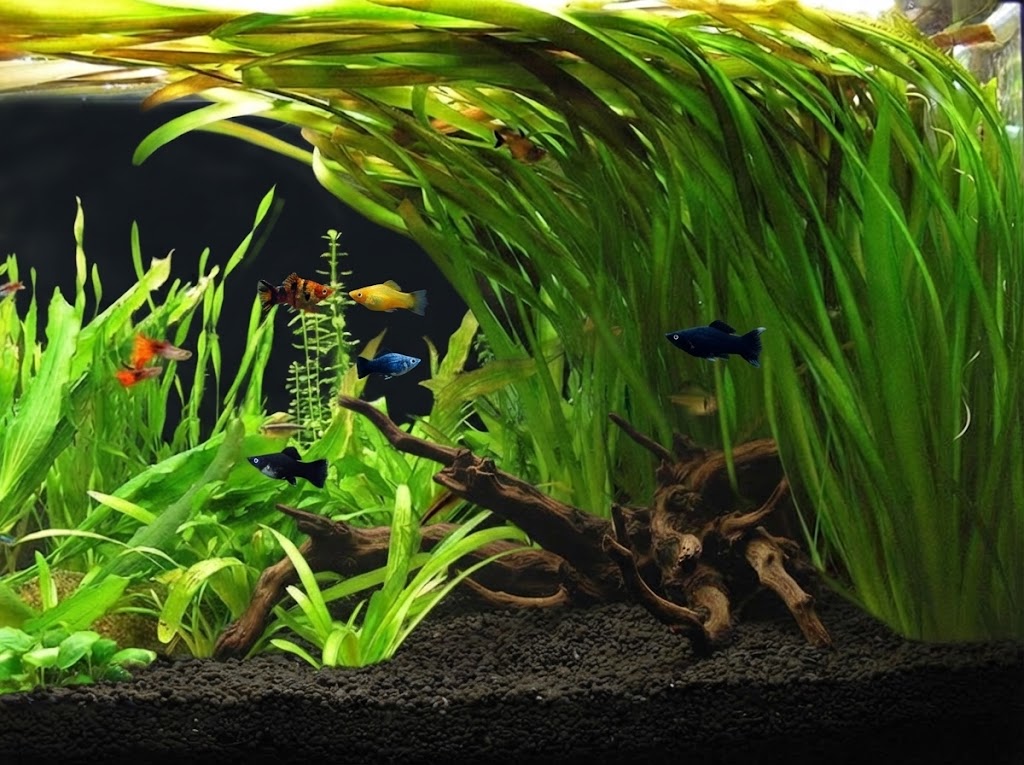
Jungle Vallisneria is generally sold as a large-growing form with long leaves. Its height makes it useful for taller aquariums and large planted backgrounds.
Before buying it, measure the distance between the substrate and the water surface. Long leaves may reach the surface and bend over, shading plants beneath them.
For a small aquarium, a shorter variety may be easier to manage.
Vallisneria nana
Vallisneria nana is commonly chosen when a finer, more compact appearance is desired. It can be a better fit for aquarists who want the grassy Vallisneria look without immediately filling the entire background with broad, long leaves.
The actual size depends on the plant sold under that name, so check the supplier’s mature-height information.
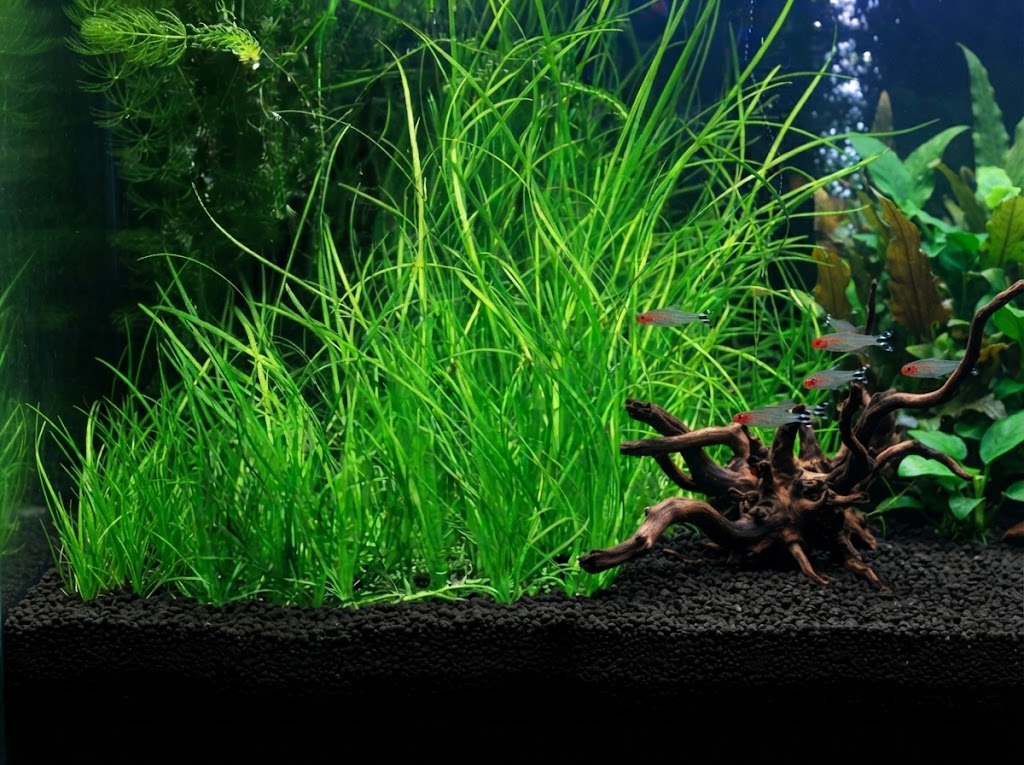
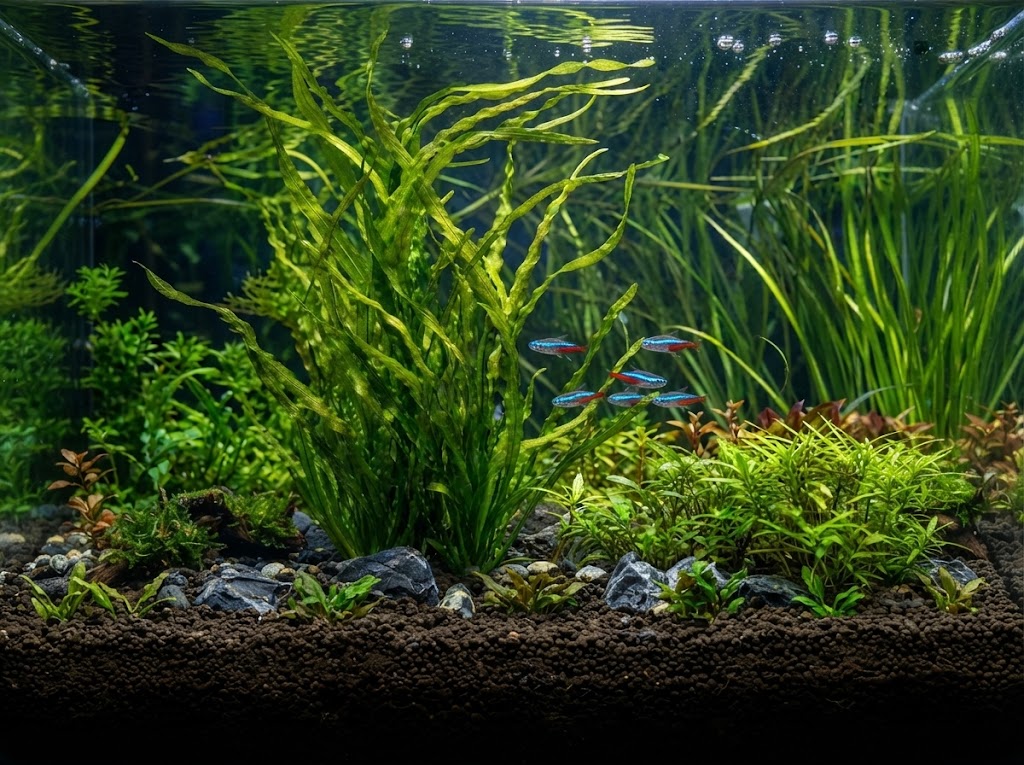
Corkscrew Vallisneria
Corkscrew Vallisneria has twisted or curled leaves that add texture to a planted tank. It is an attractive alternative to straight-leaved varieties and can work in a background or a sufficiently spacious midground.
Its leaves still need room to grow. Do not assume that a twisted-leaf variety will remain small simply because its foliage looks compact in the shop.
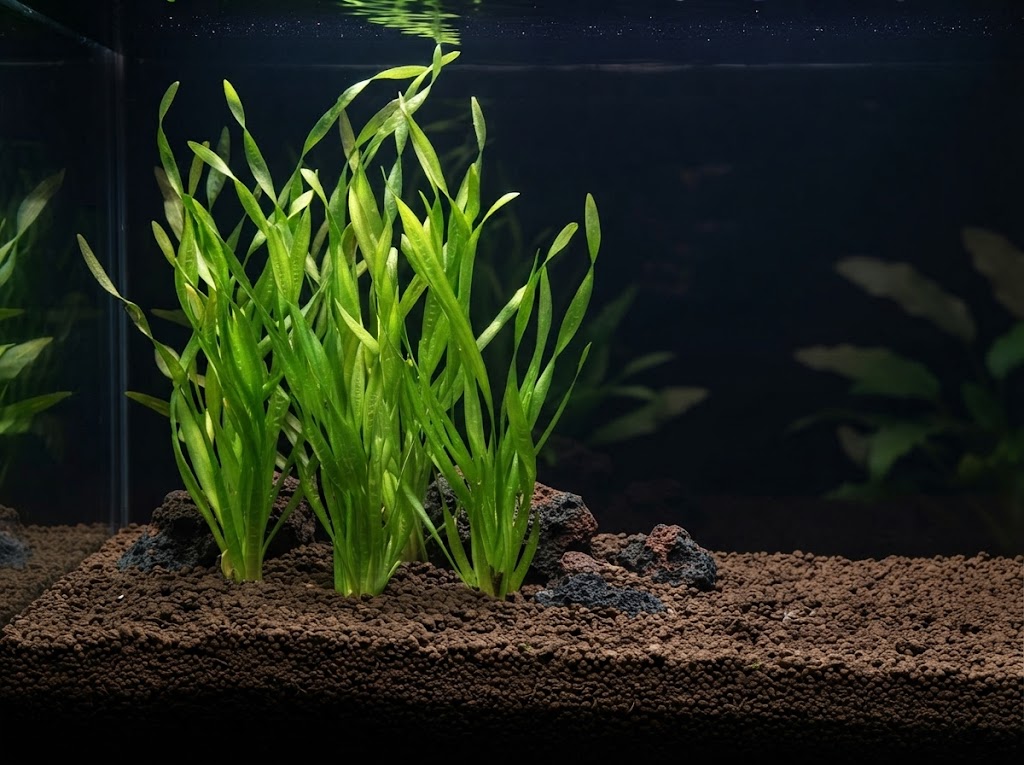
Vallisneria americana and Vallisneria gigantea
These names are associated with varieties or species that can produce substantial foliage, although the size and appearance of aquarium stock vary. They are worth considering for larger tanks where a tall stand will not overwhelm the layout.
If you are comparing V. americana, V. gigantea, jungle Vallisneria, and V. spiralis, focus on the plant’s expected mature height and leaf width. Labels alone do not always give enough information to predict how a particular specimen will look in your aquarium.
Vallisneria Water Parameters
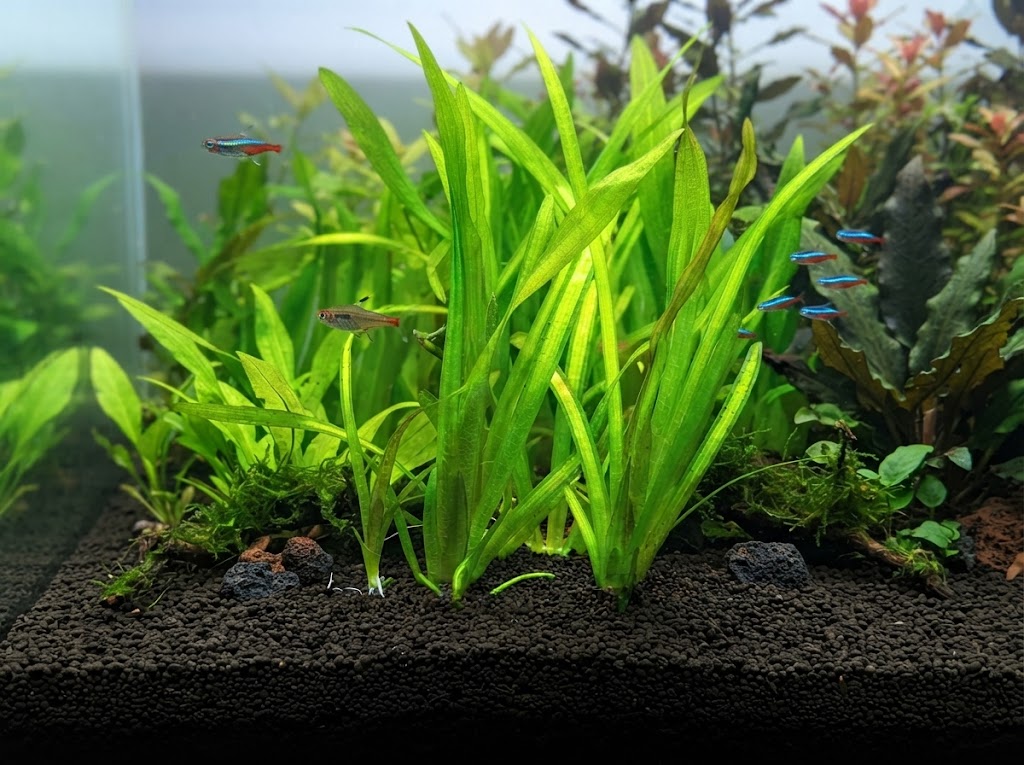
Vallisneria is adaptable, and many aquarium varieties grow across a fairly broad range of freshwater conditions. Stable water and suitable lighting are more useful starting points than trying to hit a single perfect number.
| Parameter | General starting point |
|---|---|
| Temperature | Around 18–28°C (64–82°F) for many commonly kept forms |
| pH | Approximately 6.5–8.5 for adaptable aquarium stock |
| Water hardness | Many varieties tolerate moderate to hard water |
| CO₂ | Usually not required |
| Water stability | Avoid abrupt changes when possible |
These ranges are general guidance, not a guarantee for every species. Check the needs of the specific plant you buy and the fish sharing its aquarium.
Vallisneria can be a useful choice for some hard-water community tanks and African cichlid setups. Compatibility still depends on the fish: species that routinely uproot plants or eat vegetation may damage young Vallisneria before it becomes established.
Avoid making sudden changes to pH or hardness just to suit the plant. If your fish are already thriving in stable water, choose a compatible Vallisneria variety rather than chasing a different set of parameters unnecessarily.
Lighting: How Much Does Vallisneria Need?
Low to medium lighting is a sensible starting point for many Vallisneria varieties. A dedicated high-output planted-tank light is not automatically necessary.
The amount of light reaching the plant depends on the fixture, aquarium depth, water clarity, and shading from other leaves. A light setting that works in a shallow aquarium may not deliver the same result in a deeper tank.
If Vallisneria is growing slowly, check several factors before replacing the light:
- Is the plant receiving light for a consistent daily period?
- Are floating plants or taller leaves shading it?
- Is the substrate suitable for root growth?
- Are nutrients available?
- Is the plant still adapting after transport or planting?
Stronger lighting can encourage faster growth, which may also mean more runners and more frequent thinning. The goal is healthy growth that fits the aquarium, not maximum speed.
Does Vallisneria Need CO₂?
Usually, no. Many common Vallisneria varieties grow successfully without injected CO₂, which makes them practical for low-tech aquariums.
CO₂ injection can be part of a more demanding planted-tank setup, but it is not a basic requirement for keeping Vallisneria alive. Good light, stable conditions, and adequate nutrition should be considered first.
Do not confuse injected CO₂ with liquid-carbon supplements. These are different approaches, and products marketed as liquid carbon deserve special attention when Vallisneria is involved. The next sections explain that distinction.
Substrate and Fertilizer for Vallisneria
Vallisneria develops roots in the substrate and spreads by sending runners through it. A layer of sand or fine gravel gives the roots somewhere to anchor and the runners room to travel.
A nutrient-rich substrate can support growth, but it is not the only workable option. Vallisneria can grow in inert sand or gravel when nutrients are available from other sources.
Does Vallisneria Need Root Tabs?
Root tabs can be useful when the substrate contains little available nutrition. They provide nutrients close to the roots, which is helpful for a plant that establishes itself in the substrate.
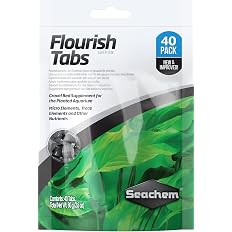
Seachem Flourish Tabs are one option. The manufacturer describes them as a root-zone supplement containing trace elements and other nutrients, with directions to replenish them every three to four months. Follow the current product label for the dose appropriate to your aquarium.
FROM AMAZON.COM
Seachem Flourish Tabs 40 Tab Pack
Root-zone fertilizer tabs packed with minerals and nutrients. Press into the substrate near plant roots for slow, steady feeding in freshwater tanks.
Buy on Amazon.comHappy Pet Zone may earn a commission when you click through to Amazon.com, at no extra cost to you. As an Amazon Associate, we earn from qualifying purchases.
You may not need them if your substrate is already nutrient-rich or the plant is growing well with the nutrients available in your aquarium. Look at the plant’s growth and the overall fertilization routine before adding another product.
Is Seachem Flourish Comprehensive Useful?
Seachem Flourish Comprehensive is a general supplement for micronutrients. It can complement a planted-tank fertilization routine when those nutrients are needed, but it should not be treated as a complete solution for every possible deficiency.
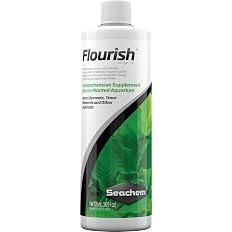
FROM AMAZON.COM
Seachem Flourish Freshwater Plant Supplement
A comprehensive plant supplement with minerals, trace elements, and vitamins to support healthy growth in freshwater planted tanks.
Buy on Amazon.comHappy Pet Zone may earn a commission when you click through to Amazon.com, at no extra cost to you. As an Amazon Associate, we earn from qualifying purchases.
Seachem notes that Flourish and Flourish Tabs have overlapping functions, although some setups may benefit from using both. Start with the needs of your plants and substrate rather than automatically buying every supplement in the range.
What About Nitrogen, Potassium, or Iron?
Targeted supplements may help when a specific nutrient is lacking, but yellow leaves or slow growth do not prove that a particular nutrient is deficient.
Before adding individual products, check the lighting, substrate, recent planting history, and overall fertilizer routine. If possible, measure relevant water parameters and look at how the symptoms affect new and old leaves.
Adding several supplements at once makes it harder to identify what helped and can create unnecessary expense.
How to Plant Vallisneria in an Aquarium
Planting Vallisneria correctly is important because the roots need to be covered while the crown must remain exposed.
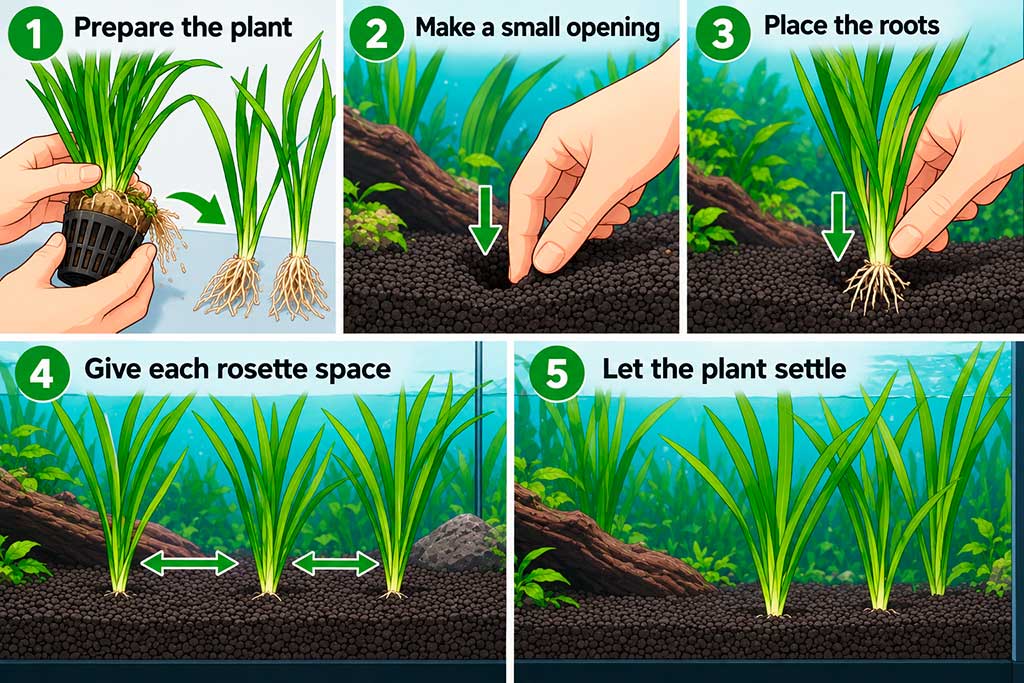
Step 1: Prepare the plant
Remove the pot, packaging, and rock wool or other growing material supplied with the plant. Gently rinse away loose debris. Separate individual rosettes if several plants have been bundled together, taking care not to damage the crown.
Step 2: Make a small opening in the substrate
Create enough space for the roots to sit naturally. Avoid forcing them into a tight hole or folding them sharply underneath the plant.
Step 3: Place the roots below the surface
Cover the roots with sand or gravel so the plant can anchor itself. Keep the point where the leaves emerge above the substrate. Burying the crown can encourage damage and decay.
Step 4: Give each rosette some space
Plant individual rosettes a short distance apart rather than pressing them into one dense bunch. They need room to develop leaves and send out runners.
The appropriate spacing depends on the variety and your desired layout. A large-growing form needs more room than a compact one.
Step 5: Let the plant settle
Avoid repeatedly pulling it up to check the roots. If fish keep uprooting it, try planting the roots a little more securely or using a suitable plant weight until the roots establish.
After planting, remove dead or badly damaged leaves at their base. Do not immediately discard the entire plant because some older leaves begin to deteriorate.
How Fast Does Vallisneria Grow?
Growth varies with the variety, lighting, available nutrients, water conditions, and the plant’s health when purchased.
Once established, Vallisneria can produce runners and daughter plants regularly. Over time, those plants may form a continuous strip of vegetation along the back of the aquarium.
Fast growth is useful if you want a dense background, but it can become a maintenance issue in smaller tanks. Long leaves may reach the surface, shade shorter plants, or extend into open swimming areas.
Plan the location before planting. If you want Vallisneria to remain in one corner, inspect the runners periodically and remove unwanted daughter plants before the colony expands too far.
How to Propagate Vallisneria
Vallisneria generally propagates through runners. These horizontal stems produce daughter plants that develop their own leaves and roots.
You can leave the daughter plants attached while the colony fills out, or separate them to start a new group elsewhere.
- Wait until the daughter plant has several leaves and a visible root system.
- Locate the runner connecting it to the parent plant.
- Cut the runner with clean scissors once the daughter plant is established enough to survive independently.
- Lift the new plant carefully, keeping as much of its root system intact as possible.
- Replant it with the roots covered and the crown exposed.
Avoid separating very small plantlets that have not yet developed roots. They may take longer to establish, particularly in a tank with fish that disturb the substrate.
You can also give unwanted daughter plants to another aquarist, provided they are healthy and free of visible pests.
How to Trim Vallisneria Without Damaging It
The long leaves are part of Vallisneria’s appeal, so pruning should preserve as much healthy foliage as possible.
If a leaf is dead, badly damaged, or melting, remove the entire leaf close to its base. Cutting straight across the middle or tip of a healthy leaf often leaves a visibly blunt edge, and the cut section may brown.
Do not remove large amounts of healthy foliage simply to keep the plant short. If the leaves are consistently too tall for your aquarium, a smaller variety may be a better long-term choice.
Thinning the colony is another useful maintenance task. Remove unwanted daughter plants and runners before they crowd other plants or block too much light.
Why Is My Vallisneria Melting?
“Melting” describes leaves that become translucent, soft, yellow, or brown and eventually break down. It can happen after planting, following changes in conditions, or when the plant is damaged.
Transition From Emersed to Submerged Growth
Some aquarium plants are grown partly or entirely out of water at commercial nurseries. Their existing leaves may not be suited to permanent submersion.
After planting, those leaves can deteriorate while the plant produces new underwater growth. This transition does not necessarily mean the plant is dying.
Remove leaves that have become badly damaged, keep the crown intact, and give the plant time to establish. Avoid uprooting it repeatedly to inspect its progress.
Changes in Water Conditions
Abrupt changes in temperature, hardness, or other water conditions can stress an established plant. If melting begins after a water change or a move to another aquarium, review what changed rather than adding several fertilizers immediately.
Liquid-Carbon Supplements
Vallisneria has a specific relationship with Seachem Flourish Excel worth understanding. Seachem’s own FAQ reports that Vallisneria generally tolerated the regular maintenance dose in its tests, while larger doses sometimes caused temporary leaf melting. The company also reports that affected plants could regrow from healthy roots. Seachem Flourish Excel FAQ.
That does not mean every aquarium will respond identically. Avoid overdosing, follow the current label, and watch for changes after introducing any new supplement. If your Vallisneria is already struggling, do not increase the dose in an attempt to force faster growth.
Damaged or Buried Crowns
If the crown is buried, soft, or decaying, recovery becomes more difficult. During planting and maintenance, keep the crown above the substrate and avoid damaging the central growing point.
Why Is My Vallisneria Turning Yellow?
Yellow leaves can have several causes, so look at the pattern before changing your fertilizer routine.
- Older leaves deteriorate soon after planting: The plant may be adapting from emersed to submerged growth.
- New growth is weak or pale: Check lighting, nutrient availability, and whether the roots are established.
- Leaves deteriorate after dosing a supplement: Review the dose and timing, especially if several products were added recently.
- The crown is soft or decaying: Check planting depth and remove material that is clearly dead.
Nutrient deficiency is one possible explanation, but it is not the only one. Review the whole aquarium before buying a targeted nitrogen, potassium, or iron supplement.
Can Vallisneria Grow With Goldfish or African Cichlids?
Vallisneria can work in some aquariums with goldfish or African cichlids, but the fish’s behavior matters as much as the plant’s water requirements.
Goldfish may uproot young plants while foraging. Some cichlids dig in the substrate or disturb newly planted roots. An established Vallisneria colony may cope better than freshly planted rosettes, but no plant is guaranteed to survive persistent digging or grazing.
Use secure planting, choose a location that fits the fish’s behavior, and watch the plant during the first few weeks. In tanks where fish repeatedly uproot vegetation, a protected planting area or a different plant arrangement may be more practical.
Common Vallisneria Care Mistakes
- Burying the crown. Cover the roots, not the point where the leaves emerge.
- Planting too many rosettes too close together. Leave room for each plant to grow and spread through runners.
- Cutting across healthy leaf tips. Remove damaged leaves at the base instead of shortening every leaf with a horizontal cut.
- Expecting every variety to stay small. Confirm the likely mature size before purchasing jungle or other large-growing forms.
- Adding fertilizers without diagnosing the problem. Slow growth and yellowing can have several causes. Check conditions before using targeted supplements.
- Overdosing liquid-carbon products. Follow the product label and be alert to signs of leaf deterioration.
- Removing a plant too early during its transition. Some leaf loss can occur after planting. If the crown and roots remain healthy, give the plant time to produce new submerged leaves.
Frequently Asked Questions
Vallisneria is a strong choice for aquarists who want a tall, natural-looking background without committing to injected CO₂ or an elaborate plant-care routine. The most important decisions happen before and during planting: choose a variety that fits your tank, cover the roots while keeping the crown exposed, and leave room for runners.
Start with stable conditions and observe how the plant responds. Add fertilizer only when your substrate or aquarium’s nutrient supply calls for it. With that approach, Vallisneria can gradually develop into a healthy stand that gives fish cover and brings more movement and texture to a freshwater aquarium.