Java Fern Care Guide: 7 Essential Tips for Healthy Growth
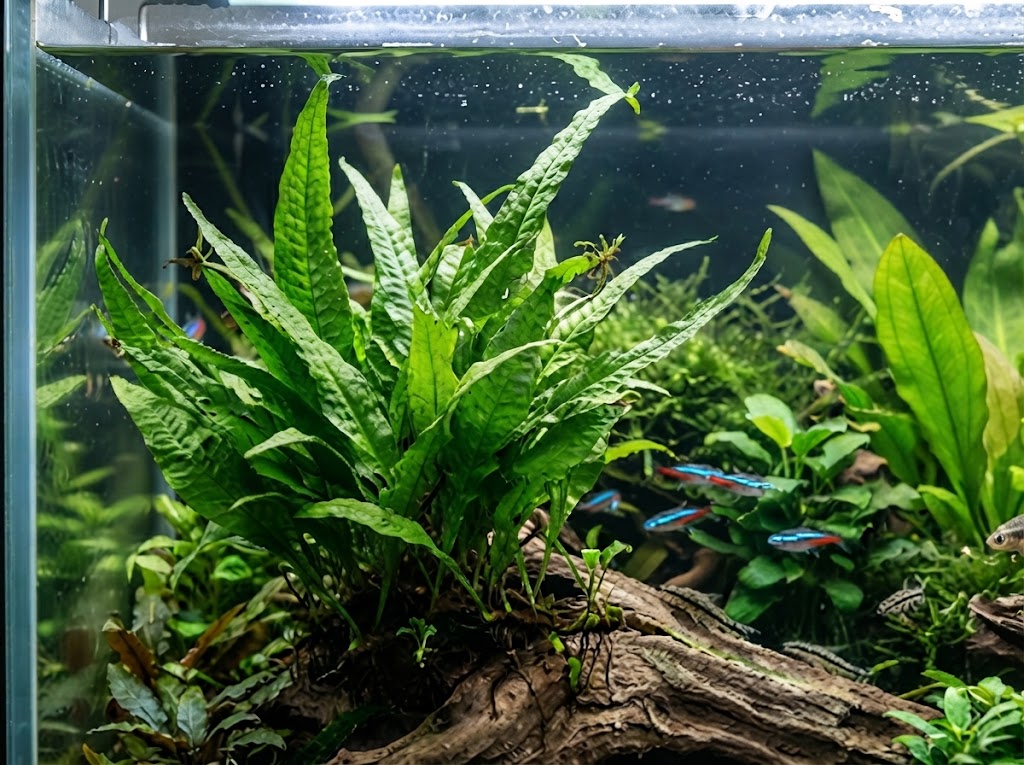
Java fern is one of the easiest aquarium plants to grow, especially when you want a hardy plant that can attach to wood or rock instead of being planted in the substrate.
In this Java Fern Care Guide, you’ll learn how to provide the right light, water, nutrients and placement, plus how to deal with black spots, algae and propagation.
Java Fern at a Glance
Scientific name: Microsorum pteropus
Common name: Java fern
Difficulty: Easy
Light: Low to moderate
CO2: Optional
Placement: Attach to driftwood or rock
Growth: Slow to moderate
Typical use: Beginner planted aquariums, community tanks and low-tech setups
Why Java Fern Is So Popular
Java fern earns its reputation because it tolerates conditions that make many other aquarium plants struggle. It can grow under relatively modest lighting, does not require a nutrient-rich substrate, and usually adapts well to established community aquariums.
Its unusual growth habit also makes it useful for aquascaping. Instead of burying the rhizome in gravel, you normally attach the plant to driftwood, rocks or another hard surface. Over time, the roots grip the surface while new leaves emerge from the rhizome.
That makes Java fern particularly useful when you want greenery without redesigning the substrate. It also works well in tanks with fish that like to dig.
Java Fern Light Requirements
Java fern does not need intense aquarium lighting. Low to moderate light is usually enough for steady growth, and excessive light can create another problem: algae growing on leaves that develop slowly.
A practical starting point is around 6 to 8 hours of aquarium light per day. The exact duration depends on your tank, other plants and algae pressure. If algae starts coating the leaves, reducing the photoperiod is often more useful than immediately adding more fertilizer.
For more background on balancing light with the rest of your planted tank, see our aquarium lighting guide.
How Long Should the Light Be On?
Start with a consistent schedule rather than changing the light every few days. A timer is useful because plants respond better to predictable day and night cycles.
If your Java fern is healthy but algae is increasing, test a shorter photoperiod before assuming the plant needs more light. Java fern is slow enough that giving it more light can sometimes benefit algae faster than it benefits the plant.
Does Java Fern Need CO2?
No. Java fern can grow without injected CO2, which is one reason it is so popular in low-tech aquariums. Additional carbon can increase plant growth under suitable conditions, but it is not a requirement for keeping Java fern alive.
If you already run a planted aquarium with CO2, Java fern can benefit from the more carbon-rich environment. If you do not, focus first on stable water conditions, appropriate lighting and basic plant nutrition.
How to Plant Java Fern Correctly
The most important Java fern planting rule is simple: do not bury the rhizome. The rhizome is the thick horizontal stem from which leaves and roots emerge. If it is buried under gravel or sand, it can deteriorate and the plant may eventually fail.
Instead, position the rhizome on top of the substrate or attach it to a piece of hardscape. The roots will eventually grow around the surface and hold the plant in place.
Can You Put Java Fern in Aquarium Gravel?
You can place the roots in gravel, but keep the rhizome exposed. The roots can sit among the substrate while the rhizome remains above it. This is different from planting a rooted stem or rosette plant deeply into the substrate.
Java Fern on Driftwood
Driftwood is one of the best places for Java fern. Position the rhizome against the wood and secure it temporarily until the roots attach. Fishing line, thread or aquarium-safe cyanoacrylate gel can all be useful depending on the setup.

FROM AMAZON.COM
Seachem Flourish Glue
Cyanoacrylate adhesive for aquascaping, plastic repairs, and freshwater tanks. Bonds plants, rocks, and decorations securely underwater.
Buy on Amazon.comAs an Amazon Associate, Happy Pet Zone earns from qualifying purchases, at no extra cost to you.
Java Fern Fertilizer Requirements
Java fern is not a heavy feeder compared with many fast-growing stem plants, but that does not mean it needs no nutrients. It can take nutrients from the water column, making a liquid fertilizer more useful than relying on root tabs.
A sensible approach is to start conservatively and watch the plant. New leaves should develop gradually, and existing leaves should remain reasonably firm and green. If several plants in the aquarium show nutrient deficiency symptoms, evaluate the whole tank rather than treating Java fern in isolation.
FROM AMAZON.COM
Seachem Flourish Freshwater Plant Supplement
A comprehensive plant supplement with minerals, trace elements, and vitamins to support healthy growth in freshwater planted tanks.
Buy on Amazon.comHappy Pet Zone may earn a commission when you click through to Amazon.com, at no extra cost to you. As an Amazon Associate, we earn from qualifying purchases.
FROM AMAZON.COM
Seachem Flourish Potassium 500 mL / 17 fl. oz.
Concentrated potassium supplement for planted freshwater tanks. Supports strong stem growth and helps prevent deficiency without affecting pH.
Buy on Amazon.comHappy Pet Zone may earn a commission when you click through to Amazon.com, at no extra cost to you. As an Amazon Associate, we earn from qualifying purchases.
Do not automatically add every Seachem plant supplement to a Java fern tank. More fertilizer is not always better, and unnecessary dosing can complicate algae control.
Why Does My Java Fern Have Black Spots?
Black or dark spots on Java fern leaves are one of the most common reasons aquarists think something is wrong. In many cases, however, the spots are part of the plant’s normal reproductive process.
Black Spots From Natural Spore Development
Java fern can develop dark spots on mature leaves as part of its natural reproduction. These spots may eventually produce plantlets. If the leaf otherwise looks healthy and the plant continues producing new growth, black spots alone are not a reason to panic.
Watch the pattern instead. A few dark reproductive spots on an otherwise healthy leaf are very different from rapidly deteriorating tissue, transparent patches or heavy algae coverage.
Black Spots From Plant Stress
Stress can also cause damaged-looking leaves, especially after a sudden change in water conditions, lighting or placement. Newly purchased Java fern may shed older leaves while adapting to a new aquarium.
If deterioration is widespread, check water quality, temperature, lighting and recent changes before reaching for additional products. Our aquarium water guide can help you review the basics.
Why Are My Java Fern Leaves Turning Brown?
Brown leaves can have several causes. Older leaves may naturally decline, while sudden browning can follow transplant shock, poor water conditions, excessive algae or physical damage.
Look at the newest growth first. If the rhizome is firm and new leaves are appearing, the plant may be recovering even while older leaves look unattractive. Removing badly damaged leaves can improve the appearance of the aquarium and make it easier to monitor new growth.
Java Fern and Algae
Because Java fern grows slowly, algae can take advantage of its leaves when lighting is stronger than the plant can use. This is especially common with brown algae, green spot algae and hair-like growth attached to older leaves.
Start with the basics: keep the light consistent, avoid excessive photoperiods, maintain stable water conditions and remove algae manually when practical. Do not assume that adding fertilizer will solve an algae problem.
For a deeper look at persistent filamentous growth, see our guide on how to remove filamentous algae from aquariums.
How Fast Does Java Fern Grow?
Java fern is a slow to moderate grower. Growth speed depends on light, temperature, nutrient availability, carbon availability and overall aquarium stability.
Do not judge the plant by daily changes. Give it several weeks and look for new leaves, expanding leaf blades and healthy roots. A plant that appears unchanged for a short period may still be growing normally.
How to Propagate Java Fern
Java fern can be propagated in two straightforward ways. Mature leaves may produce small plantlets, and established rhizomes can also be divided.
When plantlets develop on older leaves, wait until they have formed recognizable leaves and roots before separating them. You can then attach the young plant to another piece of wood or rock.
For rhizome division, separate a healthy section with several leaves and roots using a clean, sharp tool. Keep the new section attached to hardscape in the same way you would a mature plant.
Java Fern Varieties
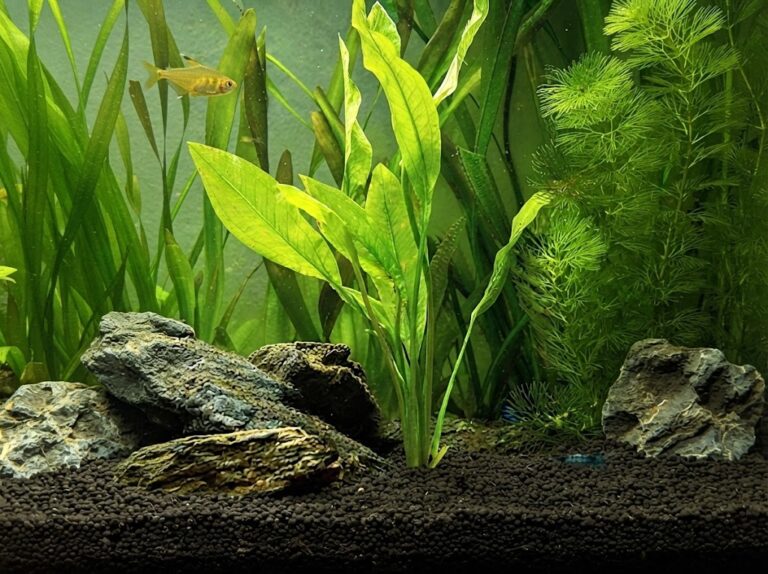
- Standard Java fern: The classic broad-leaf form and a dependable choice for beginners.
- Narrow Leaf Java fern: Produces slimmer leaves and can create a lighter, more delicate look.
- Needle Leaf Java fern: Has particularly narrow leaf blades and works well for more textured aquascapes.
- Trident Java fern: Characterized by leaves that develop branching or forked tips.
- Windelov Java fern: Known for frilly, branched leaf tips and a distinctive appearance. It is often chosen as a focal plant on driftwood or rock.
Is Java Fern Good for Beginners?
Yes. Java fern is one of the better choices for a beginner aquarium because it tolerates modest lighting, does not depend on a nutrient-rich substrate and can grow without injected CO2.
The biggest beginner mistake is usually not under-fertilizing. It is planting the rhizome too deeply or trying to force faster growth with excessive light and fertilizer.
Java Fern With Fish, Shrimp and Snails
Java fern is generally well suited to community aquariums. Its leaves and roots provide structure for shrimp and small fish, while its hardscape attachment makes it less vulnerable to fish that disturb the substrate.
It can also be useful in aquariums where digging fish make conventional rooted plants difficult to maintain. Just remember that Java fern is not a substitute for appropriate hiding places or species-specific habitat needs.
The Java Fern Setup I Would Use
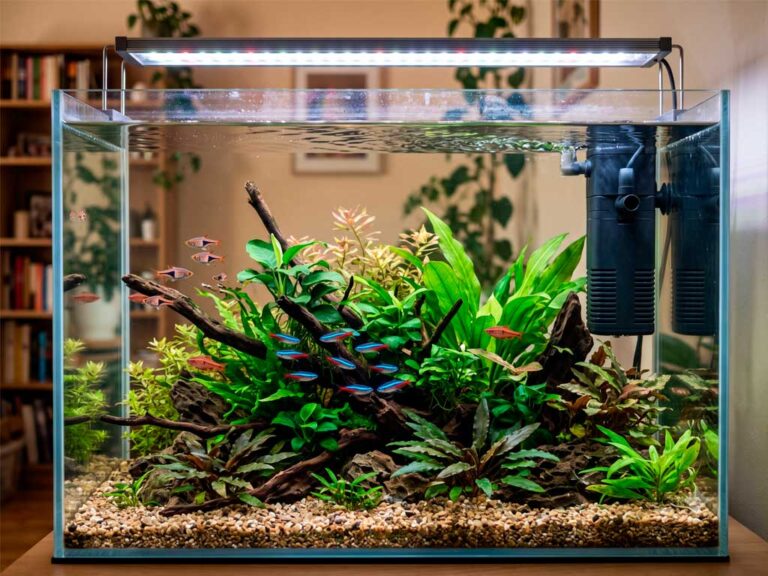
For a simple low-tech aquarium, I would attach Java fern to driftwood or rock, use low to moderate lighting for roughly 6 to 8 hours, keep the rhizome exposed and avoid chasing rapid growth.
I would also monitor the aquarium before adding supplements. If the tank is stable and the plant is producing healthy new leaves, there is little reason to change several variables at once.
If nutrients are genuinely needed, a modest water-column fertilizer such as Seachem Flourish is more directly relevant to Java fern than a root-tab strategy designed primarily for heavy root-feeders. Seachem’s own product information describes Flourish Tabs as intended for root-feeding plants such as Amazon swords and Cryptocorynes, which is why they are not my first recommendation for Java fern.
Frequently Asked Questions
A Simple Java Fern Routine
Keep the rhizome exposed. Give the plant consistent, moderate conditions. Attach it securely to hardscape, keep the light schedule predictable and watch new growth rather than expecting dramatic changes every week.
When something looks wrong, change one variable at a time. That makes it much easier to identify whether the real issue is light, algae, water quality, nutrients or simply the normal life cycle of an older leaf.
With that approach, Java fern can become one of those aquarium plants you barely have to think about. It settles onto the hardscape, grows at its own pace and adds structure to the tank for years.
Affiliate disclosure: Happy Pet Zone may earn a commission from qualifying purchases made through affiliate links. Product recommendations are based on relevance to the aquarium use described and are not claims of personal product testing.