Chesapeake Bay Retriever: America’s Waterfowl Specialist
Legend says the Chesapeake Bay Retriever’s story began with a shipwreck off the Maryland coast in 1807. Two Newfoundland puppies survived that wreck, and their descendants eventually became this breed’s foundation.
Today’s Chesapeake carries that origin story in its love of cold water and its powerful, independent streak. Here’s a complete look at what makes this breed such a dedicated water dog.
Quick Facts
- Life expectancy: 10 to 12 years
- Weight: 25 to 36.4 kg
- Height: Males 58-66 cm, females 53-61 cm
- Size: Large, Gundog group
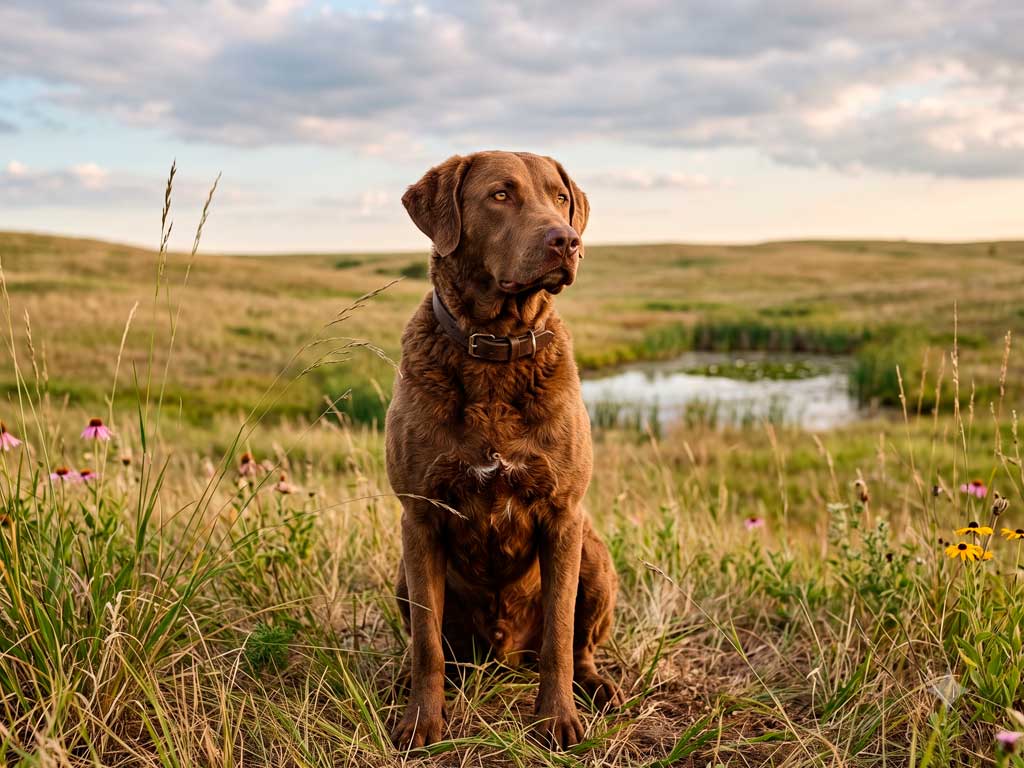
- Colors: “Dead grass” (straw to fern), sedge, or shades of brown
- Coat: Short, thick, and naturally water-resistant
- Exercise needs: Very high, two or more hours a day
- Good for: Experienced, active owners with access to water
Chesapeake Bay Retriever History and Origin
Legend says two Newfoundland puppies survived a shipwreck off the coast of Maryland in 1807. Grateful rescuers received the puppies as a thank-you, and those dogs became the foundation of an entirely new American breed.
Breeders later crossed their descendants with flat-coated retrievers, curly-coated retrievers, Irish water spaniels, and coonhounds. The result was a powerful, water-loving dog built specifically for retrieving waterfowl in the cold, rough waters of Chesapeake Bay.
Physical Characteristics
This breed carries a muscular, powerful build with distinctive webbed feet built for swimming. Its short, thick double coat repels water thanks to a harsh outer layer and a fine, woolly undercoat.
Coat color typically falls somewhere between straw and fern, a shade breeders call “dead grass,” though reddish-gold and various shades of brown also appear. Small white markings sometimes show up on the chest and feet.
Chesapeake Bay Retriever Temperament and Personality
The Chesapeake Bay Retriever carries a genuinely independent streak, though it stays affectionate with its family. Here’s the thing — this breed loves children but can play a bit roughly, so supervision matters with younger kids.
Expect a protective, alert dog with a playful, positive outlook on life, one that genuinely enjoys the company of other dogs and people. This isn’t the easiest breed for first-time owners, given its independence and strength.
Care Guide
Exercise and Water Play
This breed needs serious exercise, ideally two or more hours daily. Swimming and retrieving genuinely light this dog up, so access to water makes a real difference in its happiness.
Struggling to tire out a Chesapeake in a city apartment? This breed isn’t suited to that lifestyle, and it does much better with space and regular water access.
Nutrition and Bloat Prevention
Large breeds need a different mineral and vitamin balance than smaller dogs to support joint health. The Chesapeake Bay Retriever carries a real risk of bloat and stomach problems, so smaller, more frequent meals help lower that risk.
Trust me on this one: consistent feeding habits matter just as much as the food itself.
Grooming Needs
Resist the urge to bathe this breed often, since frequent washing damages its naturally waterproof coat. Brush only during shedding season to remove loose, dead hair, and skip excessive brushing the rest of the year.
Give it time to figure out the right rhythm — this breed’s coat genuinely takes care of itself better than most.
Gear That Actually Helps
A sturdy retrieving dummy or floating toy makes a great outlet for this breed’s natural drive to fetch, especially in water. A slow-feeder bowl also helps manage bloat risk by naturally pacing out each meal.
Chesapeake Bay Retriever Health Considerations
The Chesapeake Bay Retriever can face hereditary eye problems and hip dysplasia, among other issues common in large breeds. Responsible breeders test hips and eyes before breeding to help reduce these risks.
As always, this article offers general guidance, not veterinary advice — talk to your vet about breed-specific screening before bringing one home.
Fun Facts About the Chesapeake Bay Retriever
The Chesapeake Bay Retriever has served as Maryland’s official state dog since 1967. Actor Paul Walker, known for the Fast & Furious films, owned a Chesapeake named Boone, who appeared alongside him in the 2005 film Into the Blue.
According to breed lore, one Chesapeake once retrieved 300 downed ducks from icy waters in a single day, proving that rough seas rarely slow this breed down. Its webbed feet contribute significantly to its swimming ability, and this dog is famous for a playful, almost goofy sense of humor.
Frequently Asked Questions About the Chesapeake Bay Retriever
Is the Chesapeake Bay Retriever good for first-time owners?
Not typically, since this breed’s independence and strength take real experience to manage well. Confident, consistent training makes a big difference.
Does the Chesapeake Bay Retriever love water?
Yes, genuinely so — this breed was bred specifically for retrieving in cold water. Regular swimming access keeps it happy and well-exercised.
How much exercise does a Chesapeake Bay Retriever need?
Plan on two or more hours of daily activity, ideally including swimming or retrieving games. This breed doesn’t do well with a sedentary lifestyle.
Is the Chesapeake Bay Retriever good with kids?
Generally yes, though its playful energy can get a bit rough with younger children. Supervision helps keep interactions safe and positive.
Does the Chesapeake Bay Retriever need frequent baths?
No, frequent bathing actually damages this breed’s naturally waterproof coat. Brushing during shedding season covers most grooming needs.
How long do Chesapeake Bay Retrievers live?
Most live between 10 and 12 years with proper care. Regular vet visits support a long, healthy life.
What health problems are common in Chesapeake Bay Retrievers?
This breed can face hereditary eye issues and hip dysplasia, among other large-breed concerns. Responsible breeders screen for these conditions.
Is the Chesapeake Bay Retriever a good guard dog?
This breed isn’t primarily bred for guarding, though its protective, alert nature shows up around its family. It tends to welcome familiar people and other dogs warmly.
Can the Chesapeake Bay Retriever live in an apartment?
It’s not the best fit, given its high exercise needs and love of open space and water. A house with yard access and nearby water suits this breed far better.
Why is the Chesapeake Bay Retriever called Maryland’s state dog?
This breed’s origin story ties directly to the Chesapeake Bay region, and Maryland officially recognized it as the state dog in 1967. It remains a genuine point of local pride.
Is the Chesapeake Bay Retriever Right for You?
This breed suits active owners with access to open space and, ideally, water for swimming and retrieving. It thrives with experienced handlers who can match its independence with confident, consistent training.
If you want a powerful, water-loving companion with genuine working history, the Chesapeake Bay Retriever delivers exactly that.
Curious how the Chesapeake Bay Retriever compares to other retriever breeds? Browse the full Dog Breeds hub to explore more guides, or try our Dog Breed Quiz to find your best match.
For a smaller, older breed with a similar water-loving history, the Dutch Spaniel (Kooikerhondje) was bred centuries ago in the Netherlands to lure ducks toward hunting nets.