Portuguese Pointer: The Complete Breed Guide
Most hunting dogs get plenty of attention. The Portuguese Pointer barely gets any, and that’s a shame. This medium-sized gundog has been pointing partridges since the 12th century, yet outside Portugal almost nobody has heard of it.
That gap in awareness is exactly why this guide exists. Below you’ll find everything a prospective owner needs: temperament, history, exercise needs, grooming, training, and health. Every detail here draws on breed-standard data and real working-dog behavior patterns.
One fact stands out before we go further. The Portuguese Pointer tolerates being left alone worse than almost any breed on this list, scoring just 1 out of 5 for independence. That single trait shapes nearly every decision a potential owner needs to make.
History and Origin
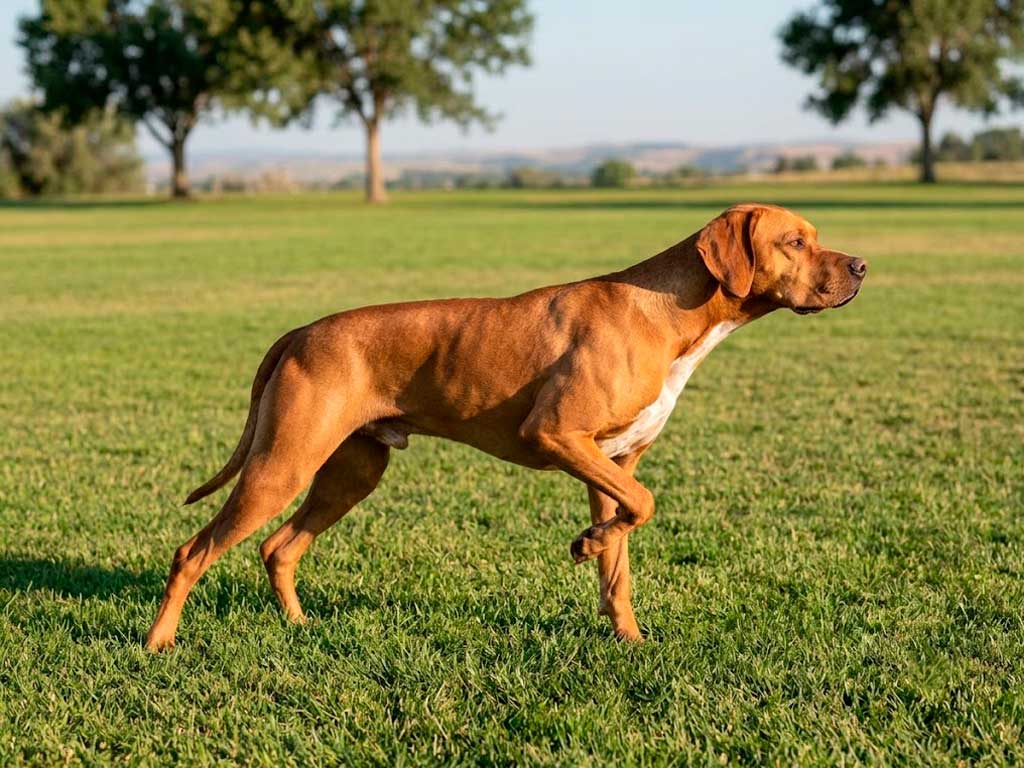
The Portuguese Pointer’s story starts in the 12th century on the Iberian Peninsula. Early hunters used the breed’s rigid, one-paw-raised stance to mark hidden game birds without flushing them.
Hunting laws shifted in the 16th century, and pointing breeds fell out of favor across the region. Numbers dropped sharply. Around that same period, the breed earned its Portuguese name, perdigueiro, which translates roughly to “partridge finder.”
British wine merchants working in Porto discovered the breed in the 18th century. Several dogs traveled back to England, where breed historians believe they contributed to the English Pointer’s bloodline.
Portuguese breeders spent the 1920s tracking down surviving family lines to save the breed from disappearing entirely. Their work produced a studbook in 1932 and an official breed standard in 1938. The UK Kennel Club added the Portuguese Pointer to its import register only in 2013, which explains why the breed still feels undiscovered in English-speaking countries.
Physical Characteristics
A Portuguese Pointer stands 50 to 58 cm tall and weighs between 16 and 27 kg. That puts it firmly in the medium category, smaller than most other pointing breeds.
The coat comes in any shade of yellow, from pale gold to deep rust, sometimes carrying a faint red tint. Dogs wear either a solid color with white patches on the face, tail, and legs, or a mottled pattern with white across the body.
Expect a rounded, aristocratic head, a straight muzzle, drop ears, and deep brown eyes that miss nothing. The build is athletic but sturdy, built for covering ground efficiently rather than for pure speed.
Temperament and Personality
Affectionate barely covers it. The Portuguese Pointer forms deep bonds with its people and genuinely wants to either work the field or curl up in a lap. There’s rarely a middle ground.
Strangers and unfamiliar dogs get a cooler reception. This isn’t aggression; it’s reserve. Once the dog knows you, though, expect nonstop warmth.
Sensitivity defines how this breed needs to be handled. Harsh corrections backfire fast, turning a cheerful dog withdrawn and anxious. Positive reinforcement isn’t optional here, it’s the only method that works long-term.
Care Guide
Diet and Nutrition
Medium and large working breeds need a nutrient balance different from smaller companion dogs, with particular attention to mineral and vitamin ratios that support joint and muscle health. An active Portuguese Pointer burns through calories on double daily walks, so portion sizes should reflect actual activity level rather than a generic chart.
This article contains general nutrition guidance. Always consult your veterinarian before changing your dog’s diet, especially for working or highly active dogs.
Exercise Requirements
Plan on at least two hours of physical activity daily, split across two walks. A bored, under-exercised Portuguese Pointer gets destructive fast.
Sidewalk strolls won’t satisfy this breed. Build in puzzle-solving, scent work, or open-field time whenever possible. Balance that activity with genuine couch time too, since this breed loves collapsing next to its owner just as much as running.
Grooming Needs
A single coat keeps grooming refreshingly simple. One thorough brushing per week handles most maintenance.
Check paws and ears after every walk for debris or minor injuries. That single coat also means limited insulation, so a coat during wet or windy winter walks helps this breed stay comfortable.
Training and Education
Eagerness to please makes this breed genuinely rewarding to train. Positive reinforcement techniques produce fast, lasting results, while punishment-based methods produce the opposite: a depressed, shut-down dog.
Early socialization matters enormously. Introduce puppies to other pets, children, livestock, and unfamiliar adults as young as possible, since reserve around strangers only intensifies without it.
Recall training deserves extra attention too. This breed can range far from its handler in open terrain, so a reliable “stop” and “come” command isn’t a nice-to-have, it’s a safety requirement. Beyond traditional gundog work, Portuguese Pointers often excel at agility, tracking, and search-based dog sports.
Health and Longevity
The Portuguese Pointer carries a life expectancy of 12 to 14 years and has no widely recognized breed-specific health conditions. Breed clubs recommend general health screening even so, since documented data on this rarer breed remains limited.
This section is for general informational purposes only. It does not replace professional veterinary diagnosis or treatment. Schedule regular checkups to catch any issues early.
Is This the Right Dog for You?
An ideal owner lives in a rural or semi-rural setting with a securely fenced yard. Some experience with hunting or working breeds helps considerably, since this dog’s drive needs a real outlet.
Families with older children who can join in training and exercise tend to do best with this breed. Very young children can work too, but supervision matters since puppies can be clumsy before they mature. Anyone gone for long stretches during the day should think carefully, since separation doesn’t come naturally to this breed.
Portuguese Pointer Quick Facts
| Trait | Details |
|---|---|
| Life Expectancy | 12–14 years |
| Weight | 16–27 kg |
| Height | 50–58 cm |
| Coat | Single, short |
| Shedding | Moderate |
| Grooming | Weekly brushing |
| Family Friendly | Excellent |
| Good with Other Pets | Excellent |
| Tolerates Being Alone | Poor |
| Energy Level | Very high |
Portuguese Pointer vs. Similar Breeds
| Breed | Size | Exercise Needs | Best For |
|---|---|---|---|
| Portuguese Pointer | Medium | 2+ hours/day | Rural, active owners |
| English Pointer | Large | 2+ hours/day | Experienced hunters |
| German Shorthaired Pointer | Large | 2+ hours/day | Active families |
| English Setter | Medium-Large | 1–2 hours/day | Families, moderate activity |
Frequently Asked Questions
Is the Portuguese Pointer a rare breed? Yes. It remains one of the least common pointing breeds outside Portugal, and the UK Kennel Club only added it to the import register in 2013.
Are Portuguese Pointers good family dogs? They can be, particularly for families with older children. Their affection runs deep, though supervision around young kids is always recommended.
Do Portuguese Pointers get along with other dogs? Generally yes with familiar dogs, though they can be distant or wary around unfamiliar ones.
How much exercise does a Portuguese Pointer need? At least two hours daily, ideally split into two walks with mental stimulation built in.
Can a Portuguese Pointer be left alone? Not easily. This breed scores low on independence and tends to struggle with long stretches of solitude.
Do Portuguese Pointers shed a lot? Shedding is moderate. Their single coat needs only weekly brushing to stay in good condition.
Are Portuguese Pointers easy to train? Very, provided training relies on positive reinforcement. Harsh methods damage their confidence quickly.
What health problems affect Portuguese Pointers? None are widely documented as breed-specific, though routine veterinary screening is still recommended.
Do Portuguese Pointers need a yard? Yes, ideally a securely fenced, good-sized yard in a rural or semi-rural setting.
How big does a Portuguese Pointer get? Adults reach 50 to 58 cm tall and weigh between 16 and 27 kg, placing them in the medium size category.
If you’re weighing a working breed against your daily routine, start with the exercise commitment above. It’s the single biggest factor separating a happy Portuguese Pointer from a frustrated one. For more breed comparisons, check out our guide to the German Shorthaired Pointer, another gundog with similar drive but a different temperament.