Dalmatian Dog Breed: The Spotted Icon With Ancient Heritage and Extreme Energy
The Dalmatian is arguably the world’s most recognizable dog breed. Their distinctive spotted coat, coupled with fame from Disney’s “101 Dalmatians,” makes them instantly identifiable to people worldwide who might struggle to name other breeds. However, behind the iconic appearance lies a dog whose heritage spans millennia and whose energy demands challenge many unprepared owners. The Dalmatian is far more than a pretty spotted face—they’re endurance athletes bred for centuries to run alongside horses, possessing remarkable stamina and drive. Understanding this breed requires looking beyond pop culture to appreciate their working heritage, unique health considerations, and specific behavioral traits. This comprehensive guide explores whether a Dalmatian fits your lifestyle and expectations.
History and Origin: An Ancient and Venerable Heritage
The Dalmatian boasts one of dog breeding’s most ancient documented histories. Evidence of spotted dogs working with chariots appears in Greek fresco
s and Egyptian tablets dating back to 2000 B.C. These ancient spotted dogs appear in artwork from Greece, Rome, and Egypt, performing various working roles including war dogs, sentries, and cart pullers. However, the breed’s modern name derives from Dalmatia (in what is now Yugoslavia), where detailed historical records of the breed have been found dating back centuries.
What’s remarkable is the consistency of purpose across Dalmatian history: these dogs were runners. Whether working with ancient Greek chariots, Roman legions, or medieval European nobility, Dalmatians were purpose-built to move alongside horses for hours. During the Romantic era in Europe, Dalmatians became fashionable escorts for carriages, protecting passengers and demonstrating their owners’ social status. This heritage as a “carriage dog” is fundamental to understanding modern Dalmatians.
The breed’s fame reached unprecedented heights with Dodie Smith’s 1956 novel “The Hundred and One Dalmatians,” inspired by her own dog Pongo. Walt Disney’s 1961 animated film adaptation created global cultural phenomenon, making Dalmatians instantly recognizable to generations who may never have met one in person. This cultural dominance, while flattering for the breed, has unfortunately led to widespread puppy mill production and misinformed ownership.
Physical Characteristics: The Iconic Spotted Athlete
The Dalmatian is a medium to large, square-built dog designed for endurance and elegance. Males typically stand 58 to 61 centimeters tall (23 to 24 inches) and weigh 23 to 25 kilograms (50 to 55 pounds). Females measure 56 to 58 centimeters (22 to 23 inches) with similar weight. Their body structure conveys balanced athleticism—muscular but refined, not bulky or heavy.
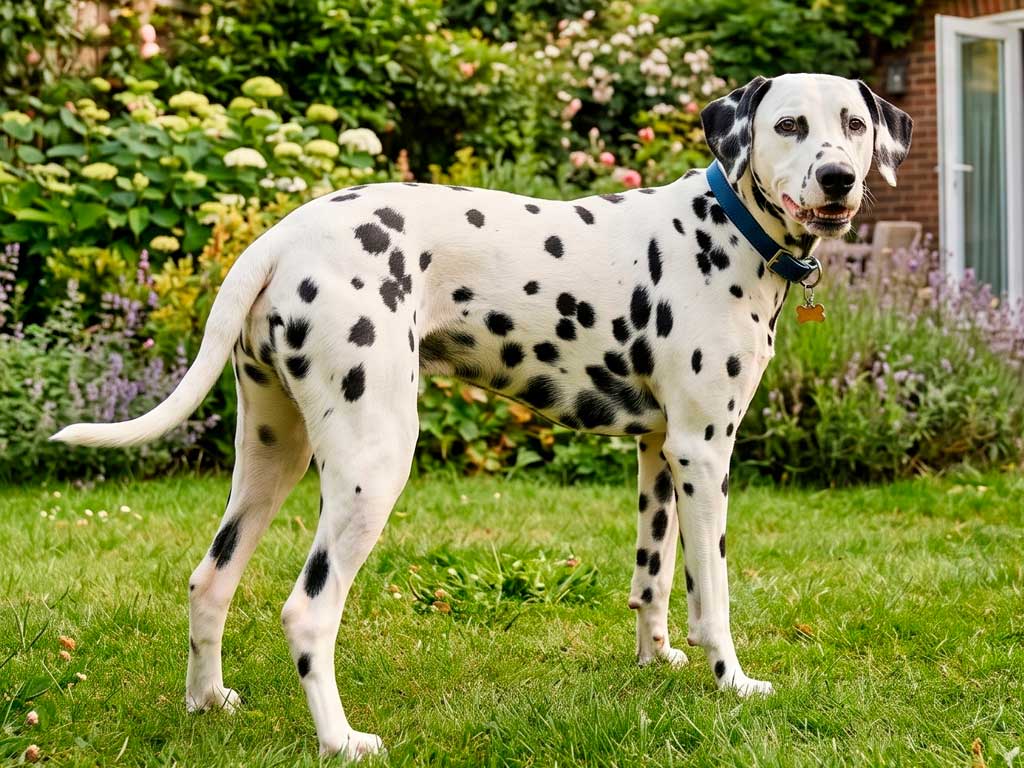
The breed’s defining characteristic is their unique spotted coat. Short, smooth, and glossy, Dalmatians display either black or brown (liver) spots on a pure white background. These spots are present at birth but incredibly tiny, developing and darkening as puppies mature. Interestingly, Dalmatians are the only dog breed displaying truly spotted coats—this characteristic makes them genetically and aesthetically unique within the canine world.
The spotted pattern itself carries genetic baggage many Dalmatian owners don’t anticipate. The gene responsible for spotting correlates with predisposition to deafness. Approximately 30-40% of Dalmatians experience some degree of hearing loss, with 5-10% being completely deaf. This genetic reality requires hearing testing at birth and careful breeding decisions.
Temperament and Personality: The Tireless Extrovert
The Dalmatian is an extroverted, friendly, and people-oriented dog that thrives on companionship and activity. These dogs are typically loyal, enthusiastic, and genuinely want to please their owners. They’re happy, clownish, and entertaining—natural entertainers who enjoy being the center of attention.
However, the Dalmatian’s personality has a significant shadow side: without adequate exercise and mental stimulation, they become hyperactive, destructive, and difficult to manage. The breed’s original purpose—running beside horses for hours—hardwired into them an energy level many modern owners fundamentally underestimate. Dalmatians need substantial daily activity, not casual walks. This isn’t a breed comfortable with apartment living or sedentary families.
Critically, Dalmatians require a minimum of 2-3 years before their energy settles into manageable levels. A Dalmatian puppy or young adult can be genuinely exhausting. Many owners return or abandon young Dalmatians to rescue organizations after underestimating this maturation period.
The breed also possesses a natural affinity with horses, stemming from centuries working alongside them. This history matters less today but remains relevant for understanding their calm demeanor around equines.
Care Guide
Diet and Nutrition
Dalmatians require high-quality nutrition matched to their substantial exercise demands. These active dogs need balanced diets with appropriate proportions of proteins, fats, carbohydrates, vitamins, and minerals. Feed appropriately sized portions twice daily based on individual activity levels and metabolism.
Monitor weight carefully—obesity significantly impacts health in athletic breeds. Always provide fresh water, especially considering the breed’s high activity level and warm climate sensitivity.
Exercise Requirements
More than 2 hours of daily exercise is essential for adult Dalmatians. This isn’t optional or negotiable. Insufficient exercise manifests as hyperactivity, destructive behavior, excessive barking, and poor decision-making. These are not lazy lap dogs—they’re endurance runners requiring substantial, varied daily activity.
Ideal exercise includes long runs, sustained walking, swimming, or activities like agility training. Many owners find that structured activities (obedience training, agility trials, running clubs) work best for channeling the breed’s energy productively. Simply letting a Dalmatian loose in a yard is insufficient—they need purposeful movement.
Grooming Needs
One advantage of Dalmatians is their minimal grooming requirement. The short coat needs brushing only once or twice weekly to remove loose hair. Occasional bathing suffices unless they become particularly dirty. This low-maintenance coat contrasts sharply with their high exercise demands—at least grooming won’t add to ownership challenges.
Training and Education
Dalmatians are intelligent and respond well to positive reinforcement training. However, their independent heritage and high energy can create training challenges for inexperienced owners. These dogs need consistent, patient guidance combined with substantial physical and mental outlets.
Early socialization is important, particularly given the breed’s natural wariness of some people. Exposure to varied humans, environments, and situations from puppyhood prevents excessive suspicion or reactivity.
Address the strong prey drive early—Dalmatians will pursue small animals, and safe off-leash areas are essential. Training and management are necessary to prevent problematic hunting behavior.
Health and Longevity
Dalmatians typically live 10 to 13 years. The breed is predisposed to specific health concerns requiring awareness and breeder screening.
Deafness is the most significant breed-specific health issue, correlating with the spotting gene. All puppies should undergo hearing tests at birth. Approximately 30-40% will experience some degree of hearing loss. Deaf Dalmatians can live normal lives but require specific management strategies.
The breed also shows predisposition to bladder stones (uroliths). High uric acid levels in Dalmatian urine create crystal formation risk, potentially requiring dietary management or medication. Breeders can test for this predisposition.
Before acquiring a Dalmatian puppy, ensure the breeder conducts hearing tests on puppies and parents and screens for uroliths predisposition.
Is This the Right Dog for You?
Dalmatians suit active owners who understand the breed’s extreme energy demands and can commit to substantial daily exercise.
Choose a Dalmatian if you:
- Have extremely active lifestyle requiring a running companion
- Can commit to 2+ hours daily structured exercise
- Want a friendly, people-oriented, entertaining dog
- Can manage the hyperactivity of young dogs (2-3 years maturation)
- Appreciate iconic, recognizable breeds
- Have secure fencing (strong prey drive)
- Understand and accept deafness risk
- Can handle high-energy personality
Consider another breed if you:
- Have limited time or sedentary lifestyle
- Live in apartments or small spaces
- Want a dog maturing quickly to manageable adulthood
- Cannot tolerate high energy or destructiveness
- Dislike extensive daily exercise requirements
- Have hearing-sensitive household environments
- Want low-maintenance personality
- Cannot manage prey drive safely
Frequently Asked Questions About Dalmatians
1. Is it true that Dalmatians are often deaf? Yes, deafness correlates strongly with the spotting gene. Approximately 30-40% experience some hearing loss, and 5-10% are completely deaf. Responsible breeders conduct hearing tests on all puppies at birth. Deaf Dalmatians can live normal lives with specific management but require understanding and accommodation from owners.
2. Why do Dalmatians need so much exercise? They were bred for centuries to run beside horses for hours. This endurance heritage is hardwired into their physiology and psychology. Without adequate exercise, they become hyperactive, destructive, and difficult. More than 2 hours daily is essential, not optional.
3. How long until a Dalmatian matures? Dalmatians require a minimum of 2-3 years before settling into manageable adulthood. Young Dalmatians can be exhausting—this extended adolescence surprises many owners and is a primary reason for returns to rescue organizations.
4. Are Dalmatians good apartment dogs? No. They need substantial daily space and exercise. Their high energy, tendency toward excessive barking, and strong prey drive make them unsuited for apartment living. They’re outdoor-loving athletes, not indoor companions.
5. What caused the 101 Dalmatians movie surge in adoptions? The 1961 Disney film created such demand that irresponsible breeders flooded the market with puppies. Many new owners, charmed by the movie but unprepared for the breed’s actual demands, abandoned dogs to rescue organizations within months. This cautionary tale illustrates the importance of breed-appropriate ownership.
Beyond the Spotted Icon
The Dalmatian is one of dog breeding’s most ancient breeds, yet one of the most misunderstood. Their iconic spotted appearance and cultural fame often overshadow the reality of their working heritage and extreme energy demands.
For the right owner—someone with an active lifestyle requiring a tireless running companion—the Dalmatian offers unmatched enthusiasm, loyalty, and entertainment. However, for those romanticizing the Disney version without understanding the endurance athlete beneath, ownership quickly becomes overwhelming.
Responsible Dalmatian ownership means embracing the full reality of this ancient breed: honoring their centuries-old purpose as runners while accepting their specific health vulnerabilities and behavioral characteristics.