How to Breed Frogs: The Complete Step-by-Step Guide
If you want to know how to breed frogs successfully, you’ve come to the right place. This guide covers every stage of the process, from choosing the right species to raising healthy froglets, with the kind of practical detail that actually makes a difference.
We’ve spent years working with amphibians at Happy Pet Zone, and the biggest mistake beginners make is underestimating the importance of setup. Get the habitat right from day one, and everything else becomes much easier.
In fact, this guide includes a full section on rain chamber setup, the technique most breeders skip that triggers breeding in species that would otherwise refuse to reproduce.
Why Breeding Frogs Is Worth the Effort
Frogs are among the most threatened vertebrates on the planet. Over 40% of amphibian species currently face some level of extinction risk, driven by habitat loss, disease, and climate change. Captive breeding contributes to conservation efforts in a very real way.
Beyond that, frog breeding is genuinely fascinating. Watching a batch of eggs develop into tadpoles, then into froglets, is one of the most rewarding experiences in the hobby. Each species behaves differently, which keeps the process interesting year after year.
Step 1: Choose the Right Frog Species
Before anything else, pick the species that fits your experience level and setup. Not all frogs breed equally well in captivity, and choosing the wrong one leads to frustration.
Best species for beginners:
- White’s tree frog (Litoria caerulea): calm, hardy, and easy to sex
- Fire-bellied toad (Bombina spp.): adaptable and breeds readily with minimal conditioning
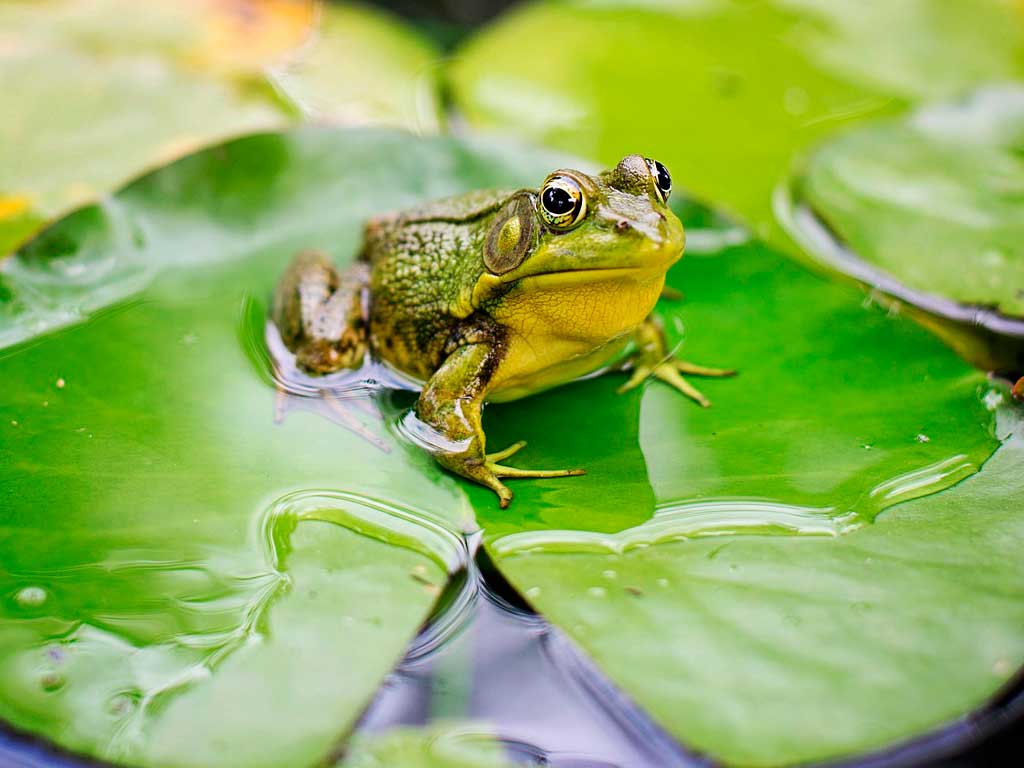
- American green tree frog (Hyla cinerea): tolerant of minor fluctuations in humidity and temperature
Intermediate options:
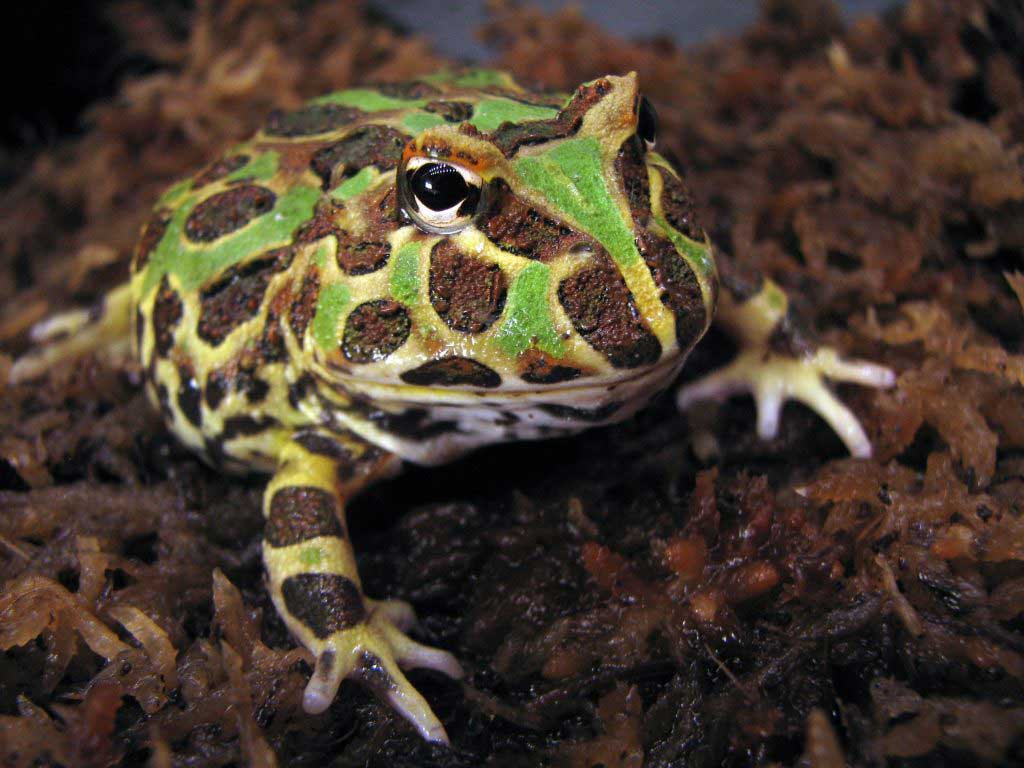
- Pacman frog (Ceratophrys ornata): rewarding but needs 30+ gallon enclosures and careful diet management
- Tomato frog (Dyscophus spp.): striking appearance, requires more precise humidity control
Advanced species:
- Dart frog (Dendrobatidae): extremely rewarding but demands a highly controlled bioactive vivarium
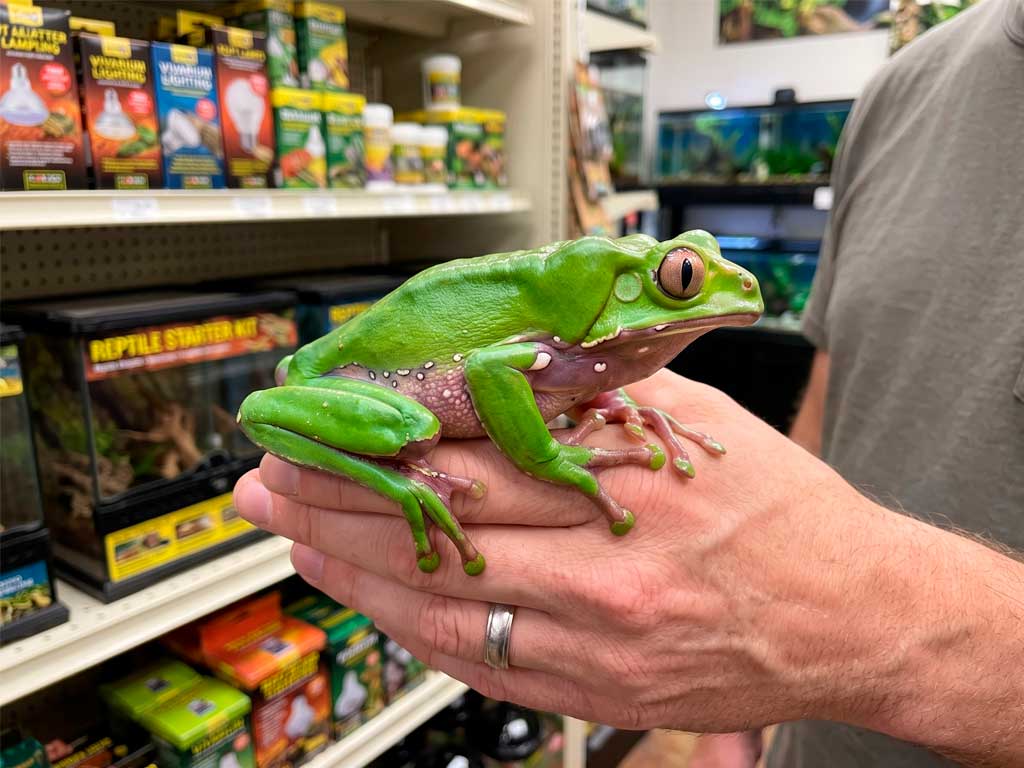
- Waxy monkey tree frog (Phyllomedusa sauvagii): specific humidity and UVB requirements make this one for experienced keepers only
Always verify local laws before acquiring any species. Some are protected and require permits. Only purchase captive-bred animals to avoid harming wild populations.
Step 2: How Do Frogs Reproduce? Understanding the Biology
Before you can breed frogs successfully, you need to understand how frogs reproduce in nature. This knowledge shapes every decision you make about habitat, triggers, and timing.
Most frog species reproduce through external fertilization. The male climbs onto the female’s back in a behavior called amplexus, gripping her just behind the front legs. As the female releases her eggs, the male simultaneously releases sperm to fertilize them.
Males attract females using vocalizations, sometimes called advertisement calls. Each species has a distinct call, which is one of the easiest ways to confirm you have a breeding-ready male. Females typically respond by moving toward the calling male, signaling receptiveness.
Understanding how do frogs mate in terms of timing is equally important. Most species are seasonal breeders. In the wild, temperature drops, barometric pressure changes, and rainfall events all act as breeding cues. In captivity, you have to simulate those cues deliberately, which is covered in Step 5.
One key biological fact: most frog species provide no parental care after egg-laying. The adults can be removed from the eggs immediately after spawning.
Step 3: Sex Your Frogs Correctly
You cannot breed frogs if you are not sure you have both a male and a female. Misidentifying the sex of your animals is one of the most common and costly mistakes beginners make.
General indicators of sex:
- Males are usually smaller than females of the same species
- Males develop nuptial pads (rough, darkened areas on the thumbs) during breeding season
- Males call actively, especially at night
- Males often have a more pronounced dewlap or vocal sac
- Females are typically larger and heavier, especially when gravid (full of eggs). Their body feels firmer and rounder around the abdomen.
Some species, like dart frogs, are notoriously difficult to sex until they are fully mature. In those cases, keeping a group of four or more adults increases the chances of having at least one pair.
Step 4: Build the Right Habitat
Habitat quality determines whether your frogs stay healthy enough to breed. A substandard enclosure produces stressed animals that will never reproduce reliably.
Tank size guidelines:
- One pair of small frogs (under 3 inches): 20-gallon minimum
- Pacman frogs or larger species: 30-40 gallons per pair
- Tree frogs: vertical tanks matter more than floor space; aim for 18 x 18 x 24 inches or larger. A ready-to-use option like the 15 Gallon Tall Reptile Glass Tank 12″x12″x24″ comes pre-assembled with a drainage system, which is ideal for arboreal species like tree frogs.

FROM AMAZON.COM
15 Gallon Tall Reptile Glass Tank 12″x12″x24″ with Drainage Hole, Pre-Assembled Vertical Reptile Terrarium
A vertical 12x12x24 setup built for climbing species like geckos and small tree frogs, with a built-in drainage hole that makes bioactive setups easier to maintain.
Buy on Amazon.comAs an Amazon Associate, we earn from qualifying purchases. Happy Pet Zone may earn a commission when you click through to Amazon.com, at no extra cost to you.
Substrate: Coconut coir mixed with sphagnum moss retains moisture well and supports beneficial microfauna. Avoid gravel or sand near tadpoles, as both can be accidentally ingested. A reliable ready-to-use option is Exo Terra Plantation Soil, a 100% natural substrate that increases humidity and is perfect for live plant setups.

FROM AMAZON.COM
Exo Terra Plantation Soil, 8 Qt (8.8 L)
A compressed coconut fiber substrate that holds humidity well, making it a solid base layer for tropical terrariums and bioactive reptile setups.
Buy on Amazon.comAs an Amazon Associate, we earn from qualifying purchases. Happy Pet Zone may earn a commission when you click through to Amazon.com, at no extra cost to you.
Water quality: Use only dechlorinated or aged water. Tap water contains chlorine and chloramine, both of which kill eggs and tadpoles. The AAwipes 8-in-1 Aquarium Test Kit lets you test pH, ammonia, alkalinity, chlorine, and more in seconds — a simple tool that removes all the guesswork. Target a pH of 6.5 to 7.5 and ammonia below 0.25 ppm.
Temperature: Most species thrive between 72°F and 82°F (22°C to 28°C). Fluctuations of more than 5°F in a short period cause significant stress. The Reptile Thermometer and Humidity Gauge is an adhesive digital hygrometer that monitors both temperature and humidity simultaneously — two critical parameters in one affordable device.
Filtration: Sponge filters are ideal when tadpoles are present. They provide gentle filtration without creating dangerous suction. The AQUANEAT Bio Sponge Filter is a solid pick for small breeding tanks up to 10 gallons. For adult enclosures, canister filters or hang-on-back units work well.
Lighting: A 12-hour light and 12-hour dark cycle supports natural circadian rhythms. Species like dart frogs benefit from UVB lighting. The Reptile Heat Lamp with 100W UVA/UVB Bulb simulates natural sunlight and works well as a basking and lighting solution for amphibian enclosures. LED grow lights are also a great option for promoting live plant growth.
Note: This post contains affiliate links. If you purchase through them, Happy Pet Zone earns a small commission at no extra cost to you. We only recommend products we believe are genuinely useful for your setup.
Step 5: How to Breed Frogs Using Environmental Triggers
This is the step most guides skip, and it is the one that makes the biggest difference. Frogs breed in response to environmental cues, not simply because you put a male and female together.
The Cooling and Drying Period
Many temperate and subtropical species require a period of reduced temperature and lower humidity to prime the breeding response. This mimics the transition from dry season to wet season.
Lower temperatures by 5-10°F over two to four weeks. Reduce misting frequency. Feed the frogs less during this period. After two to four weeks, begin warming the enclosure back up and dramatically increase humidity. This shift is often enough to trigger calling behavior in males.
The Rain Chamber Method
A rain chamber delivers the most reliable breeding results for tree frogs, dart frogs, and other species that breed in response to rainfall.
Basic DIY rain chamber setup:
- Use a 40-gallon or larger plastic tote or glass tank
- Install a small submersible pump at the bottom filled with 3 to 4 inches of dechlorinated water
- Run tubing from the pump up and over the lid, attaching a spray bar or misting nozzle
- Add a 2-inch layer of river rocks at the bottom so the frogs can perch above the water level
- Include broad-leafed artificial or live plants for egg-laying surfaces
- Run the pump for 4 to 6 hours per day to simulate rainfall
Let the chamber cycle for at least two weeks before introducing frogs. This stabilizes the water chemistry and allows biofilm to establish. Move conditioned frogs into the rain chamber and leave them for 7 to 10 days. Most pairs will breed within this window.
Step 6: Recognize Mating Behavior and Egg Care
Once breeding begins, you will hear the male calling intensely. Amplexus can last anywhere from a few hours to several days. Do not disturb the pair during this time.
After egg-laying, remove the adult frogs immediately. Most species offer no parental care, and adults may inadvertently disturb or even consume the eggs.
Egg care checklist:
- Move eggs to a separate container with clean, dechlorinated water at the same temperature
- Maintain water temperature consistently at 75°F to 82°F (24°C to 28°C) for tropical species
- Add a small air stone set to very low flow to oxygenate the water without disturbing the eggs
- Watch for white, cloudy eggs, which indicate infertility or fungal infection; remove them promptly
- Do not add commercial dechlorinators with aloe vera, as this can interfere with egg development
Most eggs hatch within 24 to 72 hours, depending on species and temperature.
Step 7: Raise Healthy Tadpoles
Tadpole care is where many first-time breeders encounter their biggest losses. The key factors are clean water, appropriate food, and avoiding overcrowding.
- Density: Keep no more than 10 tadpoles per gallon. Overcrowding leads to stunted growth and increased disease risk.
- Feeding: Feed tadpoles three times daily with small amounts they can consume in five minutes. Good options include finely crushed fish flakes, spirulina powder, and boiled spinach blended to a paste. Remove all uneaten food within an hour to prevent ammonia spikes.
- Water changes: Perform 20% to 30% water changes every two days using dechlorinated water matched to the current tank temperature. Sudden temperature shifts are a common cause of tadpole die-offs.
- Monitoring: Watch for signs of chytrid fungus infection, including skin sloughing, lethargy, and abnormal floating behavior. Quarantine any affected individuals immediately.
Step 8: Support Metamorphosis and Froglet Care
As tadpoles develop hind limbs and then front limbs, they are preparing for terrestrial life. This transition requires your immediate attention to the enclosure setup.
Add shallow ramps, cork bark pieces, or floating platforms so emerging froglets can easily climb out of the water. A froglet that cannot escape the water will drown.
- Froglet diet: Newly metamorphosed frogs need very small live prey. Flightless fruit flies (Drosophila hydei or melanogaster) are the standard starting food. Dust them with a calcium and vitamin D3 supplement at every feeding. Feed froglets daily, as they have high metabolic demands at this stage.
- Housing: Move froglets to a separate enclosure from adults. Adult frogs will eat juveniles without hesitation. A 10-gallon grow-out enclosure works well for groups of up to 10 froglets.
How Long Do Frogs Live?
If you are investing in breeding, understanding frog lifespan helps you plan your setup appropriately. How long do frogs live largely depends on species and care quality. In captivity with proper husbandry, most common species live as follows:
- White’s tree frog: 15 to 20 years
- Pacman frog: 10 to 15 years
- African dwarf frog: 5 to 8 years
- Dart frog: 10 to 15 years
- American green tree frog: 6 to 10 years
Wild frogs typically have shorter lifespans due to predation, disease, and environmental stressors. A well-maintained captive environment consistently extends their lives.
4 Common Mistakes to Avoid When Breeding Frogs
These are the errors that derail most first attempts:
1. Skipping the conditioning period. Putting a male and female together without any environmental conditioning rarely produces results. The cooling and drying cycle matters.
2. Using tap water directly. Untreated tap water contains chlorine that kills eggs and tadpoles within hours. Always use a dechlorinator, and let the water sit for 24 hours if possible.
3. Leaving adults with the eggs. Adult frogs do not protect their eggs in most species. Remove them immediately after spawning to prevent accidental egg damage.
4. Overcrowding tadpoles. Reducing density to 10 per gallon is one of the single highest-impact changes you can make to tadpole survival rates.
Frequently Asked Questions About Breeding Frogs
Ready to get started? Begin with the environmental conditioning step, since that single change produces results faster than any equipment upgrade. For a deeper look at setting up the ideal reptile and amphibian habitat, explore our complete guide to reptile care at Happy Pet Zone.