Siberian Husky Dog Breed: Energy, Intelligence & Independent Spirit Guide
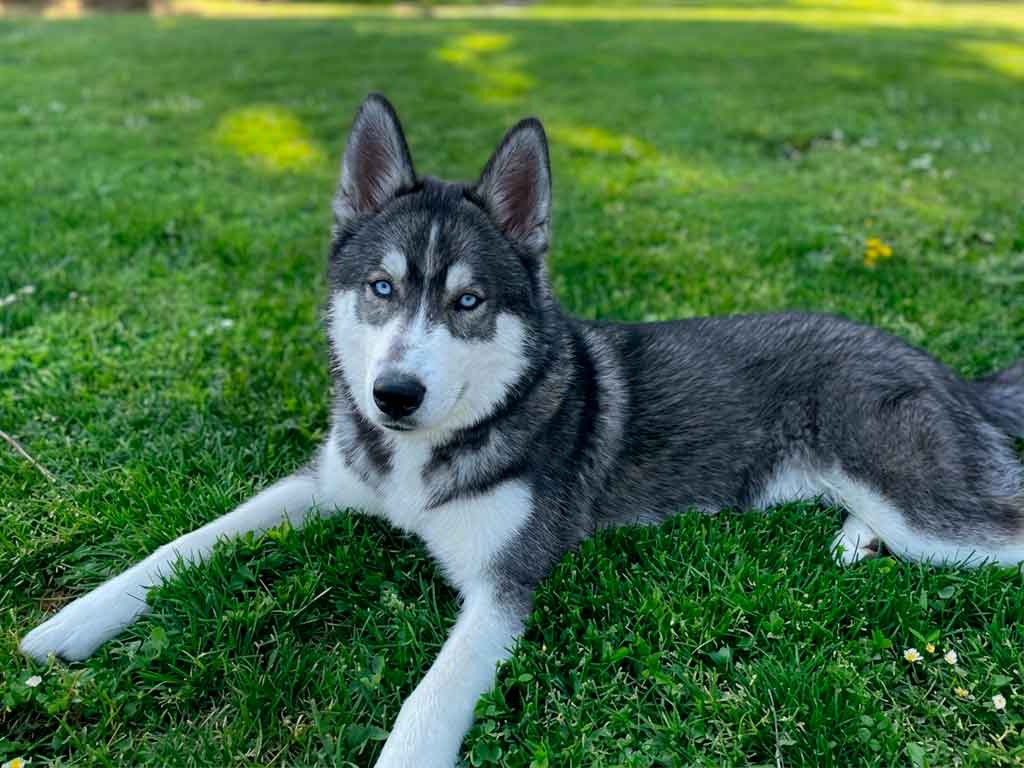
The Siberian Husky is a medium-sized sled dog built to pull light loads over long distances, and it needs more than two hours of exercise a day. That figure comes from the Kennel Club, which also asks for a large house, a large garden and a country setting.
The gap between the breed’s size and its workload explains most of the mismatch with modern homes. A Siberian Husky left in a flat all day does not turn calm. It turns inventive.
This article sets out the size figures from three registries, the exercise and coat rules the standards actually set, and the health screening the Kennel Club asks breeders to run. It also explains where the Siberian Husky dog breed parts company with the popular version of itself.
What Is a Siberian Husky?
The Siberian Husky is a working sled dog of medium size, moderate bone and great endurance. Its breed standard describes a dog that is never heavy enough to suggest a freighting animal, nor light enough to suggest a sprint racer.
Three features mark the breed at a glance: erect triangular ears, a brush tail carried in a sickle curve, and a double coat with a soft, dense undercoat.
The eyes deserve an early mention, because buyers ask about them constantly. Any shade of blue or brown is accepted, along with one of each colour and parti-coloured eyes.
These are the headline figures, with the source named where the registries differ.
| Origin | Northeast Siberia, bred by the Chukchi people |
| Kennel Club group | Working |
| Height, males | 21 to 23.5 in (53 to 60 cm) |
| Height, females | 20 to 22 in (51 to 56 cm) |
| Weight, males | 45 to 60 lb (20 to 27 kg) |
| Weight, females | 35 to 50 lb (16 to 23 kg) |
| Coat | Double, medium length, dense undercoat |
| Colour | All colours including white; merle unacceptable |
| Exercise | More than 2 hours a day |
| Grooming | More than once a week |
| Lifespan | 12 to 14 years, AKC figure |
| AKC popularity | 26th of 210 breeds |
Where Does the Siberian Husky Come From?
The breed comes from northeast Siberia, where the Chukchi people used it for long-distance sled hauling. Its line stayed undiluted for centuries, says the Kennel Club, because the Chukchi castrated all but the best lead dogs.
Those dogs lived alongside families and worked in packs, so temperament mattered as much as speed. Selective breeding for working ability and a steady character left a dog that is sociable with people and tolerant of other dogs.
Sled racing did the rest. The Kennel Club records that by the early 20th century the breed had established itself as supreme in that sport, and that Siberians have been part of many famous expeditions since.
In 1925, relay teams carried diphtheria serum to Nome, Alaska, during an epidemic. A statue in Central Park, New York, commemorates the run.
The American Kennel Club describes the original job as pulling light loads at moderate speeds over vast frozen expanses. That job still shapes the body, the gait and the mind.
How Big Does a Siberian Husky Get?
The three registries agree on size almost to the centimetre. Males stand 21 to 23.5 inches and weigh 45 to 60 pounds, while females stand 20 to 22 inches and weigh 35 to 50 pounds.
This table compares the figures each registry publishes.
| American Kennel Club | Males 21 to 23.5 in, 45 to 60 lb; females 20 to 22 in, 35 to 50 lb |
|---|---|
| Kennel Club (UK) | Males 53 to 60 cm, 20 to 27 kg; females 51 to 56 cm, 16 to 23 kg |
| United Kennel Club | Males 21 to 23.5 in, 45 to 60 lb; females 20 to 22 in, 35 to 50 lb |
Weight follows height rather than a target number. Both the Kennel Club and the United Kennel Club call the published ranges the outer limits and give no preference to either end.
A Siberian Husky carrying extra weight loses the endurance the breed was built for. The standard asks for firm, well-developed muscle and no excess weight, which is a useful check on a dog that spends most of its week on a sofa.
Proportions matter as much as the numbers. The Kennel Club asks for a body slightly longer than the height at the withers, and a front leg that measures a little more from elbow to ground than from elbow to withers. Those ratios explain the reach and the effortless trot.
For a sense of how the breed compares with dogs of similar build, the medium dog breeds category is a useful starting point.
What Is the Siberian Husky’s Temperament Like?
The Kennel Club standard is unusually clear on this point. It describes a friendly, gentle, alert and outgoing dog that does not display traits of the guard dog, is not suspicious with strangers and is not aggressive with other dogs.
Some reserve in a mature dog is expected, and that is not the same as shyness. The standard also calls the breed intelligent, tractable and eager, an agreeable companion and a willing worker.
That combination makes the Siberian Husky a poor choice for anyone who wants protection. For someone who wants a sociable dog that can still work, it is close to ideal.
The AKC sums the breed up in three words: friendly, fastidious and dignified. Fastidious matters more than it sounds, because the breed is famously clean in the house and easy to housetrain with a consistent routine.
For a household that already has a dog, that tolerance is an advantage. The breed was selected to work beside other dogs, and the standard expects it to meet other dogs without aggression.
What a husky will not do is guard. The instinct that makes a good watchdog, suspicion of strangers, is exactly what the standard rules out.
Shop for Your Breed

Just Food For Dogs – Fresh Frozen
Fresh meals. Gently cooked, then frozen to lock in nutrients. 100% Human Grade Ingredients. Gently Cooked in the USA. #1 Vet-Recommended Fresh Food.
Shop on JustFoodForDogs
Raw Paws Pet Food – Frozen Raw Pet Food
Feeding your pet a frozen raw pet food diet is a simple way to deliver real, whole-food nutrition in its most natural form.
Shop on RawPawsPetFood
Bravecto Chews for Dogs
Bravecto is a long-lasting flea and tick protection option for your dog. 1 dose of Bravecto chew provides up to 12 weeks of powerful protection, which is nearly 3 times longer than a monthly treatment.
Shop on BestVetCare.com
Deworming Treatments for Dogs
BestVetCare offers you a wide range of worm treatments which come in a variety of forms such as oral paste, tablets, granules, and liquid solutions.
Shop on BestVetCare.comHappyPetZone participates in various affiliate programs with brands and retailers. We may receive a commission on purchases made through our links, at no extra cost to you.
How Much Exercise Does a Siberian Husky Need?
More than two hours a day, according to the Kennel Club, which also lists a large house, a large garden and a country setting as the right fit.
Distance is the point for this breed. The original job was long-distance hauling at moderate speed, not sprinting, and a husky settles best when the work is steady and sustained.
A week that meets the requirement for a Siberian Husky looks roughly like this.
| Monday to Friday | One 60 to 90-minute walk, plus a short training or scent session |
|---|---|
| Three mornings a week | A canicross or bikejor run on safe ground |
| Saturday | A long trail walk of two to three hours |
| Sunday | A lighter day with garden time and a gentle walk |
Heat changes the plan. A double coat does not make a husky heat-proof, and hard exercise on a summer afternoon carries a real risk of overheating. Early mornings and shaded routes are the practical answer.
Cold weather is the easier season. A husky in good coat can walk for hours in freezing conditions, and that tolerance is one reason sled teams still use the breed. The bigger winter risk is a warm car on the way home, where a coated dog can overheat within minutes.
Fencing needs to be taken seriously. Height, a buried edge and a gate that latches properly matter more than the view, because a dog that gets out once will try the same route again.
A tired husky is a manageable husky, and a bored one is not. The difference usually comes down to whether the two hours included real sniffing and running, or a loop around the block on a short lead.
Endurance builds slowly. A young husky should start with shorter outings and add distance over months, and an adult returning from a quiet winter needs the same ramp rather than a sudden twenty-kilometre day.
Does a Siberian Husky Need a Job?
Yes, and exercise alone does not cover it. The Kennel Club standard calls the breed a willing worker, and the AKC describes a dog developed to work in packs.
Four activities suit the breed, and most can start close to home.
- Canicross, where the dog pulls in a padded harness while the owner runs, uses the breed’s natural gait.
- Bikejor or scootering on quiet trails gives the dog a harness, a line and a clear job.
- Weight pull rewards steady effort rather than speed, which suits the breed’s build.
- Scent games and trick training give the mind work on days when the weather keeps everyone indoors.
The point is cooperation rather than exhaustion. A dog with a job learns to check in with the person at the other end of the line, and that habit carries into recall, walks and vet visits.
Harness fit matters for all of these. A pulling harness should spread load across the chest rather than the throat, and a short line keeps the dog clear of wheels and legs.

Lemonade Pet Insurance
Explore customizable pet insurance coverage and learn whether Lemonade is the right fit for your dog or cat.
- Customizable coverage options
- Online policy management
How Do You Groom a Siberian Husky?
Grooming a Siberian Husky takes more than a weekly brush. The Kennel Club lists more than once a week, and it notes that the coat sheds, which is a polite way of describing two heavy blowouts a year.
That coat is double, medium in length, with a soft dense undercoat and straight guard hairs. It is not meant to be clipped: the Kennel Club allows trimming only on the feet, and the UKC extends that to the whiskers and the fur between the toes.
A routine that keeps the coat and the house manageable looks like this.
- Brush two or three times a week with an undercoat rake, and daily during a seasonal blowout.
- Bathe rarely, and dry the undercoat completely, because a damp undercoat stays damp for hours.
- Trim only the feet and, under UKC rules, the whiskers.
- Check the ears weekly and keep the nails short.
- Never shave the coat to reduce shedding, since the undercoat is what regulates temperature.
The shedding is seasonal rather than constant, which helps a household plan. A rubber rake and ten minutes a day get most homes through the worst fortnight.
Two mistakes make coat care harder. Shaving the dog in summer removes the insulation that keeps the skin cool, and bathing too often strips the oils that keep the guard hairs weather-resistant.
What Health Problems Do Siberian Huskies Have?
The Kennel Club asks breeders to run eye testing and gonioscopy for PLA under its Good Practice scheme, and hip testing for hip dysplasia under Best Practice. Prioritising genetic diversity sits alongside both.
That list is short and specific, which is useful for a buyer. Eye results and hip scores can be requested by name rather than accepted as a vague assurance that the parents are healthy.
This table compares what each registry publishes on health.
| Kennel Club (UK) | Eye testing with gonioscopy for PLA; hip testing; genetic diversity |
|---|---|
| American Kennel Club | Life expectancy of 12 to 14 years |
| United Kennel Club | No excess weight; albinism is disqualifying |
Lifespan figures differ by source. The AKC gives 12 to 14 years, and the Kennel Club gives over 10 years, which reads as a floor rather than a breed average.
Gonioscopy examines the drainage angle at the front of the eye, and the Kennel Club records the result alongside the eye test. Hip scores are recorded the same way, and the Health Test Results Finder on the Kennel Club site lets a buyer check a dog instead of trusting a claim.
Any dog that stops eating, loses weight, develops a limp or changes behaviour needs a vet rather than a wait-and-see approach. This guide is educational and does not replace veterinary advice for the dog in front of you. Owners planning costs can compare breed-specific dog insurance before a problem appears.
How Do You Train a Siberian Husky?
Training a husky is mostly about earning cooperation. The standard calls the breed intelligent, tractable and eager, and the dog still decides when a request is worth answering.
Three skills carry most of the weight for this breed.
- Build a recall on a long line, starting in low-distraction places and adding difficulty slowly.
- Teach a settle, because two hours of exercise still leaves a dog that has to live indoors.
- Practise loose lead walking early, which is far easier at five months than at two years.
Short sessions beat long ones. Five minutes of clear criteria before breakfast does more for a husky than a weekly hour in a hall.
Puppy classes and calm exposure to people, dogs and traffic do the groundwork. A husky that has met a hundred people before its first birthday is easier to take anywhere, and the puppy care guide covers the first months in detail.
Vocalisation is part of living with the breed. A bored or frustrated husky is a loud one, and the guide to naturally vocal dog breeds covers the management side without trying to silence the dog.
Off-lead work belongs in enclosed spaces. A husky that picks up a scent is not ignoring a recall out of spite, and a long line gives the dog room to work while keeping the decision with the handler.
Is the Siberian Husky Right for You?
The Siberian Husky fits an active household with space, a secure garden and time for two long outings a day. It does not fit a flat, a hot climate with no shade, or an owner who wants a dog that stays home without a fence.
The breed works when these points are true.
- You can give more than two hours of exercise a day, split into at least two outings.
- Your garden is securely fenced, with a buried edge and a gate that latches.
- You enjoy harness work, running or long trail walks in cool weather.
- A sociable dog that greets strangers rather than guarding the house suits you.
Look at other breeds if any of these apply.
- You need a dog that can be trusted off lead without training.
- A guard dog, or a dog that is wary of visitors, is what you need.
- Flat living with no garden and no easy access to trails is a poor fit.
Buying well means asking about eyes, hips and colour. Ask for eye test results and hip scores on both parents, and treat a merle puppy as a red flag, because the Kennel Club standard lists merle as unacceptable.
The Siberian Husky dog breed rewards an owner who likes winter, distance and a dog with its own opinions. It punishes an owner who wants a quiet companion that stays in the garden.
The Dog Breeds hub lists the rest of the working group by size and temperament, so a shortlist happens before a deposit rather than after.