BARF Diet by Breed: What Changes by Size and Shape
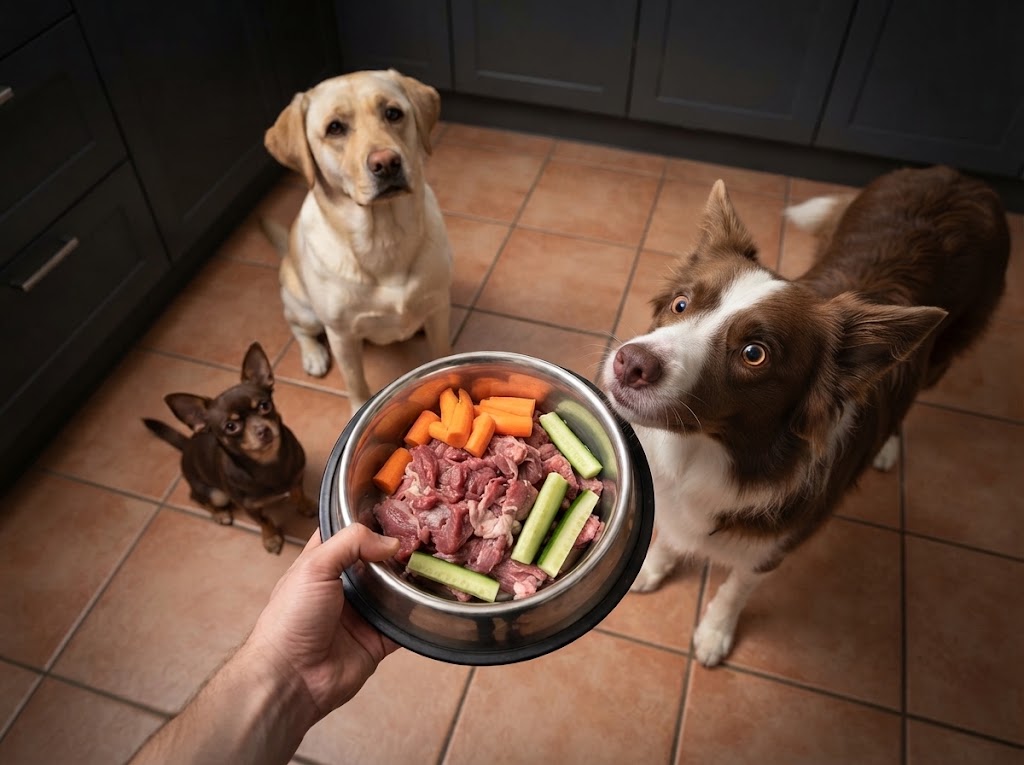
The BARF diet by breed isn’t one-size-fits-all, and treating a Chihuahua’s bowl like a scaled-down Great Dane’s is where a lot of preventable problems start.
Ratios stay roughly the same across breeds. What changes is bone size, meal frequency, calorie needs, and a handful of breed-specific risks worth knowing before you start.
Here’s what actually shifts by breed, and why.
Why Breed Changes the BARF Math
Jaw structure, chest depth, energy output, and body size all affect how a breed handles raw feeding, even when the underlying ratio stays close to the same 70/10/10/10 or 80/10/10 split.
Get the bone size wrong for a breed’s mouth and jaw, and you’re looking at either a choking risk or a dog that can’t process the bone at all. Get the calorie target wrong for a breed’s activity level, and you’re looking at slow, steady weight drift in either direction.

START YOUR RAW FEEDING JOURNEY
Try Raw Paws for the First Time
New customers get a discount on their first order — the easiest way to see if raw feeding is right for your dog.
Claim Your First-Order DiscountHappy Pet Zone may earn a commission when you click through to Raw Paws, at no extra cost to you.
French Bulldogs and Other Flat-Faced Breeds
Brachycephalic breeds, French Bulldogs, Pugs, and Boston Terriers among them, have shortened airways that make eating slower and occasionally noisier than other breeds. Large bone pieces or big chunks of meat increase choking risk more than they would for a breed with a longer snout.
Ground or finely chopped raw meaty bone works better than whole pieces for most flat-faced dogs. Watch feeding pace closely, since airway structure sometimes leads to gulping rather than chewing.
Heat sensitivity matters here too. Flat-faced breeds struggle more with heat regulation, so thaw and serve raw meals a bit cooler in summer, and don’t leave food sitting out any longer than usual.
Chihuahuas and Other Toy Breeds
Small mouths and small stomachs change two things: bone sizing and meal frequency. A bone piece safely sized for a 60-pound dog can be a genuine choking hazard for a 5-pound Chihuahua, even at the “right” percentage of the diet.
Toy breeds often do better on three or four small meals a day rather than one or two larger ones, since their stomach capacity is limited relative to their metabolic needs.
Precision matters more here too. A measurement error that’s negligible for a large dog’s portion is proportionally much bigger for a 5-pound dog, and that includes any supplement dosing. Double-check the math before assuming a “pinch” of anything is safe.
Huskies and Other High-Energy Working Breeds
Huskies, Malamutes, and similar working breeds often run at the higher end of the activity scale, closer to 3% or occasionally 4% of body weight daily rather than the standard 2.5%.
Their thick double coat also makes omega-3 fatty acids worth prioritizing, since coat and skin health draw heavily on those fats, especially through shedding seasons.
These breeds evolved on comparatively lean diets in harsh climates, and some do genuinely well on leaner cuts than the average recommendation. Watch body condition closely if activity drops, since efficient metabolism built for hard work can turn into steady weight gain fast once that work stops.
Pitbulls and Other Muscular, Athletic Breeds
Pitbulls and similar athletic breeds carry more muscle mass relative to body weight, and some owners lean toward the higher end of the muscle meat range to support that.
Skin sensitivities and food allergies show up more often in some Pitbull lines, and raw feeding is one of the more common approaches people try specifically to manage that, alongside a vet’s guidance rather than instead of it.
Strong jaw strength means these dogs can usually handle larger, tougher bone pieces than a toy breed could. That strength is also exactly why resource guarding around bones deserves real attention. Feed bone-in meals separately if you have multiple dogs, and don’t let kids handle bowls during a raw meal with any breed prone to guarding, Pitbulls included.
Deep-Chested Large Breeds and Bloat Risk
German Shepherds, Great Danes, Dobermans, and other deep-chested large breeds carry a higher bloat risk than the general dog population, and that risk exists regardless of diet type.
Avoid vigorous exercise right before or after a raw meal, same as you would with any meal for a bloat-prone breed. Whether an elevated bowl helps or hurts is still genuinely debated among vets, so that’s a conversation worth having directly with yours rather than following a blanket rule.
FROM RAW PAWS PET FOOD
Small-Batch, Farm-Traceable Raw Food
80/10/10 signature blends made with real, whole ingredients — shipped frozen straight to your door.
Shop Raw Paws Pet FoodHappy Pet Zone may earn a commission when you click through to Raw Paws, at no extra cost to you.
Quick Reference by Breed Category
- Flat-faced breeds: ground or finely chopped bone, slower feeding pace, cooler food in hot weather
- Toy breeds: smaller bone pieces, more frequent meals, precise portion and supplement measuring
- High-energy working breeds: higher end of the calorie range, prioritize omega-3s, watch weight if activity drops
- Athletic/muscular breeds: can handle larger bone, watch for resource guarding, consider raw for documented skin sensitivities alongside vet guidance
- Deep-chested large breeds: standard ratios apply, but manage exercise timing around meals for bloat risk
Frequently Asked Questions
Match the Diet to the Dog in Front of You
Start with the standard ratio and portion size from the feeding chart, then adjust bone size and meal frequency for your specific breed’s mouth and energy level.
If you’re just getting started, the complete BARF diet guide covers the fundamentals this all builds on.