Raw Feeding Chart: How Much to Feed Your Dog by Weight
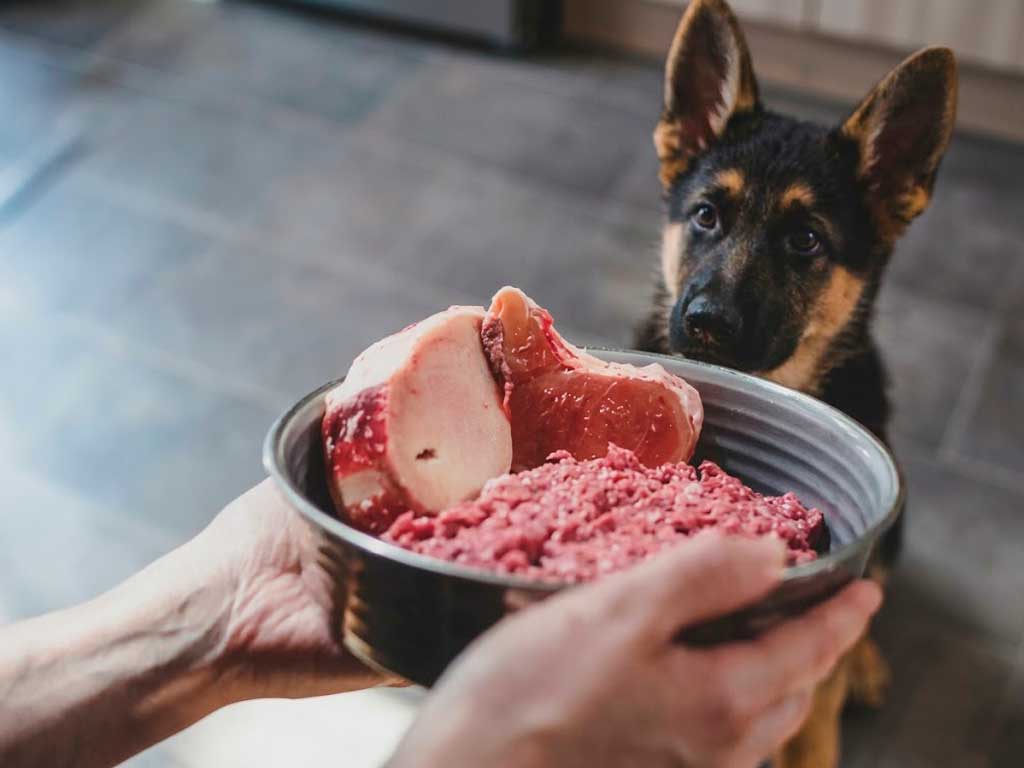
A raw feeding chart only works if the math behind it fits your actual dog, not some generic template built for a 50-pound Labrador.
Get the portions wrong and you’ll either watch your dog gain weight on a diet that’s supposed to be lean, or lose weight on portions that looked generous on paper.
This guide gives you the formula and a chart you can actually use. Then I’ll cover the adjustments most people skip.
The Quick Answer: How Much Raw Food to Feed Daily
Feed adult dogs about 2% to 3% of their current body weight in raw food per day, split across one or two meals. Active or working dogs need closer to 3%, while sedentary or overweight dogs do better around 2%. Puppies eat considerably more relative to their size, which I’ll get to below.
The 80/10/10 Ratio, and Where 70/10/10/10 Fits In
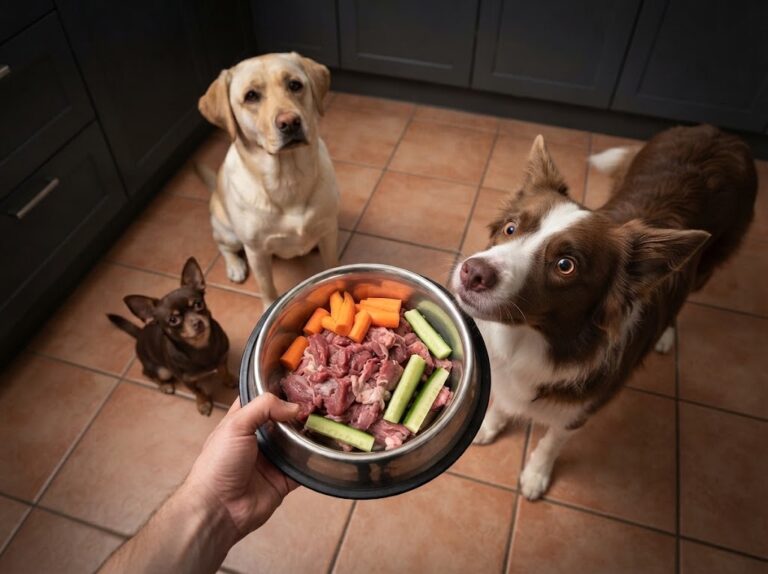
Once you know the total amount, the ratio decides what fills the bowl. Prey Model Raw runs 80% muscle meat, 10% bone, 10% organ. Classic BARF trims that to roughly 70% meat, 10% bone, 10% organ, and adds back 10% vegetables and fruit.
Neither ratio is wrong. Prey Model leans closer to what a wild canid would actually eat. Classic BARF hedges toward more fiber and micronutrients from produce. If measuring out muscle meat, bone, and organ separately isn’t realistic on a weeknight, pre-mixed frozen raw blends built to these ratios take the math out of it, and pre-portioned raw meaty bones save you from portioning bone by hand.
Whichever you pick, run the math on the total daily amount first, then split it by percentage. A 40-pound dog eating 3% of body weight gets about 19.2 ounces of food a day. At an 80/10/10 split, that’s roughly 15.4 ounces of meat, 1.9 ounces of bone, and 1.9 ounces of organ.

START YOUR RAW FEEDING JOURNEY
Try Raw Paws for the First Time
New customers get a discount on their first order — the easiest way to see if raw feeding is right for your dog.
Claim Your First-Order DiscountHappy Pet Zone may earn a commission when you click through to Raw Paws, at no extra cost to you.
Raw Feeding Calculator: Get Your Dog’s Exact Portion
Feeding a puppy instead? The math changes at that age, so use the puppy growth calculator in the BARF Diet for Puppies guide instead.
Adult Dog Raw Feeding Calculator
Daily
Weekly
Bookmark this page and update your numbers at every reweigh. It takes less time than most people expect. If you’re feeding the same recipe long-term, setting up autoship removes one more thing to remember.
Raw Feeding Chart by Weight
Here’s a working chart based on the 2%, 2.5%, and 3% tiers. Weigh your dog first. Guessing costs you accuracy fast.
- 10 lb: 3.2 oz sedentary/senior · 4 oz average adult · 4.8 oz active/working
- 20 lb: 6.4 oz sedentary/senior · 8 oz average adult · 9.6 oz active/working
- 30 lb: 9.6 oz sedentary/senior · 12 oz average adult · 14.4 oz active/working
- 40 lb: 12.8 oz sedentary/senior · 16 oz average adult · 19.2 oz active/working
- 50 lb: 16 oz sedentary/senior · 20 oz average adult · 24 oz active/working
- 60 lb: 19.2 oz sedentary/senior · 24 oz average adult · 28.8 oz active/working
- 70 lb: 22.4 oz sedentary/senior · 28 oz average adult · 33.6 oz active/working
- 80 lb: 25.6 oz sedentary/senior · 32 oz average adult · 38.4 oz active/working
- 90 lb: 28.8 oz sedentary/senior · 36 oz average adult · 43.2 oz active/working
- 100 lb: 32 oz sedentary/senior · 40 oz average adult · 48 oz active/working
Split that total across two meals for most adult dogs, or one meal for dogs who do fine on a single feeding. Weigh the food, not just the dog, for the first few weeks. Eyeballing portions is where most people drift off target.
Percentage of Body Weight vs. Calorie-Based Feeding
The 2% to 3% rule is a shortcut, not an exact science. It assumes raw diets run somewhere around 500 to 600 calories per pound of food, which holds up reasonably well across most fresh raw recipes.
For most dogs, that shortcut is close enough. For a dog that’s significantly overweight, underweight, or recovering from illness, a vet can calculate Resting Energy Requirement and work from actual calorie needs instead of a flat percentage. It’s more precise, and it’s worth doing if the weight-based chart isn’t producing results after a few weeks.
Adjusting the Raw Feeding Chart for Activity Level and Age
The chart above is a starting point, not a fixed rule. A few things shift it:
- Spayed or neutered dogs often need 10-15% less than the chart suggests, since altered dogs typically burn less energy at rest.
- Senior dogs, roughly seven and up, usually drop toward the 2% tier even if they were active in their prime.
- Working or high-drive breeds, herding dogs and sport dogs especially, can run above 3%, sometimes closer to 4% during heavy training blocks.
- Puppies eat far more relative to body weight, starting around 8-10% and stepping down as they approach adult size. I cover the exact puppy math in the BARF Diet for Puppies guide, because cramming it into a general chart does puppies a disservice.
Common Feeding Chart Mistakes That Throw Off the Ratio
Feeding by volume instead of weight is the biggest one. A cup of ground meat and a cup of chunked meat with bone don’t weigh the same, and “a cup” isn’t a real unit anyway.
Skipping the reweigh is another. Dogs gain and lose weight, and a chart calculated in January doesn’t automatically hold in June.
Treats count too. If your dog gets a handful of jerky training treats daily, that’s part of the daily total, not an extra on top of it freeze-dried treats make it easier to know exactly how much you’re adding, since the weight per piece is consistent.
And forgetting organ meat consistency trips people up more than expected. Organ should stay close to 10% across the week even if you don’t hit it in every single meal.
FROM RAW PAWS PET FOOD
Small-Batch, Farm-Traceable Raw Food
80/10/10 signature blends made with real, whole ingredients — shipped frozen straight to your door.
Shop Raw Paws Pet FoodHappy Pet Zone may earn a commission when you click through to Raw Paws, at no extra cost to you.
Breed and Size Considerations
Small and toy breeds run a slightly higher metabolism per pound than large breeds, so they often land at the top of their weight-based range rather than the bottom.
Deep-chested large breeds need bone pieces sized to avoid gulping appropriately sized marrow bones work well here and flat-faced breeds chew differently altogether. I go through the specifics for Chihuahuas, French Bulldogs, Huskies, and Pitbulls in a dedicated breed guide.
Frequently Asked Questions
Get Your Dog’s Exact Portion Right
Weigh your dog this week if you haven’t in a while. Pick the activity tier that actually matches their life, not their breed reputation.
Once the daily total is set, the complete BARF diet guide walks you through everything else that goes into the bowl alongside it.