BARF Diet for Dogs: The Complete Feeding Guide
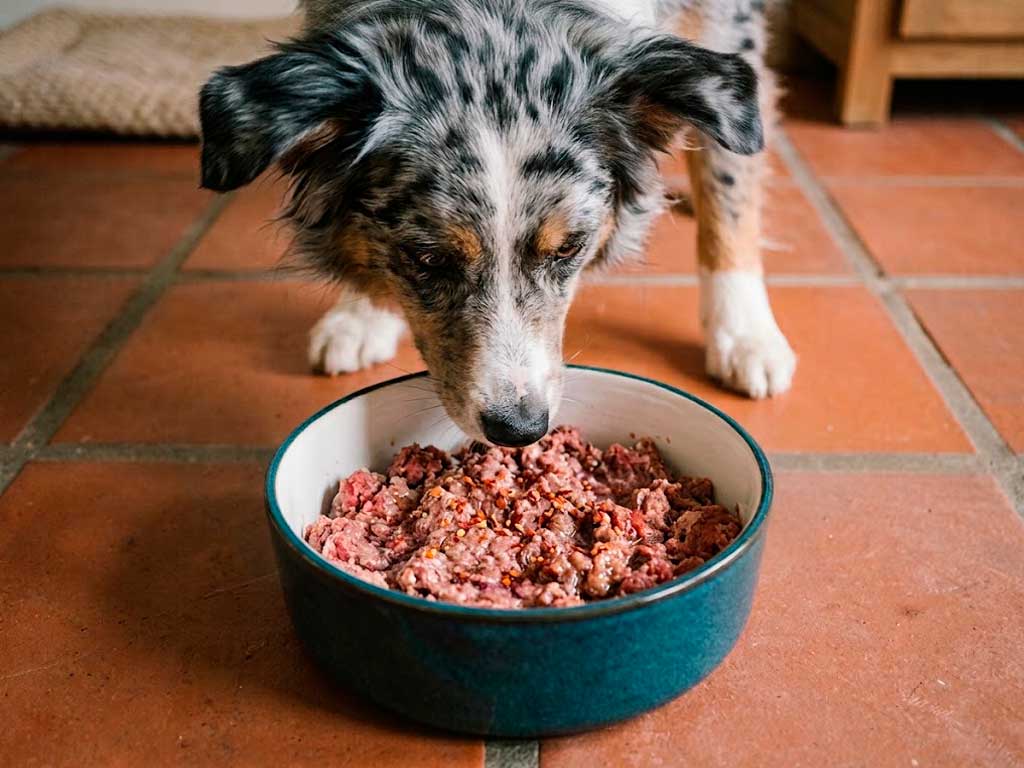
Curious whether the BARF diet for dogs is worth the hype, or just another feeding trend dressed up in nice photos? I get this question in almost every training consultation now.
This guide breaks down what BARF actually means, the real ratios behind it, the risks nobody prints on the label, and a transition plan that won’t wreck your dog’s stomach in week one.
Give it a read before you buy a single pound of meat.
What Is the BARF Diet, Exactly?
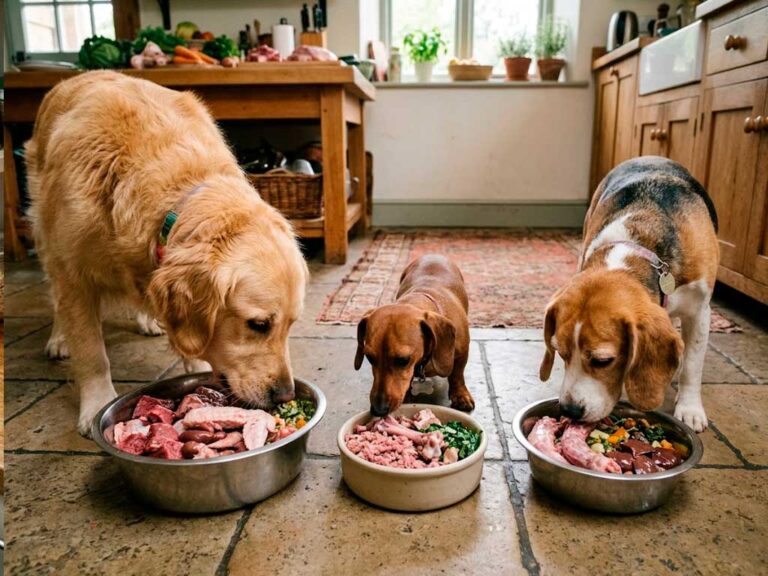
BARF stands for Biologically Appropriate Raw Food, sometimes back-translated as Bones and Raw Food. It means feeding a dog raw meat, edible bone, organs, and a small amount of produce instead of cooked kibble or canned food.
Veterinarian Ian Billinghurst coined the term back in 1993, arguing that dogs evolved eating whole prey, not extruded pellets. The core idea hasn’t changed much since.
There’s more than one way to do it, though, and confusing the terms trips people up constantly.
Prey Model Raw sticks close to 80% meat, 10% bone, and 10% organ, with zero produce. Classic BARF adds vegetables, fruit, and sometimes grains back into the mix, closer to 70% muscle meat, 10% bone, 10% organ, and 10% plant matter. A peer-reviewed nutrition review breaks the classic split slightly differently, closer to 80% muscle, 10% bone, 5% liver, and 5% other organ meat, which shows how much the exact numbers shift depending on which BARF school you follow.
Neither version is more correct. They’re just different philosophies about how close to wolf ancestry you want to stick.
That wolf comparison deserves a caveat. Research from NC State’s College of Veterinary Medicine has found dogs and wolves differ across 36 regions of the genome, and ten of those regions affect starch digestion and fat metabolism specifically. Thousands of years of domestication turned dogs into omnivores, not the strict carnivores their ancestors were. That doesn’t make BARF wrong, but it does mean the case for raw feeding rests on more than “wolves ate this way,” and NC State’s own guidance notes the benefits of raw diets remain largely unproven over the long term.
One number matters more than any percentage on that list: the calcium-to-phosphorus ratio. Raw meaty bone supplies calcium naturally, and most vets want that ratio somewhere between 1:1 and 2:1. Skip the bone, or skimp on it, and you can throw that balance off within weeks, especially in a growing puppy.
Benefits and Risks of the BARF Diet for Dogs
Owners who switch to raw feeding often report shinier coats and noticeably smaller stools within a few weeks. Fresher breath comes up a lot too, and that part actually holds up under scrutiny: raw bone chewing genuinely helps scrape tartar off teeth.
The rest is harder to prove. Energy levels and allergy improvements get reported constantly in raw feeding forums, but the research behind those claims is thin. The same nutrition review does note higher digestibility and strong palatability for BARF diets in controlled comparisons, which lines up with what owners notice at home. If a seller promises BARF cures a specific condition, though, that’s a red flag, not a selling point.
Food Safety and Bacterial Risk
Raw meat carries Salmonella, E. coli, and Listeria, the same bacteria a butcher handles every day at work. That risk is real, and it’s the part most BARF guides gloss over.
Cornell’s Riney Canine Health Center points to an FDA-funded study that found roughly one out of every three frozen raw pet food products purchased online carried a foodborne pathogen, Salmonella, Listeria, or a toxin-producing strain of E. coli. A more recent study out of the University of Pennsylvania found that about 10% of raw dog food products contained bacteria resistant to common antibiotics, the kind that make infections genuinely harder to treat.
Freeze-dried raw doesn’t dodge this problem either, even though it feels safer sitting on a shelf. Cornell’s researchers point out that freeze-drying doesn’t kill bacteria, it just dries it out, and dried bacteria can survive for years. Treat a bag of freeze-dried treats with the same hygiene rules you’d use for a package of raw chicken thighs.
Keep raw meat refrigerated at or below 40°F, and freeze it for at least three weeks before feeding to cut parasite risk. Use separate cutting boards and bowls for raw meals, and wash your hands and surfaces with hot, soapy water afterward.
Toss anything left out for more than two hours. Make that one hour if your kitchen runs warm.
If anyone in your household is pregnant, elderly, very young, or immunocompromised, talk to your vet before switching your dog to raw. Cross-contamination in a shared kitchen is a genuine risk, not a hypothetical one, and dogs can shed Salmonella in their stool without ever looking sick themselves.

START YOUR RAW FEEDING JOURNEY
Try Raw Paws for the First Time
New customers get a discount on their first order — the easiest way to see if raw feeding is right for your dog.
Claim Your First-Order DiscountHappy Pet Zone may earn a commission when you click through to Raw Paws, at no extra cost to you.
The Overlooked Risks: Thyroid Hormone and Nutrient Imbalances
Bacteria gets most of the attention, but it isn’t the only risk worth knowing about. A peer-reviewed review of BARF nutrition flags thyrotoxicosis as a real, if uncommon, complication in dogs fed neck or head meat that still has thyroid tissue attached. Symptoms include unexplained weight loss, a racing heart, restlessness, and general agitation, and they trace directly back to the dog absorbing active thyroid hormone from the meat itself.
That same review points to poorly formulated home recipes as the more common problem. Homemade diets built from online recipes don’t always match official nutrient guidelines, and that gap can lead to real deficiencies or excesses over months of feeding, long before you’d notice anything from the outside.
None of this means BARF can’t be done well. It means the recipe matters as much as the raw part, and a wobbly homemade formula deserves the same scrutiny you’d give a cheap bag of kibble.
Who Should Think Twice Before Trying BARF
BARF isn’t the right call for every dog. Dogs with a history of pancreatitis, kidney disease, or a compromised immune system usually do better on a controlled, vet-formulated diet, since raw feeding can make those conditions harder to manage.
A vet-formulated diet handles those cases better than a home recipe can, at least until things stabilize.
Book a quick vet consultation before switching a senior dog with existing health problems. Fifteen minutes on the phone saves weeks of guessing later.
BARF Diet Ratios: What Goes on Your Dog’s Plate
The 70/10/10/10 split works fine as a starting point. The actual grams per meal depend on your dog’s weight, age, and activity level, though: a couch-bound senior needs a lot less than a working dog logging ten miles a week.
I put together a full BARF Diet Feeding Chart with a portion calculator by weight so you’re not eyeballing it. Bookmark that one. You’ll come back to it every time your dog’s weight changes.
How to Transition Your Dog to BARF (Without a Week of Stomach Trouble)
Most guides say “transition over 7 to 10 days” and call it done. That leaves you guessing the actual schedule.
Here’s what I actually recommend: days 1 through 3, mix in 25% raw with 75% of the current food. Days 4 through 6, move to a 50/50 split. Days 7 through 9, push to 75% raw. From day 10 on, if stools look normal and firm, go fully raw.
Watch the stool, not the calendar. Loose stool for a day or two is normal. Loose stool past day four means slow down, not push through.
And if your dog skips a meal early on, don’t panic. Some dogs need a day or two to get curious about food that doesn’t come from a bag.
Puppies, Breeds, and Other Special Cases
Puppies need more calcium relative to body weight than adult dogs, because their growth plates are still closing. Get that ratio wrong during the growth window and you risk skeletal problems down the line, not just an upset stomach.
I wrote a full BARF Diet for Puppies: Complete Feeding Guide that covers exact ratios by age and weight. Cramming that into this article would shortchange the topic.
Breed matters too. Deep-chested breeds carry a higher bloat risk around large raw bones, and flat-faced breeds like French Bulldogs often struggle to gnaw bones their jaw shape wasn’t built for. I broke down the specifics for Chihuahuas, Huskies, Pitbulls, and French Bulldogs in a separate breed-by-breed guide.
Commercial vs. Homemade BARF: What the Research Actually Says
Once you’ve decided BARF is worth trying, the next fork in the road is whether to make it yourself or buy a premade commercial version. Both routes work, but they fail in different ways.
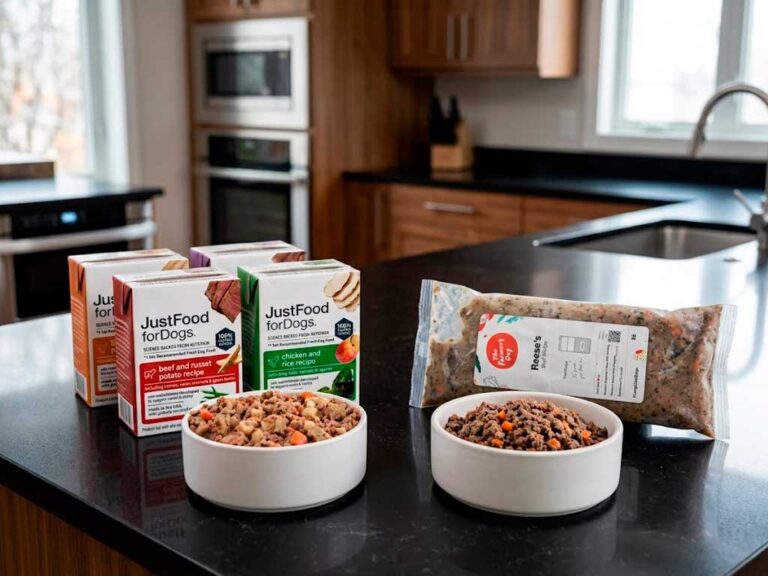
NC State’s veterinary hospital put together a checklist for evaluating commercial raw diets, and it’s worth running any brand through before you buy. Look for a manufacturer that employs a full-time qualified nutritionist, tests its formulas against AAFCO nutrient profiles or feeding trials, owns the plant where the food is made, and will hand you a full nutrient analysis if you ask for one.
Homemade BARF skips those checkpoints entirely. You control every ingredient, which some owners genuinely prefer, but you’re also responsible for hitting the right nutrient balance meal after meal, without a lab checking your work. That’s exactly the gap the calcium-to-phosphorus ratio and the thyroid tissue risk above tend to fall through.
If you want the full breakdown of building a homemade BARF diet safely, including which supplements actually close the nutrient gaps, I cover that in two separate guides: How to Make BARF Dog Food at Home and BARF Supplements: What Your Dog Actually Needs.
What Comes Next: Kibble and Cost
Once the basics click, two questions come up almost every time. Is BARF actually better than kibble, or just different? And what does it cost per month for a dog your size?
I answer both in separate guides, because each one deserves more room than a paragraph here: BARF vs Kibble: Which Is Better for Your Dog? and How Much Does a BARF Diet Cost? Monthly Budget Breakdown.
FROM RAW PAWS PET FOOD
Small-Batch, Farm-Traceable Raw Food
80/10/10 signature blends made with real, whole ingredients — shipped frozen straight to your door.
Shop Raw Paws Pet FoodHappy Pet Zone may earn a commission when you click through to Raw Paws, at no extra cost to you.
Your Next Step With the BARF Diet
Don’t try to implement everything in this guide on day one. Pick the transition schedule, get your ratios roughly right, and lock down your food safety habits first. The rest can wait.
My rescue mutt Biscuit took nine days to fully switch over, mostly because he side-eyed the first raw meal like I’d personally betrayed him. He came around. Most dogs do.
Start with the feeding chart, get your dog’s exact portions dialed in, and go from there.
Frequently Asked Questions
Sources
- NC State College of Veterinary Medicine — Biologically Appropriate Raw Diets
- Riney Canine Health Center, Cornell University — Raw Foods for Dogs: Evidence-Based Advice
- Samardžija et al. — Raw Meat-Based Diet (BARF) in Dogs and Cats Nutrition