Nova Scotia Duck Tolling Retriever: Breed Facts, Care & Temperament
The Nova Scotia Duck Tolling Retriever — affectionately known as the “Toller” — is one of the most athletic, intelligent, and underrated retrievers in the world. If you want the energy and trainability of a Border Collie packaged inside a fox-red retriever body, this might be exactly the breed you’ve been looking for.
Here’s what makes the Toller genuinely unique: it was bred to lure ducks toward hunters by playing along the shoreline — a technique called “tolling.” That instinct to perform, engage, and retrieve is still very much alive in every Toller alive today.
In this article, you’ll find the Toller’s complete breed profile — history, physical characteristics, temperament, full care requirements, health risks, and a clear verdict on whether this high-energy dog belongs in your life.
History and Origin of the Nova Scotia Duck Tolling Retriever
The Nova Scotia Duck Tolling Retriever was developed in early 20th-century Canada, specifically in the Little River district of Yarmouth County, Nova Scotia — which explains one of its earliest nicknames: the Little River Duck Dog.
The breed was engineered for a very specific hunting task. Hunters noticed that foxes playing along riverbanks would draw curious ducks closer to the shore. They set out to create a dog that could replicate this behavior — one that would run, leap, and frisk along the water’s edge, luring waterfowl within shooting range. After the shot, the same dog would then plunge into the water and retrieve the fallen birds.
That’s where the name comes from. The word “toll” is an archaic English term meaning to lure or entice — and that’s precisely what this breed was built to do.
The Toller’s genetic makeup reflects its demanding job description. Breeders likely crossed several retrieving breeds — including the Golden Retriever, Chesapeake Bay Retriever, and Flat-Coated Retriever — with working spaniel and setter blood, possibly from the Irish Setter and Cocker Spaniel. Some historians also suggest influence from Spitz-type farm dogs, which may account for the breed’s distinctive fox-like appearance.
The breed was officially recognised by the Canadian Kennel Club in 1945 and has since gained recognition worldwide, though it remains considerably less common than its Golden or Labrador cousins.
Physical Characteristics
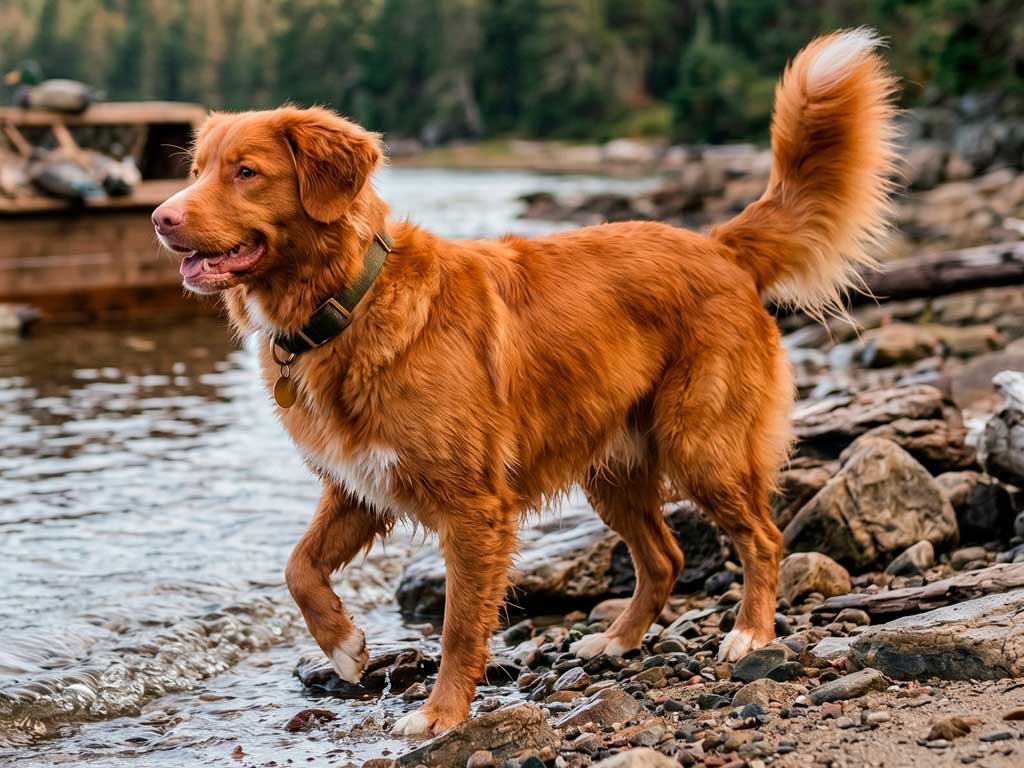
The Nova Scotia Duck Tolling Retriever is a compact, well-muscled, medium-sized dog that looks — at first glance — remarkably like a small Golden Retriever.
Key physical stats:
- Height: 48–51 cm (males); 45–48 cm (females)
- Weight: 17–23 kg for both sexes
- Lifespan: 10–14 years
- Coat colors: All shades of red and orange, from pale gold to deep copper-red
- Size classification: Medium
The Toller’s coat is medium-length, water-repellent, and dense, with a soft, thick undercoat designed to insulate against the frigid waters of Nova Scotia. The most visually striking feature is the white-tipped tail, along with possible white markings on the chest, paws, and blaze. In motion, that plumed tail waves constantly — part of the “tolling” performance that defines the breed.
Another important physical feature: webbed feet. Like other water retrievers, the Toller has webbing between its toes that makes it a remarkably powerful swimmer. Combined with its athletic build, this dog is purpose-built for cold-water retrieval work.
Temperament and Personality
Here’s the honest assessment of living with a Toller: this breed is a lot — in the best possible way.
The Nova Scotia Duck Tolling Retriever is playful, high-energy, deeply affectionate, and acutely intelligent. It bonds closely with its family and thrives on physical activity, mental stimulation, and purposeful work. Leave a Toller under-stimulated and under-exercised, and you’ll discover a very different dog — one that finds its own entertainment, usually at your expense.
What Toller owners consistently describe:
- Boundless enthusiasm for any activity involving water, fetching, or running
- Exceptional responsiveness to training — especially when it involves food and play
- Sensitivity to tension or stress in the home; Tollers pick up on emotional cues quickly
- A distinctive, high-pitched “Toller scream” — an excited vocalization the breed produces when frustrated or extremely aroused
- Strong herding or chasing instincts toward smaller animals if not properly socialised
The Toller is an ideal match for active families who spend time outdoors. It thrives in rural settings with space to run, but can adapt to suburban life if its exercise needs are fully met. Apartment living is possible but challenging — this is not a couch dog by nature.
Care
Diet and Nutrition
The Nova Scotia Duck Tolling Retriever is a medium-sized, highly active dog with caloric needs that reflect its energy output.
A high-quality commercial dog food formulated for medium-to-large active breeds is the most practical foundation. For working or competition dogs, caloric intake should be increased proportionally.
Feeding principles:
- Feed twice daily rather than one large meal — this reduces the risk of bloat
- Measure portions to body weight and activity level; free-feeding leads to weight gain even in active breeds
- Maintain a body condition score of 4–5 out of 9 — ribs should be easily felt but not visible
- Ensure continuous access to fresh, clean water, particularly after swimming or intense exercise
Given the Toller’s predisposition to hip and elbow dysplasia, foods enriched with omega-3 fatty acids, glucosamine, and chondroitin offer meaningful joint support over the long term, especially from middle age onward. Consult your vet before adding supplements to the diet.
Exercise Requirements
This is where prospective Toller owners need to be completely honest with themselves.
The Nova Scotia Duck Tolling Retriever needs more than two hours of vigorous exercise daily. This isn’t a dog that’s satisfied with a brisk 30-minute walk. It was built to work all day in cold water and dense cover — and that drive doesn’t switch off simply because the hunting season is over.
What the Toller excels at:
- Swimming — this is the ideal exercise outlet, mimicking natural working behavior
- Fetching — the retrieve instinct is exceptionally strong and virtually tireless
- Dog sports: agility, flyball, obedience trials, dock diving, and scent work
- Off-lead running in secured, open spaces
Here’s the critical detail: a mentally stimulated Toller is a calm Toller. Physical exercise alone isn’t enough. Incorporate training games, puzzle feeders, and structured activities alongside physical workouts. A tired brain is just as valuable as tired legs for this breed.
Grooming Needs
The Toller’s water-resistant double coat is relatively easy to maintain compared to longer-coated breeds — but it still requires consistent attention.
Grooming routine:
- Brush two to three times per week with a slicker brush and metal comb, working through the undercoat
- During seasonal shedding (spring and autumn), daily brushing is recommended to manage the volume of loose hair
- Trim the longer feathering on the paws, ears, and legs every six to eight weeks
- Check and clean ears weekly, especially after swimming sessions — moisture trapped in the ear canal creates ideal conditions for infection
- Bathe every six to eight weeks, or after heavy outdoor work
The Toller is not hypoallergenic and sheds moderately year-round, with heavier seasonal blows. Anyone sensitive to dog hair should factor this in before committing.
Training and Education
Training a Nova Scotia Duck Tolling Retriever is one of the great pleasures of owning this breed — if you approach it correctly.
Tollers are exceptionally responsive to positive reinforcement, particularly when food and play are involved. They learn quickly, retain commands reliably, and genuinely enjoy the training process. Many Toller owners go well beyond basic obedience into performance sports, and the breed consistently excels.
What works:
- Short, varied sessions of 10–15 minutes — Tollers engage intensely but lose interest with repetition
- High-value food rewards combined with toy-based play
- Early socialisation with other dogs, children, cats, and unfamiliar environments from 8 weeks onward
- Consistent, calm handling — this is a sensitive breed that responds poorly to raised voices or harsh corrections
What to avoid:
- Punishment-based or dominance-based training methods — these damage the Toller’s trust and enthusiasm
- Repetitive drilling — boredom triggers disengagement and sometimes the infamous Toller scream
- Skipping socialisation — poorly socialised Tollers can develop wariness around strangers or reactivity toward other animals
The breed requires some prior dog experience. First-time dog owners can absolutely succeed with a Toller, but only if they’re committed to structured training from day one and have access to good guidance, ideally through a positive-reinforcement trainer.
Health and Longevity
The Nova Scotia Duck Tolling Retriever enjoys a lifespan of 10 to 14 years — solid for a medium-sized sporting dog.
However, like all purebred dogs, the Toller carries several hereditary health risks that responsible breeders actively screen for.
Common health concerns:
- Hip dysplasia — abnormal hip joint development causing pain and reduced mobility; hip scoring of both parents is essential before breeding
- Elbow dysplasia — similarly caused by developmental abnormalities in the elbow joint
- Progressive retinal atrophy (PRA) — a hereditary eye condition causing gradual vision loss; DNA testing is available and should be standard in breeding lines
- Collie Eye Anomaly (CEA) — another inherited ocular condition found in the breed
- Addison’s disease — a hormonal disorder affecting the adrenal glands, seen with higher frequency in Tollers than in most other breeds; symptoms include lethargy, vomiting, and weakness
Always request full health certificates — including hip scores, elbow scores, and DNA eye test results — before purchasing from a breeder. Any reputable breeder will provide these without hesitation.
Is the Nova Scotia Duck Tolling Retriever the Right Dog for You?
The Toller is a spectacular dog — but it is unambiguously the wrong dog for a sedentary lifestyle.
This breed is an excellent match if you:
- Lead an active life with at least two hours per day available for exercise
- Want a highly trainable dog that excels at sports and structured activities
- Have access to water — lakes, rivers, or even a good-sized garden hose will do
- Enjoy an engaged, interactive companion rather than a low-maintenance pet
- Have some prior experience with energetic or working breeds
This breed is not right for you if:
- You work long hours and can’t provide adequate daily exercise and stimulation
- You live in a flat with no outdoor access
- You want a calm, easygoing companion that’s happy with short walks
- You’re a complete first-time dog owner without access to training support
- You can’t tolerate moderate shedding year-round
Get the exercise and mental stimulation right, start training early, and you’ll have one of the most versatile, joyful, and rewarding dogs in the retriever family.
Frequently Asked Questions About the Nova Scotia Duck Tolling Retriever
1. What does “tolling” mean, and why does this breed do it? The word “toll” comes from an archaic English verb meaning to lure or entice. The Toller was specifically developed to run and play along the water’s edge, mimicking the behavior of foxes, which naturally draws curious ducks closer to shore. Once the birds were within range, the hunter would take the shot — and the Toller would then retrieve the downed waterfowl. This instinctive sequence of luring, playing, and retrieving is still deeply embedded in the breed’s DNA.
2. How much exercise does a Nova Scotia Duck Tolling Retriever need? More than most people expect. An adult Toller needs a minimum of two hours of vigorous activity daily — not casual walking, but active running, swimming, or dog sports. Mental stimulation through training and interactive games is equally important. A Toller that doesn’t get enough exercise and engagement will find destructive outlets for its energy.
3. Are Tollers good with children and other pets? Generally yes, with proper socialisation. Tollers are playful, patient, and affectionate with children who know how to engage respectfully. However, their high energy can overwhelm very young toddlers. With other pets, early introduction matters — Tollers can have a strong prey drive toward smaller animals if not socialised from puppyhood.
4. What is the “Toller scream” and should I be worried about it? The Toller scream is a high-pitched, almost eerie vocalization that the breed produces when intensely excited or frustrated — particularly when it can see prey it can’t reach, or when it’s about to do something it loves, like swim. It’s completely normal behavior for the breed, but it can be startling if you’re not expecting it. It’s not a sign of pain or distress — just a very vocal expression of anticipation.
5. How do Nova Scotia Duck Tolling Retrievers compare to Golden Retrievers? They look similar at first glance, but they’re very different dogs to live with. Tollers are smaller, higher-energy, more intense, and considerably more demanding in terms of exercise and mental stimulation. Golden Retrievers are generally more laid-back, easier for first-time owners, and less athletically driven. If you want a Golden Retriever’s looks with a Border Collie’s work ethic and drive, the Toller is your dog. If you want a relaxed family companion, the Golden is the better choice.
Now you have everything you need to decide whether the Nova Scotia Duck Tolling Retriever belongs in your life.
The most important first step? Be honest about your lifestyle. If you can genuinely commit to two-plus hours of daily activity, structured training, and regular mental stimulation — start looking for a health-tested breeder through the breed club in your country. This dog will repay that investment a hundredfold.
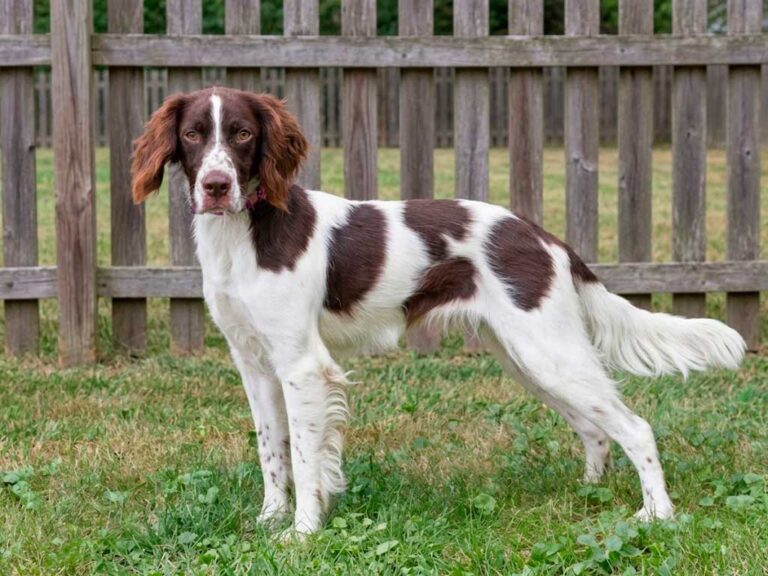
On the other side of the Atlantic, the Dutch Spaniel (Kooikerhondje) was doing an almost identical job centuries earlier in the Netherlands, luring ducks toward hunters using its tail alone.