All about the Bouvier des Flandres: Power, History and Character
The Bouvier des Flandres is one of the most capable, loyal, and misunderstood breeds on the planet. If you’re researching this dog, you’re already considering something special — a working breed that combines raw power with surprising gentleness.
In this guide, you’ll get everything you need: the full history, physical traits, temperament, care needs, training tips, health risks, and an honest answer to whether this breed is right for your lifestyle.
History and Origin
The Bouvier des Flandres has roots stretching back to at least the 17th century in the Flanders region — a historical area spanning modern-day Belgium and northern France.
The name itself tells you everything: Bouvier means “cattle herder” in French. These dogs were bred for hard work — driving cattle, pulling carts, and guarding farms. Every region had its own working dog type, and the Bouvier was the Flemish version.
Then World War I nearly wiped them out.
The conflict devastated the dog population across Belgium and northern France. Most of the regional herding varieties vanished entirely. Only two types survived: the Bouvier des Flandres and the Bouvier des Ardennes.
Here’s where the story gets remarkable.
A young Belgian named Justin Chastel is credited with helping save the breed during those brutal years. Unable to afford stud fees, he cleverly timed his female Bouvier’s walks to cross paths with a male on a nearby street. The resulting litter helped restart a bloodline — and eventually gave rise to the famous De la Thudinie kennel.
A Belgian army veterinarian, Captain Darby, also played a crucial role in preserving the breed through the war years.
Today, both France and Belgium claim the Bouvier as their own. The debate hasn’t been settled — but the dog’s excellence is beyond dispute.
Physical Characteristics
The Bouvier des Flandres is built like a tank. That’s not an exaggeration.
Size:
- Males: 62–68 cm tall, weighing 35–40 kg
- Females: 59–65 cm tall, weighing 27–35 kg
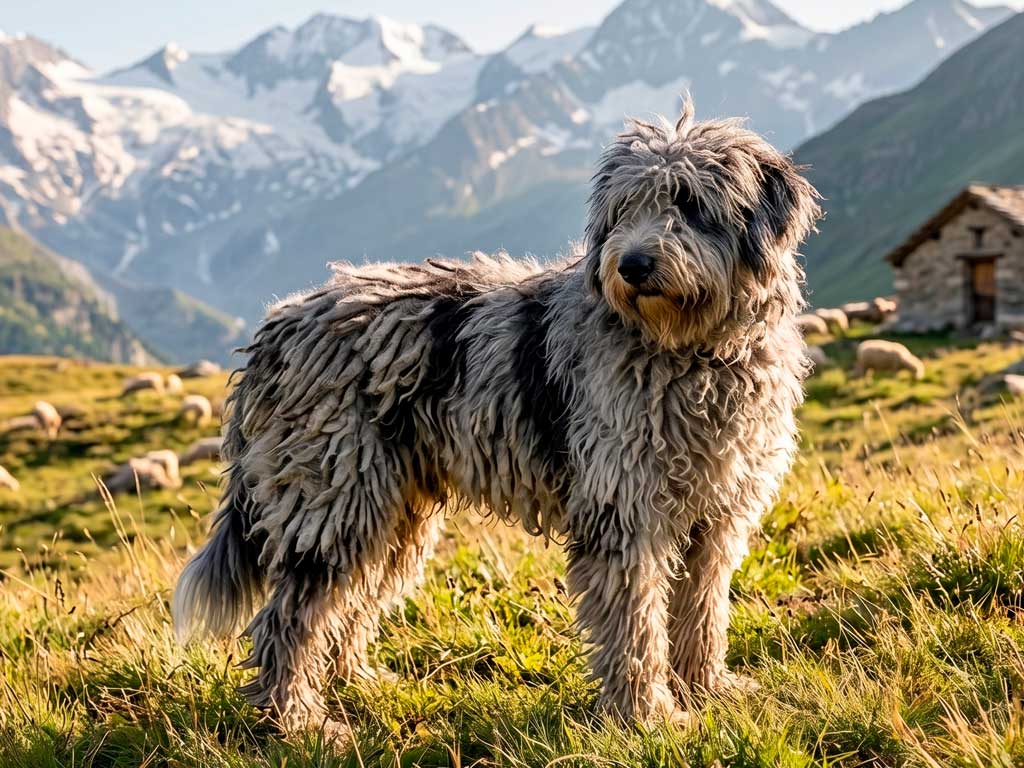
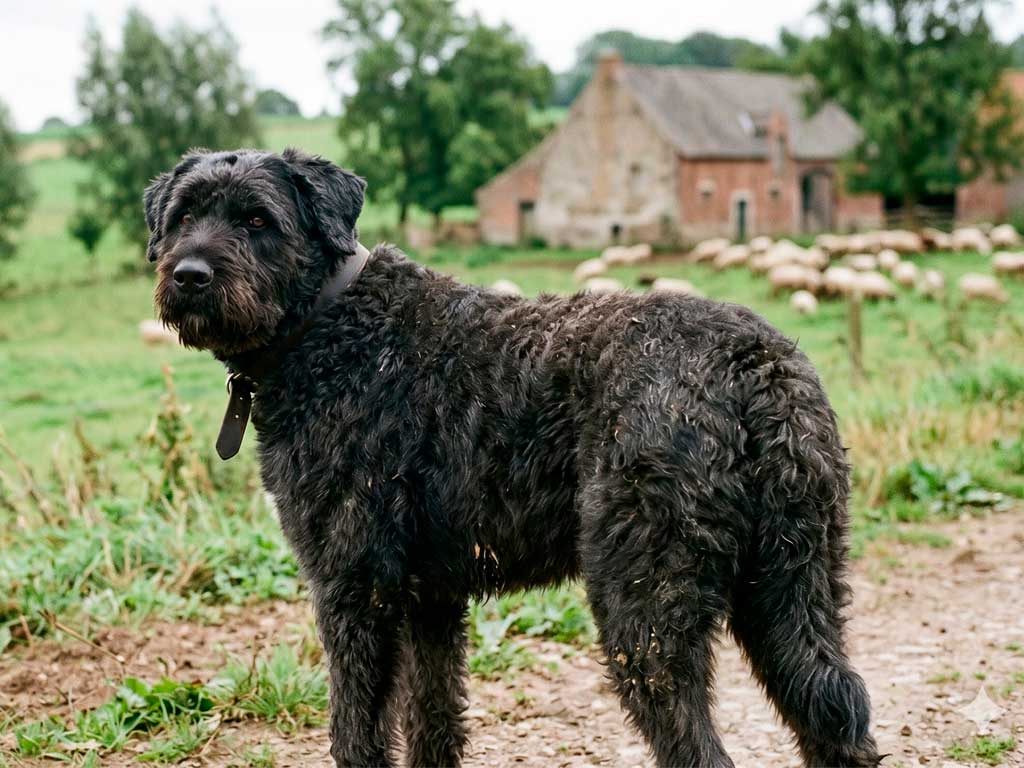
The coat is the breed’s most recognizable feature. It’s rough, thick, and abundant — almost shaggy-looking from a distance. Underneath, a dense, tight undercoat provides insulation against cold and wet conditions. On the face, you’ll notice a trademark beard, mustache, and bushy eyebrows that give the dog an almost professorial expression.
Colors range from fawn and brindle to black. A small amount of white on the chest is acceptable. Historically, many Bouviers had their tails docked to prevent injury while pulling carts — but this practice is now illegal in the UK and much of Europe.
One popular nickname for this breed is Vuilbaard, which translates from Dutch as “dirty beard.” Another is Koehond (“cattle dog”). Their loving owners often call them something simpler: the gentle giant.
Temperament and Personality
Don’t let the rugged exterior fool you.
Despite their imposing appearance, Bouviers des Flandres have a remarkably stable, calm temperament. In the home, they are composed and affectionate with their family. They are sensitive dogs — they pick up on the mood of the household and respond accordingly.
They are protective by nature. This breed will alert you to strangers and take their guarding role seriously — but they are never aggressive without cause. With proper socialization from an early age, they get along well with other dogs and pets.
A few key personality traits to know:
- Loyal to the core. This dog bonds deeply with its family and will go to great lengths to protect them.
- Calm indoors. Unlike some working breeds that are “always on,” the Bouvier knows how to switch off at home.
- Reserved with strangers. They don’t warm up immediately to newcomers, which makes them excellent watchdogs.
- Child compatibility. Bouviers can do well with children, but all interactions with young kids should be supervised, especially given the dog’s size.
In 1975, a Bouvier des Flandres named by officer Edgar Dyson won a police dog competition in London — beating 22 German Shepherds. The dog went on to patrol London streets and even protected a member of the Royal Family. That story says everything about what this breed is capable of.
Care Guide
Diet and Nutrition
The Bouvier des Flandres is a large, high-energy breed with specific nutritional needs. Their diet should be formulated for large-breed dogs, with the right balance of protein, fat, minerals, and vitamins.
One critical concern: this breed is prone to bloat (gastric dilatation-volvulus), a potentially life-threatening condition. To reduce the risk, feed your Bouvier two or three smaller meals per day rather than one large one. Avoid vigorous exercise immediately before or after eating.
High-quality dry kibble designed for large, active breeds is typically the best foundation. Always consult your vet for portion guidance based on your dog’s age, weight, and activity level.
Exercise Requirements
Adult Bouviers need a minimum of one hour of vigorous exercise per day. This is non-negotiable. A bored, under-exercised Bouvier will find ways to entertain itself — usually in ways you won’t appreciate.
As puppies, they get enough physical activity by roaming a secure garden. Over-exercising young dogs can damage developing joints, so hold off on long runs until they’re fully grown (around 18 months).
Activities they excel at:
- Long walks and hikes
- Fetch and retrieval games
- Agility and obedience sports
- Tracking and scent work
- Bikejoring or canicross
Mental stimulation is equally important. Puzzle feeders, training sessions, and problem-solving games keep this intelligent breed balanced and happy.
Grooming Needs
The Bouvier’s coat is high-maintenance — there’s no way around it.
Brush at least three times per week. Pay extra attention to the beard and mustache, where food residue tends to accumulate. The dense undercoat must be kept tangle-free to prevent discomfort and skin issues.
Twice a year, during seasonal shedding, you’ll need to strip or thin the outer coat. Many owners opt to have a professional groomer handle this, especially for the first few times.
Maintain the outer coat at approximately 6 cm in length for optimal function and appearance. Regular nail trimming, ear cleaning, and dental hygiene should also be part of your routine.
Training and Education
This breed was literally designed to work alongside humans — and it shows.
Bouviers des Flandres are highly intelligent and eager to learn, but they need an experienced handler. This is not a first-time dog owner’s breed. They respond well to consistent, calm, reward-based training — but they can become stubborn or dominant with handlers who are unclear in their communication.
Start socialization as early as possible. Expose your Bouvier puppy to a wide range of people, environments, sounds, and other animals. Early socialization makes an enormous difference in how this dog interacts with the world as an adult.
Key training principles:
- Be consistent. Set clear rules and stick to them.
- Use positive reinforcement. Food rewards and praise work beautifully.
- Keep sessions short and varied. This is a smart breed that gets bored with repetition.
- Enroll in puppy classes. Structured group training helps with both obedience and socialization.
Bouviers excel in advanced disciplines: obedience trials, Schutzhund, tracking, search and rescue, and police or military work. If you have the time and commitment, the sky is the limit with this breed.
Health and Longevity
The Bouvier des Flandres has a life expectancy of 10 to 12 years — solid for a large-breed dog.
Overall, they are a hardy breed. However, like most purebreds, they carry a predisposition to certain conditions. The most important ones to know:
- Hip dysplasia. A malformation of the hip joint that can cause pain and reduced mobility. Reputable breeders screen for this before breeding.
- Hereditary eye disorders. Several genetic eye conditions have been identified in the breed. Eye exams before breeding are essential.
- Laryngeal paralysis. This breed has a notable predisposition to this condition, which causes noisy, labored breathing and can worsen with age. It is manageable with veterinary intervention.
- Bloat (GDV). As mentioned, this is a serious risk for deep-chested, large breeds. Know the warning signs and act quickly if symptoms appear.
When sourcing a Bouvier puppy, always ask breeders for documented health screening results for hips and eyes. Responsible breeders will have these readily available.
Is This the Right Dog for You?
Let’s be honest here.
The Bouvier des Flandres is a magnificent dog — but it’s absolutely not for everyone.
This breed is a great fit if you:
- Have previous experience with large or working breeds
- Can commit to at least one hour of daily vigorous exercise
- Have space (a garden is ideal, though not mandatory)
- Enjoy training and are willing to invest time in it
- Are looking for a loyal, protective family companion
Think twice if you:
- Are a first-time dog owner with no prior experience
- Have a very busy lifestyle with little time for exercise or grooming
- Are looking for an easy-going, low-maintenance pet
- Have very young children and no experience managing large dogs
The good news: with the right owner, the Bouvier des Flandres is one of the most rewarding breeds you’ll ever share your life with. These dogs give everything they have to their families. In return, they need your time, commitment, and respect.
Frequently Asked Questions About the Bouvier des Flandres
1. Is the Bouvier des Flandres a good family dog?
Yes — but with important caveats. Bouviers are loving and protective with their families, and they can be wonderful with children when properly socialized. However, their size and energy level mean they’re best suited to families with some dog experience. All interactions between Bouviers and small children should be supervised.
2. How much exercise does a Bouvier des Flandres need?
Adult Bouviers need a minimum of one hour of vigorous exercise per day. This breed thrives with structured activities like hiking, agility training, or tracking work. Simply letting them out in a garden is not enough — they need purposeful, active exercise daily.
3. Do Bouviers des Flandres shed a lot?
Yes. While their coat doesn’t shed as constantly as some breeds, they do go through significant shedding periods twice a year. Regular brushing (at least three times per week) helps manage loose hair. Their coat also requires stripping or thinning seasonally, so grooming costs should be factored into ownership.
4. Are Bouvier des Flandres dogs aggressive?
No — not by temperament. Bouviers are naturally protective and may be reserved with strangers, but a well-socialized, properly trained Bouvier is not aggressive. The key is early and thorough socialization combined with consistent training from a confident, experienced owner.
5. What health problems are common in Bouvier des Flandres dogs?
The main health concerns include hip dysplasia, hereditary eye disorders, laryngeal paralysis (a particular vulnerability in this breed), and bloat (GDV). Always purchase from breeders who screen for hip and eye conditions, and ask your vet about preventive strategies for bloat.