Why Salt is More Dangerous for Your Dog Than You Think
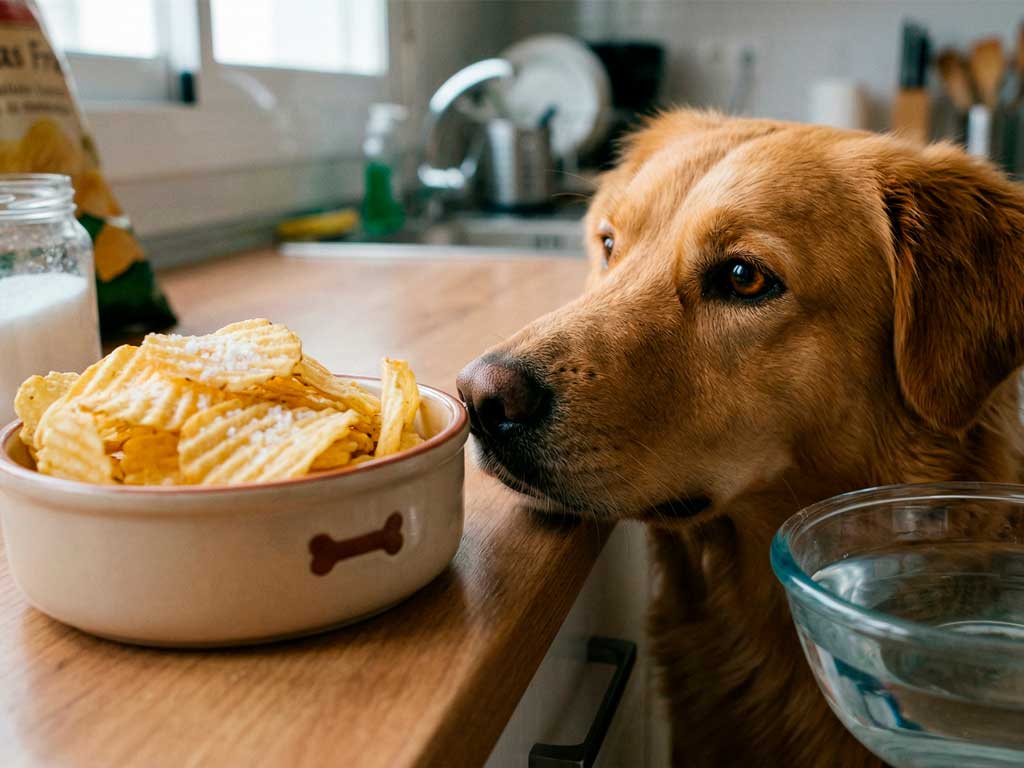
We’ve all been there: you’re relaxing on the couch with a bag of potato chips, and those puppy-dog eyes start pleading for just one crunch. It seems harmless, right? After all, salt is a basic nutrient, and if you look at your dog’s kibble bag, “salt” or “sodium chloride” is right there on the ingredient list.
However, there is a massive difference between the balanced nutrition found in high-quality dog food and the high-sodium snacks humans enjoy.
For our canine companions, salt is a double-edged sword. While it’s essential for life, even a small excess can quickly turn into a life-threatening emergency.
The Science: Why Dogs are Salt-Sensitive
Just like us, dogs need sodium and chloride to maintain healthy nerve impulses and muscle function. But here is the catch: canine kidneys are not designed to process large amounts of salt, and repeated overexposure is one of several everyday mistakes that damage a dog’s kidneys over time.
Unlike humans, who can flush out a salty meal by drinking extra water and relying on efficient kidney filtration, dogs are far more delicate. When a dog consumes too much salt, they can develop a condition called hypernatremia (excess sodium in the blood).
Think of sodium as a magnet for water. When there is too much of it in the bloodstream, it starts pulling moisture out of the body’s cells. I like to visualize it this way: the cells end up shriveling like raisins. This cellular dehydration is exactly why the physical symptoms of salt poisoning are so severe.

FROM JUSTFOODFORDOGS
Fresh, Human-Grade Dog Food
Vet-formulated recipes made with real, whole ingredients — delivered frozen straight to your door.
Get 50% Off My First OrderHappy Pet Zone may earn a commission when you click through to JustFoodForDogs, at no extra cost to you.
How Much Salt is Too Much?
The threshold for “danger” is surprisingly low. Clinical problems usually begin when a dog consumes as little as 2 to 3 grams of salt per kilogram of body weight. To put that into perspective:
- A small 5lb (2.3kg) dog could show signs of toxicity after eating just one teaspoon of salt.
- Common “hidden” sources include deli meats, sausages, and potato chips.
- A standard bag of chips can contain enough salt to push a small or medium-sized dog into the danger zone if they manage to gobble down a large portion.
Veterinary Safety Note: While this guide provides educational information on sodium risks, it is not a substitute for professional medical advice. If you suspect your dog has ingested a large amount of salt, contact your veterinarian immediately.
Symptoms of Salt Poisoning (Hypernatremia)
If your dog gets into the salt shaker or raids a bag of pretzels, you need to watch for these red flags. Symptoms can progress rapidly:
- Early Signs: Extreme thirst, vomiting, and diarrhea.
- Neurological Warning: Muscle tremors and lack of energy.
- Severe Distress: Incoordination, seizures, and potentially falling into a coma.
One of the most dangerous side effects of high salt intake even if it doesn’t reach the level of a seizure is a spike in blood pressure. This puts an immense strain on the heart and can lead to long-term cardiac failure if salty human foods become a regular part of their diet.
Common Household Hazards
It’s rarely just the salt shaker we have to worry about. Most salt toxicity cases come from “human treats” that we think are harmless the same caution applies to plenty of store-bought options, as we cover in our guide to dangerous dog treats:
- Potato Chips & Pretzels: These are “salt bombs” for a dog’s system.
- Cured Meats: Ham, bacon, and salami are loaded with preservatives and sodium.
- Salted Popcorn: A favorite movie-night snack that can cause real trouble.
- Homemade Playdough: A surprising danger! Because it’s made with massive amounts of salt, it can be lethal if a dog eats it.
What to Do in an Emergency
If you catch your dog eating something highly salted and they start trembling or acting disoriented, do not wait. Salt toxicity is a medical emergency that cannot be treated at home.
While your instinct might be to force them to drink water, doing so too quickly can actually cause brain swelling. A veterinarian needs to administer intravenous fluids (IV) to carefully and slowly rebalance the sodium levels in the blood.
The bottom line? Keep the chips to yourself and stick to dog-safe treats. Your pup’s heart and kidneys will thank you!